Commercial Lighting Maintenance Checklist Guide
Commercial Lighting Maintenance Checklist for Facility Managers (and the calm truth about long-term savings)
At Kord Electric, we keep it simple: a Commercial lighting maintenance checklist helps facility managers protect people, budgets, and productivity. In the first pass, we follow a practical routine that inspects fixtures, verifies controls, checks emergency function, and confirms that the whole lighting system stays within safe performance levels. Then, we document findings, schedule repairs, and verify results before we close the loop. Yes, lighting can be boring, but so is wearing a seatbelt until you need it. For commercial and industrial facilities, that difference matters.
This guide walks through a clear, field-tested Commercial lighting maintenance checklist you can use as a framework, adapt to your facility, and hand off to your maintenance team without needing to translate technical jargon.
Why commercial lighting maintenance quietly affects safety and costs
Most teams think lighting maintenance means changing bulbs. However, the real risk shows up when small issues stack up. A dim aisle becomes a safety concern. A flickering warehouse bay becomes a productivity problem. Then the power draw creeps higher because drivers age, optics get cloudy, and controls drift out of calibration.
Meanwhile, we see the same pattern at major property buildings: facilities that treat lighting like a “set it and forget it” system eventually pay for emergency fixes, more downtime, and messy retrofits. In contrast, others that follow a disciplined maintenance approach typically keep photometrics stable, extend component life, and reduce calls for urgent service. And because our technicians work in the field every day, we translate the technical details into clear next steps instead of vague promises.
The other quiet benefit? Code and compliance stability. Buildings that maintain lighting systems proactively usually have an easier path when they decide to pursue an LED retrofit or lighting upgrade, because their existing infrastructure is already documented and reasonably stable.
Walkthrough inspection: what our technicians check first
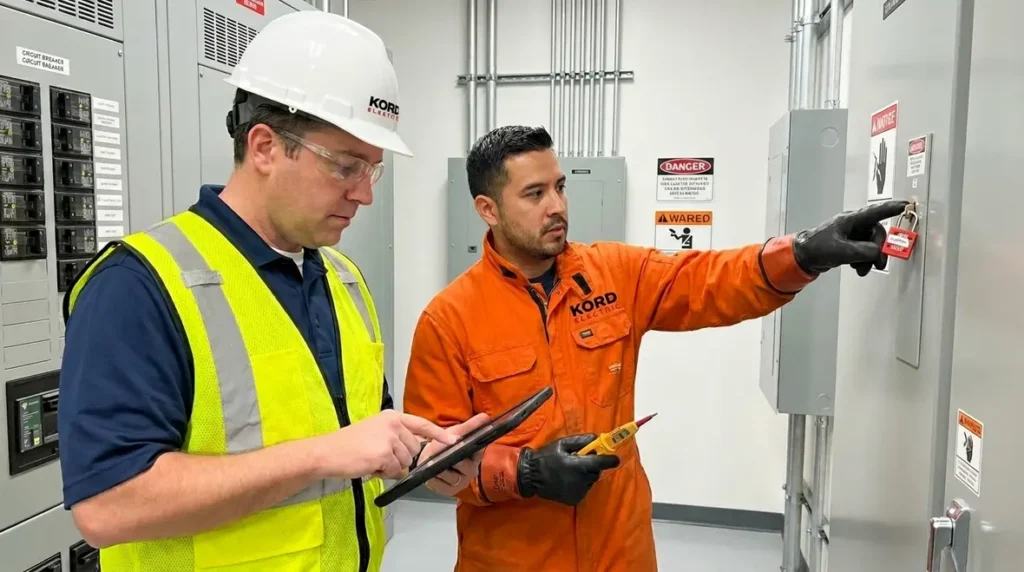
We start each maintenance visit with an on site walkthrough that targets what facility managers actually experience: visibility, glare, outages, and control behavior. Then, we move through fixtures by zone, because large buildings do not fail evenly. For example, loading docks and parking structures often collect grime and moisture, while offices and hallways suffer from vibration, frequent occupancy changes, and aging occupancy sensors.
Next, our expert service staff checks the physical condition and performance indicators, including the following:
- Fixture mounting security and proper sealing to help prevent water and dust intrusion
- Lens and reflector cleanliness, since dirt changes light output and can increase glare
- Visible signs of heat stress like discoloration at housings and wiring compartments
- Emergency lighting and exit signs for correct operation under test conditions
- Photometric consistency across key corridors, stairs, and work zones
After that, we compare current observations against the building’s expectations. If your team reports uneven brightness or faster lamp failures in specific areas, we treat that as a clue, not a mystery. And yes, when someone tells us “it just started happening,” we ask the polite questions that reveal the root cause.
A solid Commercial lighting maintenance checklist usually starts with this exact walkthrough stage, because it captures what people actually see and feel in the building before anyone brings out a meter.

Sample walkthrough tasks to include in your checklist
- Note any visibly dark aisles, corners, or stair landings during normal operation
- Record areas with frequent complaints about glare or eye strain
- Mark fixtures with mismatched color temperature within the same zone
- Flag fixtures with cracked lenses, missing trims, or signs of impact
- Confirm emergency egress paths are fully illuminated when tested
Controls, sensors, and dimming settings that drift over time
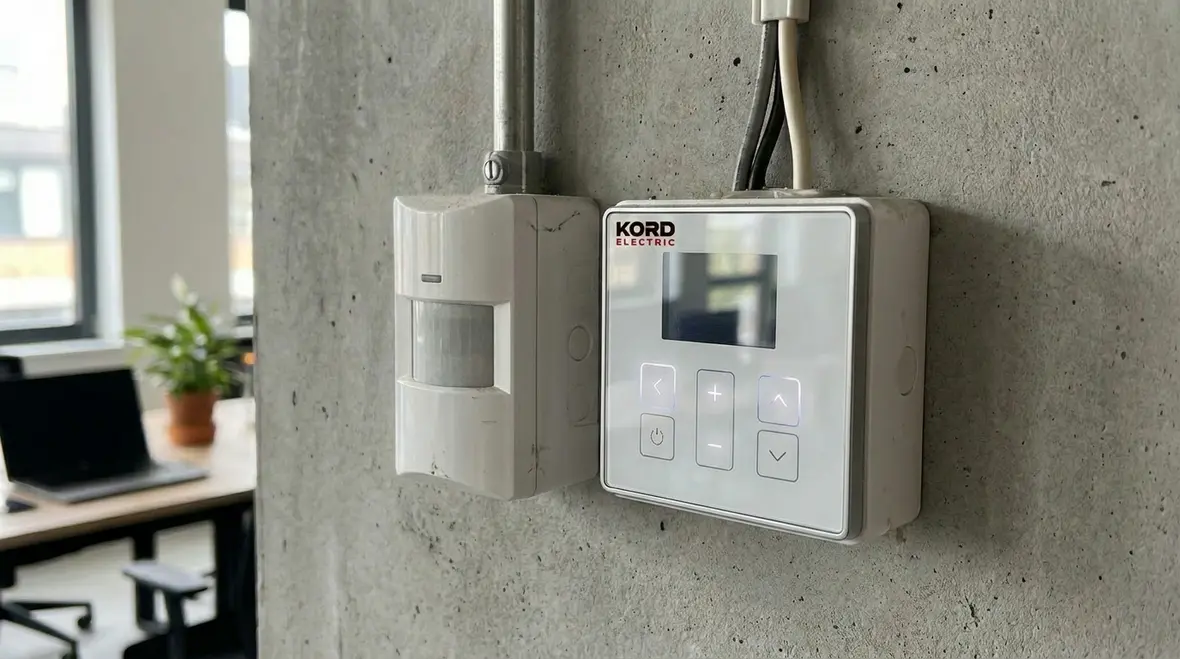
Lighting controls save energy when they work correctly. Yet controls also drift due to software updates, wiring changes, occupancy pattern shifts, and sensor placement that no longer matches how people use the space. In commercial and industrial facilities, that drift can quietly erase savings while creating user complaints like “lights won’t turn on” or “it keeps dimming when I need it to stay bright.”
Therefore, we verify that control zones match real usage and that sensors respond as intended. We also check:
- Occupancy sensor coverage and sensitivity settings
- Dimming curves and daylight harvesting behavior near windows
- Switching logic in multi level systems so stairwells and corridors do not surprise people
- Communication health for networked lighting where applicable
- Correct operation sequences for normal and emergency modes
To keep it calm and practical, our technicians document what they test and what they find. Then, we propose adjustments that facility managers can approve without needing a decoder ring. If the building team wants a quick wins list, we can usually deliver one during the same visit. If they want a longer plan, we can map improvements by risk and impact.
Control and sensor steps for your Commercial lighting maintenance checklist
- Confirm time schedules match current operating hours and cleaning shifts
- Verify occupancy sensors do not leave people in the dark during normal tasks
- Test daylight zones for over-dimming that makes spaces feel gloomy
- Document any overrides or “workarounds” staff have added so they can be corrected properly
- Check that emergency override controls function as designed
Electrical safety checks that protect equipment and prevent repeat failures
Lighting is only the visible part of the system. Under the surface, wiring connections, drivers, and protective devices decide whether your lights stay reliable or start failing in clusters. And clusters are never random. They are usually the result of shared feeders, common junction points, or environmental stress.
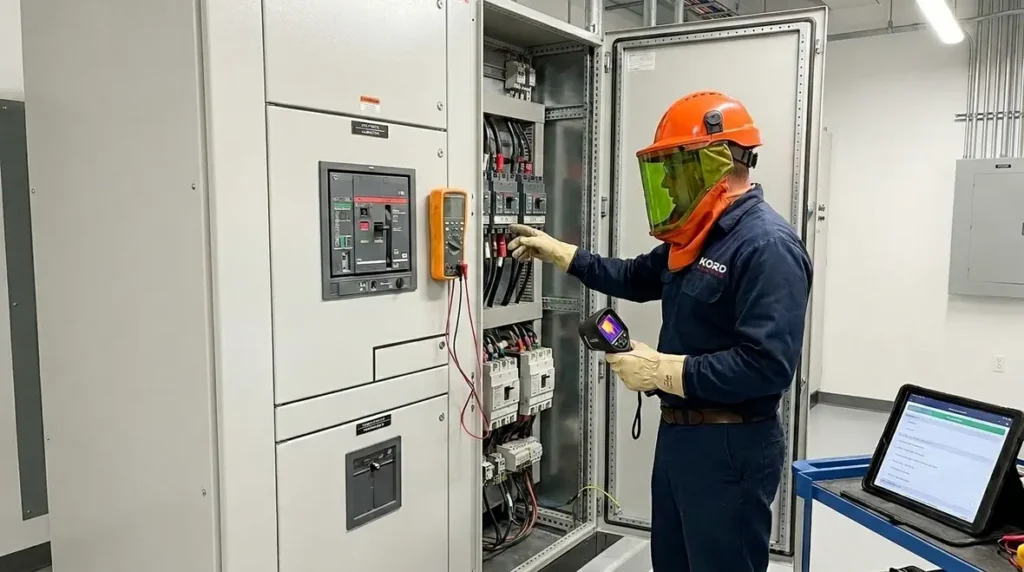
So, we include electrical safety checks that support long-term reliability for commercial and industrial facilities. At a high level, we focus on:
- Loose or heat damaged connections in fixture branches and junction boxes
- Driver and ballast performance where applicable
- Grounding and bonding continuity to reduce nuisance faults and shock risk
- Breaker and protective device condition and proper labeling
- Proper insulation condition around conductors exposed to moisture or vibration
We also connect this work to the broader commercial electrical maintenance picture. For instance, when facility managers plan upgrades, they often ask about rewiring and costs. If you look at our rewiring cost guide for commercial electrical systems, the takeaway is the same: system health and component age drive cost, and planning reduces both downtime and surprise expenses. Lighting maintenance is not the same as rewiring, but it helps prevent situations where rewiring becomes the only option.
Electrical items to log on your maintenance checklist
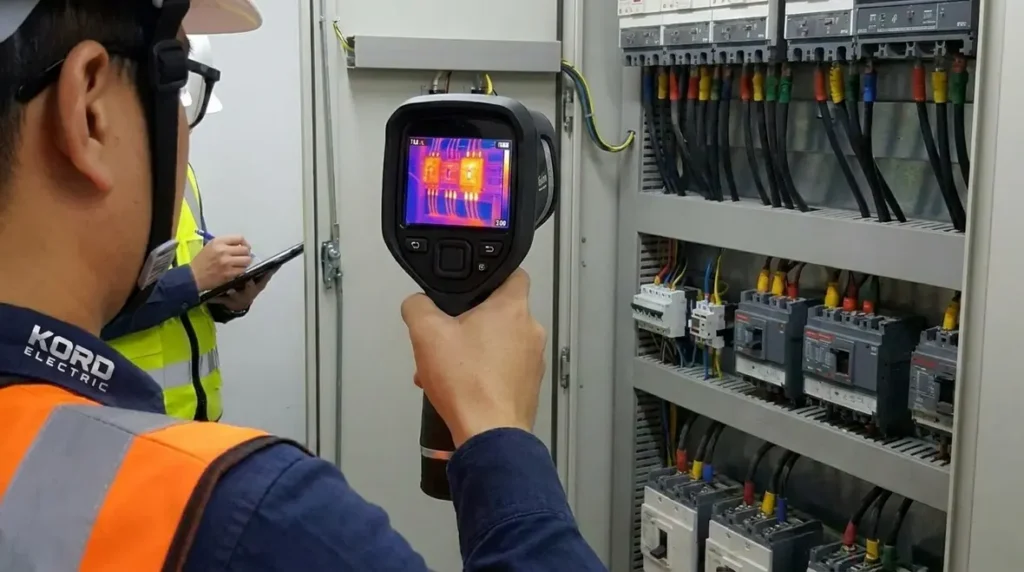
- Infrared or thermal scans for hot spots at panels feeding lighting circuits
- Torque checks on terminations where appropriate and safe to perform
- Verification that breakers match conductor and load ratings
- Documentation of any recurring trip patterns tied to lighting loads
- Notes on environmental conditions (heat, moisture, dust) that may justify enclosure upgrades
From maintenance to upgrades: when repair stops being the best move
Eventually, every facility hits the point where repair becomes a treadmill. One fixture gets replaced, then another fails, then controls behave oddly, and suddenly the building feels like it is playing whack a mole with electricity. We help teams avoid that loop by distinguishing between manageable wear and systemic decline.
During service, we track failure patterns, note environmental conditions, and evaluate whether the current layout still meets operational needs. Then we discuss options that fit the facility’s goals, such as:
- Targeted fixture replacements in the highest failure zones
- Driver or component upgrades to improve reliability and energy performance
- Control modernization when sensor behavior no longer matches occupancy patterns
- Optical improvements to restore light levels and reduce glare
In other words, we do not just keep lights on. We help manage performance so your facility supports people and operations. And if someone in your organization says, “Let’s just wait until everything breaks,” we respectfully ask them to picture that happening at 2 a.m. in a loading bay. Then we offer a smarter plan.
Using your checklist to time upgrades
A well-documented Commercial lighting maintenance checklist becomes evidence when you are deciding whether to repair, retrofit, or redesign. When entries show repeated failures in the same circuits, chronic control complaints, and increasing downtime, it is usually time to look at a more strategic upgrade, often tied to a broader commercial lighting installation or retrofit project.
Scheduled service plans that keep your building consistent
Once we complete inspections and repairs, we recommend a schedule that matches building usage and risk level. Commercial and industrial facilities do not have one lighting reality. Warehouses and outdoor areas face dust and moisture. Offices face frequent switching and longer burn times. Schools are not our focus, but major property buildings and industrial sites are, and those environments deserve a plan that recognizes their pressures.
We typically structure service so you get regular checks, not random heroics. For example, teams often benefit from seasonal rounds for outdoor and high exposure zones, plus periodic control and emergency testing. Then, if you maintain records, you can spot trends before they become expensive.
Also, we keep communication tight. Our technicians explain what they found, what they repaired, and what they recommend next. So your facility manager is not left guessing, and the maintenance department avoids the “who touched what” situation that turns every future issue into a detective novel.
Example cadence for a Commercial lighting maintenance checklist
- Monthly: Quick visual checks of high-traffic areas, emergency exit verification, control overrides reset
- Quarterly: Structured walkthroughs by zone, sensor testing, cleanliness and lens checks
- Semiannual: Deeper electrical checks on representative panels and junction points
- Annual: Full system review tied to energy usage, complaints, incidents, and planned projects
Building your own Commercial lighting maintenance checklist
If you are starting from scratch, the goal is not to create a perfect document. It is to create a usable, repeatable process. A good Commercial lighting maintenance checklist should be simple enough for field staff to complete accurately and detailed enough to reveal patterns over time.
At a minimum, we suggest organizing your checklist into these sections:
- Zone information: Area name, typical occupancy, critical tasks nearby
- Fixture details: Type, mounting height, quantity, general condition
- Performance notes: Light levels by impression or measurement, glare, color consistency
- Control behavior: Sensor response, dimming performance, schedule alignment
- Electrical and safety: Visible damage, heat indications, breaker labeling, egress compliance
- Actions and follow-up: Immediate repairs, recommended projects, dates, and responsible parties
Over a year or two, these records become one of the most valuable tools your facility manager has. They turn “I think we have more outages lately” into “We have documented failure clustering in the west loading area tied to moisture and aging housings.” Decision makers listen to the second version.
FAQ
How Kord Electric helps facility managers keep lighting dependable
At Kord Electric, we service commercial and industrial facilities and major property buildings with a disciplined approach. We send expert technicians who inspect thoroughly, explain clearly, and repair with an eye on long-term reliability. Then we help your team plan the next steps so you do not chase failures. If you want steadier lighting, fewer emergency calls, and a maintenance routine your team can actually trust, contact us for a scheduled assessment. Let’s keep your building bright for the right reasons.
For facilities that are ready to pair maintenance with a forward-looking upgrade path, our dedicated lighting installation services for commercial and industrial properties can help you move from patchwork fixes to a modern, efficient system supported by a clear maintenance plan.
Whether you need a one-time Commercial lighting maintenance checklist review or an ongoing service program for multiple properties, our team builds plans that fit your operations instead of disrupting them.
If you are looking ahead at larger infrastructure decisions, you can also explore our in-depth Rewiring Cost Guide for Commercial Electrical Systems to see how long-term planning, maintenance, and upgrades work together to protect your facility.
When you are ready, we are here with calm, practical guidance, from everyday lighting checks to full-scale commercial lighting projects.