
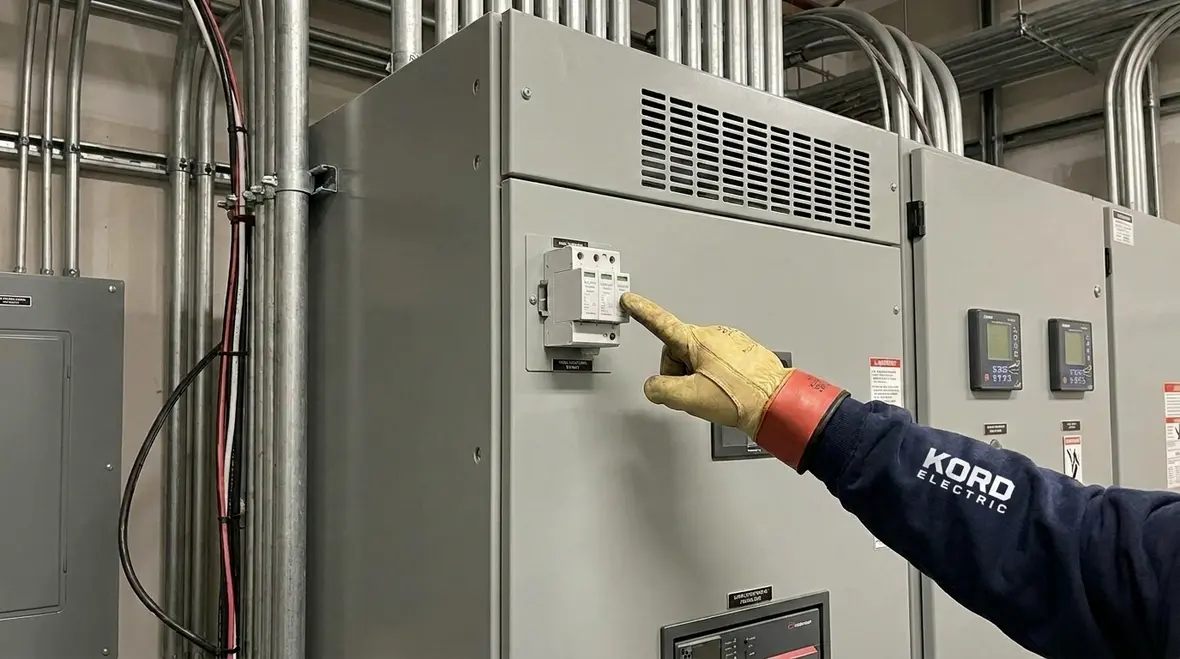
Commercial Power Surge Protection for Facilities
Commercial power surge protection: the first line of defense for big facilities
Modern commercial buildings run on sensitive electronics, and when the power system gets hit, the damage can be quiet at first and expensive later. At Kord Electric, we design commercial power surge protection plans that help protect switchgear, panels, UPS systems, lighting controls, HVAC drives, cameras, and access systems. We also coordinate with the facility team so the right protection shows up at the right place. And yes, we remind people that electricity is like gravity: it always wins, but we can make sure it wins on our terms. Others may treat surges like a “once in a while” event, yet in real service work we see far too many cases where poor protection turns into repeat downtime.
So, in this article, our technicians will explain how surge risk builds, what strategies actually work in the field, and how to tie surge protection into ongoing electrical maintenance. You will walk away with a practical plan your team can use immediately.
Where surges come from in commercial power systems
To protect a facility well, we start with how surges behave. A surge is not just one loud event. It can be a fast voltage spike, a sustained overvoltage, or a sequence of disturbances that move through the building like a rumor that spreads faster the more people believe it. In commercial and industrial settings, common sources include utility switching, lightning induced surges, motor starts and stops, elevator and HVAC cycling, and even damaged wiring that creates intermittent faults.
Then there is the “path” factor. A surge does not simply jump into equipment. It travels along conductors, references ground points, and uses electrical paths that exist through the building. For example, a spike on incoming service conductors can couple into data lines, fire alarms, or control wiring. As a result, your protection must manage energy flow, reduce let through voltage, and provide proper grounding and bonding. Our expert service staff will tell your team this: if the grounding system does not match the protection design, the best surge devices cannot perform at their peak.
Risk mapping and equipment prioritization that teams can act on
After we understand sources, we then map risk. In practice, we do not treat every building the same, even when the square footage looks similar. Instead, we review how the property operates and which systems must stay alive. A hospital corridor, a manufacturing control room, and a high end retail store have different power sensitivity and different downtime costs.
Our technicians often begin with a simple but disciplined approach. They list the loads that are most surge sensitive and the loads that can generate disturbance. Then they define the protection goals. Do we need to reduce damage risk for certain controllers? Do we need to lower nuisance trip events? Do we need to support critical areas during storms and switching events?
Next, we prioritize where protection will land first. That usually starts at the service entrance and distribution level, then moves to sub panels and local distribution boards feeding critical circuits. Finally, we add targeted device level protection where equipment demands it. This layered method prevents a common mistake: people buy devices and install them “somewhere,” then hope for the best like it is a luck based raffle. We do not run our work that way.
Engineering a layered approach: service, distribution, and point of use
A strong surge strategy uses layers, and it uses them in the right order. Think of it as a team of guards at different doors. If one door fails, the next guard steps in. At the incoming service, we install protection that helps manage large energy events. At the distribution level, we tighten the voltage stress on feeders that run deeper into the building. At the point of use, we reduce residual voltage and protect sensitive terminals.
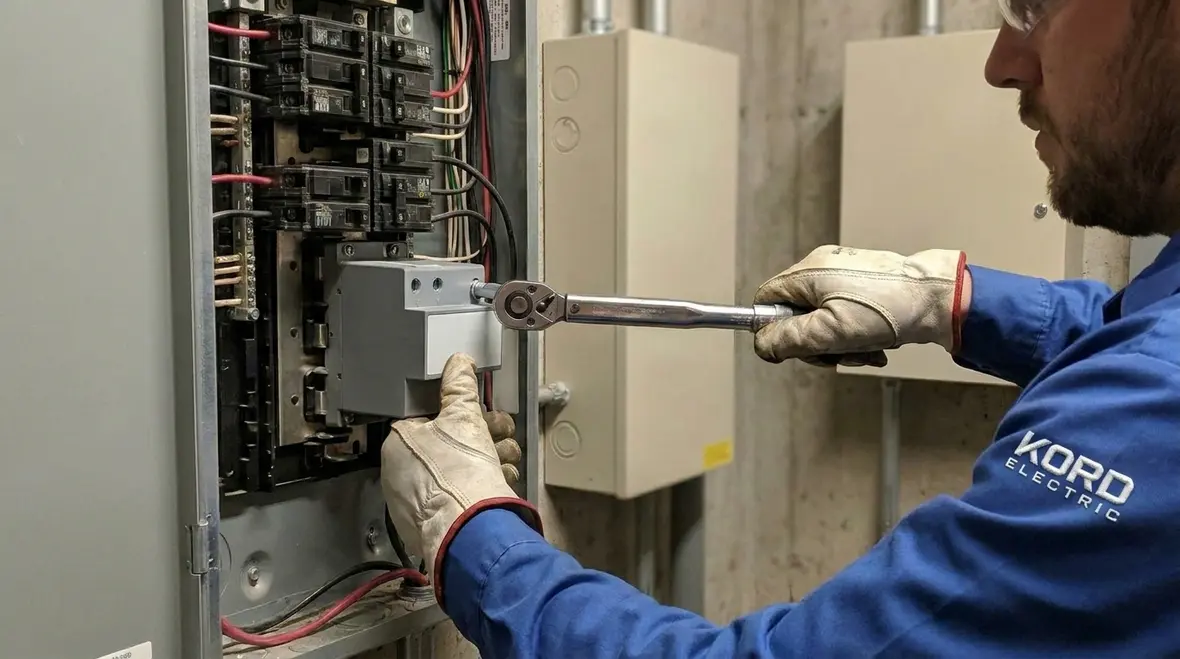
During installation, our service staff does not just set devices in a box and walk away. We verify conductor routing, check bonding integrity, and confirm that surge protective components connect to the correct reference points. We also keep the installation consistent with the building’s electrical topology. Why does this matter? Because a surge protective device is only as effective as the path it has to clamp and the path it has to reference. If the connection method forces long leads, shared neutral issues, or weak ground links, the device may not reach its rated performance under real stress.
In commercial environments, this layered method also supports operational stability. It helps reduce the chance that control systems reboot during disturbances. That matters when your building uses automation, metering, and distributed control. And it matters when the “reboot” is not a quick fix because your system requires manual reset or vendor involvement.
Maintenance planning that keeps protection reliable year after year
Surge protection should not be a “set it and forget it” purchase. Components can age, clamping performance can drift, and indicators can signal that a device has taken hits beyond normal conditions. This is where we connect protection to electrical maintenance, not just sales.
Kord Electric supports commercial and industrial facilities with structured maintenance thinking, aligned with the reality that businesses need uptime. If you want a deeper look at how we approach ongoing electrical maintenance plans, our resources cover how commercial and industrial electrical maintenance plans help facilities manage performance, safety, and predictable service. In short, we help teams maintain the health of the electrical system that surge devices depend on: switchgear condition, terminations, grounding paths, panel integrity, and protective device coordination.
Also, our technicians help your team document what matters. We label devices, track inspection dates, and review indicator states. Then, if something shows wear or past surge events, we recommend replacement before the next storm turns your downtime into a headline. Yes, that is a joke, but it is the kind of joke that costs money when you do not prepare.
How we handle surge protection in commercial and industrial facilities
We treat every major property project like a responsibility. Our process stays focused on commercial and industrial electrical needs, not smaller non critical installs. First, we coordinate with the site leadership and facility team to understand operational constraints, critical load requirements, and any existing power quality concerns. Then we review available drawings, panel schedules, and equipment lists. If documentation is missing or unclear, we verify in the field because real conductors do not care about our assumptions.
Next, we design a protection plan that fits the building. That means we choose the right technology and device class for the risk profile and expected surge environment. We also confirm coordination with overcurrent protection so the surge plan does not fight the rest of the system. Finally, we test and verify as appropriate, so the installation matches the design intent.
And when things are done correctly, the value shows up fast. Fewer intermittent faults. Better continuity for control networks. More stable performance for automation and safety systems. Your team gets calm, predictable operations, instead of the “why did the lights flicker like a bad movie montage” moment that never makes anyone happy.
FAQ: quick answers for featured snippets
Conclusion: protect your uptime with a surge plan we build for you
If your commercial or industrial facility depends on electronics, automation, and safety systems, surge protection cannot be an afterthought. At Kord Electric, we help you build a layered commercial power surge protection strategy, install it with care, and maintain it through smart electrical maintenance planning. Our technicians explain the work in clear terms, and we guide your team toward practical next steps. If you want a protection review for your major property, contact Kord Electric today and we will help you move from “maybe” to prepared.
For facilities across the region that need help stabilizing power quality and addressing broader electrical needs, our dedicated Los Angeles County electrical services support everything from troubleshooting and upgrades to coordinated surge mitigation across large portfolios.
And if you are planning broader upgrades or need targeted support beyond surge mitigation, Kord Electric’s commercial and industrial service lines can align a surge protection roadmap with preventive maintenance, emergency response, and project work so your facility runs on calm, predictable power instead of surprise outages.


