Commercial EV Charger Infrastructure Planning That Works
Commercial EV Charger Infrastructure Planning That Works in the Real World
Kord Electric starts every project with commercial ev charger infrastructure planning that matches the way businesses run, not the way a diagram dreams. In the first planning steps, we map site power, charger locations, and future growth so an installation can support fleets, visitor parking, and tenant needs without causing surprise outages. Then our team executes with clear sequencing, tight documentation, and a focus on safety that never takes a coffee break.
Because in the commercial and industrial world, “close enough” is a phrase people say right before a problem invoices them. And yes, we have heard the joke that EVs are the only thing that should be charging on time. We politely disagree and we make sure the rest of the electrical system stays on schedule, too.
Site Walks, Load Studies, and the Power Reality Check

After Kord Electric confirms that a site is the right fit for a commercial and industrial scope, our process begins with field work and data gathering. First, we review utility service details, existing panels, switchgear, transformer capacity, and demand history. Then we capture site details like parking flow, service access, and trench routes for conduit runs.
Next, our engineers and technicians run a load study that looks beyond today’s charger count. They estimate how charging will behave during peak windows, when multiple vehicles plug in at once. This matters, because a charger schedule that works for one building can fail in another once tenants, shifts, or events change.
To keep planning practical, we also consider how power will move across the facility. We check cable sizing, voltage drop, and protection device ratings. And because you cannot “optimize” a system you do not understand, our team documents assumptions so the owner and stakeholders can see what drives each decision.
Still, the best part is that our technicians explain each choice in plain language. They do not hide behind jargon, even when the client says, “Just make it work.” We smile, nod, and then we make it work the right way.
Design for Reliability, Not Just Installation

Once Kord Electric has load and site inputs, we shift into design. For major property buildings, reliability means the electrical distribution must handle charger loads with stable performance and safe fault clearing.
At this stage, we often align our approach with the same reliability mindset described in our data center electrical distribution design work, where we plan for dependable power paths and disciplined protection coordination. The core idea stays the same: build a distribution scheme that can withstand real conditions, not ideal ones. That means we select distribution components with the right ratings, we plan for redundancy where it makes sense, and we coordinate protective devices so faults do not cascade through the building.
Then we design the charger circuits with clear fault protection and proper grounding and bonding. We also plan for smart charging features when required, including load management and network monitoring. Even when a site does not need advanced features today, we plan conduit and panel capacity for tomorrow because upgrades should not turn into a “dig-and-replace” weekend project.
And yes, clients sometimes ask if we can “just tap into an existing circuit.” We can, sometimes. But we also have to keep compliance, avoid overloading, and make sure the facility stays safe. In our world, the answer is never “because it is easier.” The answer is “because it is sound.”
Permitting, Utility Coordination, and Schedule Control

Plans that look great on paper still need permission to exist in the field. Therefore, Kord Electric handles the steps that keep a commercial project moving. First, we coordinate site and electrical permitting requirements for the specific facility type and authority having jurisdiction. Then we collect the details that inspectors and utilities request, like one line diagrams, conductor sizing, and equipment specifications.
Next, we coordinate with the utility when service upgrades or metering changes are needed. Some projects require transformer work, panel additions, or new feeders. Even small changes can trigger lead times, so we build a schedule around procurement realities rather than optimism.
To keep the job calm, our project team sets milestones for submittals, equipment delivery, rough in, final terminations, and testing. And when delays happen, we communicate quickly. Our service staff keeps stakeholders informed because waiting in silence is how small issues grow teeth.
In the end, control is not about being strict. It is about removing uncertainty so the facility can keep operating, while the charger infrastructure gets installed with minimal disruption.
Execution on Site: Trenching, Conduit, Terminations, and Testing

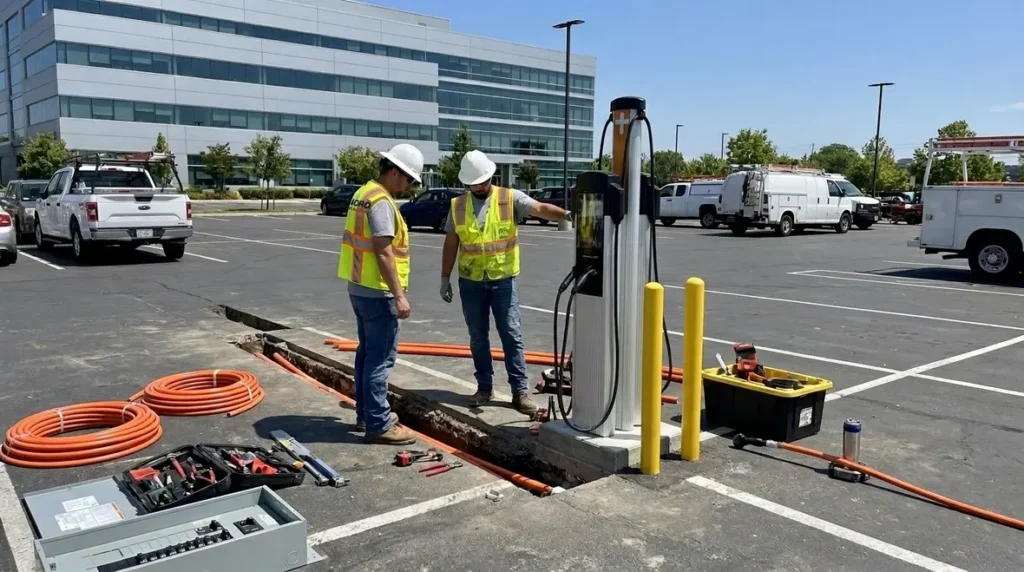
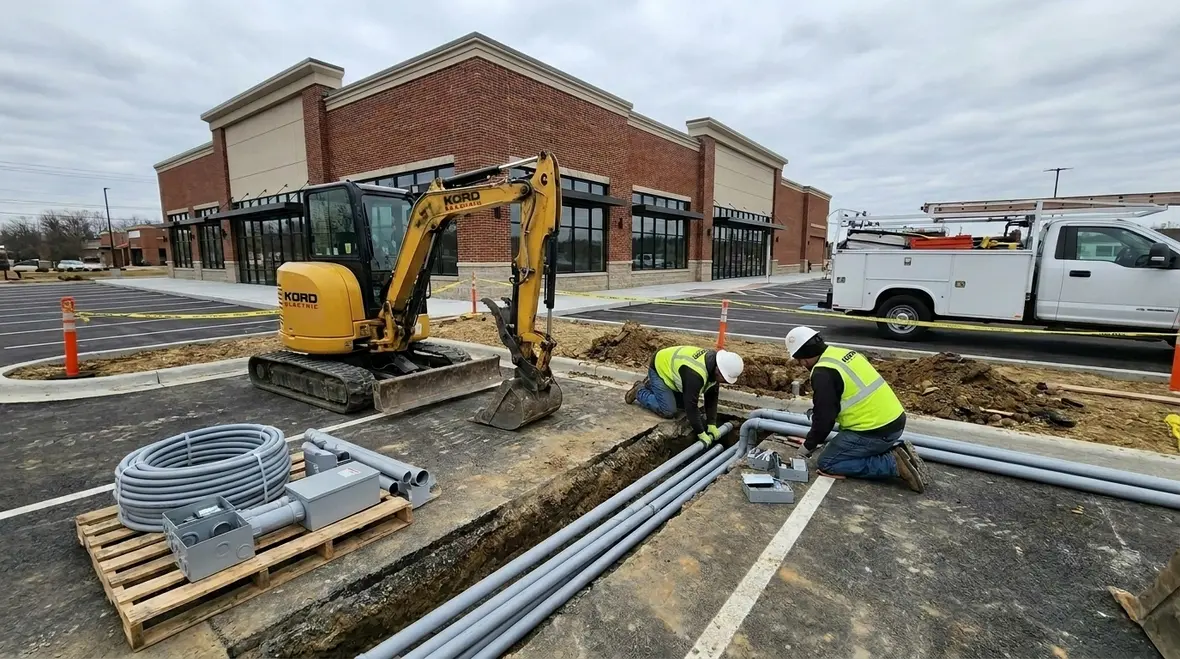
When Kord Electric arrives to install, we execute in sequence so the site stays safe and organized. First, our electricians and technicians confirm the layout and protective routing, including where conduit enters buildings and how it avoids conflicts with other trades. Then we complete trenching, conduit runs, and pull strings so installation stays clean, not chaotic.
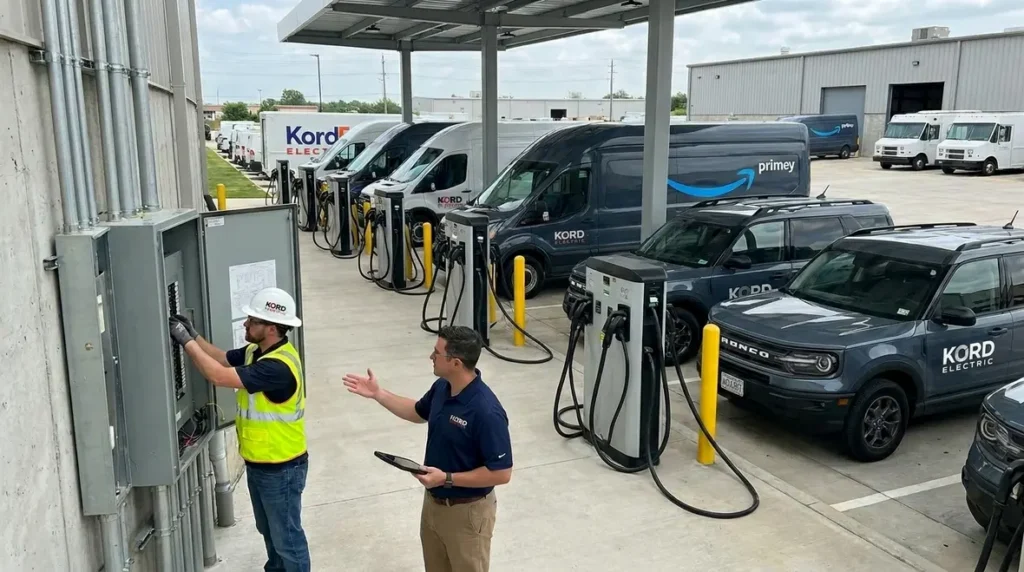
After rough in, we set equipment, pull conductors, and land them on the correct breakers or power distribution equipment. We follow torque and termination standards, and we keep labeling consistent. That labeling matters later during troubleshooting, audits, and expansions.
Then our team performs testing. We verify insulation resistance, polarity, continuity, and ground integrity. We also validate charger functionality, meter readings, and any load management settings. Finally, we document results for the owner and for closeout packages.
Our technicians do not just test once and walk away. They explain what they found and why it matters, so building operators feel confident. It is the difference between a “finished” job and a job that can be maintained without guesswork.
Operations, Maintenance, and Expansion Ready for Growth

Charging stations in commercial environments rarely stay the same. New tenants arrive. Fleet managers shift schedules. Companies upgrade vehicles and add charging needs. Therefore, Kord Electric prepares for long term operations from day one.
We recommend a maintenance plan that fits the site’s usage. That plan can include periodic inspections, cleaning, firmware updates where applicable, and electrical checks on terminations and protective devices. Then we set up monitoring options when chargers include network capabilities. With monitoring, building staff can spot faults early and reduce downtime.
Just as important, our infrastructure planning supports future expansion. We reserve space in panels or distribution areas when feasible. We design conduit pathways and cable routes with growth in mind. And we align charger circuit capacity with realistic demand so future add ons do not turn into a full redesign.
In other words, we build for today’s needs and tomorrow’s decisions. Because nobody wants to revisit the same trench twice. That is a hobby, not a business strategy.
Key Risks We Manage So the Project Stays Stable
Every commercial and industrial facility has constraints. Kord Electric manages the common risks that can derail charger infrastructure projects.
- Overloading and poor load forecasting: we perform load studies that reflect real charging behavior and peak events.
- Voltage drop and conductor sizing errors: we size conductors and route circuits to protect performance.
- Protection coordination issues: we coordinate breakers and protective devices to limit fault impacts.
- Permitting delays: we prepare submittals and documentation early, then track approvals closely.
- Installation shortcuts: our technicians follow standards for terminations, grounding, and labeling.
- Lack of expansion planning: we leave room for future chargers and avoid “dead ends” in distribution.
When owners see these risks handled early, the project feels smoother. And when issues do appear, our service mindset keeps them from turning into full scale problems.
FAQ
Ready to Build EV Charging That Won’t Break the Grid?
Kord Electric helps commercial and industrial facilities install EV charging with a reliability first mindset. We handle planning, design, permitting coordination, installation, and testing, and our technicians explain each step so your team can maintain the system with confidence. If you want charger infrastructure that supports business needs now and expansion later, reach out to Kord Electric. We will review your site, map a practical path forward, and help you charge forward without the drama.
If you are planning a broader rollout across multiple properties or want to pair EV charging with a stability-focused electrical strategy, explore how our regional Los Angeles County electrical services support commercial and industrial facilities that need reliable power day after day.
For sites ready to move from planning to action, Kord Electric also offers dedicated commercial EV charger installation services so your infrastructure, permitting, and on site work all stay aligned under one team.