
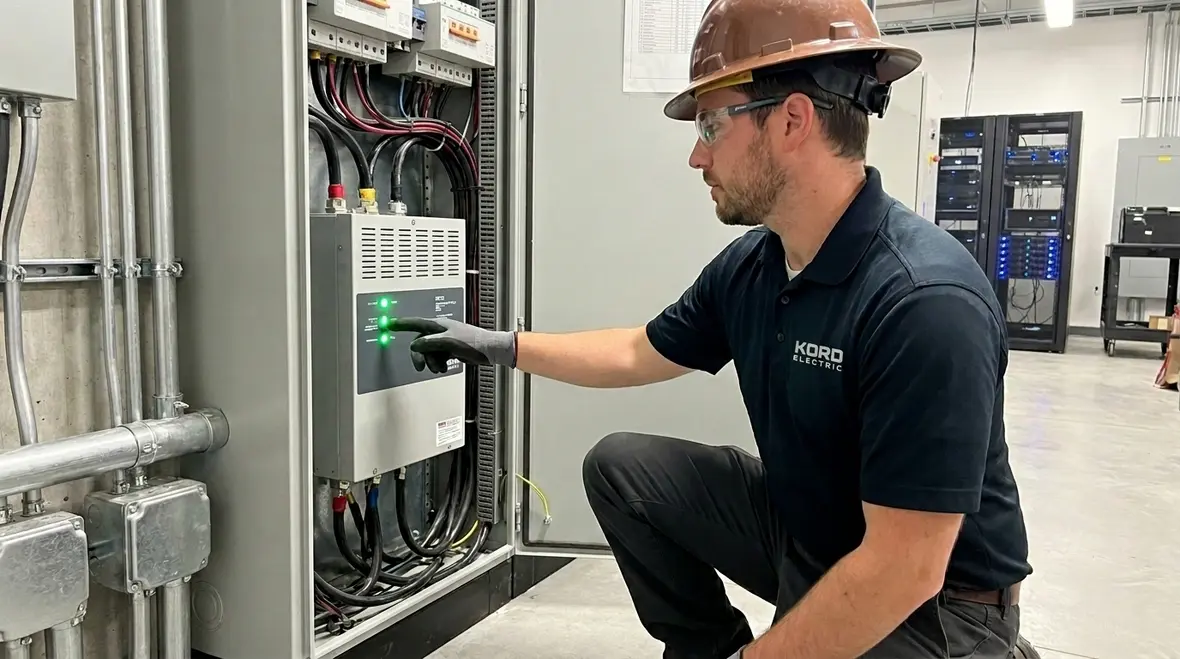
Commercial Surge Protection for Mission Critical
Advanced surge protection that keeps mission critical equipment online
At Kord Electric, we begin with a simple goal: protect mission critical systems in commercial properties using advanced surge suppression. Our commercial electrical surge protection strategies start with understanding what your building depends on, then engineering protection in layers so the damage from lightning, utility switching, and power cycling has fewer chances to “find a way in.” Next, we coordinate protection with grounding, bonding, and panel level devices so the whole system works together, not like a band with one missing drummer. Meanwhile, our technicians and expert service staff walk clients through what we see, what we recommend, and why it matters, in plain language. After all, nobody wants their HVAC controls or process equipment to behave like they just watched the season finale of a streaming show without warning.
Why surges hurt more in commercial and industrial buildings
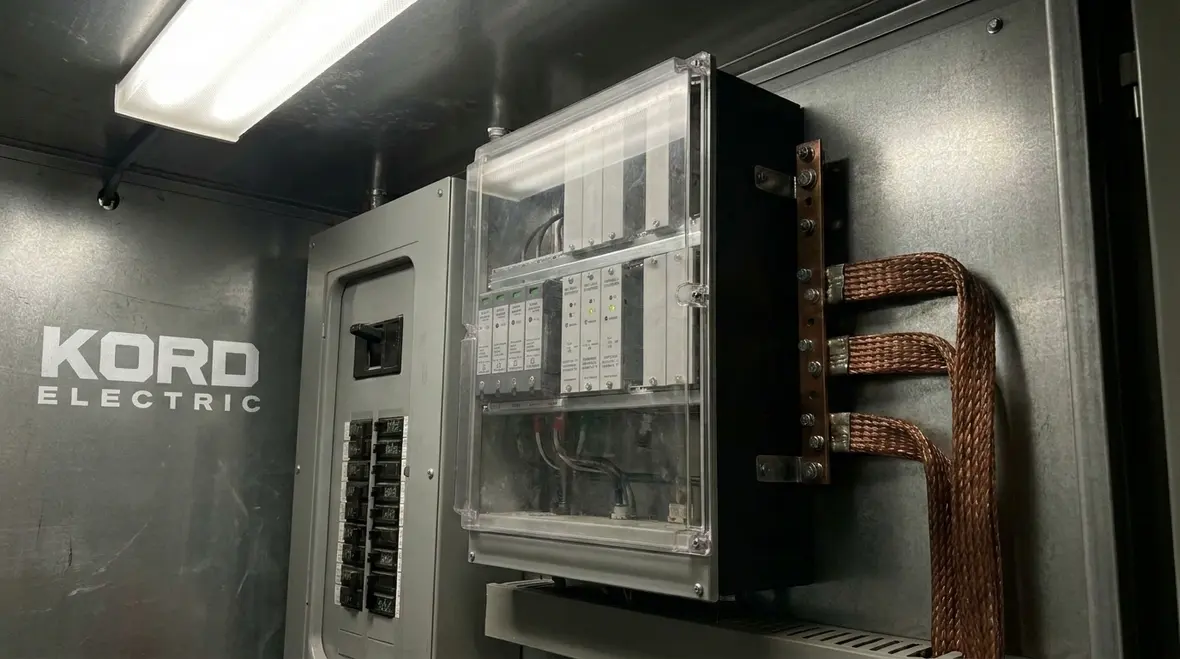
In commercial and industrial facilities, equipment rarely runs “for fun.” Production lines, security systems, life safety interfaces, network switches, and building automation need stable power. However, surges can enter during lightning events, when the utility switches loads, or when large motors start and stop nearby. Even small voltage spikes can stress power supplies, shorten component life, and cause intermittent faults that appear weeks later, like a bill you forgot about but still owe.
Because of that, Kord Electric focuses on commercial sites where downtime costs real money. Our approach recognizes that advanced protection is not just about one device at one panel. Instead, it is about managing energy before it reaches sensitive loads. As our technicians explain during site visits, you can picture surge energy like water pressure. If the pressure has only one exit, it will push elsewhere. With proper layered protection, the system gives surges a clear path, so critical electronics keep doing their job.
Building a layered plan for commercial electrical surge protection strategies
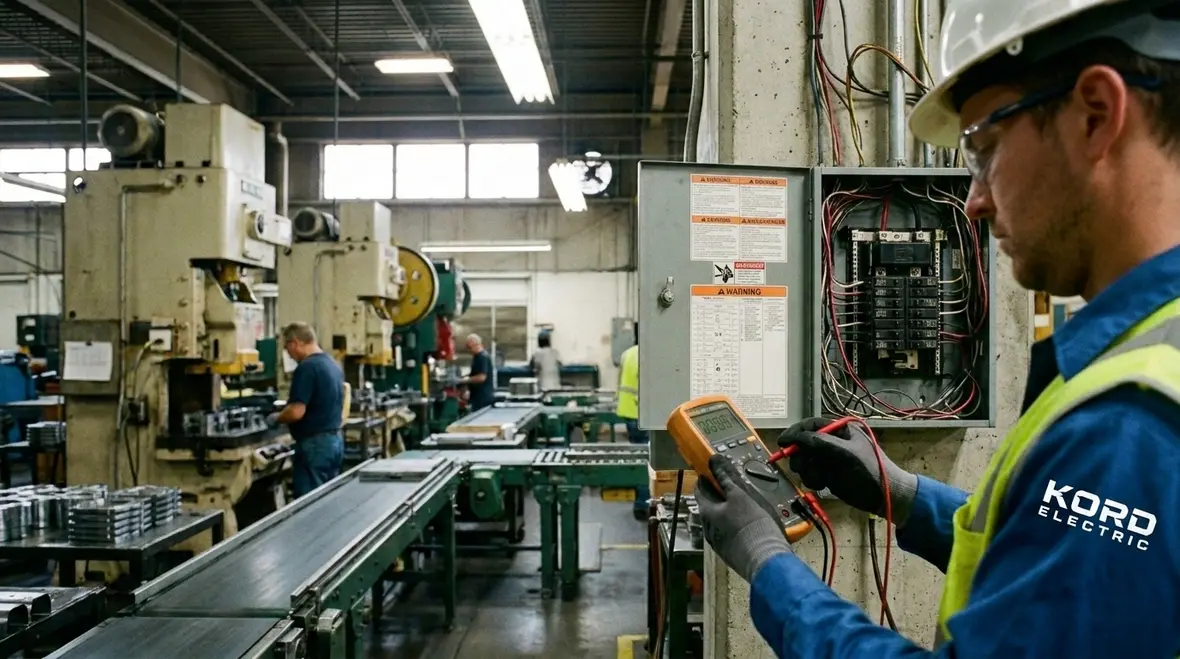
To protect mission critical systems, we design a layered defense that follows how energy actually travels. First, we evaluate the service entrance, distribution panels, and the locations of sensitive equipment. Then we map potential entry points. After that, we match the level of protection to the environment and the risk profile.
Here is the framework our expert service staff typically uses on major property buildings:
- Service entrance protection: We install devices that handle large surge events and reduce incoming energy before it spreads through the facility.
- Subpanel coordination: We add protection downstream so surges encounter multiple “checkpoints,” not one weak link.
- Load level protection for key circuits: For controllers, automation panels, POS systems, servers, and other high value equipment, we protect at the circuit level when the design calls for it.
- System bonding and grounding review: We do not treat grounding as an afterthought. We verify connections and routing so protection devices can do their job safely.
- Compatibility and coordination: We ensure ratings and response characteristics align so devices work in sequence rather than fight each other.
In other words, we aim for a coordinated system. Otherwise, you end up with a “surge protector” that looks great on paper but behaves poorly in real events. And yes, that is the electrical version of buying a smoke alarm for your kitchen and forgetting the kitchen is the whole house.
What to expect during a Kord Electric surge protection assessment
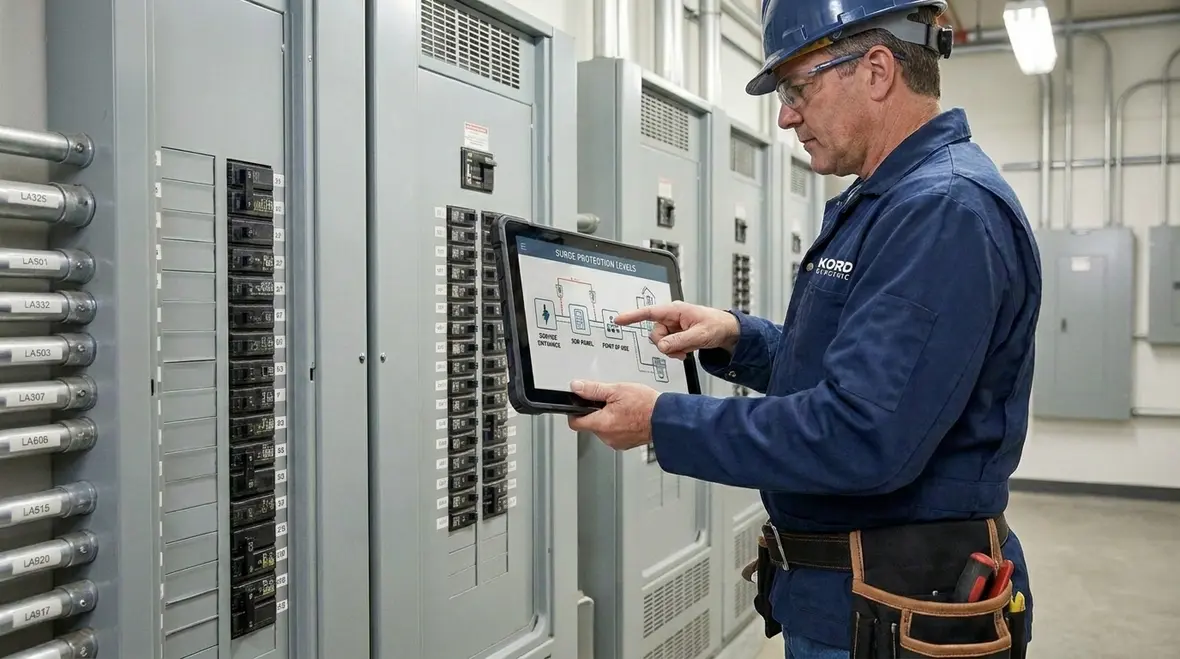
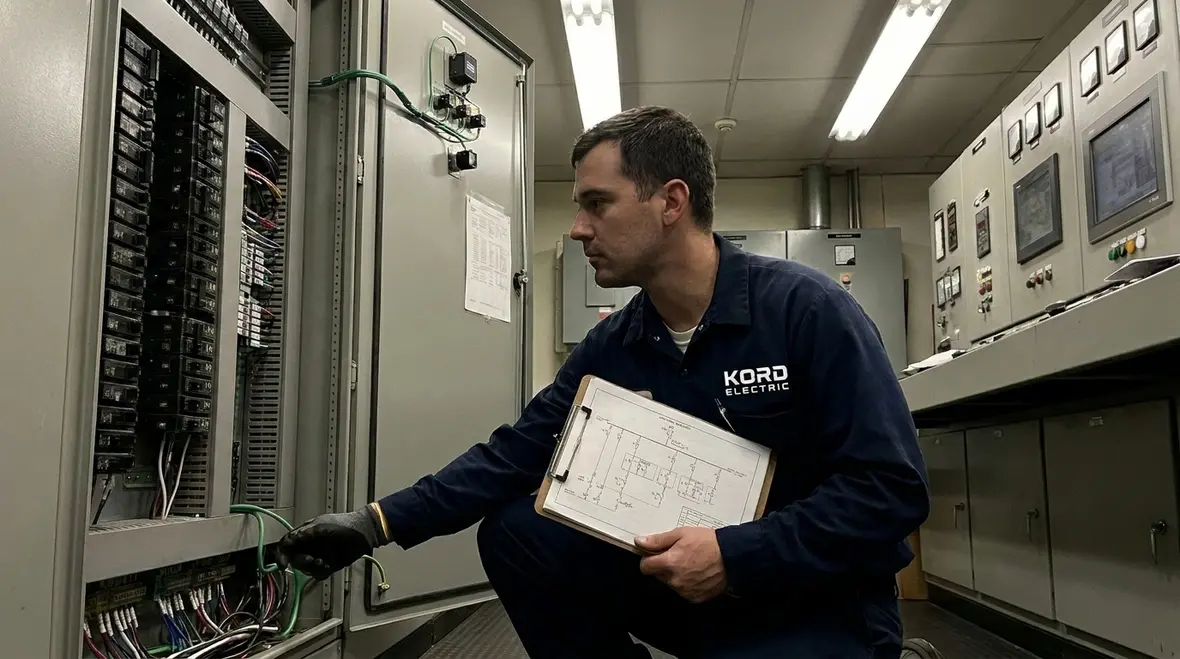
Our technicians do not just show up and swap equipment. They run an organized assessment that fits commercial and industrial needs. To start, we ask what systems must stay live and what failures cost the most. Then we review existing electrical layouts, single line diagrams, and panel schedules if they are available. After that, we inspect for installation details that can affect performance, like grounding continuity, device placement, conductor routing, and overcurrent protection coordination.
Next, we verify whether the site experiences issues such as flicker, nuisance trips, or intermittent control faults. These clues often point to power quality problems that surge suppression alone cannot fully fix. However, when we see clear surge risk, we develop commercial electrical surge protection strategies that fit the building’s actual use, not a generic template.
Finally, we explain findings in a calm, direct way. Our expert service staff helps others understand what we can prevent, what we can reduce, and how the recommended solution integrates with ongoing maintenance. Because we work on major property buildings, we also plan for how upgrades happen with minimal disruption to operations. Nobody wants the only production line in the building to pause because someone is “trying something new.”
Using real project data to plan upgrades and budgets
We know that decision makers want numbers, not vibes. Our commercial lighting upgrade cost guide includes practical thinking about budgeting and scheduling for large facility improvements. While lighting upgrades focus on different equipment, the planning habits matter: stakeholders need a timeline, they need to understand how work affects operations, and they need a clear path from assessment to installation.
At Kord Electric, we apply that same disciplined mindset to surge suppression. We break the scope into steps so owners can understand cost drivers and risk coverage. In many cases, we can phase improvements by priority circuits and building zones, especially when the facility must stay open. Meanwhile, we help others avoid common budget traps such as installing protection devices without coordination, or choosing devices that do not match the facility’s electrical design.
As our technicians explain, a surge suppression plan often saves money by reducing repeat failures and downtime. Yet the plan still needs to fit real constraints like panel space, routing limitations, and shutdown windows. So we coordinate with your facility team and, when needed, align work with other scheduled projects so the building upgrades happen once, not repeatedly.
How we protect sensitive electronics, controls, and life safety interfaces
Surges do not always kill equipment in one dramatic moment. More often, they stress components so the next failure arrives later, like a slow leak that turns into a flood. That is why Kord Electric takes special care when dealing with sensitive electronics and mission critical controls.
For commercial and industrial buildings, we focus on the systems that keep people safe and operations stable, such as:
- Building automation and HVAC controls: Controllers, sensors, and variable frequency drives can see spikes during switching and lightning events.
- Security and access systems: Cameras, controllers, and network equipment rely on stable power and clean protection coordination.
- Telecom and data gear: Network switches and routers can suffer intermittent faults that look like “software problems” until power is investigated.
- Process equipment in industrial settings: Power supplies, PLCs, and motor controls benefit from coordinated suppression strategy.
- Life safety interfaces: We treat these circuits with extra planning so protection does not interfere with safety behavior.
Then we tailor the solution based on the building. If a facility has long feeder runs, multiple panels, or remote equipment, we account for how surge energy spreads. If the building has frequent switching events, we consider coordination so devices respond properly. If the facility has older electrical infrastructure, we highlight where improvements in bonding and grounding will make the protection perform better. Our expert service staff explains these details so others can make confident decisions without guessing.
Maintenance and monitoring to keep surge suppression effective
Surge suppression is not a “set it and forget it” product. Over time, devices can reach end of life after repeated events, especially in locations that see frequent electrical disturbances. Therefore, Kord Electric supports maintenance practices that keep protection current. We also help facility teams understand what to watch for and how to schedule checks.
Our technicians typically recommend a process that includes visual inspection, verification of device status indicators, and review of the surrounding electrical conditions. Additionally, when a facility experiences a major lightning event or unusual power disturbance, we advise a follow up review. That way, owners do not discover weeks later that the protection did its job once, then got tired quietly. Electricity does not usually announce its plans.
Meanwhile, when we update electrical systems, we recheck coordination. A new panel, added production equipment, or expanded automation can change how surges travel. So we keep the protection aligned with the current building design.
FAQ
These answers stay short on purpose, because featured snippets work best when they respect your time. If you want the deeper version, we can walk your team through it.
Call Kord Electric for a surge protection plan
When mission critical systems run your daily business, you cannot treat surge protection like an optional upgrade. Kord Electric designs coordinated surge suppression for commercial and industrial facilities, then we explain the plan clearly so your team understands the protection path. If you are planning a major property improvement or you simply want fewer mystery outages, contact us for an assessment. We will review your electrical layout, protect critical loads, and help you move forward with confidence.
If your facility is also preparing for broader modernization work, you can pair a surge suppression plan with targeted electrical preventive maintenance so mission critical systems stay protected, documented, and ready for the next phase of upgrades.


