Emergency Egress Lighting Testing for Compliance
Emergency Egress Lighting Testing Protocols for Compliance, Done Right
At Kord Electric, we start every job by setting clear emergency lighting testing protocols before anyone flips a switch. Our process follows essential compliance checks so egress paths stay lit when they matter most. We inspect fixtures, verify battery function, confirm control operation, and document results in a way auditors can trust. Then, we test under conditions that reflect real use, not just “it looks fine” vibes. In other words, we treat emergency lighting like an air bag: you hope you never need it, yet you should test it like your reputation depends on it. And usually, it does.
Others may rush. We do not. Our technicians and expert service staff work with a calm, methodical rhythm so every exit route, stairway, and corridor receives proper coverage and measurable performance.
Clear Code Alignment for Commercial and Industrial Buildings
Compliance starts with understanding what the building needs and what the standard requires. Kord Electric focuses only on commercial and industrial facilities and major property buildings, where life safety systems carry real responsibility. We align design and testing with the applicable requirements for egress lighting, including placement rules, illumination targets, and how emergency power must behave.
Moreover, we verify that the installed system matches the approved intent. For example, if the drawings show a coverage plan, we confirm field conditions match it. If changes happened over time, we record them and recommend corrective steps. This is how we help clients avoid the classic problem: a system that passes a quick glance but fails when tested against compliance expectations.
To keep everything steady, our expert service staff communicates the “why” behind each check, so facility managers understand what they are signing off on and why it matters.
Inspection and Verification Before Any Test Runs
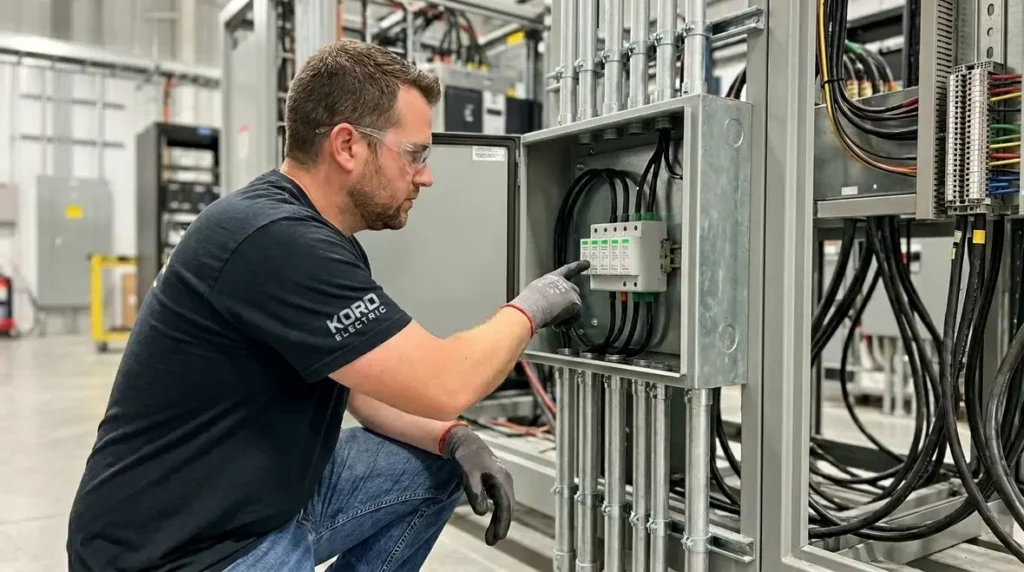
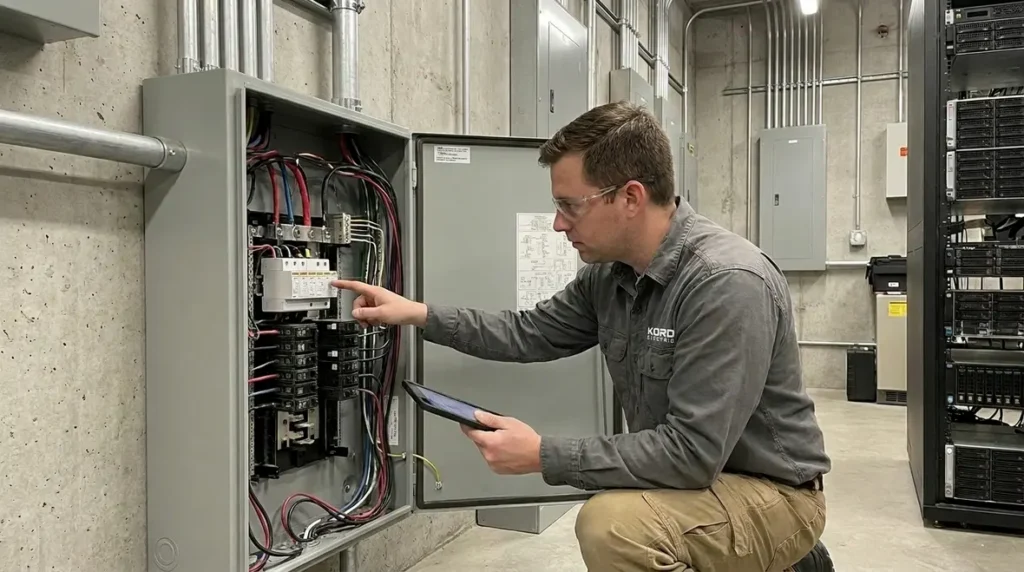
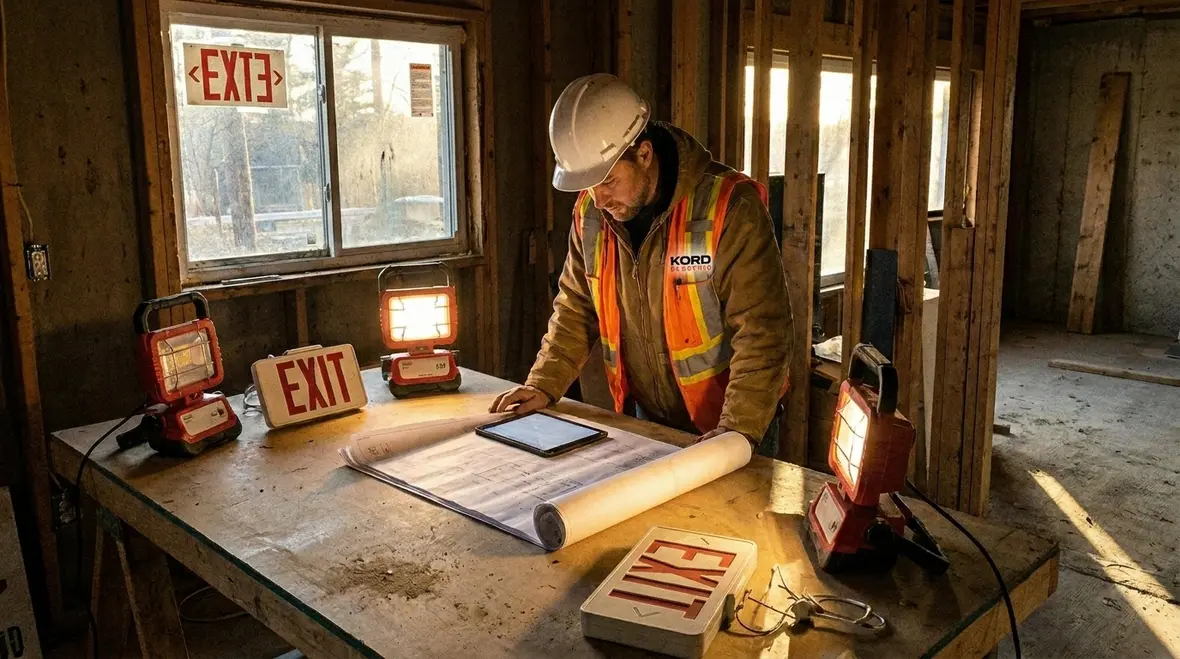
Before testing, we examine the system like we are preparing for a performance review, not a random checklist. We check fixture location, housing condition, labeling, wiring integrity, and the state of the emergency control equipment. Then we verify that signage and lighting work together to guide occupants toward exits.
Next, we make sure the emergency power source is ready. That means confirming battery condition, charging behavior, and the correct transfer operation for the system type. After that, we review the control interface and confirm it can report status properly.
Additionally, we look for common “silent failures” such as loose connections, damaged lenses, corrosion, or missing components. These issues often stay invisible until testing reveals them. And when that happens, the system may not deliver the intended illumination during an outage. We prefer to catch problems early, when fixes take hours instead of days.
How We Execute Emergency Lighting Testing Protocols in the Field
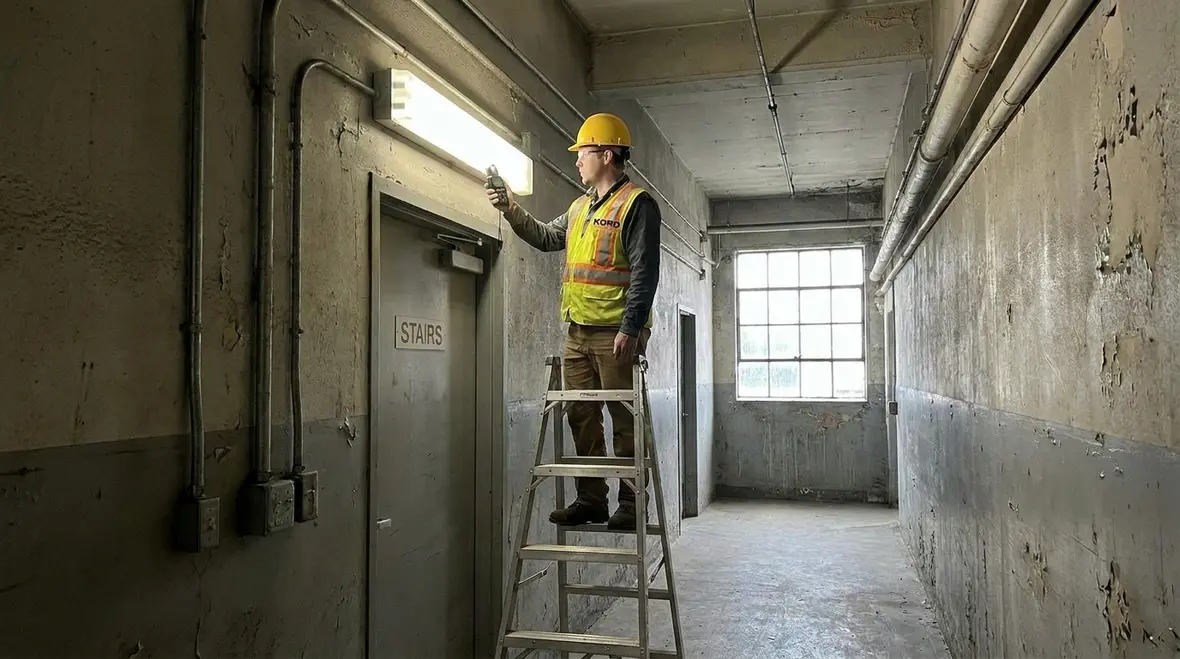
Kord Electric uses emergency lighting testing protocols that work in the real world, not just on paper. We test in a controlled, stepwise way so the facility stays safe and the results remain reliable. First, we coordinate access and timing with the building team to limit disruption. Then we verify that fixtures respond to the emergency command and that the system maintains output for the required duration.
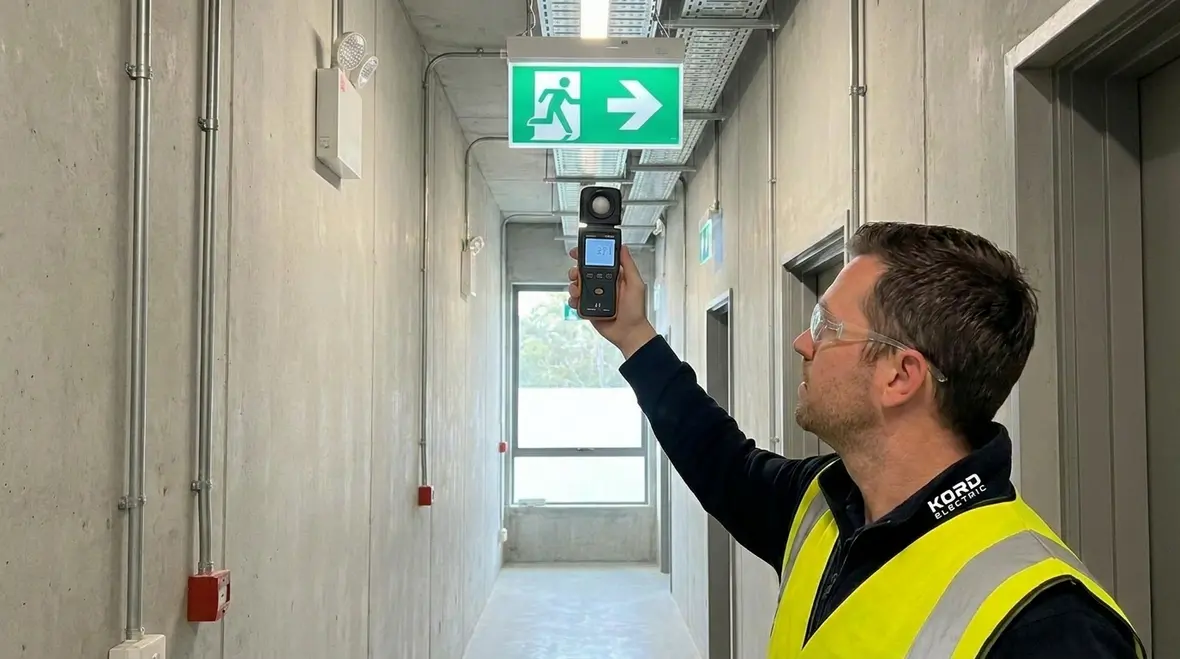
After that, our technicians measure performance and compare it to expected conditions. We document outcomes for each circuit and identify any units that fall outside acceptable thresholds. If we find issues, we do not guess. We isolate the cause, then correct it and retest.
In practice, this means the system does not merely “turn on.” It delivers consistent illumination along the intended egress route. So if a corridor light flickers or a stairwell fixture weakens, we catch it before the next storm, power event, or shift change.
And yes, we do keep it calm. Emergency systems are serious, but our process is not chaotic. We act like professionals, not like that late-night DIY show where everything is held together by hope and duct tape.
Documentation, Traceability, and Audit Ready Reporting
Compliance is not just about passing tests. It is also about proving what happened, when it happened, and what actions followed. Kord Electric builds documentation that supports the building team and helps others respond quickly to audits or incident reviews.
We log the test type, the date, the affected zones, fixture identification, measured results, and any corrective work. When we spot a problem, we record the findings and the repair path. Then, we update the report after retesting so the file reflects the final condition.
Furthermore, our expert service staff explains the outcomes in plain terms. They walk facility teams through patterns, such as recurring battery problems, control module faults, or areas where coverage falls short. That way, the building does not just “clear the requirement.” It improves its safety posture over time.
To keep things organized, we also support long term planning. We help clients understand what to schedule next, so emergency lighting testing protocols do not become a yearly surprise. For organizations building broader reliability strategies, our preventative programs such as Electrical Preventive Maintenance can be aligned with life safety testing to keep everything on a single, predictable calendar.
Common Failure Points We Prevent in Stairways and Corridors
In commercial and industrial spaces, egress routes can get complicated: doors get blocked, corridors shift, and occupancy changes with time. As a result, emergency egress lighting systems can drift out of compliance even when the original installation was correct.
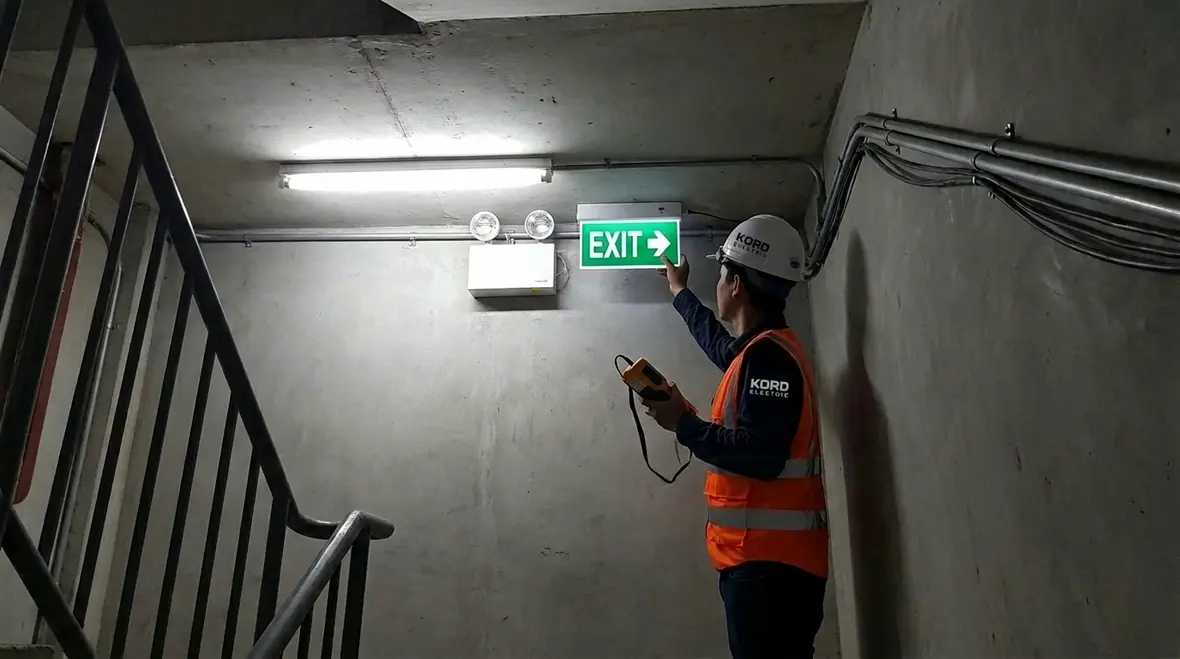
Kord Electric focuses on high risk areas such as stairwells, egress corridors, and points where occupants make decisions. We pay attention to coverage transitions, because people do not walk in straight lines during stress. They slow down, turn, and search. Therefore, the lighting must guide them smoothly.
We often see failures tied to aging components, environmental exposure, and maintenance gaps. For example, fixtures near loading docks may experience vibration or impact. Units in mechanical rooms may face heat and dust. Meanwhile, stairwell fixtures can degrade when coatings or lenses get cloudy over time.
To address these risks, our technicians use a systematic approach: inspect first, test second, correct third, and verify again. That flow avoids rework and helps the building team maintain control. And nobody wants emergency repairs that start at the worst possible time, like during the busiest shift or right before an inspection day.

Maintenance Scheduling That Fits Real Building Operations
Facilities operate on real clocks: shift changes, production schedules, and tenant needs. Kord Electric builds maintenance schedules that fit commercial and industrial routines without sacrificing safety. We help clients set intervals that align with compliance expectations and system design.
We also recommend smart follow ups after repairs. If a battery module fails, we do not just replace it and move on. We look for similar symptoms across the same zones. That approach reduces repeat problems and keeps service costs predictable.
Moreover, we support ongoing awareness. Our expert service staff can provide guidance on what staff should report, such as flickering fixtures, unusual status alerts, or signs of physical damage. When teams notice issues early, we fix them faster.
In short, emergency lighting testing protocols work best when they connect to a broader maintenance plan. Otherwise, you end up treating safety like a fire drill you only practice once a decade. When facilities pair structured emergency egress lighting testing with ongoing programs like Commercial and Industrial Electrical Maintenance Plans, they gain a clearer picture of risk and a smoother path to long term reliability.
FAQ
Ready for Compliance-Grade Emergency Egress Lighting Support?
If your facility needs dependable emergency lighting testing protocols and real documentation, Kord Electric is ready. Our technicians and expert service staff work with commercial and industrial teams to inspect, test, repair, and verify performance with an audit ready paper trail. Do not wait for the next power event to find out what your system can do.
For properties that also need broader electrical support, our dedicated services like Electrical Preventive Maintenance and Emergency Electrical Services can be integrated with your life safety plan so testing, maintenance, and urgent repairs all follow the same structured playbook.
Contact us to schedule an on site assessment, get a clear service plan, and keep egress lighting performance steady when it counts.