EV Charging Infrastructure for Commercial Properties
Scaling EV Charging Infrastructure for Commercial Properties, Starting with Planning
Commercial property owners who want to welcome EV drivers should begin with strong EV charging station infrastructure planning before they pour concrete or sign leases. Kord Electric helps facilities align charger placement, electrical capacity, and safety so the system can grow without turning into an expensive puzzle later. In this article, we break down what teams should consider when they scale, including load planning, site reliability, and maintenance processes. Our expert technicians walk owners through the tradeoffs in plain language, because nobody wins when a “quick install” becomes a long-term headache. And yes, we have heard the classic joke: “The chargers will figure it out.” They will not, but we will.
How to Size Electrical Capacity Without Guesswork
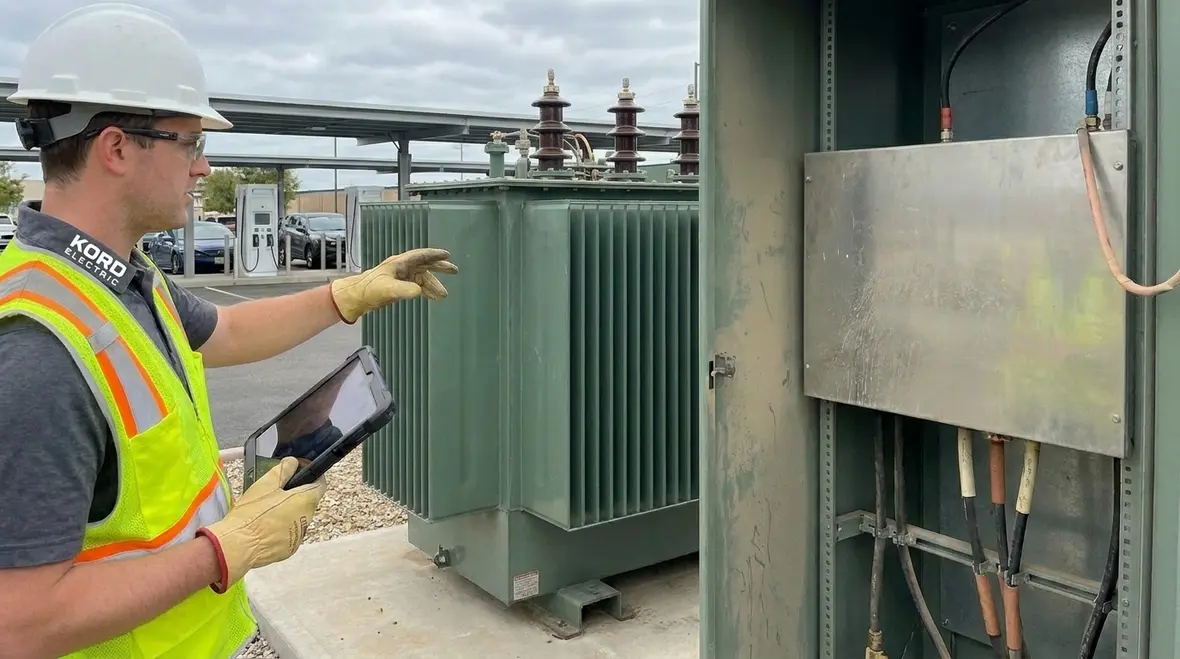
When commercial sites add chargers, they usually add demand. Therefore, the first step is to evaluate existing service size, transformer capacity, switchgear limits, and feeder ratings. Then, we model how charging loads will behave across peak hours, including simultaneous plug in events. This is where EV charging station infrastructure planning earns its keep, because a site that looks fine at 7 a.m. can strain at 5 p.m.
Our approach starts with a site electrical review and a future growth plan. Moreover, we coordinate with the property team to understand expected usage patterns, fleet schedules, and tenant demand. If the facility serves commuters, loads spike differently than if it supports a delivery fleet that charges overnight. As a result, we select the right mix of charger power levels and determine whether the property needs an upgrade or smart load management.
We also consider code requirements and safety margins. For example, wiring runs, panel capacity, heat dissipation, and derating rules must all fit the real environment, not a guess made during a site walk. Our technicians explain these constraints step by step so owners can make decisions with confidence, not hope.
Where Chargers Should Go on a Site That Actually Makes Sense
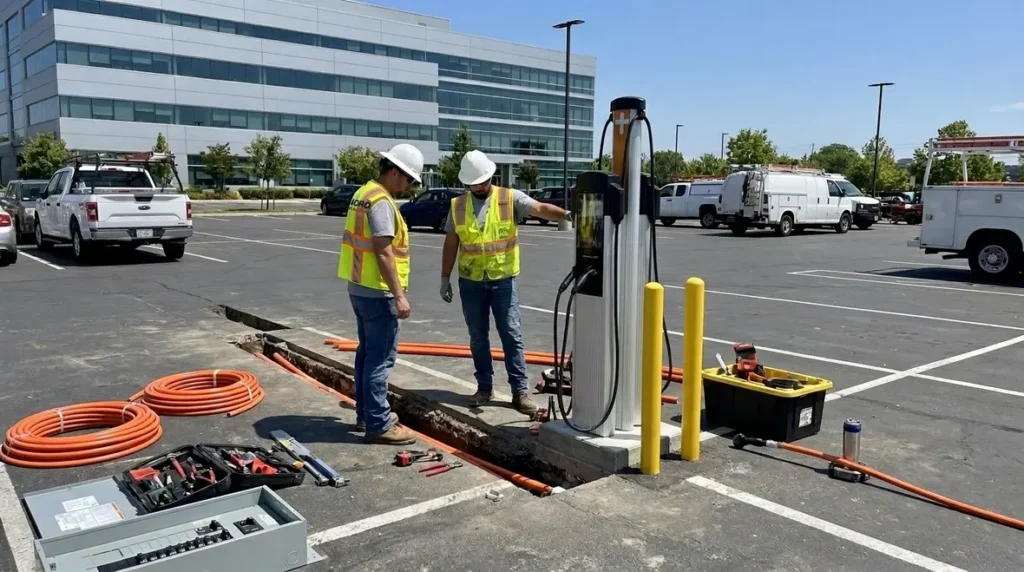
Placement can make or break uptime and user experience. For many commercial properties, the best locations feel obvious, yet the electrical path is the real story. Therefore, we evaluate routes for conduit, trenching needs, surface conditions, and future expansion space. Then we match charger placement to traffic flow, ADA needs, and parking layout. In other words, we keep people moving while keeping electrical work efficient.
Additionally, we think about how chargers will scale. A property that starts with a few stalls should still have a clear plan for adding more later. Consequently, we recommend conduit pathways and power distribution design that supports growth, rather than forcing new cuts and reroutes each time demand increases. It is cheaper to plan the extra stub ups now than to pay for “emergency archaeology” later, digging up pavement because someone counted stalls instead of amperes.
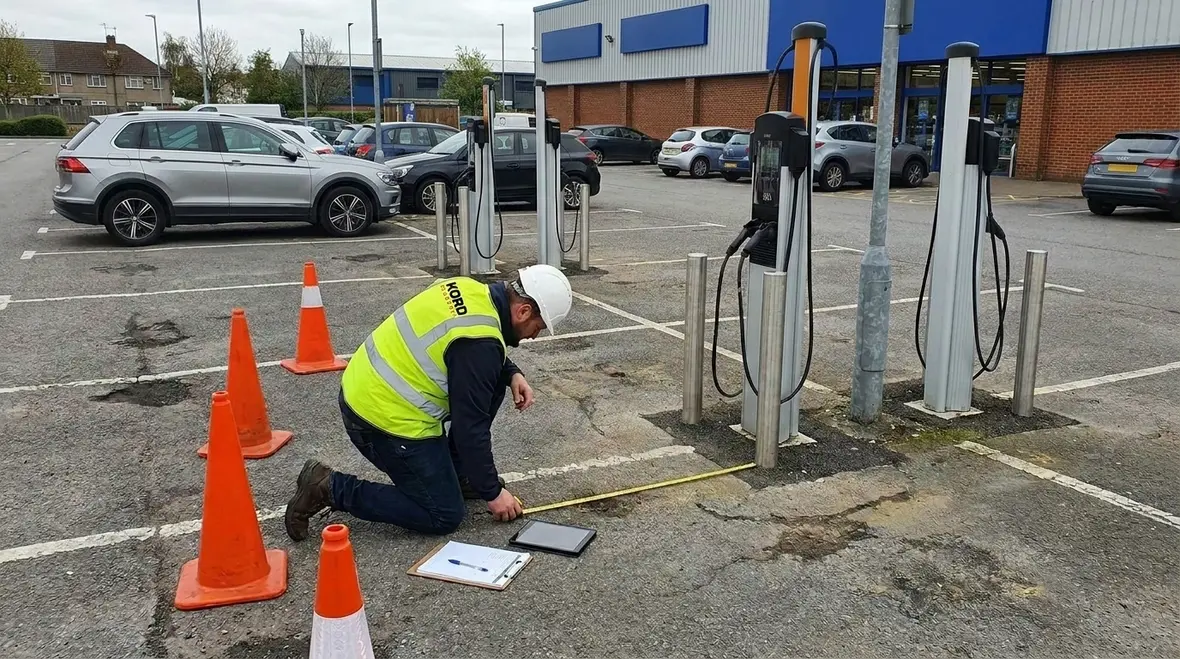
Finally, we consider protection. Bollards, signage, and weather resistance matter in commercial lots where equipment gets hit, blown on, or splashed with all kinds of things that never show up in brochures. Our team coordinates design so the charger stays safe and visible, and so service access stays practical.
Phasing and Project Plans That Reduce Downtime
Scaling does not have to disrupt daily operations. We help owners stage work so the facility keeps running. First, we plan outages around tenant schedules and peak business hours. Then, we sequence the electrical upgrades, cabinet work, conduit pulls, and charger commissioning in a way that reduces downtime and avoids surprises.
Our technicians also build a clear commissioning checklist. That includes verifying grounding and bonding, testing circuit loads, confirming communication links, and validating protection settings. After installation, we run functional checks so chargers start reliably, not with a “we will monitor it” vibe that sounds great until it delays revenue.
Moreover, we coordinate with property managers to define what is needed for onboarding. If a facility offers access for employees, guests, or fleets, the billing and access approach should match the charger architecture. When the design supports the business model, scaling becomes smoother. When it does not, the property ends up rebuilding. Nobody wants to rebuild. Not even the villains in action movies, and they rebuild for fun.
Safety, Reliability, and Protection for Commercial Conditions
Commercial and industrial sites face harsher realities than a simple storefront. Chargers may sit in rain, snow, dust, salt air, and constant foot and vehicle activity. Therefore, safety and durability must lead every decision. Kord Electric designs for code compliance, proper overcurrent protection, and safe fault handling so the system protects people and equipment.
We also focus on environmental factors. That includes planning cable routing, sealing penetrations, and protecting terminations in the right enclosures. In addition, we address electrical noise and communication reliability, especially if chargers connect to networks for monitoring and payment. When communication fails, owners see downtime, and drivers see frustration. As always, the property pays the bill, not the tech company’s support page.
To keep reliability high, we recommend surge protection where it applies and we verify grounding practices that fit the site. Then we test and document everything. Our expert service staff explains what was installed, why it was installed, and how it will be maintained, so owners can build trust and reduce guesswork.
Commercial Maintenance Plans That Keep Scaling Affordable
Owners scale when the system stays reliable. That is why maintenance must be built into the plan, not treated like an afterthought. Kord Electric supports commercial and industrial electrical maintenance planning through structured service options that help facilities manage risk and reduce unexpected downtime. If you want a framework, our blog on commercial and industrial electrical maintenance plans outlines how proactive service can protect assets and keep electrical systems dependable.
From our side, we typically align maintenance with charger usage patterns and the building’s broader electrical health. For example, we may schedule inspections for terminations, cabinet conditions, ventilation performance, and signs of water intrusion. We also review breaker health, torque checks where appropriate, and visual checks for wear. In addition, we confirm firmware and configuration updates when they apply, since software changes can affect how chargers behave under load.
Our expert technicians also guide owners on maintenance logs and how to interpret monitoring data. Therefore, when a charger shows a recurring fault, the owner does not rely on blind troubleshooting. Instead, the service team sees patterns and addresses root causes. And yes, it helps the property avoid the “it worked yesterday, so it must be fine” strategy. That strategy is charming. It is also expensive.
Finally, we recommend a service response approach that fits commercial operations. If the site depends on charging for fleet uptime or tenant satisfaction, response time matters. We help owners set expectations so the property can plan with real timelines.
How to Support Growth for Fleet, Tenants, and Future Demand
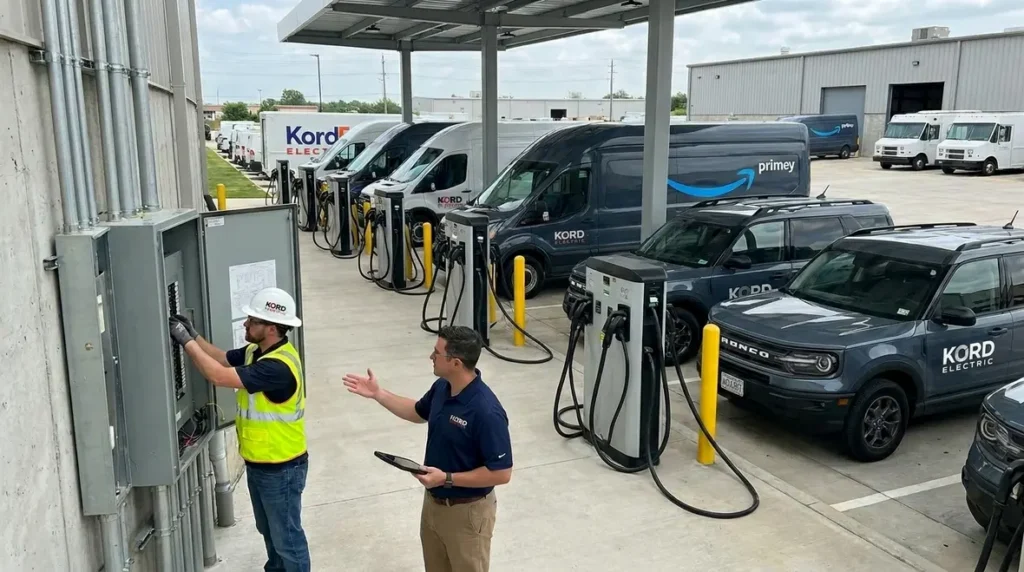
Scaling is not only about adding chargers. It also includes how the property handles access, billing, and system performance as the number of vehicles grows. Therefore, we design for future expansion and also for operational flow. If a site serves fleets, the property may need charge scheduling, reporting, and power prioritization during peak windows. If it serves tenants, the experience must stay consistent and easy.
As demand changes, EV chargers can also shift the electrical load profile. Consequently, we may use smart load management or reserve power strategies so the property avoids repeated panel upgrades. However, owners should not treat load management as magic. It still depends on correct design and safe limits. Our technicians explain this relationship in plain terms so decisions stay grounded.
We also help commercial teams think through contract and procurement planning. When chargers and network services reach end of life at different times, the property can face uneven costs. So we suggest a consistent hardware and service approach that supports long-term reliability. In turn, owners can scale without turning their budget into a suspense thriller.
Ultimately, the best growth plan connects electrical capacity, charger placement, safety systems, and maintenance. When those elements work together, the site can add capacity without breaking the original design.
FAQ: EV Charging Infrastructure for Commercial Property Owners
Conclusion: Let Kord Electric Scale Your Charging with Confidence
Scaling EV charging on commercial property should feel controlled, not chaotic. Kord Electric helps owners plan electrical capacity, place chargers for real-world flow, and protect reliability with a maintenance mindset built for commercial and industrial use. Our technicians explain every step, so decisions stay clear and budgets stay steady. If your facility plans to add chargers this year or next, contact us to review your site and build a growth-ready plan you can trust. Your parking lot does not need another science project. It needs a solid system.
To move from planning into action, explore how our dedicated EV charger installation services support commercial and industrial properties with turnkey design, deployment, and testing tailored to your site.