
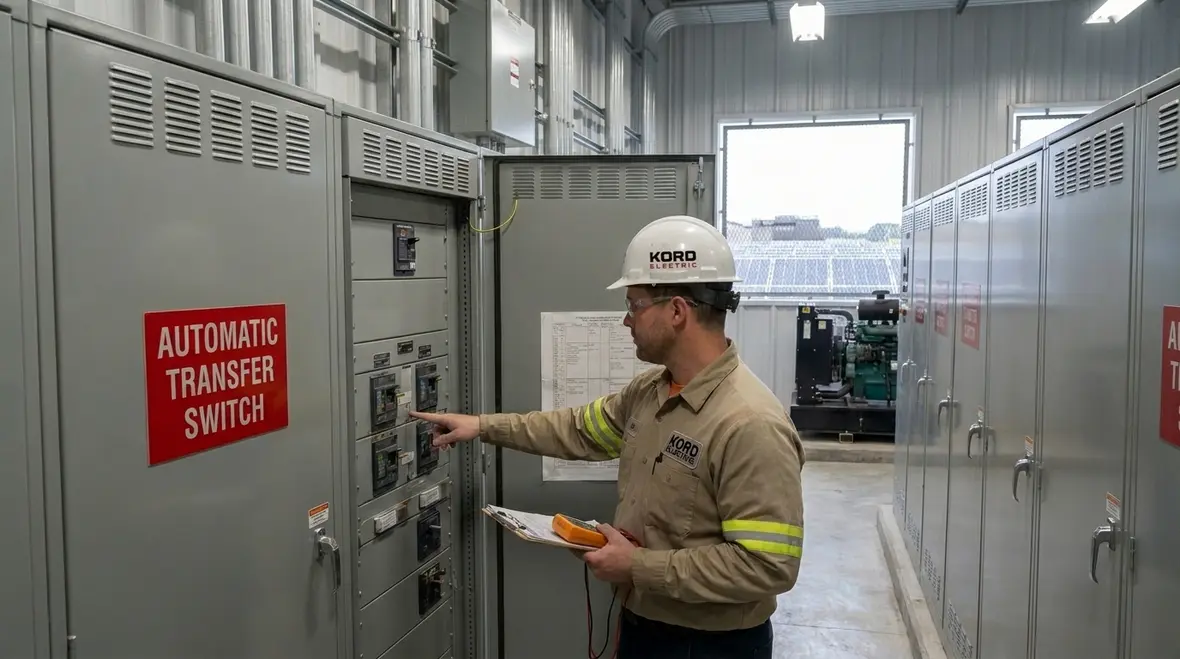
Critical Facility Power Redundancy for Uptime
Kord Electric helps commercial and industrial facilities keep the lights on when the stakes are high. In mission critical facility operations, outages do not just “cause inconvenience.” They disrupt safety systems, halt production lines, and can even affect compliance. That is why we focus on strategic power redundancy, the kind that keeps essential loads running even when a utility feed stumbles. And yes, we have heard the jokes. When the power goes out, people act like their building is a phone with 1 percent battery. But in the real world, a facility needs a plan, not a prayer.
Our technicians and expert service staff explain the steps in plain language, then they implement them with discipline. Others can sell equipment. We help our clients build a dependable electrical system that stays steady during faults, maintenance, and unexpected events.
Why critical facility power redundancy matters for industrial uptime
In most plants and major property buildings, power is not a background utility. It is the backbone that supports control systems, elevators, pumps, HVAC, communications, and life safety devices. Therefore, a sound approach to critical facility power redundancy starts with a simple idea. A facility should not lose vital service from a single failure, a single breaker, or a single maintenance error.
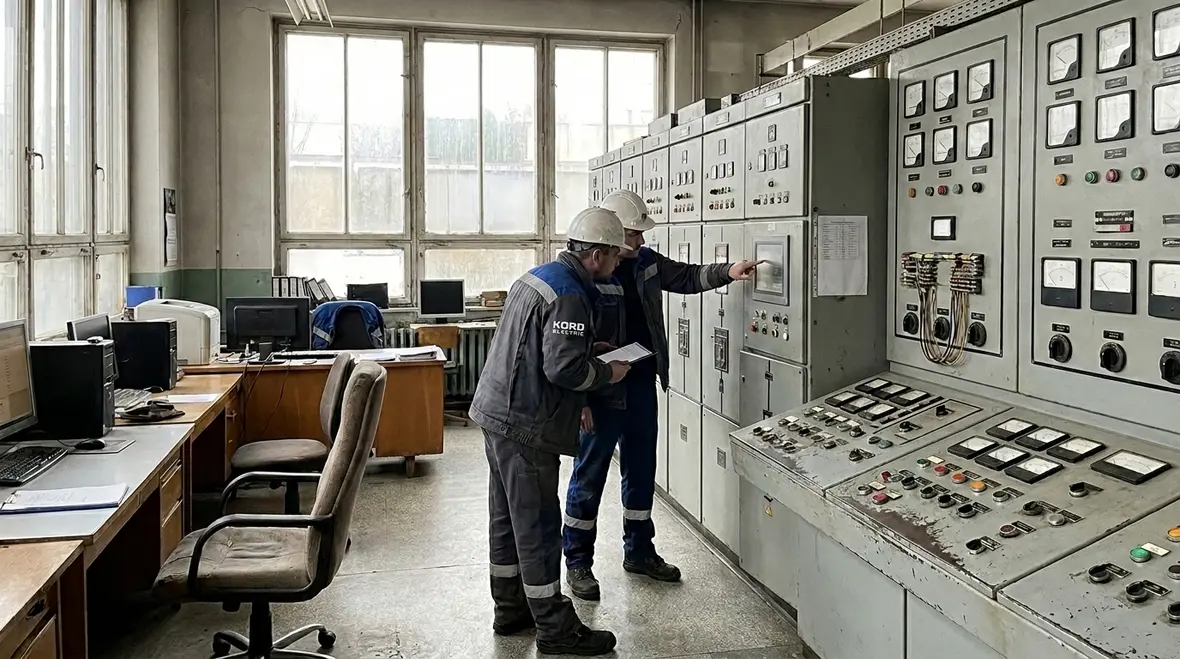
Here is the calm truth our team shares: redundancy is not just “having more gear.” It is having the right alternatives for the right risks. For example, a short transfer delay might be fine for some loads, while other loads need seamless continuity. Additionally, some sites face utility interruptions while others face internal faults or generator issues. So we map the threat, then we design the layers.
When Kord Electric evaluates a site, we look at switching times, load categories, protection coordination, and the path power takes from source to load. In other words, we design the system so that when something fails, the replacement route takes over without drama. And if you are thinking, “Drama is fun,” well, not when your fire alarm panel is staring at darkness.
How power system design creates steady backups
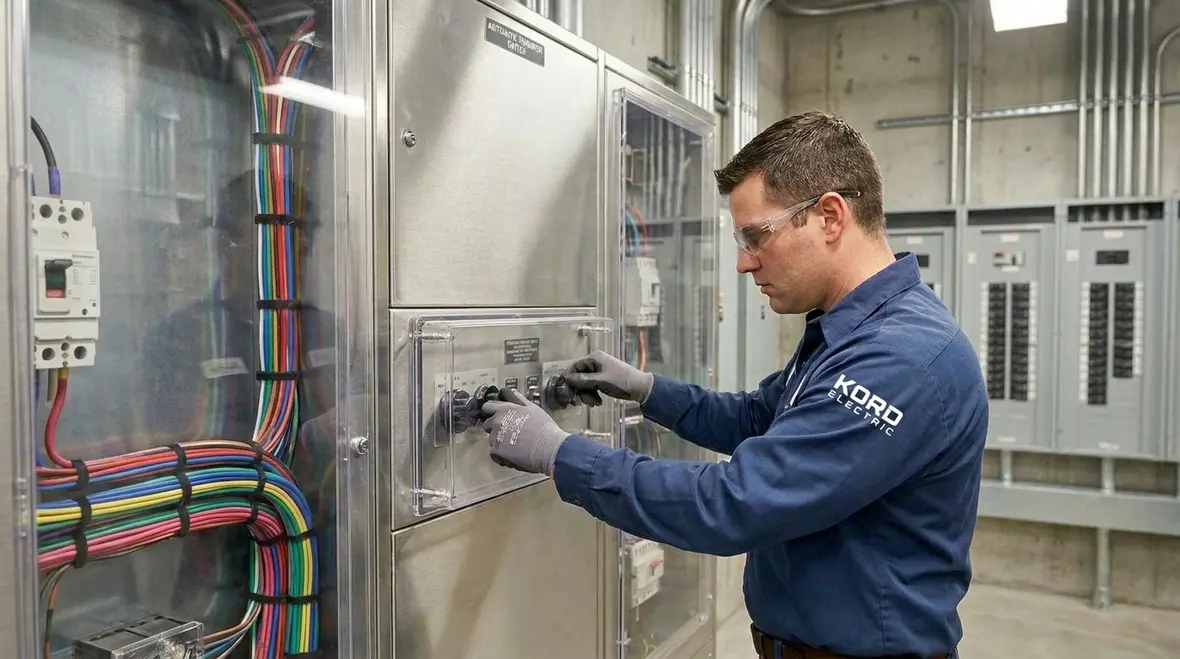
People often picture backup power as a generator that starts during an outage. That can be part of the solution, but it is not the whole story. In practice, strategic power redundancy uses multiple layers: utility feeds, transformers, switchgear, ATS or transfer switches, power conditioning, and proper control logic.
First, we help facilities decide how to split essential loads. A typical method uses life safety, critical process, and support loads as different categories. Then we match each category with the right level of backup. For instance, critical process loads might need rapid transfer and clean power, while support loads might tolerate longer restoration.
Next, we focus on the “how” of switching. Transfer switches, breaker interlocks, and automatic control systems must coordinate with protective relays. Therefore, the system avoids unwanted backfeeding and prevents the standby source from getting dragged down by a fault. Also, coordination reduces nuisance trips that can turn a backup plan into a backup problem.
Our technicians walk clients through diagrams and test results. They also explain what happens during real events, because theory does not prevent downtime. If a relay trips during testing, we want the facility to know why, fix it, and confirm the outcome under simulated conditions.
Integrating solar and electrical systems without risking continuity
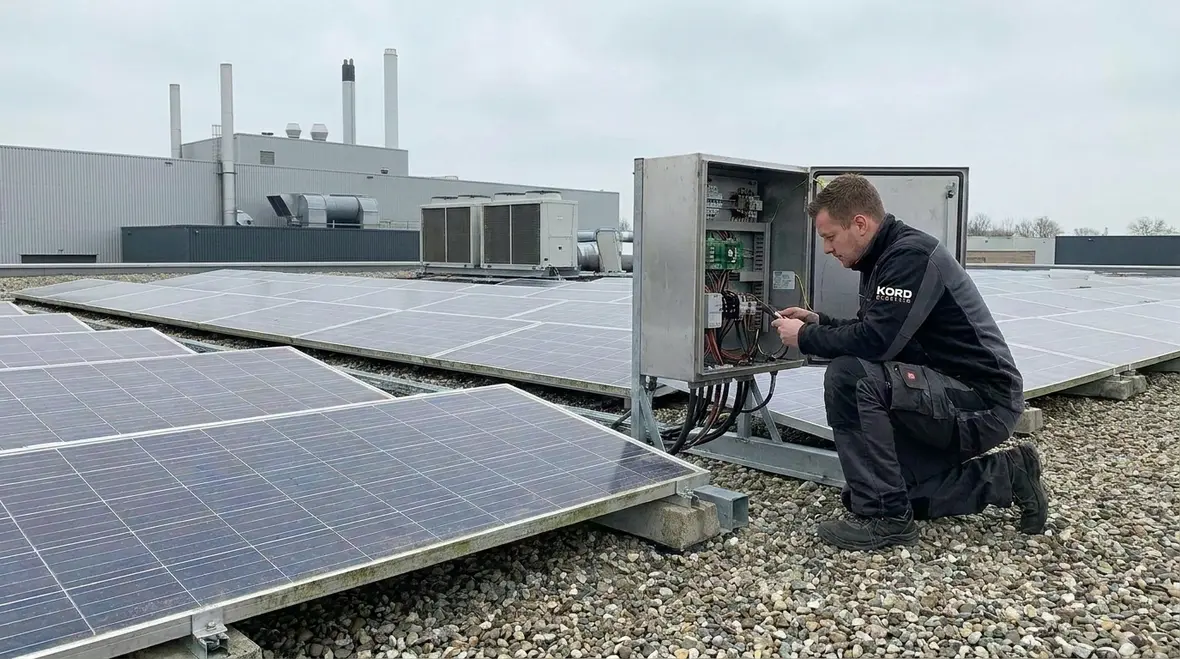
Many commercial and industrial sites now add solar generation, and that brings opportunity and responsibility. A clean solar integration must support the facility’s redundancy goals rather than weaken them. Kord Electric has experience guiding commercial solar panel electrical integration so it works with existing power paths, protection devices, and load priorities.
For instance, a well planned solar electrical integration supports stable operation during normal conditions. Yet the real question is what happens when the grid fails. Without careful design, solar can create operational confusion during outages. Therefore, our approach aims to preserve the critical facility power redundancy strategy. We ensure the electrical design handles islanding rules, inverter behavior, and switching logic in a way that protects people and equipment.
Additionally, we review where solar ties into the electrical one line. We consider how PV output interacts with transfer schemes and how controls manage transitions. In many facilities, it is not enough to “connect the panels.” We must also coordinate protective elements so faults get cleared correctly and do not spread across sources. That is how a building gains resiliency, not chaos.
Our expert service staff explains these details in a practical way. They show what changes in the one line, what relays and breakers respond, and what tests confirm safe behavior. In other words, we help others avoid the classic scenario where solar looks great on sunny days and behaves like a mystery device during an outage. We do not let that happen on our watch. For a deeper dive into how solar ties into commercial distribution, many facility leaders pair this planning with our commercial solar panel electrical integration guide to keep renewable projects aligned with reliability goals.
What redundancy looks like at the panel, switchgear, and bus level
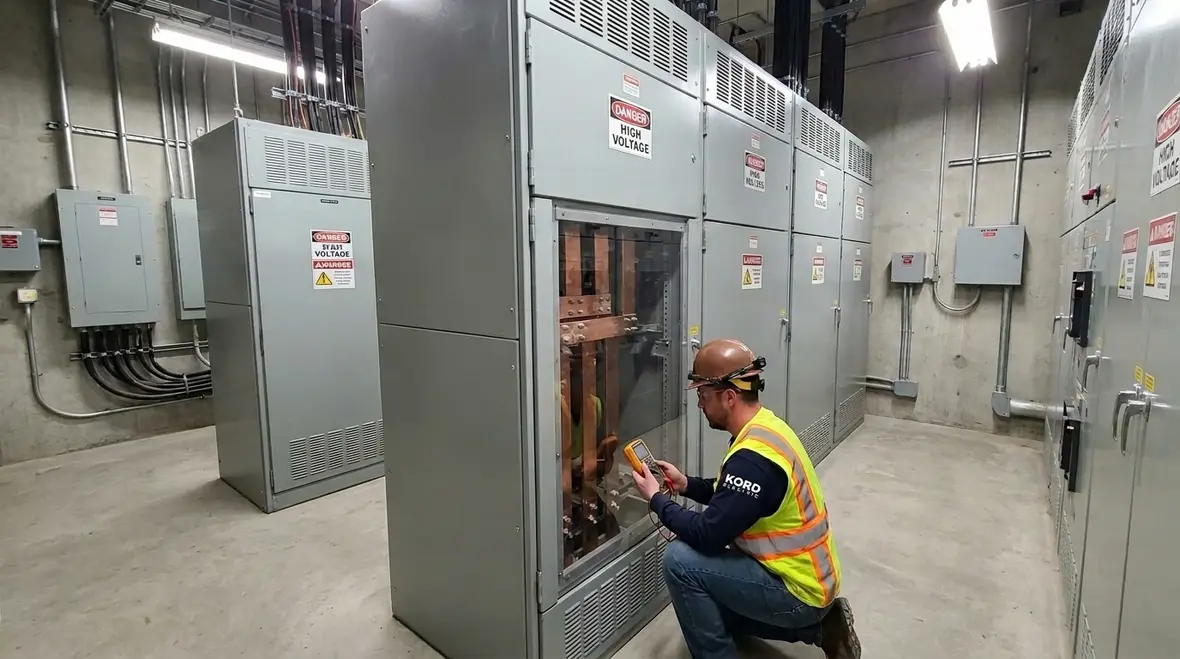
Redundancy must show up where decisions happen: panels, switchgear, and the distribution buses. If a single bus bar failure takes out multiple critical feeders, the system is not truly redundant. So Kord Electric focuses on the physical and functional structure of distribution.
First, we examine bus configurations and feeder routes. Then we design for separation where it matters. Dual paths, selective switching, and well planned feeder arrangement keep critical loads alive when one path is under maintenance or exposed to a fault. Next, we verify that protective settings align with equipment ratings and upstream devices. That coordination prevents cascading failures.
Then we address the human factor. Facility teams need clear procedures for maintenance and testing. Therefore, we help others plan lockout steps, labeling, and status indicators so technicians can work safely. Our technicians also explain the “why” behind those procedures so the system stays predictable.
And here is a pop culture moment for the serious part. In the movies, backup plans always work. In real life, sometimes the backup plan works, and then a checklist is missing. So we set expectations early and confirm operating states through functional testing.
Testing, commissioning, and maintenance that actually reduce risk
Design is only the first half. Execution and verification make redundancy real. Kord Electric supports commercial and industrial sites through commissioning strategies that confirm the system does what it promises.
We plan tests for transfer devices, generator synchronization where applicable, relay settings, and protective coordination. We also validate control logic that handles source selection and load management. Since redundancy relies on automatic behavior, testing must prove the sequence under realistic scenarios.
Furthermore, maintenance must stay consistent. Components that manage redundancy, like breakers, relays, and control power supplies, need scheduled inspection and preventive replacement where required. Therefore, Kord Electric helps others build a maintenance rhythm that matches the facility’s operating schedule and risk tolerance.
Our expert service staff then explains maintenance outcomes and trends, not just ticket closures. They review what failed, what near failed, and what will likely need attention soon. That approach helps facility leaders plan budgets and avoid surprise downtime. Nobody enjoys surprise downtime. Even villains do not like it, and they have much cooler capes.
Redundancy planning steps for major property buildings and plants
When others attempt power redundancy, they sometimes start with hardware. We start with priorities. Kord Electric uses a planning sequence that fits commercial and industrial facilities, including major property buildings where many systems compete for power reliability.
First, we gather load lists and define categories for essential service. Then we confirm which loads require fast transfer, which can ride through, and which can wait for a longer restoration window. Next, we evaluate sources, including utility service, on site generation options, and solar contributions when present.
After that, we build the electrical architecture. We define switching methods, protection coordination goals, and the physical separation required for dependable operation. Finally, we create a testing and training plan. That includes technician walkthroughs, clear operating instructions, and functional tests that simulate real events.
Because strategic designs can still fail due to unclear operations, we emphasize training. Our technicians explain how the system responds in each scenario so facility staff can make decisions calmly. Then we align documentation with the actual one line and field hardware so maintenance teams do not guess under pressure.
For sites that want to connect redundancy planning with regional support, many of our factory and plant clients also coordinate this work with our broader Los Angeles County electrical services so uptime strategies match real operating schedules and local conditions.
FAQ about critical facility power redundancy for commercial and industrial sites
When power redundancy is built right, uptime stops being luck
Kord Electric helps commercial and industrial facilities build strategic power redundancy that protects essential operations during outages, maintenance, and faults. We design layered electrical paths, coordinate protection and switching, and integrate solar when it supports the resilience plan. Then our technicians and expert service staff test and maintain the system so it behaves as designed, not as hoped. If you want dependable continuity for your facility, contact Kord Electric today for an assessment and a clear plan forward.
For facilities that want their critical facility power redundancy strategy to connect seamlessly with broader reliability and upgrade work, our team can also align redundancy projects with related services such as regional troubleshooting support, preventive maintenance, and EV charging or solar integration planning so your entire electrical system moves toward the same uptime goals.
Whether you operate a manufacturing plant, a data heavy commercial property, or a campus of major buildings, the goal is the same: essential loads should not depend on luck. With disciplined design, testing, and maintenance, your electrical backbone can stay calm during faults, behave predictably during transfers, and support the long term reliability your operations demand.
When you are ready to move from “hoping the lights stay on” to building a documented, tested, and maintainable redundancy plan, Kord Electric is ready to help you map every layer—from sources and switchgear to panels, controls, and solar integration—into one clear path.


