Smart Lighting ROI Analysis for Commercial Buildings
At Kord Electric, we help commercial and industrial facilities make smart lighting decisions with clear numbers, not guesswork. In our smart lighting ROI analysis, we typically compare the total annual cost of today’s lighting and controls against the smarter option, then we factor in incentives, maintenance changes, and energy rates. Then we translate it into a payback window and long term savings that facility leaders can actually defend. In other words, we take the “sounds good” pitch and replace it with a spreadsheet that holds up in the real world. And yes, we still explain it in plain language, because not everyone wants to read a manual like it is a spy thriller.
What is smart lighting ROI analysis for commercial buildings?
Smart lighting ROI analysis measures how much return a building earns after installing connected lighting controls and sensors. For commercial and industrial buildings, the return usually comes from three buckets that move together. First, energy use drops because lights respond to occupancy and daylight. Next, controls reduce waste time, such as lights running in empty bays or over-lit offices. Finally, smarter operation often improves maintenance planning, which can reduce labor and downtime.
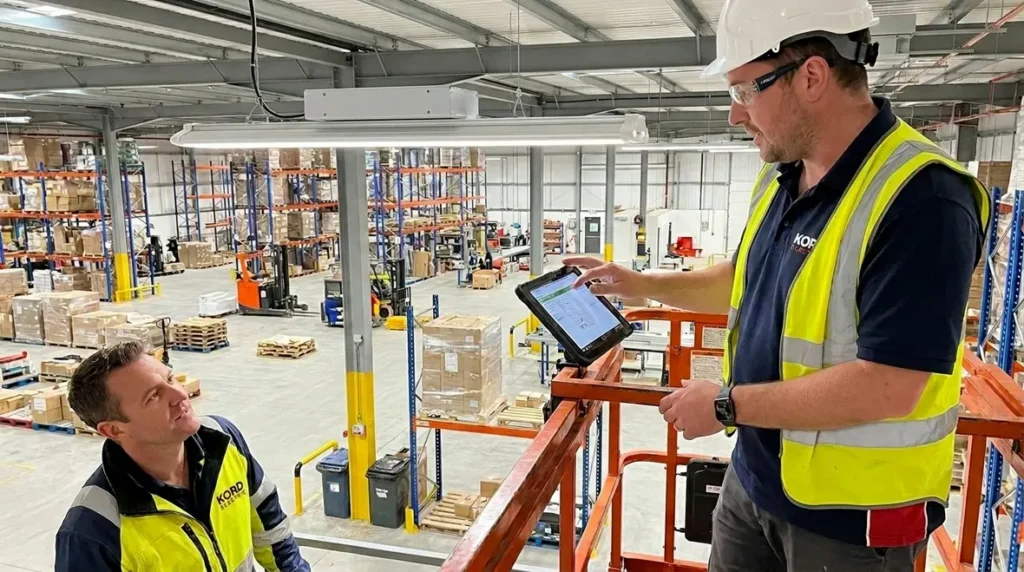
However, ROI does not live in a vacuum. We also look at capital cost, commissioning time, and integration with building systems. Therefore, we ask what the facility is currently doing, what it is paying for, and where the waste hides. Then our technicians walk stakeholders through the logic step by step so nobody feels trapped in technical fog.

When property managers and operations leaders compare options, this kind of smart lighting ROI analysis keeps the conversation grounded. Instead of arguing over which controls sound cooler, they can see where money leaves the building today and how sensors, dimming, and scheduling change that picture tomorrow.
What numbers do we use when calculating ROI?
To calculate ROI, we build a model that starts with baseline lighting cost and then predicts the new cost with smart lighting controls. We can do this quickly, but we do not do it lazily. Here is how we typically structure the key inputs.
1) Baseline energy cost
We use current electricity consumption, fixture type, operating hours, and demand charges where they apply. If a property already has partial controls, we adjust for those savings instead of pretending the lights run 24 7. This keeps the analysis honest.
2) Projected energy reduction
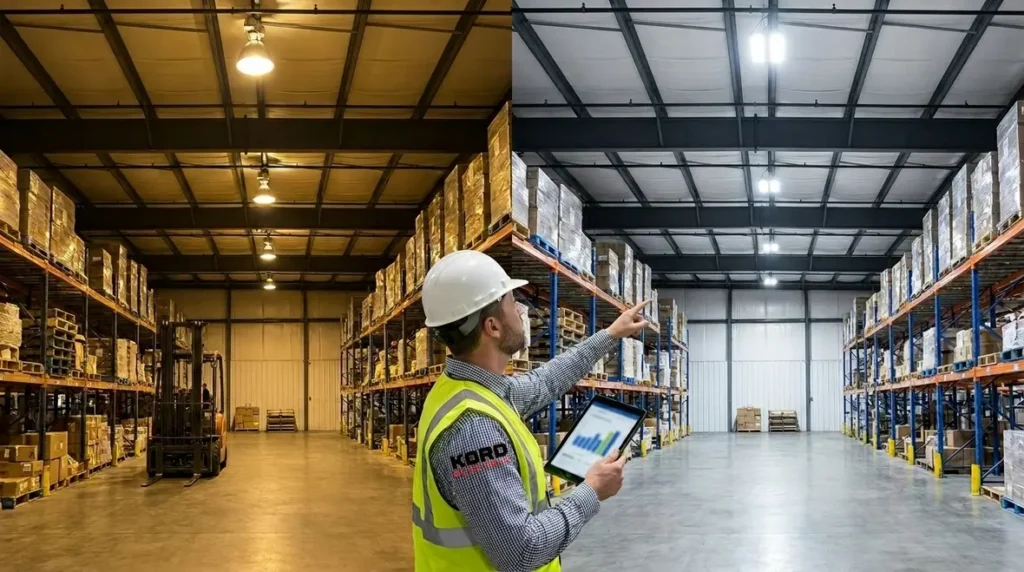
Smart systems vary by layout and usage, so we forecast savings based on occupancy patterns, daylight availability, and control settings. For example, warehouse zones often benefit from scheduling and occupancy sensing, while office areas benefit from daylight dimming and zone control.
3) Installation and commissioning cost
This includes hardware, wiring or retrofits where needed, gateway or network components, and labor. Also, we include commissioning time, because a system that works on day one but not on day ninety is still a problem.
4) Maintenance and service changes
Maintenance affects ROI. When controls reduce unnecessary lamp and driver cycling, the facility can extend service intervals and lower call volume. Our team also supports proactive inspections.
5) Incentives and utility programs
Whenever incentives apply, they improve payback. We account for these if the facility qualifies.
And because smart lighting does not exist alone, we align the controls strategy with electrical infrastructure. When properties plan broader electrical work, they often need to maintain distribution equipment too. In that realm, we point leaders to our detailed guidance on NFPA 70B electrical panels and switchgear maintenance, since reliable electrical gear protects the performance of the lighting system.
In many projects, we also reference related code topics such as commercial lighting requirements and installation practices. For facilities across California, that might include resources like Title 24-focused lighting compliance or broader electrical preventive maintenance planning that keeps the whole system steady while the smart controls do their job.

Smart lighting ROI analysis stays strongest when all these cost inputs live in one place. That way, facility leaders can see exactly how each assumption affects payback, and they can defend the project when someone in finance asks, “Where did this number come from?”
How do we estimate energy savings without guessing?
First, we measure or verify the real operating conditions. Then we apply control logic to those conditions. Instead of relying on generic percentages, we map zones and schedules. For example, we treat a manufacturing floor like it behaves differently than a conference corridor. We then evaluate how sensors will dim lights, how quickly they will respond, and how daylight will offset output near windows.
Next, we model the likely run time reduction. Then we estimate lumen output behavior under dimming. Finally, we check the impact on illumination levels where safety or code requirements matter. This matters because a “savings number” that breaks usability is just expensive sadness.
Our expert service staff also helps stakeholders understand what changes after deployment. Therefore, they explain how occupancy settings, override behavior, and time delays affect comfort and energy. In practice, we often find that the biggest savings come from fewer hours at full output, not from turning lights off instantly like a magic trick. Facilities tend to get better results when the system matches how people and processes actually move.
This is where smart lighting ROI analysis overlaps with topics like automated lighting control strategies, Title 24 code requirements, and even advanced features such as daylight harvesting. When the model captures how all of those behaviors play out in real rooms with real people, the final savings number looks less like a marketing claim and more like something you could show in a quarterly review.

Because we treat each facility like its own case study, the same smart lighting package might show a different ROI profile in two neighboring buildings. That is not a problem; it is the point. When you rely on real operating data, the analysis adjusts to the building instead of forcing the building to match the brochure.
Why maintenance and electrical reliability change the ROI story
Commercial and industrial facilities usually judge ROI by utility bills first. Yet, the full return comes from reliability and maintenance changes too. Smart lighting adds controls, networks, and drivers that must remain stable. That is where good electrical maintenance matters.
At Kord Electric, we do not treat the lighting decision as a standalone purchase. Instead, we connect it to the health of the electrical panels and switchgear that feed the lighting loads. If those systems run beyond their maintenance window, they can create voltage issues, heat, and nuisance problems that reduce lighting performance. And while smart controls can adapt, they cannot fix deteriorating infrastructure.
In our guidance on NFPA 70B panel and switchgear maintenance, we emphasize that planned care supports safe, dependable operation. We follow a maintenance approach that supports inspections, cleaning where appropriate, torque verification, and condition checks based on the environment and load profile. When electrical equipment stays healthy, controls run as designed and faults become less frequent. As a result, the facility avoids unplanned downtime and emergency calls, and ROI improves because the system behaves like it should.
Yes, that means ROI is not only about watts. It is also about fewer interruptions. And anyone who has ever watched a lighting issue become an afternoon “we will figure it out later” event knows that later can get pricey.
Because of that connection, many smart lighting ROI projects pair naturally with broader electrical preventive maintenance. When facilities build a plan that covers panels, switchgear, and smart controls under one umbrella, they get fewer surprises and a clearer picture of how their lighting investment behaves over five or ten years instead of just the first twelve months.
How do we evaluate total cost of ownership and payback time?
After we estimate savings, we translate everything into total cost of ownership. We then compare it to what the facility would spend without smart lighting. In this step, we include lifecycle costs so the ROI analysis stays grounded.
Total cost of ownership includes:
Upfront costs for equipment, installation, and commissioning
Ongoing energy costs based on predicted run time and dimming behavior
Service and maintenance such as inspections, component replacement intervals, and potential software updates
Training and adjustments for occupants and operations teams
Risk controls for cybersecurity and network reliability where the building uses connected systems
Then we compute payback time. We typically present it in plain terms such as: “At current rates and usage, the investment returns in X months.” Next, we calculate net savings over a selected horizon, often three to five years, depending on financing and building goals.
To keep the decision moving, we also run scenarios. If energy rates rise or usage shifts, the outcome changes. Likewise, if a site uses extended overtime or changes shifts, the model adapts. That way, others do not have to treat ROI like a horoscope. It stays measurable.
When needed, we connect these numbers to related decision tools such as recessed lighting cost guides or automated control benefit comparisons from our broader blog library. Smart lighting ROI analysis works best when decision makers can zoom out from the spreadsheet and see how fixture choices, control strategies, and maintenance plans all affect the same bottom line.
Where do smart lighting ROI and performance show up fastest?
Not every zone returns savings at the same speed. We prioritize areas where occupancy and daylight variation create obvious waste. For many commercial and industrial properties, smart lighting ROI analysis tends to show strong early results in the following environments.
Warehouses and distribution centers where large zones operate only parts of the day
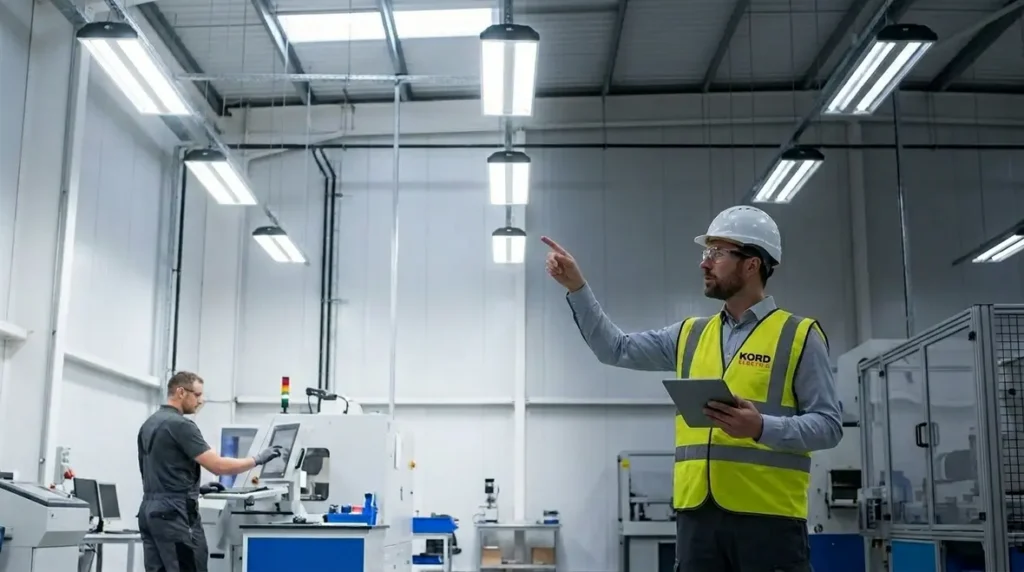
Manufacturing and production spaces with shift-based occupancy and variable process lighting needs
Office and campus facilities where daylight dimming can reduce glare and energy at the same time
Parking garages and exterior corridors where motion sensing and scheduling reduce unnecessary full output
Conference rooms and shared spaces that often sit unused for long stretches
Meanwhile, we sometimes see slower results in areas with steady occupancy and near constant full use. Yet even there, the facility may still gain value through improved comfort, consistent lighting levels, and better operational control.
Our expert service staff helps leaders set expectations. Therefore, when we recommend smart lighting, we explain what the system will do, what it will not do, and why the numbers make sense for that exact property. That is how ROI stays credible across stakeholders.
For organizations operating across regions like Los Angeles County, that clarity matters even more. Properties may differ in schedules, tenant mix, and code requirements, but they can still rely on a common framework for smart lighting ROI analysis that compares apples to apples and keeps future electrical projects—from EV charging to reliability upgrades—on a coordinated track.
FAQ: Smart lighting ROI for commercial and industrial buildings
What about code and safety requirements for smart lighting?
We align control settings and lighting behavior with applicable requirements and usability needs so the system maintains proper illumination. For facilities operating under California’s current commercial lighting code, that includes making sure smart strategies such as scheduling, daylight harvesting, and occupancy sensing work hand in hand with Title 24 expectations rather than fighting them.
Do we need to integrate smart lighting with other building systems?
Often it helps, but we evaluate what is necessary for your facility. We focus on practical integration that supports operations. In some buildings, that means connecting smart lighting to building management systems or security controls; in others, it means keeping things simpler while still capturing the full value of the smart lighting ROI analysis.
Do smart lighting systems reduce electrical issues?
Smart controls can reduce unnecessary load time, but they do not replace electrical maintenance. Healthy panels and switchgear still matter. When facilities pair smart lighting with structured electrical preventive maintenance and regional support such as Los Angeles County electrical services, they usually see better long term ROI and fewer surprise outages.
Conclusion: Let Kord Electric run the numbers for your facility
If you lead a commercial or industrial property, you deserve ROI that stands up to real scrutiny. Kord Electric delivers smart lighting ROI analysis with site specific data, clear cost inputs, and practical expectations. Our technicians explain the decisions in plain language, and our expert service team supports the electrical reliability you need for long term performance. Reach out for an assessment and we will map your zones, estimate savings, and present a payback story you can take to your team with confidence. Let us turn lighting from a guess into a plan.
If smart lighting is part of a larger upgrade plan for your facility, we can also connect it with broader electrical preventive maintenance, EV charging infrastructure planning, or lighting installation projects so the entire system moves forward together. Our goal is simple: help you turn every kilowatt, control decision, and maintenance visit into a return that your organization can actually measure.
When you are ready to see what smart lighting ROI analysis looks like for your exact site, Kord Electric is ready to build the model, walk the floors, and translate the results into a clear, defensible upgrade path.