
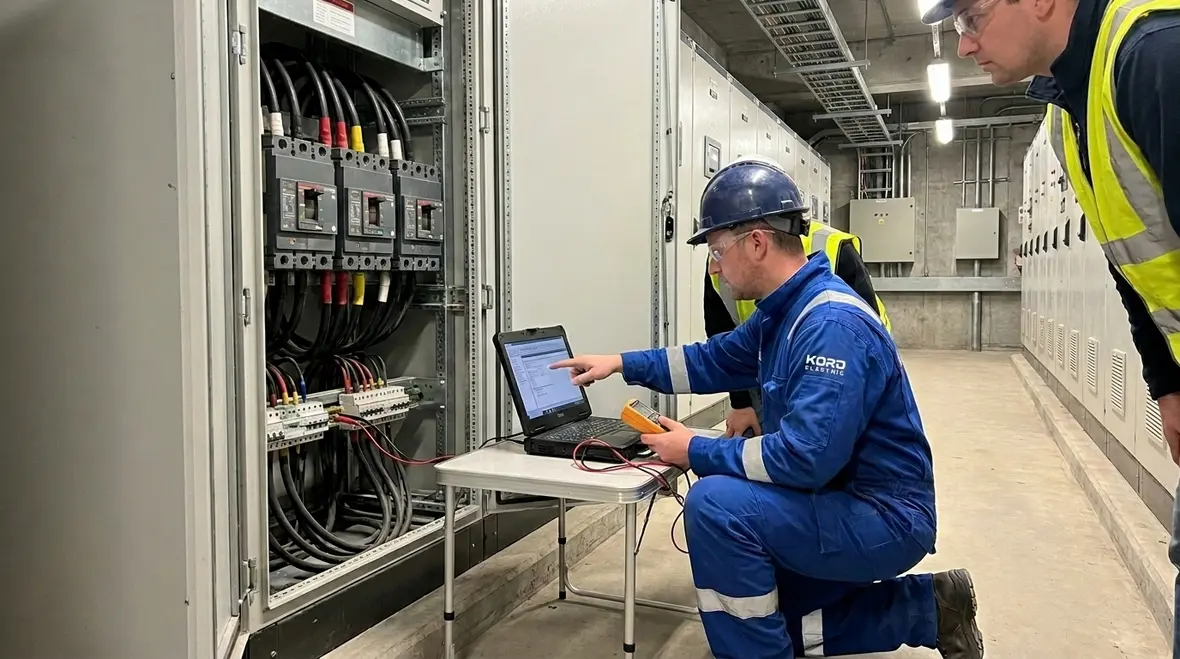
Critical Infrastructure Electrical Reliability Testing
Critical infrastructure electrical reliability testing is where Kord Electric starts, before a single breaker trips or a critical system slows down. We run structured checks that help commercial and industrial facilities spot weak links in time. Then our team of technicians and expert service staff explains the findings in plain language, so facility leaders can act with confidence. Because when power matters, guesswork is not a strategy. And yes, we have heard the classic plan: “Let’s wait until it fails.” That plan works great in jokes, not in data centers, hospitals, plants, and major property buildings.
How we protect uptime in critical facilities
Critical facilities do not simply “use electricity.” They depend on it, sometimes every second of the day. Therefore, Kord Electric focuses on reliability as a system, not as a single component. We treat the electrical distribution chain like a team: if one player misses a pass, the whole play breaks down.
To protect uptime, we begin with a baseline view. Then we evaluate equipment health, wiring condition, connections, and protective device behavior. As we do this, our technicians walk operators through what the results mean and what changes reduce risk.
And because this is real life, not a sitcom, we also plan for the moments when something goes wrong. We help sites prepare for maintenance windows, coordinate outages, and align testing with how the facility runs. That way, downtime does not surprise anyone.
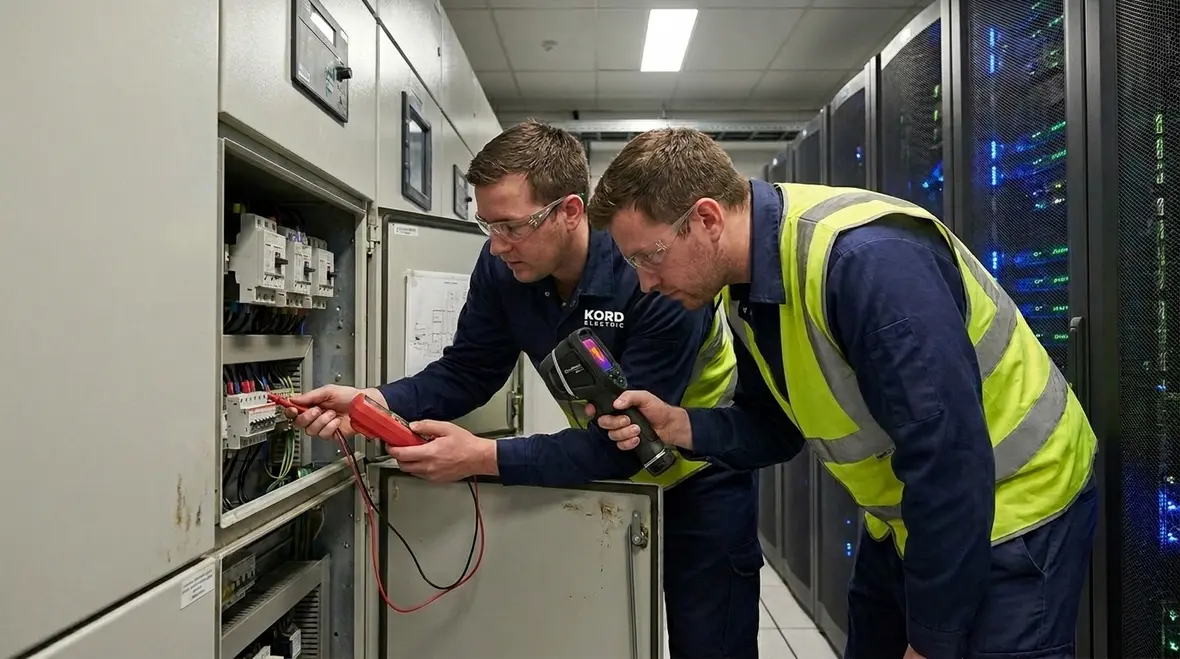
Electrical risk mapping for power distribution health
Facility leaders often ask where to start. So, we start by mapping electrical risk across the distribution path. First, we review one line diagrams and as built documentation. Next, we inspect switchgear, transformers, feeders, panels, and key loads that support mission critical operations.
Then we connect the dots between failure modes and real consequences. For instance, a small issue at a bus connection may look minor, yet it can lead to overheating, nuisance trips, or a cascade event that affects multiple systems. In addition, we examine how load patterns change across shifts, seasons, and project updates.
From there, we create a practical plan: what to test, what to measure, and what to repair now versus later. And if someone says, “We already do maintenance,” we respect that. Still, maintenance without targeted testing can miss hidden problems that only show up under real load conditions.
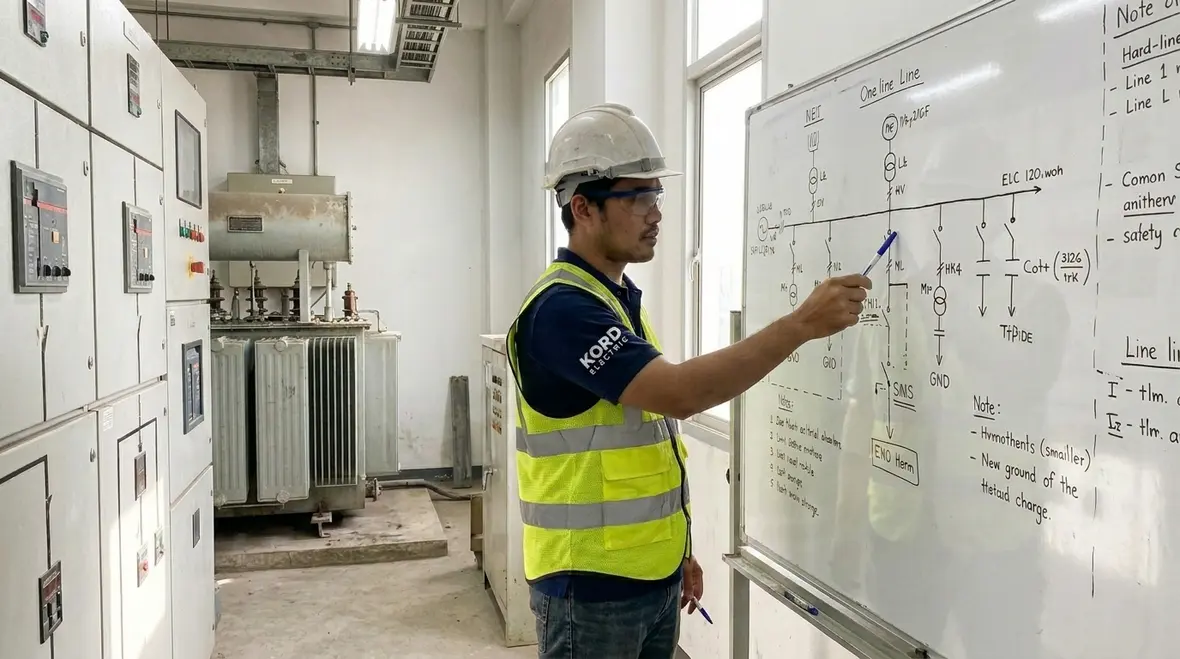
Reliability strategies that reduce unexpected outages
Unexpected outages usually have roots long before the event. Therefore, Kord Electric uses layered reliability strategies. We do not rely on one test or one report. Instead, we combine field checks, condition assessments, and verification of protective coordination.
When we find issues, we act in a way that fits how commercial and industrial facilities operate. Some repairs can wait for planned downtime. Others cannot. Our technicians explain the urgency and the impact, and they outline options that match the site budget and timeline.
As an example, we often see problems that look “electrical,” yet show up as operational pain. Flicker, intermittent alarms, or recurring trips can cause staff to lose trust in equipment. Then they end up resetting things instead of fixing them. We help break that cycle through testing, documentation, and clear repair paths.
Also, we keep the human side in mind. People run the building, and people need simple guidance. So we offer training moments and walkthroughs that make equipment behavior easier to understand.
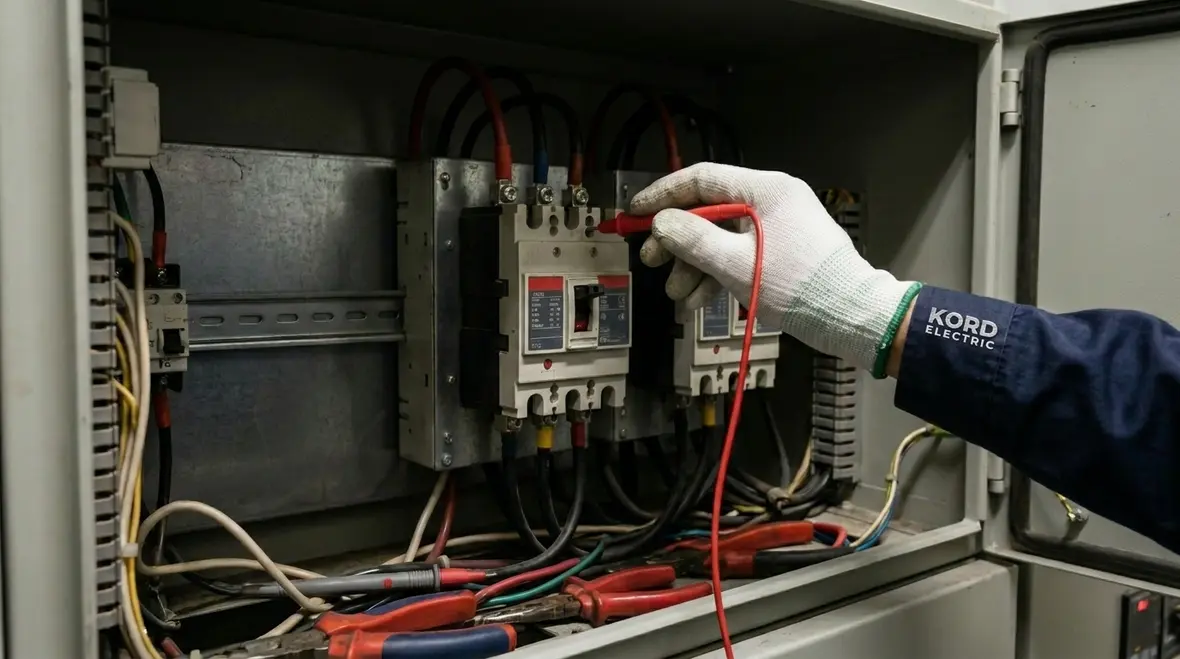
Switchgear, feeders, and breakers: what we test and why
Because many critical systems rely on switchgear and protective devices, Kord Electric pays close attention to these areas. We test to confirm the electrical system behaves as designed. Then we verify that the protection scheme protects the load instead of adding chaos.
Typical reliability work includes verification of insulation condition, assessment of connection integrity, thermal and electrical measurements, and evaluation of breaker and relay performance. We also inspect grounding and bonding, since grounding problems can create unexpected risks during faults.
Now, here is the part people do not always say out loud. Some equipment fails quietly first. Then, when a facility faces peak load or a transient event, it fails “loudly.” In that moment, teams scramble. Therefore, our approach aims to find what is quietly wrong before the building experiences the drama.
And yes, if a facility manager tells us, “It’s been fine for years,” we smile politely. Years of “fine” usually just means the next failure has not rolled into the schedule yet.

When upgrades are necessary: budgeting with confidence
Testing often shows that the best path to uptime is an upgrade. However, upgrades can feel expensive, especially when leaders are juggling budgets and operational demands. So we help facilities plan upgrade scope in a way that supports reliability goals.
Sometimes, electrical work teams expand beyond power distribution into lighting modernization and control improvements. For facilities that need better lighting and reduced maintenance costs, we reference our own guidance on upgrade planning and costs. For example, our commercial lighting upgrade cost guide helps building owners understand what typically drives pricing, what factors can change the total, and how to think about value rather than just sticker shock.
In the same spirit, our technicians explain upgrade options for power systems and life safety loads. As a result, facility leaders can compare repair versus replace, understand schedule impacts, and avoid stop work surprises.
Then we coordinate the work so the site stays online as much as possible. We sequence tasks and align them with planned outages. And when a project does not require full shutdown, we pursue solutions that reduce interruption.
Dual focus: reliability metrics and clear reporting
Great testing means little if nobody can use the results. Therefore, Kord Electric builds reporting around decisions. We share what we measured, what we found, and what it means for uptime. Then we prioritize actions based on risk.
In addition, we support facilities with reliability metrics that help them track progress over time. One team can review the data. Another team can follow repair actions. Then leadership sees how reliability improves, not just that “something was tested.”
Our expert service staff also explains results in a way that matches the audience. Engineers want technical clarity. Operations teams want practical steps. And executives want confidence. We deliver each with the right level of detail.
FAQ
Next steps with Kord Electric
If your facility runs on power that cannot fail, Kord Electric can help you protect uptime with targeted testing, clear reporting, and expert repair planning for commercial and industrial sites. First, we review your electrical system and operating needs. Then we schedule critical infrastructure electrical reliability testing that fits your timeline. After that, our technicians explain the results in plain language and recommend actions with risk in mind. Call Kord Electric now to map reliability gaps and move from hope to proof.
For organizations that want ongoing support beyond a single project, connecting critical infrastructure electrical reliability testing with a broader electrical preventive maintenance program helps keep distribution equipment, life safety circuits, and emergency systems in reliable shape year after year.
When you are ready to turn “we think it’s fine” into documented performance, Kord Electric’s commercial and industrial electrical team can help you align testing, repairs, and upgrades with real world operations so uptime is not left to chance.


