Data Center Electrical Infrastructure Services: Design, Testing & Maintenance
Reliable data center power is never an accident. It is the result of disciplined design, serious testing, and maintenance that refuses to drift. When Kord Electric plans, builds, and maintains a data center electrical backbone, the goal is simple: your critical loads stay on, even when the rest of the world does something weird with the grid.
In this guide, we expand on Data Center Electrical Infrastructure Services: Design, Testing & Maintenance for commercial and industrial facilities and major property buildings. We walk through what belongs in a complete electrical stack, how our technicians verify that stack under real conditions, and how ongoing care prevents those “why today of all days?” power events.
We will stay practical, point out classic failure paths, and keep the language human. Power systems deserve clear explanations, not cryptic muttering over single line diagrams.
Reliable power starts before the first cable is pulled
Kord Electric delivers Data Center Electrical Infrastructure Services: Design, Testing & Maintenance for commercial and industrial facilities and major property buildings, because the grid does not care how busy your team is. First, we plan and design electrical systems that match your uptime goals. Then, we test with discipline and document what we find. Finally, we maintain the infrastructure so it stays stable when demand rises and outside conditions try their best to cause trouble.
In this article, we explain what an entire electrical backbone should include, how our technicians and expert service staff verify performance, and how you can avoid the classic problems that show up right when deadlines start sweating. And yes, we will keep it professional, but no promises about jokes being absent. Power systems deserve better than silence.
What electrical infrastructure should a data center include
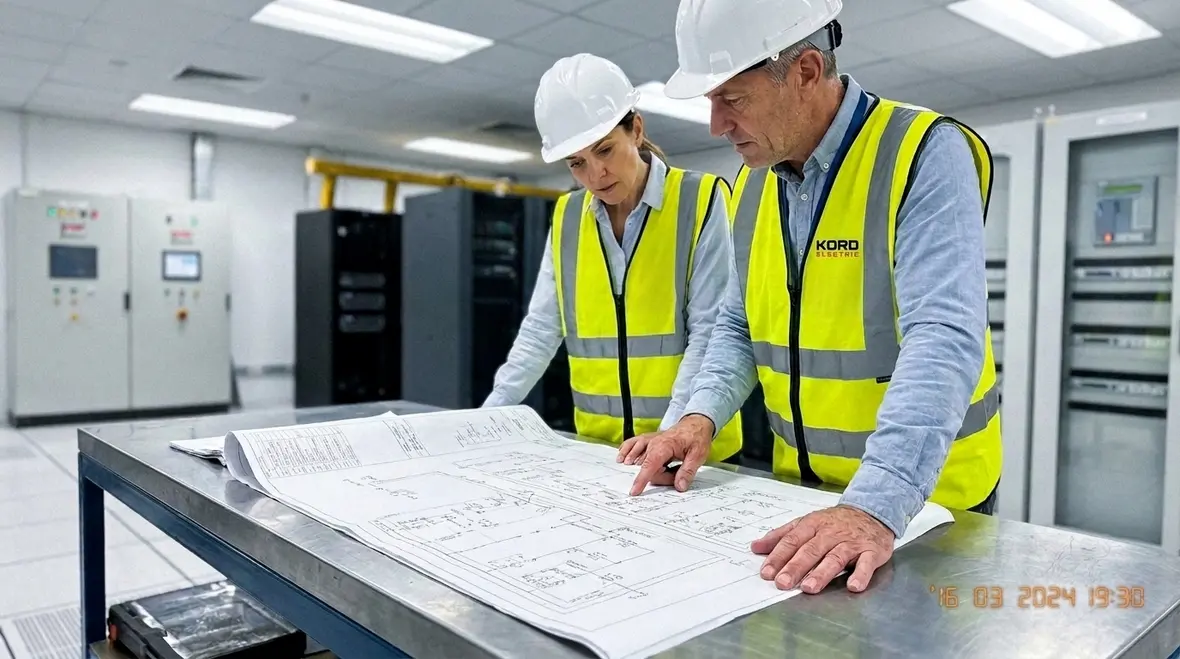
When others talk about “power,” they often mean one thing. We mean the whole stack, from utility entry to the last connection that matters for your critical loads. Our expert service staff breaks it down like a checklist you can actually use, and we build from there.
Typically, a modern data center electrical setup includes these elements, working together as one system:
Utility service and incoming switchgear to receive power safely
Transformers to step voltage to the right level for distribution
Main distribution panels and busway to route power efficiently
UPS systems to bridge short interruptions and protect sensitive equipment
Generators and automatic transfer systems for longer outages
PDUs and downstream distribution for server racks and critical circuits
Grounding and bonding that keeps fault behavior predictable
Monitoring and alarms so operators see issues early, not after smoke review
Moreover, we design these parts so they coordinate. For example, protection devices must trip in the intended sequence. Also, UPS settings must align with generator behavior. If you separate these decisions, you end up with a system that technically “works” but performs like a comedian with bad timing.
For a deeper primer on how all of these layers come together in practice, many facility teams explore Kord Electric’s guide on data center electrical infrastructure essentials, then use this article as the next step toward field-ready execution.
Designing for uptime and safe operation
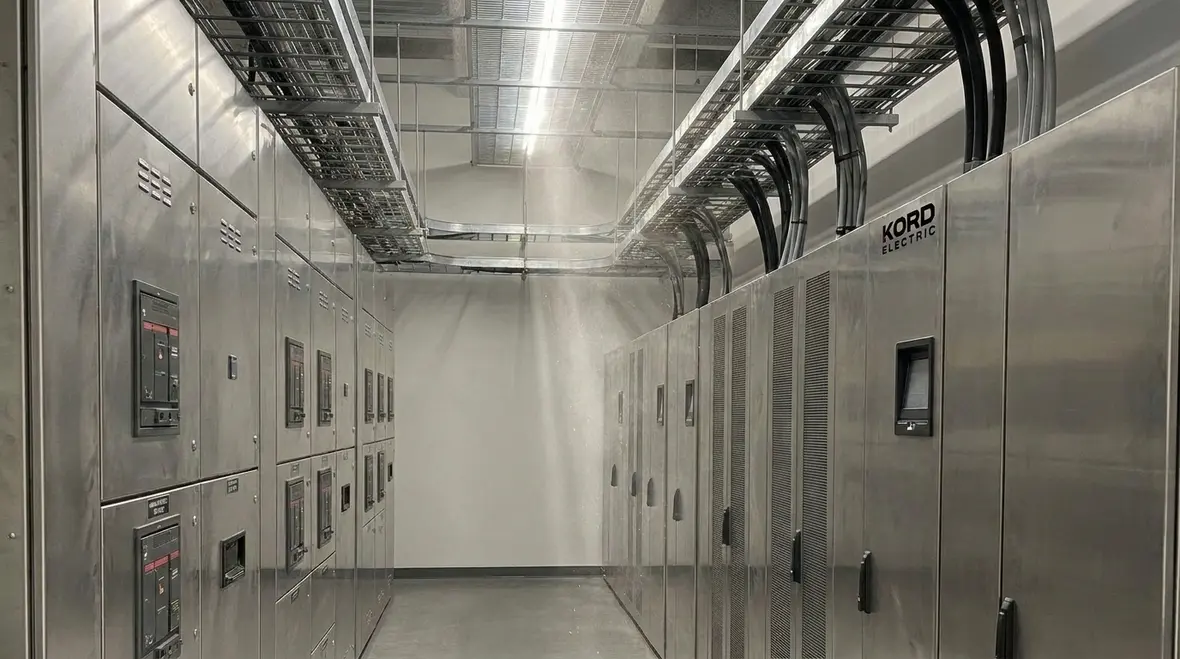
Good Data Center Electrical Infrastructure Services: Design, Testing & Maintenance begins long before installation. We start with load planning, single line diagrams, and power flow studies that show how electricity travels under normal and abnormal conditions. Then, we align the electrical design to the mechanical reality of the facility and your operational needs.
At Kord Electric, our approach stays practical. First, we evaluate your current load and expected growth. Next, we confirm redundancy and switching logic so the facility can ride through failures without dropping critical equipment. Then, we make sure protection, earthing, and labeling support real field work by real people.
We also address coordination. That means choosing breakers, relays, and fuses that protect equipment without causing nuisance trips. In the same spirit, we consider inrush current, harmonics, and voltage regulation. Otherwise, you may see overheating, degraded power quality, and alarms that become background noise. And background noise is just another word for “event you ignored.”
Finally, we design with maintainability. Access paths, cable routing, clearances, and test points matter. Because when maintenance day arrives, technicians cannot solve problems with guesswork.
Our team often connects this design phase with broader facility planning efforts, such as electrical infrastructure upgrade planning, so data center projects stay aligned with the rest of the property’s long term investments.
Testing that proves the system, not just the paperwork
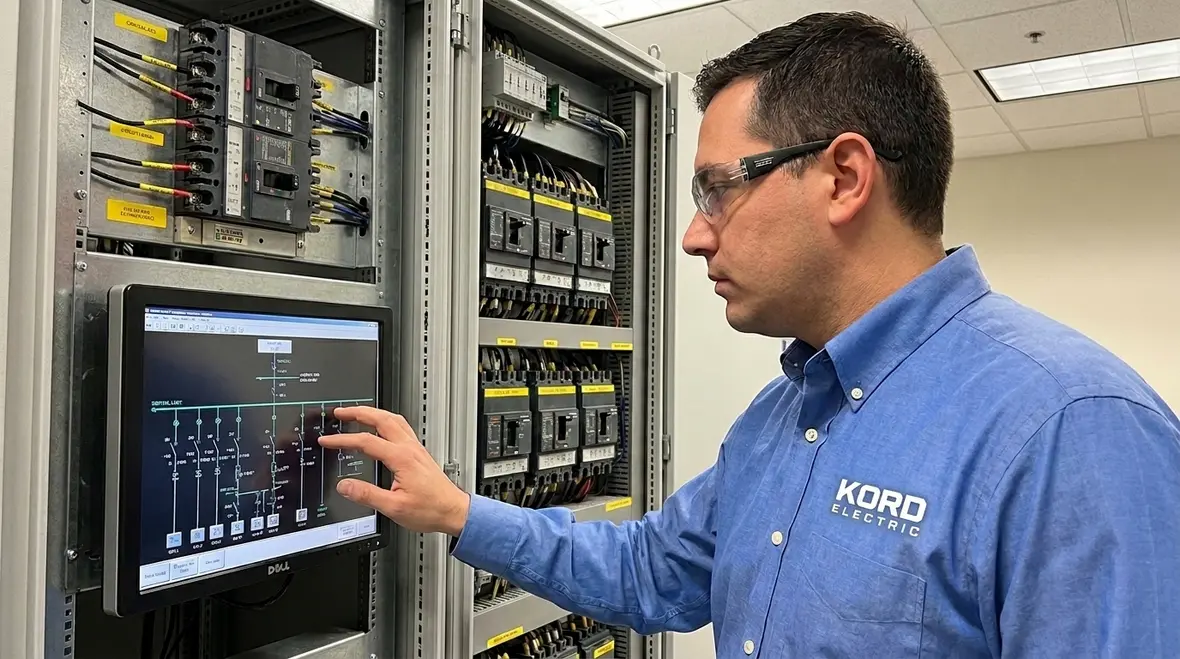
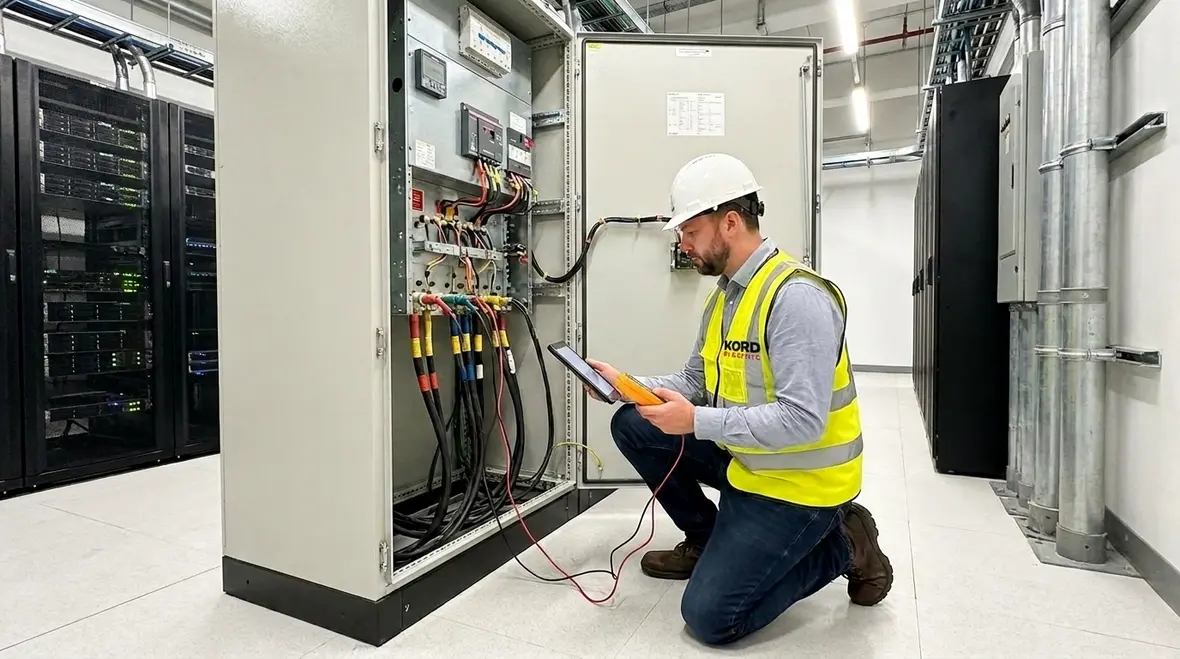
After design comes verification. We do not rely on “it should be fine.” Our technicians perform testing that measures performance and confirms safety. In other words, we use results, not vibes.
Testing efforts often include:
Insulation resistance checks on cables and bus systems
Continuity and resistance measurements for grounding and bonding
Relay and protection testing to confirm trip settings and behavior
Transformer ratio and polarity verification
UPS commissioning tests for transfer time, load handling, and runtime behavior
Load bank testing or functional testing for generator readiness and transfer
Power quality checks such as harmonics and voltage stability monitoring
Additionally, we document the findings in a way your operations and engineering teams can use later. That documentation helps you troubleshoot faster, plan upgrades, and prove compliance during audits. And if you ever wondered why good records feel rare, it is because too many teams treat testing like a one-time checkbox. We treat it like a baseline you return to.
Many of these test reports and diagrams fold directly into the practices outlined in Kord Electric’s guide to electrical system documentation best practices, turning field results into an everyday tool for your staff instead of a dusty binder.
Maintenance strategies that reduce surprises
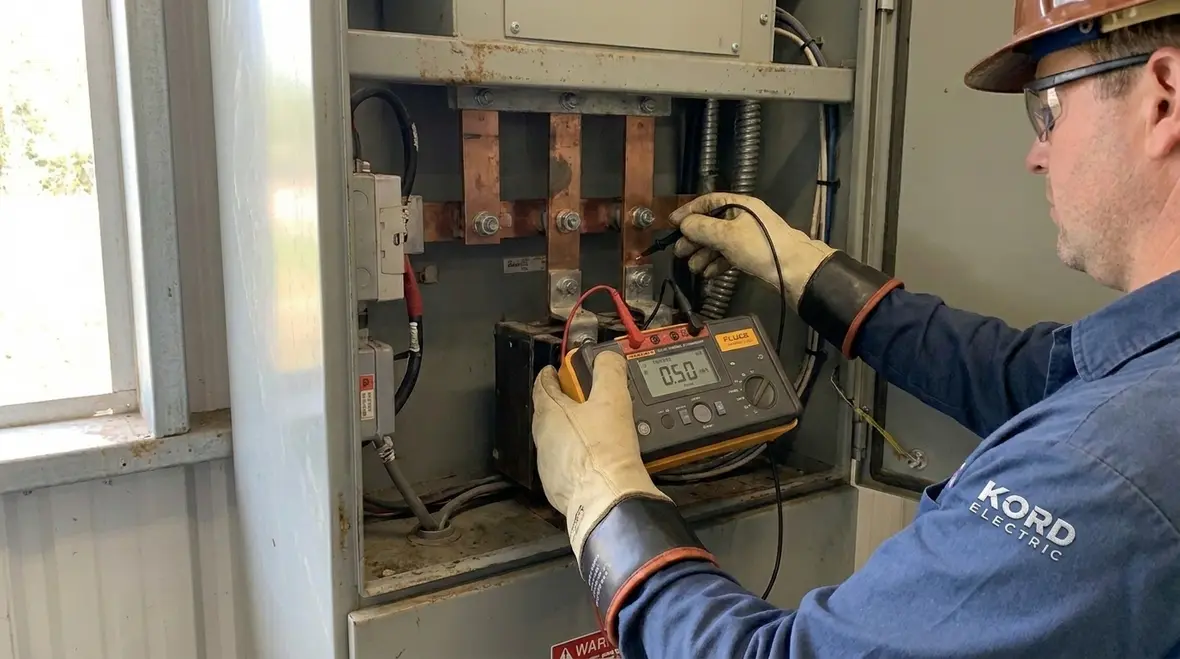
Once the facility runs, the job is not over. Over time, components age, loads change, and operating conditions shift. Therefore, we build maintenance around prevention and inspection, not just reaction. Our expert service staff follows structured plans that target the parts most likely to drift in performance.
Maintenance in data center environments typically focuses on:
Switchgear inspection including contacts, mechanisms, and thermal checks
UPS battery health monitoring and replacement planning
Generator service to maintain starting reliability and fuel system readiness
Transfer switch testing to confirm switching under real conditions
Thermal imaging and torque checks on critical terminations
Monitoring system review to ensure alarms stay meaningful
Cleaning and inspection for airflow related impacts on electrical cabinets
Just as important, we help teams plan upgrades without downtime surprises. We coordinate maintenance windows, validate load impacts, and confirm that changes do not break coordination settings. In short, we keep the system steady, like a calm voice during a fire drill. (We said calm. We did not say chaotic would not happen. That is on the universe.)
For organizations operating across multiple locations, Kord Electric can align data center maintenance with broader Los Angeles County electrical services, so corporate standards match what actually happens in the field.
How monitoring and documentation support daily operations
Electrical infrastructure is only as good as how people manage it. That is why we emphasize monitoring that operators can trust. When a facility uses clear alarms and reliable data, teams respond faster and with less guesswork. And when documentation is accurate, handoffs between shifts feel smoother instead of like a mystery novel with missing pages.
We help clients understand what the monitoring signals mean. Then, we connect those signals to action plans. For example, if monitoring indicates increasing resistance at a termination, the team can schedule a targeted correction before heat turns into damage. If UPS runtime behavior shifts, the team can investigate battery health or load characteristics.
In addition, we support major property buildings and other commercial and industrial environments where multiple systems interact. Coordinated operations reduce downtime because teams know which system to check first. So instead of chasing ghosts, your team follows a path that leads to answers.
Often, this includes integrating monitoring strategies with lessons from Kord Electric’s articles on emergency power for business continuity, ensuring that backup behavior and live alarms tell the same story.
Key risks we help clients avoid in commercial data centers
Every data center has risks. The difference is whether the facility measures and manages them. We help reduce predictable failure paths, especially in commercial and industrial facilities where uptime impacts revenue and reputation.
Here are risks we commonly address through proper Data Center Electrical Infrastructure Services: Design, Testing & Maintenance planning and ongoing field work:
Improper coordination between protection devices that can cause cascading trips
Weak grounding and bonding that leads to unpredictable fault behavior
Battery aging without clear replacement timing
Transfer switch issues that only show up when you need them most
Power quality problems that stress UPS and downstream equipment
Thermal hotspots caused by loosened terminations or clogged airflow
Missing test baselines that make troubleshooting slower later
And yes, some risks are avoidable with better planning. If you build the foundation with care, the rest of the building behaves. If you rush, the facility pays interest on that decision every single month.
For teams building or refreshing a site from the ground up, pairing these risk controls with Kord Electric’s data center electrical infrastructure design for reliability helps ensure that uptime objectives, redundancy strategies, and maintenance realities line up from day one.
FAQ
Next step: let Kord Electric verify your electrical readiness
If your data center is under pressure to deliver uptime, you need more than guesses and generic checklists. Kord Electric supports commercial and industrial facilities with Data Center Electrical Infrastructure Services: Design, Testing & Maintenance that reduce risk and improve reliability. Our technicians and expert service staff explain what they find and what to do next, so your team can act with confidence. Contact us to review your current electrical setup, identify gaps, and build a maintenance plan that keeps power steady.
When you are ready to move from theory to action, Kord Electric’s Los Angeles County electrical services team can scope, design, test, and maintain the entire electrical path that keeps your data, staff, and operations online.
Whether you oversee a single data hall or a larger portfolio of critical facilities, our goal is the same: power that behaves on your busiest day the same way it does on your quietest.