
Data Center Power Distribution Design Guide
Resilient Power Starts With the Right Data Center Power Distribution Design Considerations
When Kord Electric plans power for a mission critical facility, we treat resilience like a promise, not a slogan. In the first phase, our data center power distribution design considerations focus on how power flows, where faults can be contained, and how fast operations can recover. We also think about real world conditions, like heat, humidity, aging parts, and the human factor, because even the best automation can’t stop someone from scheduling a shutdown at the worst possible time. Therefore, we guide our commercial and industrial clients toward architectures that keep servers running, keep teams calm, and keep downtime from turning into a headline. Next, we explain the key build blocks, and our expert service staff make it plain why each choice matters.
1) Map the Power Path Like You Mean It

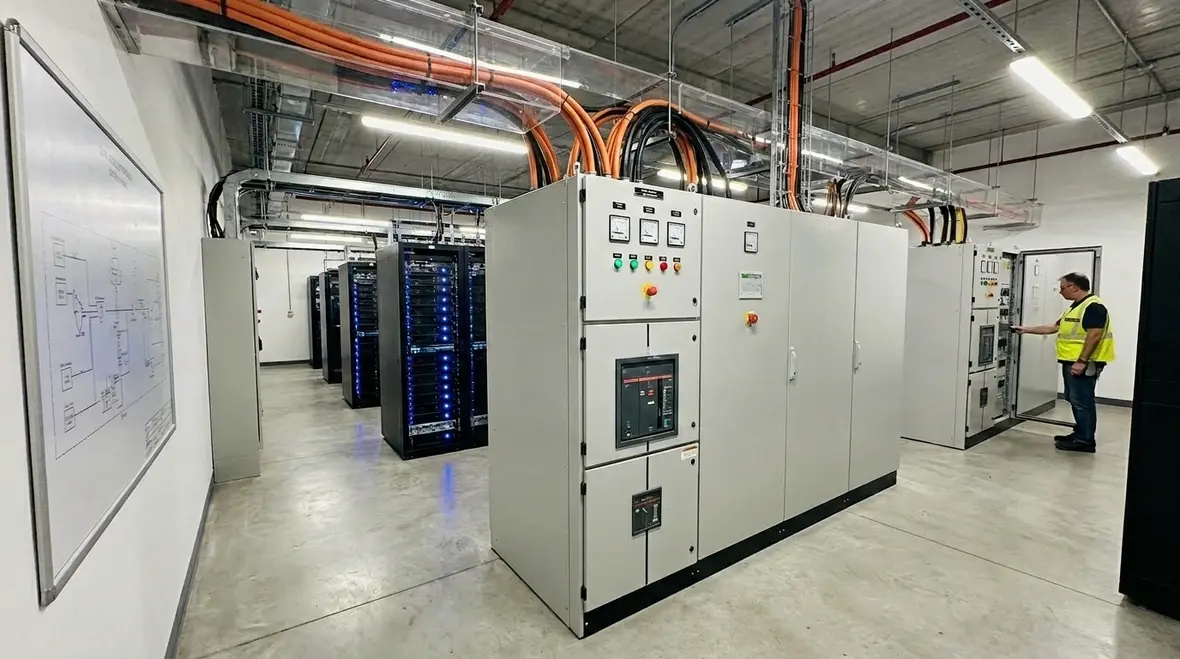
Before any conduit gets laid or any panel gets built, Kord Electric starts with a clear map of the power path. We look at the full route from utility service through switchgear, transformers, UPS systems, and down to critical load distribution. Then we confirm where power can split, where it must stay isolated, and how maintenance work stays safe. In other words, we design for both operation and inspection, because downtime for testing should not become downtime for the business.
Our technicians follow a practical rule: if we cannot explain the path in simple terms, we should not trust it in the field. Meanwhile, we involve facility managers early so they understand how loads move during normal operation, partial transfers, and fault events. This approach helps prevent the classic surprise, the one where everyone discovers their “redundant system” still has a single point of failure hiding like a plot twist from a bad sequel.
- We define critical loads and non critical loads clearly.
- We label feeders and functional zones so teams act fast during alarms.
- We plan maintenance windows around real transfer sequences.

2) Plan for Reliability, Then Plan for Recovery
Resilience does not end at “it stays on.” It continues into “it recovers fast and safely.” Kord Electric designs architectures that reduce the chance of failure and also reduce the impact when something fails. Therefore, we evaluate how the system behaves under load changes, battery runtime limits, generator start times, and transfer switching. We also check for how control signals and protective devices respond, because a protective device that trips at the wrong moment does not feel like reliability, no matter what the brochure says.
Next, our expert service staff explain the difference between availability and continuity. Availability means the system returns to service quickly after events. Continuity means the most critical loads ride through disturbances without disruption. Then we align both with the facility’s real service targets, not generic numbers pulled from thin air.
- We coordinate UPS behavior with upstream switchgear settings.
- We verify generator and transfer logic under realistic scenarios.
- We set protective coordination so faults get contained, not amplified.
3) Use Redundancy That Actually Reduces Risk
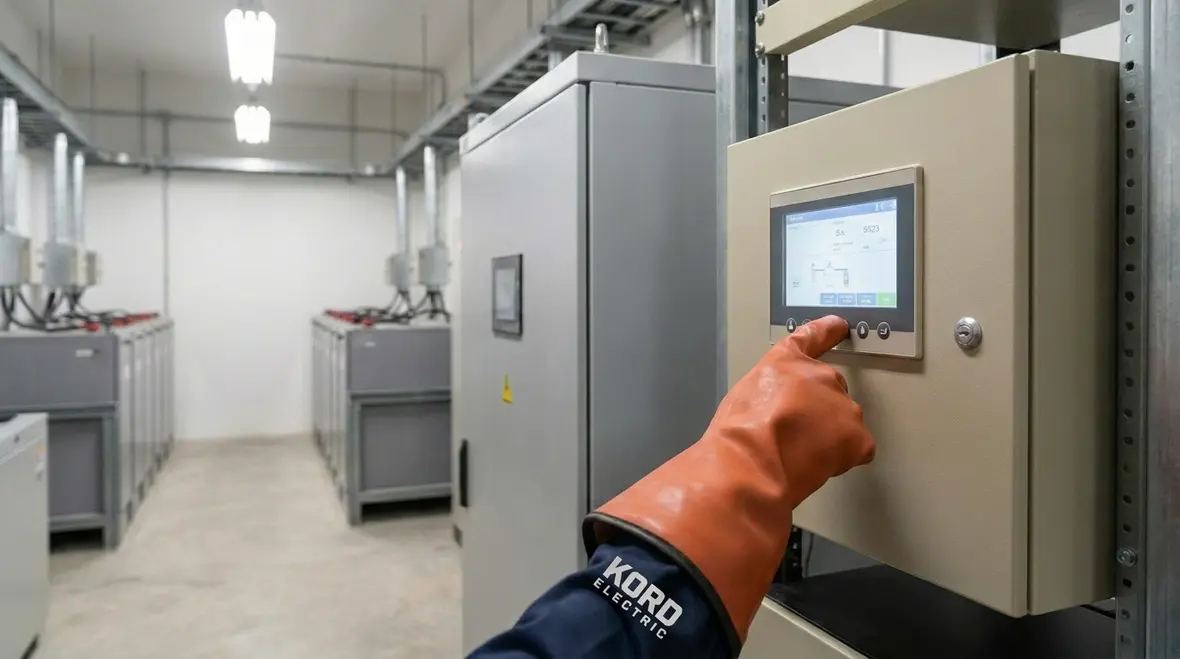
Many facilities claim redundancy, yet risk still concentrates in quiet places. Kord Electric helps clients avoid that trap by treating redundancy as a design strategy with rules, not a word on a spec sheet. For example, we consider how power trains duplicate across switchgear sections, how paths diversify through bus configurations, and how parallel systems share load without fighting each other.
Additionally, we look at physical separation and shared components. If two “independent” paths share one common upstream element, the risk remains shared. As a result, the system can fail in tandem during an event that should have stayed localized. Our technicians also pay attention to routing, cable supports, grounding, and heat sources, because small layout issues can create big operational issues later.
- We analyze redundant paths for hidden single points of failure.
- We separate redundant systems physically wherever practical.
- We review how redundancy interacts with generators, UPS, and switchgear.
4) Protect From Faults, Not Just From Outages
In a resilient data center power distribution design, protection matters at the component level and at the system level. Kord Electric focuses on selective coordination, correct breaker clearing times, and safe fault isolation. Then we confirm how protective relays detect conditions and how they interact during abnormal states.
When a fault occurs, the goal is simple: keep the faulted section isolated and keep the rest of the facility stable. However, the “simple” part can get complicated fast when someone mixes protective settings, cable types, and load growth plans without updating the study. Therefore, we recommend periodic review as part of maintenance, so the system remains coordinated as equipment ages.
- We validate breaker ratings and arc risk considerations.
- We confirm proper grounding and bonding practices.
- We plan for fault current paths that do not damage critical equipment.
5) Keep Systems Healthy With Proper Maintenance Plans
After the architecture is in place, resilience depends on execution. Kord Electric supports commercial and industrial facilities with maintenance plans that keep power systems dependable and predictable. We leverage structured plans for inspections, preventive work, and performance checks, so maintenance does not become guesswork or a scramble. Then, as part of our service approach, our technicians explain what they do and why they do it, in plain language that facility teams can use.
For many clients, the best results come from clear maintenance boundaries and documented outcomes. We refer to our commercial and industrial electrical maintenance plan framework so teams can stay organized. When the plan gets used consistently, it reduces “unknown unknowns” and helps extend equipment life.
Additionally, we schedule work to support system integrity without disrupting operations more than necessary. We also track findings so the next visit starts with context, not blank notes.
Maintenance plan items we commonly prioritize
- Visual checks, torque verification, and terminations inspection
- Protective device checks and coordination review triggers
- UPS system health checks and battery replacement planning
- Generator support checks and transfer switch verification
If your team is formalizing a broader program for large properties, pairing these practices with Kord Electric’s dedicated commercial and industrial maintenance plans helps align day to day tasks with long term reliability goals.
6) Manage Change Like a Pro, Not Like a Copycat
Facilities evolve. Loads increase. Racks get added. Cooling gets upgraded. Software gets updated. If a data center power distribution design change happens without electrical updates, the system can drift away from its original assumptions. Kord Electric helps clients manage change so reliability does not erode quietly over time.
We focus on three areas. First, we assess how new loads affect distribution capacity, voltage levels, and heat. Second, we evaluate how protection settings and transfer paths interact with new equipment. Third, we update documentation so the as built model stays accurate. Because when drawings lie, the field pays the price.
And yes, we have seen the “it worked last time” argument. That story always sounds confident, like a movie villain monologuing before the explosion. Next time, we prefer action based on measured data and updated studies.
- We review load growth impacts on feeders and bus systems.
- We verify commissioning results after expansions.
- We update labeling and single line diagrams for safe operations.
7) Test Under Real Conditions, Then Train the Team
Resilience improves when verification meets reality. Kord Electric encourages testing that reflects operational conditions, not just “pass fail” checks. We support clients with test planning that considers transfer sequence timing, load behavior, and protective response. Then we help teams run drills so operators know what to do when alarms happen at 2:00 a.m., the hour when even seasoned staff feel like they are in a sitcom they did not audition for.
Training also includes how to interpret system behavior. When our expert service staff explain expected results, teams make better decisions and respond faster. That reduces stress and limits secondary damage.
Over time, these drills turn theory into muscle memory. In a real event, that difference shows up as seconds saved, calmer responses, and less guesswork under pressure.
Two Column Reality Check for Resilient Power
Design choice |
Why it matters |
Clear power segmentation and isolation strategy |
It limits outage scope and supports safer maintenance |
Coordinated protection and selective clearing |
Faults stay contained and critical loads stay stable |
Documented transfer logic and testing cadence |
Recovery works the way the plan says it should |
Structured maintenance aligned with system studies |
Equipment health supports long term reliability and safety |
FAQ
Conclusion
If your commercial or industrial facility depends on stable power, don’t wait for the next alarm to find your weak spot. Kord Electric designs and supports resilient power strategies that keep critical operations running and keep response calm and fast. Our expert service staff also help you maintain that resilience over time, with structured maintenance plans and clear explanations. Reach out to us for a power review and next steps you can execute with confidence. Because downtime is expensive, and we prefer you stay in business, not in troubleshooting mode.
For facilities planning upgrades or new builds, our team can translate these data center power distribution design considerations into actionable drawings, specifications, and maintenance programs that integrate cleanly with your broader electrical infrastructure. From commercial towers to industrial campuses and mission critical data environments, Kord Electric approaches each project with the same priority: resilient, understandable, and maintainable power.
As you evaluate next steps, consider pairing your future designs with a structured maintenance program and a clear roadmap for enhancements over time. That combination helps ensure that today’s resilient architecture does not quietly drift into tomorrow’s weak link.
To explore how these strategies apply to your broader systems beyond the data hall, you can also review our insights on data center electrical infrastructure essentials and other commercial power topics, then align those best practices with a tailored service plan for your site.
When you are ready to turn plans into implementation, Kord Electric’s commercial and industrial electrical teams can support everything from design review to installation and long term support.
If your facility is approaching major upgrades, considering a new mission critical build, or simply wants a grounded review of current risks, our licensed electricians can help you evaluate the options and prioritize investments that matter most.


