Industrial LED Lighting Upgrades for Smart ROI
Industrial Facilities Find Smart Value in LED Upgrades
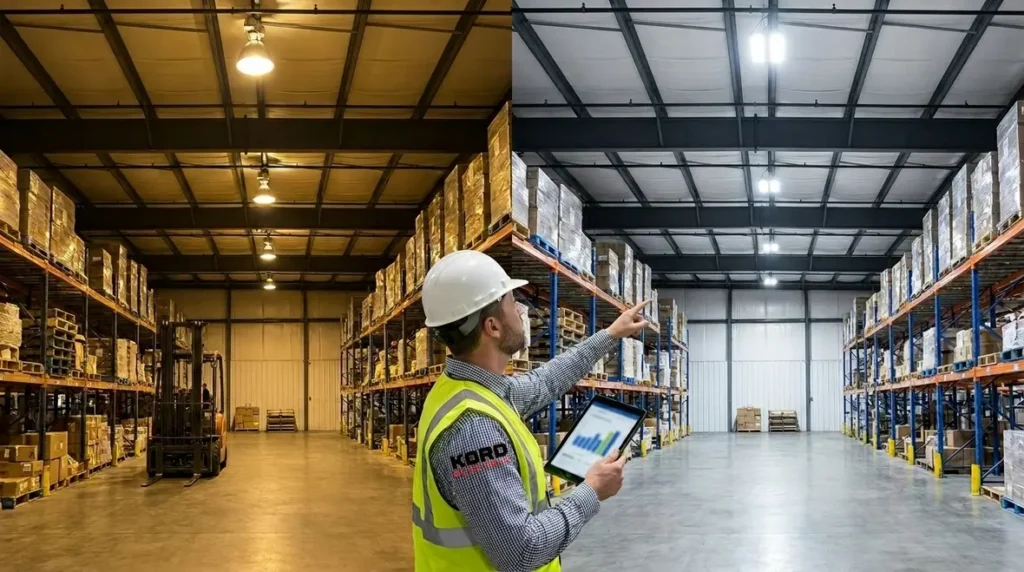
At Kord Electric, we see industrial facilities switch to smart LED lighting upgrades for one reason: the return shows up fast and stays consistent. Others chase novelty, but we chase results. In the first place, modern LED systems cut energy use, reduce maintenance, and improve lighting quality so work runs smoother. Then, smart controls help facilities avoid wasted electricity during slow shifts, nights, or seasonal slowdowns. And finally, when our technicians plan the work well, the upgrade fits real schedules, not fantasy timelines. Yes, it is still “just lights,” but if lights are wrong, production feels it. If lights are right, everything else breathes easier.
How ROI Works When Lighting Runs the Plant Floor
Most teams look at a simple math problem: cost today versus savings tomorrow. However, in commercial and industrial spaces, the savings stack up in several ways. First, LEDs use less power than older fixtures. Next, their long life lowers replacement frequency, which reduces both labor time and downtime. Meanwhile, smart controls add another layer by matching light levels to actual activity. So instead of blasting full brightness all night, facilities can dim safely when nobody is working. That is not just comfort, it is direct operating cost control.
To make the decision smarter, we help others map ROI by area, shift pattern, and duty cycle. Then we factor out real constraints like maintenance access, safety rules, and production windows. Our expert service staff explains these tradeoffs plainly, because nobody wants a spreadsheet that looks great and performs like a broken forklift.
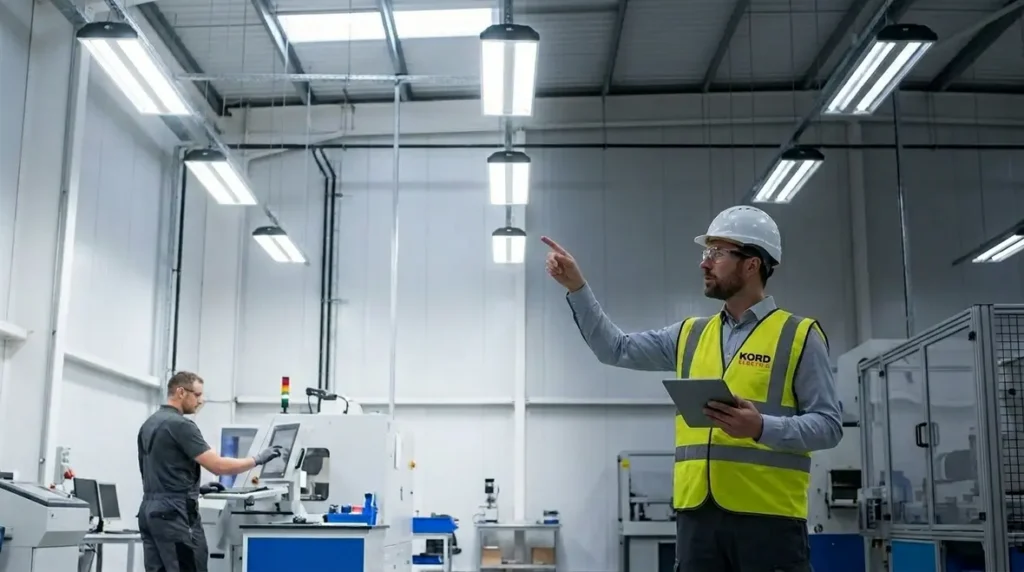
Also, ROI improves when lighting upgrades support throughput and safety. Brighter, even illumination helps workers see clearly, reduces errors, and supports inspection and quality checks. When people find defects sooner, waste drops. When they trip less, investigations drop too. Lighting does not manufacture products, but it can help the line run without extra friction.
Why Smart Controls Matter More Than People Expect
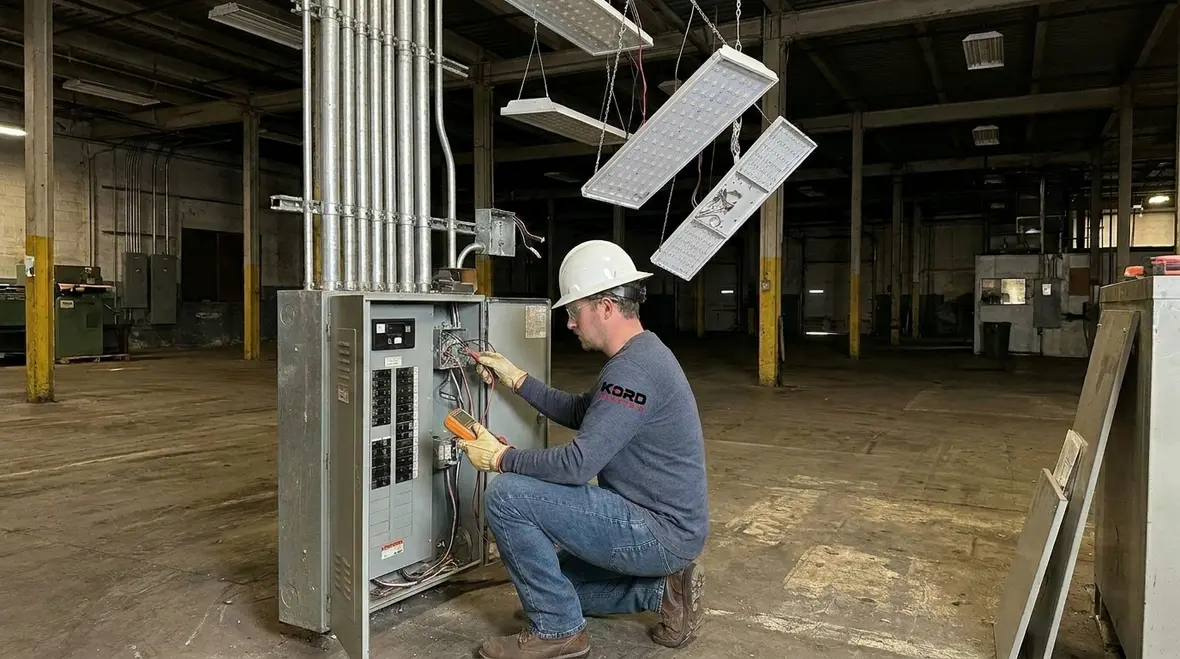
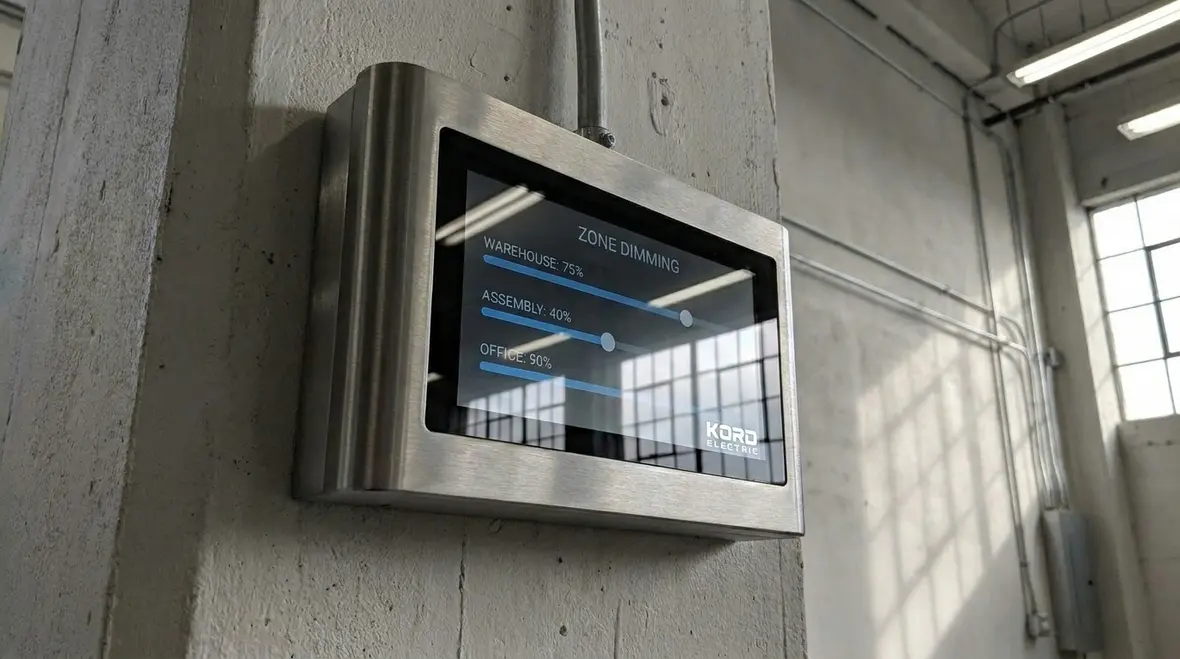
After the upgrade, the biggest difference usually comes from controls, not the fixture shell. With smart lighting, facilities can set scenes for different tasks and automate schedules. For example, a distribution center can run higher output during loading, then step down gradually during cleanup and off hours. Additionally, occupancy sensing can prevent lights from staying full on unused areas like corridors or low traffic zones.
At Kord Electric, we guide facilities through choices that match their building behavior. If others add sensors without planning, they may create flicker complaints or uneven light levels. We prevent that by reviewing layouts, ceiling heights, reflectance, and where people actually move. Then our technicians set control zones so dimming stays stable and visual quality holds. It is like tuning music for a venue. Everyone hears it differently unless you set it right.
Electrical Preventive Maintenance Keeps the Upgrade Profitable
Smart LED lighting upgrades perform best when the electrical system stays healthy. That is where preventive maintenance matters. When our teams inspect power quality, terminations, and switching behavior, they help prevent issues that can cut savings. Loose connections can cause heat. Heat can cause failures. Failures can cause downtime, and downtime always costs more than a planned visit.
In fact, the approach fits closely with the mindset behind our electrical preventive maintenance work. We look at the system before it fails, and we document what we find so the facility can act with confidence. Our technician team also explains what matters and why, so building managers do not get stuck guessing. If you want the core idea, it is simple: stop problems early, and the benefits from your lighting upgrade last longer.
So, while a lighting plan targets the fixtures and controls, preventive maintenance protects the energy savings and performance underneath. Both sides work together, and that is how a smart system stays smart.
Implementation That Respects Production, Safety, and Downtime Limits
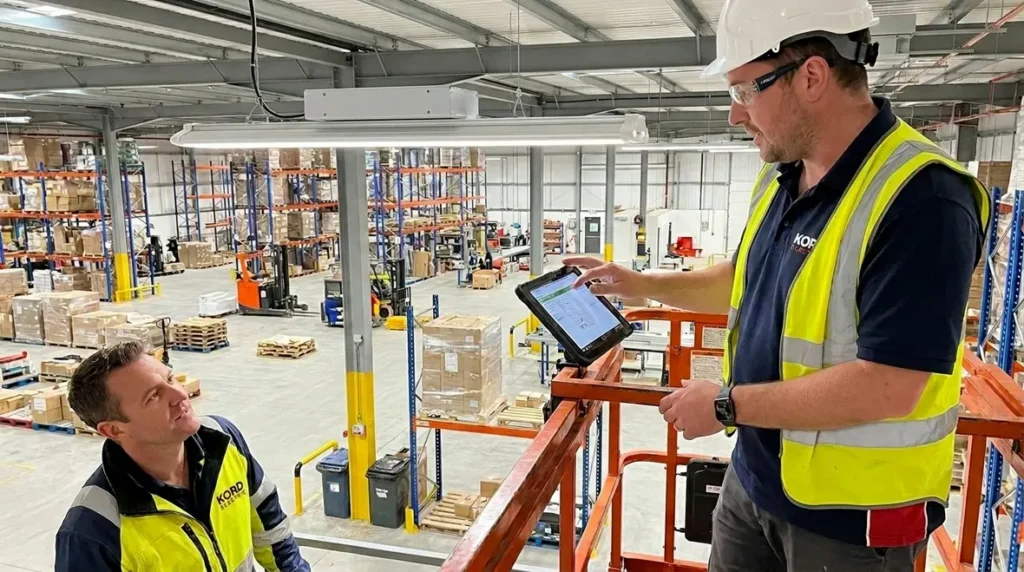
Industrial facilities do not shut down just because new lighting needs to go in. Therefore, we build installation plans around real operations. First, we group work by zones and access points, then we plan downtime windows that match the least disruptive times. Next, we verify fixture placement for safe visibility and consistent coverage. After that, we test controls behavior so dimming and scheduling work as designed.
Our experienced service staff also coordinates with facility leaders on documentation and handoff. We make sure the controls settings match the facility’s shift patterns, and we provide clear guidance for ongoing operation. That way, others do not have to treat the system like a mystery box from a sci fi show. You should not need a decoder ring to run lighting.
Additionally, we help manage compliance and safety expectations for commercial and industrial environments. That includes proper electrical connections, safe handling procedures, and verification of performance after installation. When the job is done right, workers notice better lighting quality immediately, and the facility manager notices the bills. For facilities planning a larger scope of work, tying the project into broader commercial and industrial electrical maintenance plans keeps everything aligned long term.
What Facilities Gain Beyond Energy Savings
Energy savings are only the start. A well planned industrial LED lighting upgrade benefits the whole operation. For one, improved light distribution reduces harsh shadows that can hide hazards. Then, better consistency can support tasks that need accurate visual detail, like maintenance work, packaging checks, and quality inspection. When people can see clearly, they move with less hesitation and fewer mistakes.
Next, fewer maintenance events reduce disruption. Older lighting systems often need frequent bulb changes, and that means repeated labor and recurring downtime. With LEDs, the life span is longer, and replacement can shift from constant to scheduled. Additionally, smart controls can reduce total operating hours, which helps the fixtures last even longer.
There is also a management benefit. Smart systems can support reporting and monitoring, which helps leaders spot patterns. For example, they can identify areas that stay on too long or rooms that rarely use full brightness. Over time, that insight improves operational habits and keeps ROI from drifting downward. A facility does not lose savings because the tech failed. It loses savings when nobody adjusts the system after the first month. When industrial LED lighting upgrade benefits are tracked the same way as other performance metrics, it is easier to keep those gains locked in as the facility evolves.
FAQ: Smart LED Upgrades and Industrial ROI
Next Steps: Let Us Plan the Upgrade and Protect the Savings
At Kord Electric, we help commercial and industrial facilities plan smart LED lighting upgrades that deliver real ROI, not wishful thinking. We coordinate installation around your production needs, set controls for actual schedules, and pair the work with preventive maintenance so the system stays reliable. If you want energy savings that stick, contact us for a site focused assessment. Our technicians and expert service staff will explain the plan clearly, then execute it with care. Let’s turn those lights into a business advantage.
If you are starting to map out your project scope, our lighting installation services overview walks through how we design and deliver commercial and industrial lighting solutions built for performance, safety, and long term efficiency.