
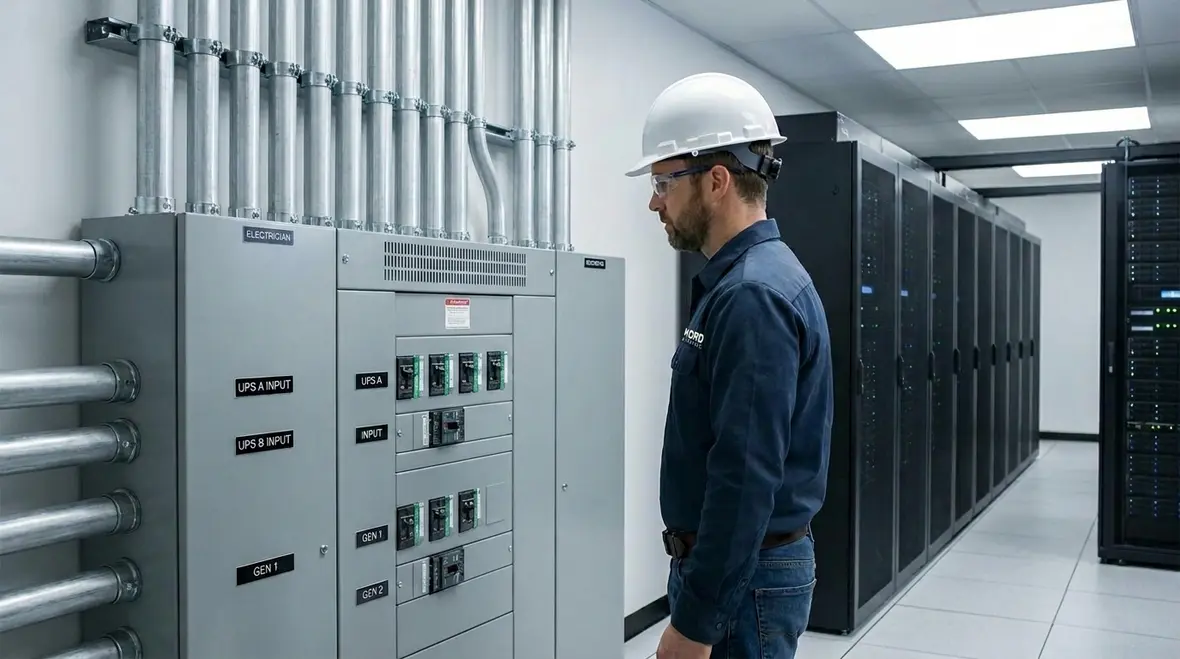
Data Center Power Redundancy for 99.999% Uptime
Data Center Power Redundancy That Keeps Los Angeles Facilities at 99.999% Uptime
In Los Angeles, where heat, grid swings, and the occasional “mysterious” utility hiccup can test even the calmest operations, Data Center Power Redundancy becomes more than a design goal. At Kord Electric, we help commercial and industrial facilities build power systems that protect mission critical loads with near nonstop reliability. We plan for the moments you do not want to meet, and we back it up with field-ready execution by our technicians and expert service staff who explain the why in plain language. And yes, we also make sure your power stays steady even when life around you behaves like a sitcom plot twist. In the sections ahead, we lay out practical redundancy strategies for Los Angeles data centers, using reliability-focused distribution design principles.
Start With the Reliability Map for LA Facilities
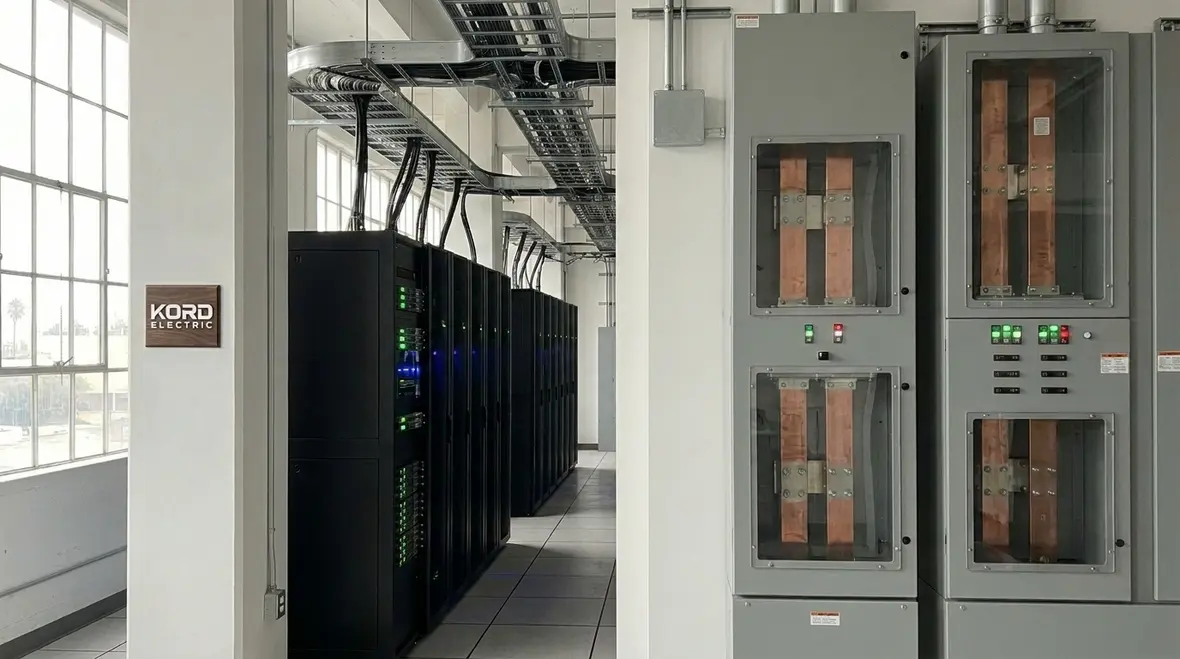
Before anyone buys gear or pulls cable, we build a reliability map. This is where our team treats the facility like a system, not a pile of parts. We identify the critical loads first, then trace how power flows from the utility service through distribution, switching, and into sensitive equipment. From there, we decide what redundancy looks like for each path.
Then we ask the hard, useful questions. Which loads can tolerate a short interruption? Which must not blink at all? How fast can systems transfer? What is the maintenance plan during normal operations? If the answer is “we will figure it out later,” we usually pause the project right there and gently redirect. It is not dramatic, it is just physics, and physics always collects its bills.
At this stage, we also align with common reliability goals such as N+1 or 2N design concepts, and we set the targets for fault tolerance. Importantly, we focus on commercial and industrial environments and major property buildings, because that is where Kord Electric’s experience gives clients the most direct path to uptime.
Design Power Paths With N, N+1, and 2N in Mind
Once we know what must stay alive, we choose a redundancy pattern that matches the risk and cost balance. In practice, we often use:
- N paths for loads that can tolerate some downtime
- N+1 paths for critical systems where a single failure should not stop operation
- 2N paths for maximum independence, where each side can operate without sharing a single point of failure
Here is the calm truth: redundancy fails when you accidentally create hidden dependencies. So we examine switching schemes, bus connections, and how maintenance actions affect the system. We make sure the “backup” is not only real on paper, but real during a human moment, like when someone isolates a section for service.
Our expert service staff then walks site teams through the design. They explain what will happen during a transfer, what will not happen, and what alarms should guide operators. We do not just hand over drawings and hope everyone reads them like a thriller.
Distribution Layout That Avoids Single Points of Failure
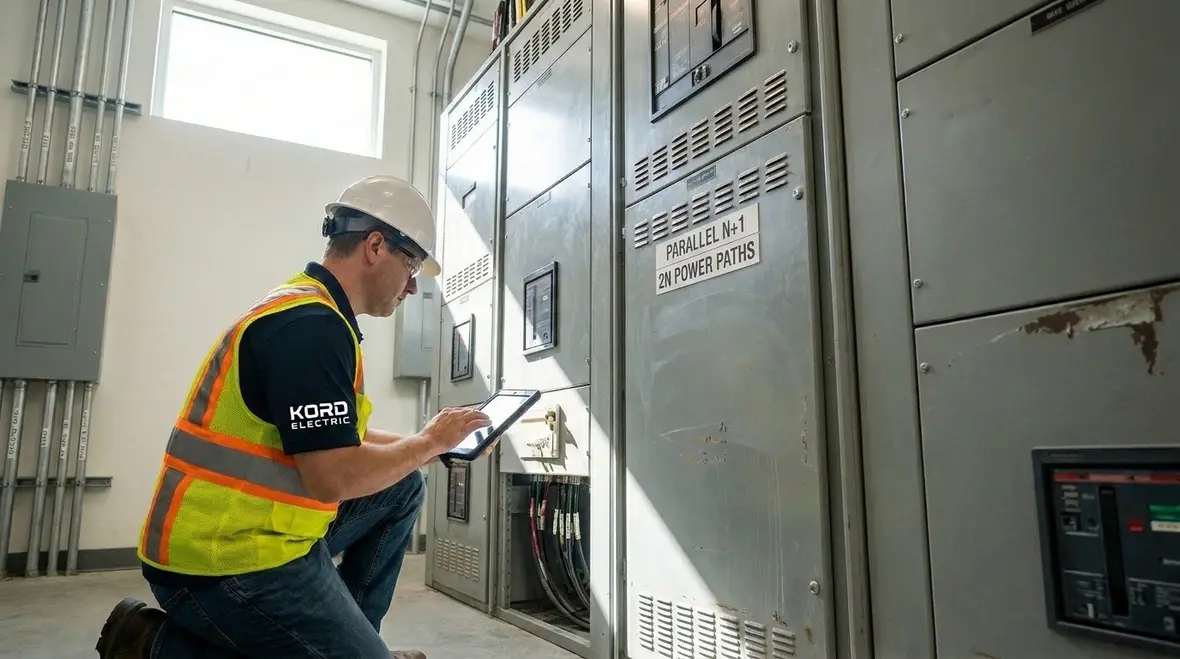
Power redundancy depends on distribution design choices that prevent one bad event from taking everything down. We follow reliability-focused distribution planning as outlined in our blog on data center electrical distribution design for reliability, because the details matter. We focus on how energy routes through switchgear, transformers, panels, and transfer devices, and we build in separation where it counts.
To reduce shared failure risk, we typically address things like:
- Physical and electrical separation between redundant components
- Proper bus partitioning so faults stay localized
- Clear device coordination so protective actions behave as intended
- Thoughtful grounding and bonding to protect people and equipment
Also, we do not ignore the “boring” parts. Buses, feeders, and device ratings determine whether redundancy actually performs under real load. Therefore, we run the numbers for thermal limits, voltage drop, and fault current. After all, a design that looks great in a meeting can still fail during the first real fault if nobody studied the coordination.

Switching and Transfer Logic That Works When It Counts
Next, we focus on switching and transfer logic, because the moment of transition is where uptime is won or lost. In many facilities, the redundancy strategy includes seamless or controlled transfers between power sources. Yet if switching logic, interlocks, or control settings are not set correctly, transfers can become slow, noisy, or unstable.
So we help clients plan for fast and predictable behavior. We define the expected sequence: how the system detects loss of normal supply, how it signals transfer, and how it returns to normal operation. Then we test. We verify settings against the design basis, and we coordinate controls with protection devices. We also ensure that the system remains safe for technicians working around it, which is why our teams pay careful attention to switching access and lockout points.
And yes, we make it understandable for operations staff. Our technicians often get asked, “What happens if X fails?” and we respond with a clear path. We explain it like we are guiding someone through a pop quiz, except the grade affects your downtime, not your GPA.

Backup Power, Fuel, and Maintenance That Prevent Surprise Outages
Battery systems, generators, and fuel strategies carry much of the reliability burden. However, effective Data Center Power Redundancy does not stop at the generator nameplate. It extends into fuel handling, run-time planning, and maintenance practices that keep equipment ready.
We help clients connect the dots between design and operations. For example, we review:
- Battery sizing and placement for stable ride through during transfers
- Generator capacity and starting performance under site conditions
- Fuel storage, monitoring, and logistics that match the uptime goal
- Scheduled maintenance plans that avoid “performing miracles” on the day you need power
Furthermore, we support test planning and documentation practices so teams can validate performance without guesswork. Our service staff then teaches what to watch for, how to interpret alarms, and how to respond before a minor issue becomes a major one. In a commercial and industrial setting, that responsiveness matters, because the cost of downtime includes more than equipment damage. It includes lost production time, missed service windows, and stress no one wants.
Monitoring, Alarms, and Field Readiness for Reliable Response
Even the best redundancy can fail to deliver value if nobody sees problems early. That is why we take monitoring seriously. We design control and alarm pathways so operators can detect abnormal conditions and act fast. We also plan for how alarms travel to the right people at the right time.
In practical terms, we help define alarm priorities so the system does not overwhelm staff with noise. We consider what should trigger immediate investigation, what can wait for scheduled response, and what should only log for trending. Then we align those expectations with operator training.
At Kord Electric, our technicians and expert service staff often handle walk-throughs with facility teams. We explain how the system behaves during transfers, what stable operation looks like, and which readings matter during load changes. We keep it clear, slow, and useful, because uptime is not just engineering. It is execution under real conditions.
Compliance, Safety, and Documentation for Commercial and Industrial Projects
For Los Angeles facilities, safety and compliance help ensure the redundancy strategy stays dependable over time. We build documentation that supports inspection readiness and ongoing maintenance, and we help clients keep records that matter for audits and operational handoffs.
Also, we design with safe access in mind so that technicians can work on equipment without improvising. That includes labeling, access clearances, lockable sections, and safe procedures for testing and isolation. When documentation is organized, teams waste less time, and they reduce the chance of human error. In other words, your uptime program becomes more than a promise. It becomes a repeatable process.
FAQ
Conclusion: Let Kord Electric Build Your Uptime Confidence
If you run a commercial or industrial data center in Los Angeles, you need more than “backup power” and a prayer. We help you plan Data Center Power Redundancy that protects critical loads through distribution reliability, smart switching logic, and real field readiness. Our technicians and expert service staff explain the system clearly, then support it with maintenance and response planning. If you would like to explore how power redundancy connects to the broader electrical backbone, you can also review our guide on data center electrical requirements for uptime alongside our article on data center electrical infrastructure essentials to see how each design decision supports the uptime goal you depend on.
When you are ready to turn design into action, Kord Electric’s team can also support the long-term side of uptime with structured electrical preventive maintenance tailored to commercial and industrial facilities. Reach out to Kord Electric today for a reliability-focused review and a practical path to the uptime goal your operations depend on.


