

Data Center Power Redundancy for Maximum Uptime
Maximizing Data Center Uptime starts with power redundancy that does not blink when the grid gets nervous. At Kord Electric, we plan electrical systems so a data center can keep running through utility interruptions, maintenance windows, and equipment faults. In this guide, we focus on essential strategies, because uptime is not a slogan in our world, it is a requirement. And yes, we understand the irony that people design “fault-tolerant” power systems and then still act surprised when something fails. Our team makes sure the design is calm, layered, and real.
How we build data center power redundancy that keeps working
Most teams talk about redundancy like it is a checkbox. We treat it like a method. Our approach begins before any single panel gets installed. First, we map critical loads, then we assign realistic failure paths. After that, we design so every path has a backup. This is how we reduce downtime without pretending risk disappears.
Next, we use clear separation between power trains so a problem in one section does not drag down the whole room. When a data center relies on shared components, a single failure can cascade. Therefore, our technicians and experienced service staff explain the logic behind the architecture in plain language, so facilities managers and stakeholders understand what happens during a utility event.
Because people like clarity, we show what supports uptime and what does not. We also explain the role of distribution switching, protective coordination, and physical routing. In short, we build a system that stays stable even when the grid throws a curveball. Like a good quarterback, it does not improvise under pressure.
Tiered backup design for continuity during utility events
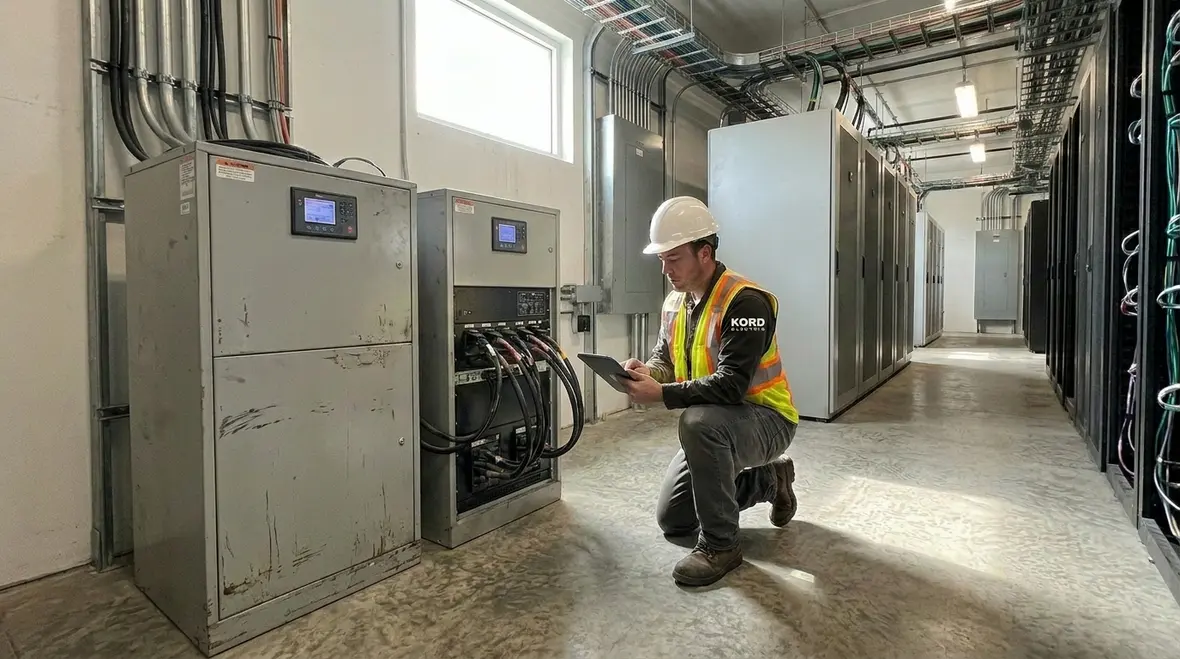
Data center teams often ask what level of redundancy they need. However, the real answer depends on the business impact of downtime, the type of risk, and the operational plan. We help commercial and industrial facilities and major property buildings decide the right mix of utility support, generator power, and distribution controls.
Typically, a tiered plan includes at least these layers: utility service, emergency generation, and uninterruptible power for the critical bridge. Then, distribution equipment routes power to the right loads through the right modes. This structure matters because uptime failures rarely come from one thing. They usually come from timing issues, wrong switching sequences, or poorly coordinated protection.
So we design for time, not just for backup. For example, the transfer from utility to generator needs predictable behavior. Also, the transition must not create overload conditions. Our service technicians walk clients through the operating logic and what operators should monitor. That way, the system does what it is supposed to do, not what someone hoped it would do.
If you want a deeper dive into how the broader electrical backbone shapes this kind of reliability, you can explore our related article on data center electrical infrastructure essentials, which connects redundancy, distribution, and equipment layout into one clear picture.
UPS, generators, and transfer switching working in harmony
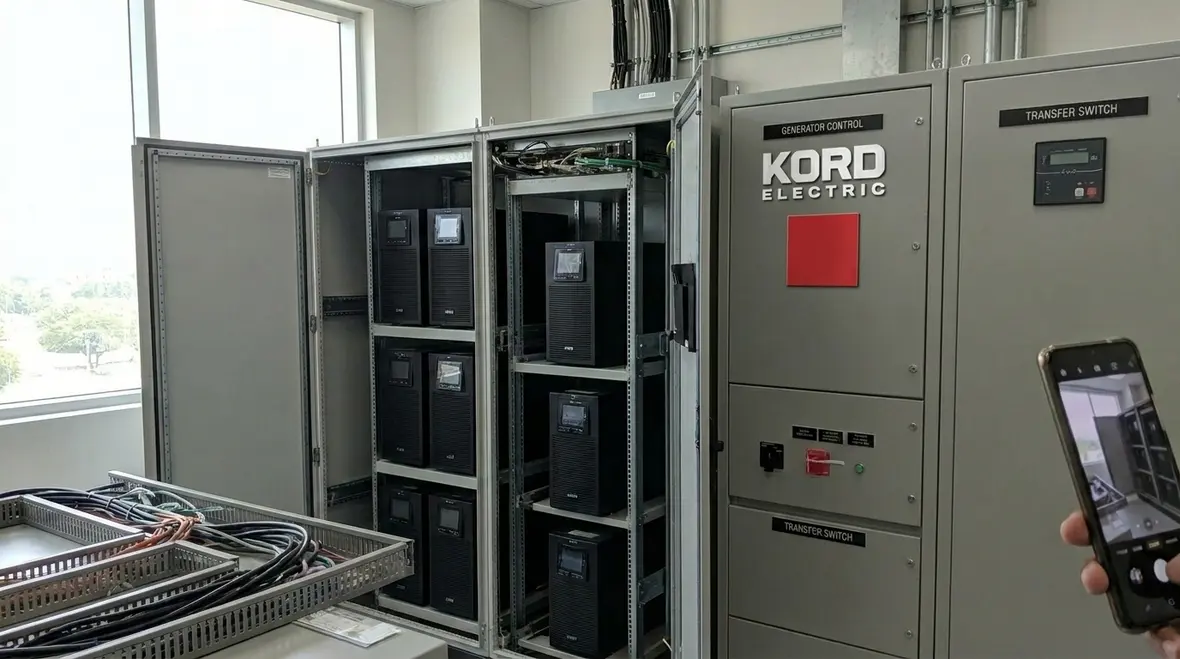
To keep mission critical equipment alive, UPS and generator systems must operate like a coordinated team. The UPS handles short ride-through time and protects against power quality issues. Then generators take over for longer duration events. However, that handoff can fail if controls and switching are treated as an afterthought.
We focus on the transfer system and the switching scheme. We consider whether critical loads require fast transfer, whether there are break-before-make constraints, and how you prevent backfeed. Additionally, we review battery strategy, runtime expectations, and maintenance schedules, because batteries do not care about our calendars.
At Kord Electric, our technicians explain these concepts in steady, practical terms. For instance, when we discuss data center power redundancy, we also explain the “why” behind each design choice. We do not just say “use a UPS.” We outline how the UPS interfaces with distribution, how bypass paths work, and how the transfer sequence protects downstream loads.
And yes, we make it fun when we can. People love action movies, but the transfer switch is not a stunt double. It must perform every time, not just on opening night.
Distribution and protection coordination that stops cascading failures
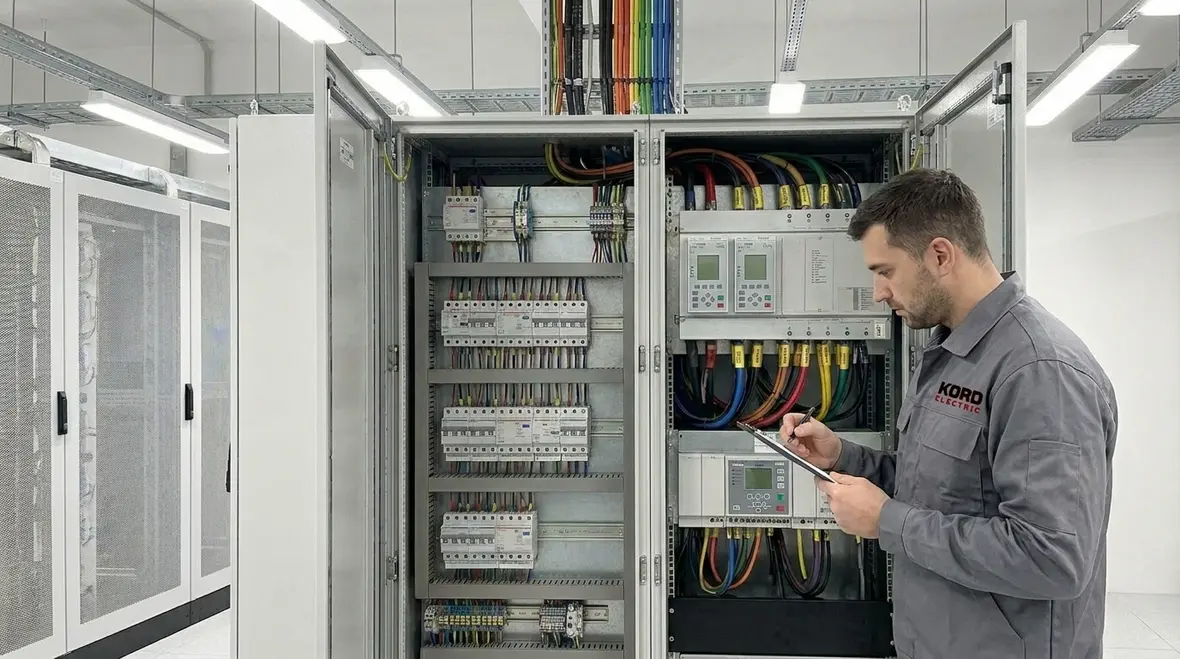
Once power generation and UPS are in place, distribution becomes the battlefield. A well built system still fails if breakers and protective devices do not work together. Therefore, we emphasize protective coordination and selective tripping. The goal is simple: when a fault occurs, only the smallest section should disconnect, while the rest keeps feeding critical loads.
We verify how protective devices behave under different scenarios, including motor starting, transient conditions, and short circuit faults. We also consider how harmonics and power quality issues can affect protection performance. When these factors get ignored, operators end up troubleshooting the electrical system like it is a mystery novel. And nobody wants that plot twist during a live event.
To prevent cascading failures, we also review busway design, cable sizing, bus sectionalizing, and grounding strategy. Each choice affects fault current, voltage drop, and equipment stress. Our team coordinates these elements so the system “knows” where to act and when.
Because facilities teams rely on documentation, we provide clear operating guidance. Our service staff can walk through alarm behavior and switching steps so the response is quick and accurate.
If you are working through distribution upgrades or planning a new build, our article on data center electrical distribution design for reliability pairs directly with these concepts, showing how coordination and layout decisions support uptime when the workload gets serious.
Reliability through monitoring, maintenance planning, and testing
Redundancy does not only mean extra equipment. It also means you can detect problems early and prove the system works. If a generator fails during a test, that is not a “surprise,” it is a design or maintenance gap that costs real money. We build maintenance plans that reduce risk and support routine testing.
We recommend monitoring that tracks key indicators such as UPS health, battery condition, generator readiness, and transfer switch status. Then we align those signals with operational procedures. When the system alerts staff quickly, people can address issues before the next utility event.
Our technicians and expert service staff explain maintenance timing and test frequency in a way teams can follow. We also advise on load testing, functional testing of transfers, and inspection of critical connections. And we help clients think through what happens after a test. Because a test without review is like watching a fire drill and then going back to ignoring the smoke detector.
Finally, we plan for replacement and upgrade paths so improvements do not require full downtime. That is especially important for commercial and industrial facilities and major property buildings that cannot afford long shutdown windows.
Physical design choices that protect uptime in real environments
Data center electrical infrastructure does not live in a lab. It sits in a room with heat, dust, vibration, and human activity. Therefore, we consider physical layout and environmental factors during planning and installation.
We account for separation between redundant paths. We also consider routing strategies that reduce the chance of a single incident affecting both trains. For example, we evaluate cable pathways, penetrations, and support methods to minimize risk from mechanical damage, water intrusion, and thermal stress.
We also examine grounding and bonding, because proper grounding reduces equipment stress and improves protective performance. In addition, we consider ventilation and temperature management for UPS rooms, generator spaces, and battery areas. When equipment runs cool and within spec, it lasts longer and fails less often. Simple idea, powerful result.
Our field teams coordinate installation so the built system matches the design intent. Then they document key details so future service stays fast and accurate.
Compliance, documentation, and operator training that reduce surprises
Commercial owners and facility managers need more than hardware. They need records, procedures, and staff readiness. We support that by emphasizing documentation that reflects how the system actually operates. This includes single line diagrams, sequence descriptions, test reports, and equipment schedules.
We also support training for the people who respond when alarms sound. Our service staff explains operational steps, what to verify, and how to avoid unsafe actions. Training matters because during a fault, stress rises and teams revert to habits. Habits are useful, until they are wrong.
In addition, we help clients plan for compliance related to electrical safety and installation standards. The purpose is to keep systems safe and consistent while preserving uptime goals. Because the best redundancy plan in the world does not help if nobody understands it during an emergency.
And if you are thinking, “We will train later,” we gently remind you that later is how most avoidable outages begin.
FAQ
Call Kord Electric to strengthen uptime now
If you want fewer surprises and steadier uptime, we can help you build, review, or upgrade your electrical design with real redundancy strategies. Our technicians and expert service staff explain the plan clearly, then support maintenance, testing, and documentation so your team can act fast during events. For commercial and industrial facilities and major property buildings, that calm reliability matters. Contact Kord Electric to discuss your current architecture and the most practical path to stronger continuity.
For facilities that want their data center power redundancy strategy backed by disciplined upkeep, pairing your design with a structured electrical preventive maintenance program helps keep breakers, switchgear, and backup systems performing the way they were designed, year after year.


