

Data Center Power Redundancy Solutions Guide
At Kord Electric, we design and evaluate data center power redundancy solutions that keep critical loads alive when the unexpected shows up. Others may treat reliability like a slogan; we treat it like a system. First, our expert service staff and technicians review how power flows from utility to switchgear, then we map what happens during every credible failure. Next, we compare architectures, balance cost and performance, and help facility teams avoid the “works on paper” trap. And yes, we do it with calm authority, because nobody wants the power system to feel like a jump scare from a horror movie. Fortunately, our process turns chaos into clear next steps, especially for commercial and industrial facilities and major property buildings.
Choosing the right architecture for uptime
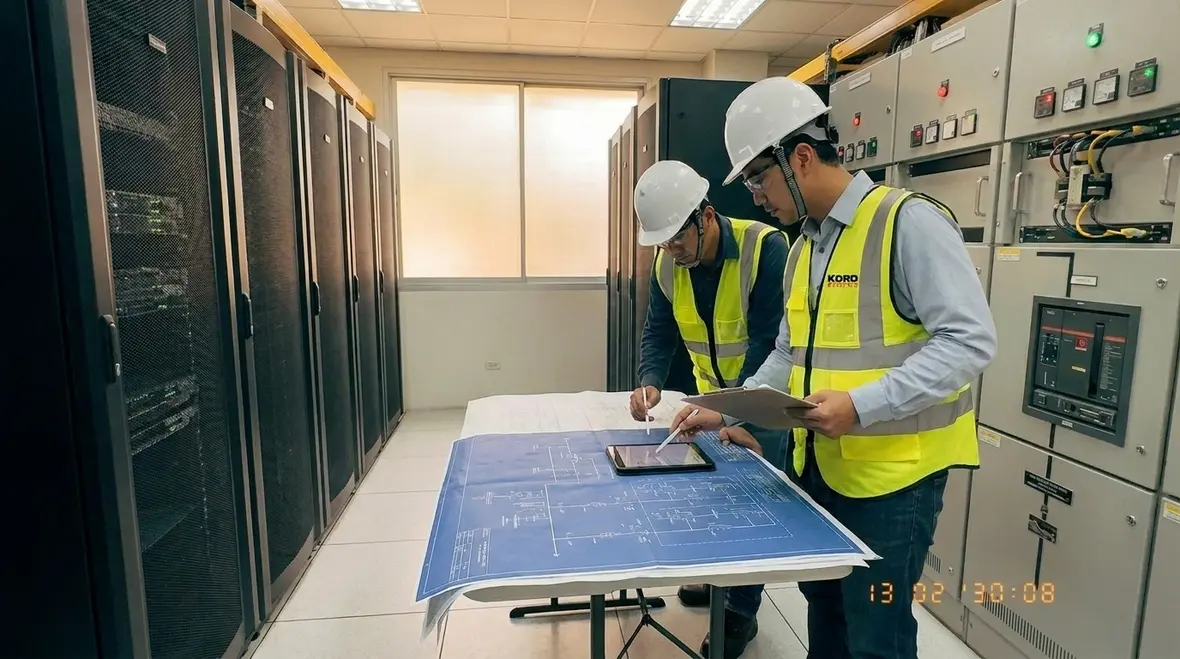
When a data center owner asks about redundancy, they often mean one thing: “Will the lights stay on, even when one part fails?” However, the smarter question is how the design behaves under load, during maintenance, and across the timeline of outages. That is where Kord Electric steps in, with our technicians explaining the logic in plain terms and walking decision makers through real scenarios.
To evaluate architectures, we first look at power paths. Then we check whether the design supports fault tolerance without creating new single points of failure. After that, we examine how the facility handles transfers, start up sequences, and switching delays. Finally, we test the practical side, like whether the operations team can isolate a component safely while keeping servers online.
Here is the key point: reliability is not just about extra equipment. It is also about control, protection, and coordination. If protection settings drift or switching logic does not match the electrical plan, the design can “fail safely” in theory and fail catastrophically in real life. So, we evaluate the architecture as a full system, not a shopping list.
How N and M levels change the design decisions
Many teams use shorthand like N plus 1, 2N, or N plus 2. Yet those labels mean different things depending on the single line diagram, the load criticality, and the planned maintenance strategy. Therefore, Kord Electric evaluates redundancy using both the math and the field behavior.
For example, an N plus 1 approach can work well when the facility can tolerate the loss of one element and still supply the required capacity. However, designers must coordinate upstream and downstream equipment ratings, including transformers, switchgear breakers, and UPS modules. If those ratings are tight, the architecture can behave less like a safety net and more like a trampoline with worn springs.
Meanwhile, a 2N design typically provides a higher level of separation between power paths. Others assume it automatically guarantees uptime, but separation only helps if the switching scheme prevents backfeeding issues and if the transfer logic works under abnormal conditions. That is why our technicians often explain not just what goes where, but how the system transitions during a real-world event.
Parallel UPS systems and switching that actually behaves
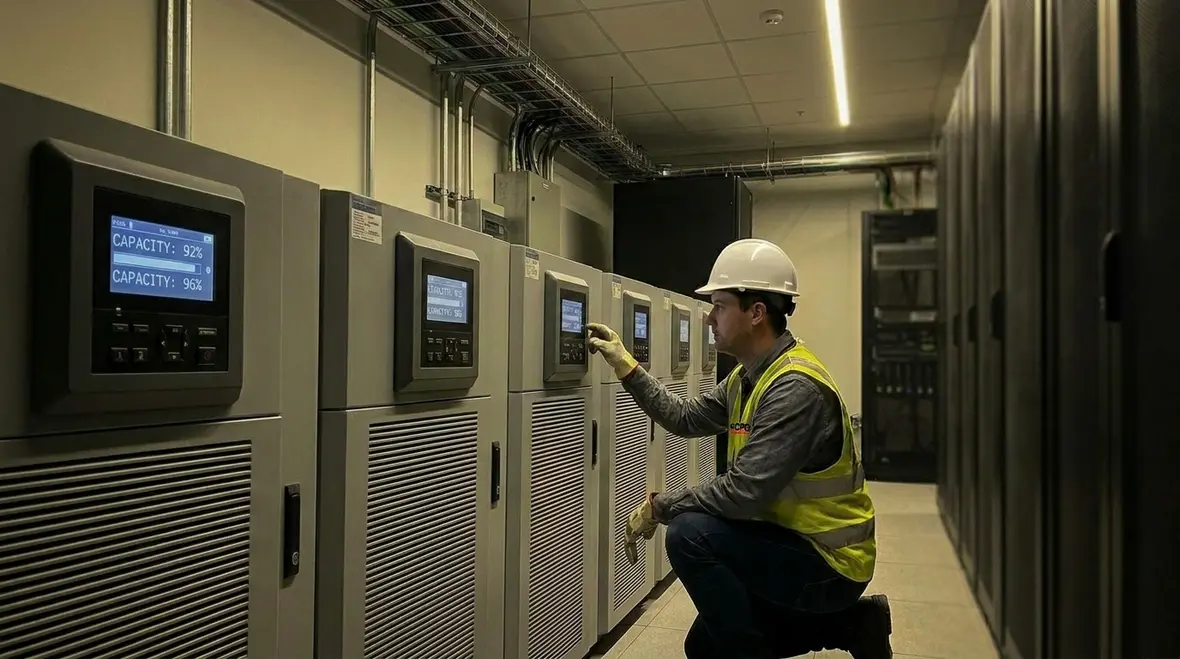
In data centers, UPS systems often serve as the buffer between utility power and generator power. Consequently, UPS redundancy architecture becomes a major reliability driver. Yet many issues originate in the details: parallel firmware timing, bypass configurations, and control signals that must coordinate quickly.
Kord Electric focuses on how the UPS trains together. We review whether the UPS modules share load properly, how maintenance bypass paths isolate faults, and what happens when one module goes offline. Then we confirm that the bypass and static switch logic aligns with protection coordination. When our technicians explain this step, they keep it calm and practical, because the goal is for operators to understand actions during alarms without guessing.
Also, we encourage teams to map the switching sequence for each credible failure. That includes utility loss, generator start, breaker failures, and a single UPS cabinet fault. And yes, if someone says “it will switch automatically,” we ask what “automatically” means in seconds and in steps. Power systems do not run on confidence alone.

Evaluating generator redundancy and transfer pathways
Generators form a long runtime plan, while UPS provides short runtime protection. Therefore, a reliable design must integrate both. Kord Electric evaluates generator systems by looking at start and transfer performance, fuel strategy, and electrical coordination between ATS or transfer switches, switchgear, and critical distribution panels.
First, we confirm the generator capacity versus load profile. Next, we validate whether the load will transfer cleanly during real start conditions, including voltage and frequency variations. Then we examine whether transfer equipment and controls create unnecessary downtime. In many facilities, the bottleneck is not the generator itself, but the pathway that moves load from utility to generator.
Here is where we connect reliability to cost reality. Our team often uses the same disciplined approach we explain in our commercial rewiring cost guide, where we break down what drives cost in real projects like labor scope, equipment changes, downtime planning, and the level of complexity. By applying that same mindset, we help data center teams avoid hidden costs from late design changes, rushed switchgear updates, or generator coordination gaps that trigger rework.
Balancing reliability with budget and project downtime
Even the strongest redundancy plan can become expensive if installation sequencing goes wrong. Thus, Kord Electric evaluates architecture alternatives with a budget lens that respects how construction affects operations. For commercial and industrial facilities and major property buildings, downtime is rarely “free,” so the design must support a safe phasing plan.
We typically break budget into categories: planning and engineering, switchgear and distribution equipment, UPS and batteries, generator and transfer controls, protection devices, testing, and commissioning. Then we add the operational cost of downtime risk, schedule delays, and extended commissioning windows. As our service staff explains, a project that saves money on equipment can cost more later if the team has to change it after energization or reroute feeders at the last moment.
To keep the process practical, we also consider how much work the facility can tolerate during each outage window. If the site can only shut down small zones, we design redundancy upgrades that match those constraints. That is how we keep the project moving and keep critical systems online as much as possible.
Assessing failure modes beyond the obvious
Redundancy plans often focus on major equipment like transformers, UPS units, or generators. However, reliability hinges on less dramatic elements too: protection settings, cable routing, grounding and bonding practices, and control wiring integrity. And yes, some faults do not look exciting until they take your day and put it in a blender.
Kord Electric evaluates failure modes in a structured way. We review what happens if a breaker fails to open or fails to close, how relays coordinate through the hierarchy, and how alarms reach the right operational group. Then we check for cascading failures, where one isolation action unintentionally trips related protective schemes.
We also verify that redundancy does not create new problems, like miscoordination that causes nuisance trips. Our technicians explain these points with clear cause and effect, so facility teams can understand the risk without getting lost in a sea of schematics. As a result, we help clients reduce the gap between “designed redundancy” and “experienced reliability.”
Commissioning, testing, and documentation that operators can use
Once the architecture gets built, the work shifts from design to proof. Kord Electric emphasizes commissioning and testing because verification prevents surprises. We help clients plan tests for switching events, protection coordination checks, UPS transfer behavior, and generator transition performance. Then we confirm that the as-built drawings match the real installation.
Documentation matters because operators need clarity during alarms. Therefore, we help teams ensure that single line diagrams, ladder logic summaries, and operating procedures align with the field. Additionally, we support training so that the facility does not rely on one person who “knows how it works,” because reliability should not depend on luck or memory.
And for the record, we like our jokes light. Still, we will say this: when documentation is missing, the system becomes a mystery novel, and nobody wants to turn pages during a failure event.
FAQ
Conclusion and call to action
Reliability does not happen by accident. Kord Electric evaluates redundancy as a full electrical system, and we help commercial and industrial clients choose architectures that perform under real failure modes, not just ideal diagrams. If your team plans a new build or a major property upgrade, reach out to us now. Our technicians and expert service staff will review your current power paths, explain the tradeoffs in clear language, and map a practical plan for safer uptime. Let us turn risk into a controlled outcome.
If you are exploring broader improvements to your data center or critical facility, you can also review related guides like Data Center Electrical Distribution Design for Reliability and Data Center Electrical Infrastructure Essentials to see how redundancy, distribution, and code compliance work together as one system.
When you are ready to translate plans into action, Kord Electric’s dedicated commercial and industrial electrical services team can help design, install, and maintain the data center power redundancy solutions that keep your critical loads running without drama.


