Warehouse LED Lighting Controls Optimization
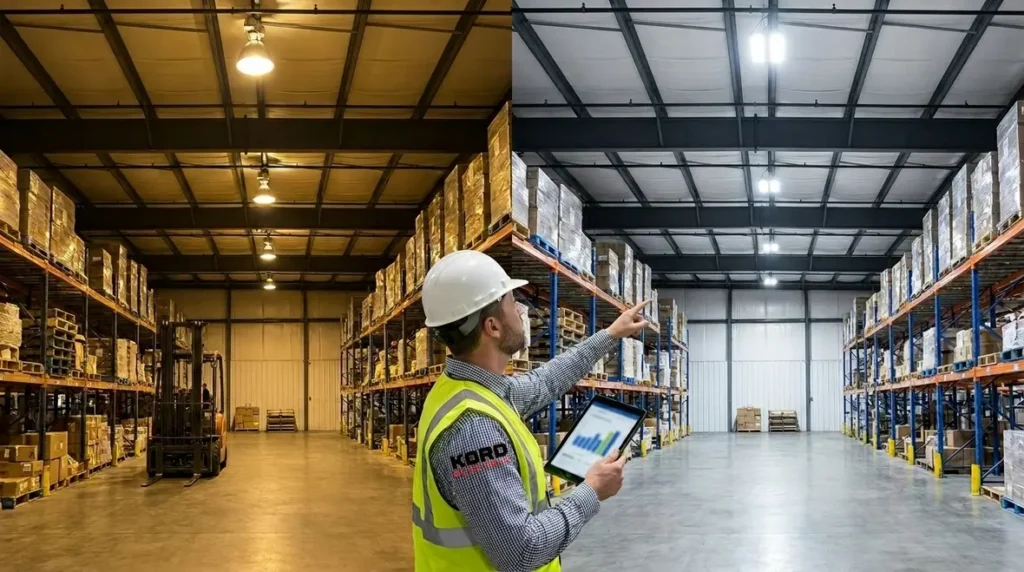
At Kord Electric, we see warehouses as living systems, not just boxes where inventory sits. When we apply warehouse LED lighting controls optimization, we help facilities cut waste, reduce maintenance calls, and keep workers safe and comfortable. However, the real win starts after the lights turn on. Smart lighting control integration connects fixtures, sensors, schedules, and zones so the building responds to reality, not guesses from a switch timer that is stuck in the past. And yes, we have met that timer. It still believes it is the year 2001.
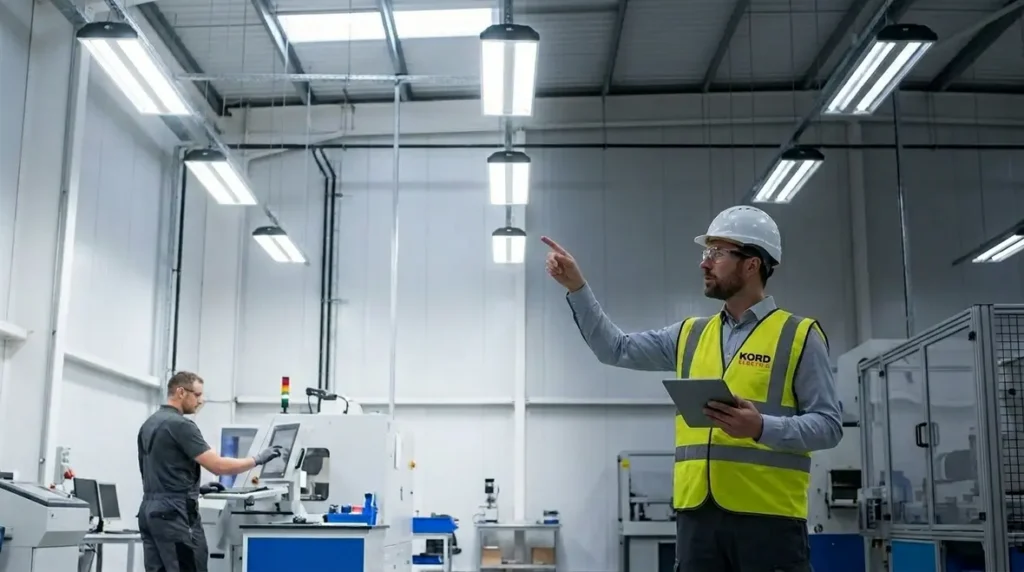
In the same way commercial electrical systems for modern buildings work together, smart lighting controls must coordinate with other building functions so the site runs smoothly. That is where our technicians and expert service staff step in. They explain what we install, why we install it, and how it performs after the first week, not just on the first day.
Why smart lighting controls belong in commercial warehouses
In a commercial and industrial warehouse, lighting should support fast work and clean safety standards. Yet most sites still rely on fixed output, one-size-fits-all layouts, and schedules that do not match actual shifts. For example, if the receiving area stays busy while the storage aisles sit idle, uniform lighting becomes wasted electricity and higher lamp wear.
With warehouse LED lighting controls optimization, we target behavior, space use, and occupancy. As a result, lights dim when the area empties, brighten when motion and tasks appear, and remain stable during long processes like staging and loading. Furthermore, the controls can group spaces into zones that match the facility floor plan, so the system does not treat every corner as equal.
In plain terms, the building stops acting like it is trying to impress a high school talent show every night, and it starts acting like a professional.

How integration changes energy use without hurting productivity
A smart lighting control system does not simply “turn lights on and off.” Instead, it measures conditions and follows logic. First, occupancy sensors detect people and vehicles where allowed, then the controls adjust brightness based on preset levels. Next, daylight sensors can reduce output near skylights or exterior rollup doors. Finally, scheduling aligns lighting performance to real shift patterns, including nights, weekends, and seasonal operations.
Because we serve commercial and industrial facilities and major property buildings, we plan integration around the site’s rules and safety needs. For instance, loading docks require reliable visibility. Therefore, we configure controls so essential zones reach full light at the right moment. Then we keep noncritical areas at energy friendly levels to reduce overall consumption.
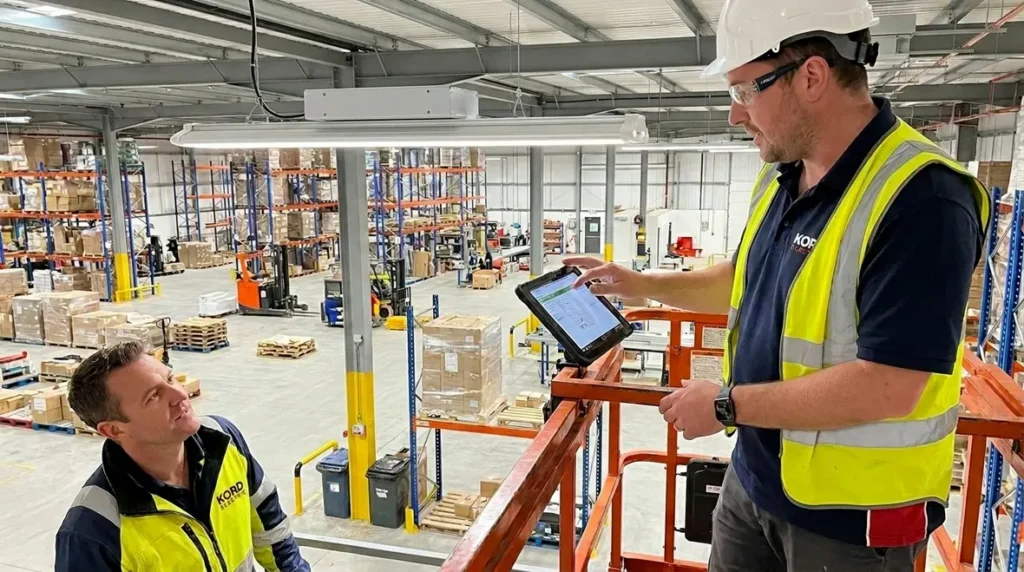
Our technicians also verify settings with the people who work on the floor. They ask what tasks happen, when forklifts move, where shadows form, and how glare affects safety. As soon as the crew confirms comfort, we lock in the logic. That is how we protect productivity while lowering energy waste.

Zones, sensors, and dimming levels that actually make sense
Many facilities install sensors and hope for the best. However, warehouses need a plan. We design zones based on traffic flow and work patterns, not just ceiling layout. Then we select sensors that match the environment. Dust, air movement, and temperature changes matter. For this reason, we review mounting heights, sensor coverage, and how vehicles affect detection.
Dimming strategy matters too. If the system dims too aggressively, workers feel it and productivity dips. If it stays too bright, energy savings shrink. So we tune dimming levels by area type. For example, we often handle receiving, packing, and picking as different zones with distinct brightness targets. Meanwhile, aisles for long storage can run lower levels until motion confirms activity.
In addition, we integrate time based overrides for scheduled tasks. When a pallet jack or lift visits an area, the controls respond quickly, and then gradually return to lower output. Therefore, the experience feels steady rather than jumpy. It is like having lights that know the routine, not lights that act surprised every time someone walks in.

Linking controls to the broader electrical system
Smart lighting controls work best when they connect to the building electrical approach. In our experience, commercial electrical systems for modern buildings need coordinated planning for power monitoring, safety behavior, and maintenance workflows. Lighting controls should align with how the facility manages circuits and panels, and how the site tracks electrical performance. For a deeper look at that bigger picture, explore our guide on commercial electrical systems for modern buildings.
At Kord Electric, we consider the entire path from the panel to the fixture. We confirm load compatibility, confirm the control device’s power requirements, and verify any network components if the system uses communication features. Then we coordinate with the facility’s procedures for alarms, night operations, and access control.
When integration supports the broader electrical system, facility managers gain clearer visibility. They can spot trends, see where faults occur, and plan repairs during downtime. Instead of waiting for a burn out, the staff can address issues early. That reduces the “call us at 2 a.m.” tradition. Nobody needs that. Not even the heroes in action movies.

Optimizing maintenance with diagnostics, schedules, and reporting
Maintenance does not end when the lights turn on. In most warehouses, maintenance teams juggle multiple systems while working with safety schedules and limited access windows. Smart lighting controls can reduce the friction by providing diagnostics, failure alerts, and useful run time data.
With proper configuration, we help facilities track which zones use more time, which fixtures experience frequent events, and where control communication may fail. As a result, technicians can focus on the areas that need attention instead of roaming the ceiling like a detective chasing a rumor.
Our expert service staff also sets up sensible maintenance schedules. They align checkups with the existing facility plan, and they train the staff on what the dashboards or reports mean. Then, if the facility changes use patterns, we recommend adjustments. Lighting control logic should evolve, because warehouses evolve. New racks go in. Routes shift. Seasonal goods arrive. The controls need to match the updated reality.
And yes, we document it so the next team does not have to guess what “that setting” was. We have seen enough mystery labels to last a lifetime.
Planning an upgrade: from site survey to commissioning
We start with a site survey that focuses on how the warehouse works, not just how it looks. Our technicians walk the space and map usage. They review shift schedules, zone requirements, and areas that need stable full brightness. Then they look at electrical infrastructure so the upgrade fits the real panel and circuit situation.
Next, we develop a controls layout that reflects the facility’s operations. We mark zones, confirm sensor coverage, and verify how dimming will feel at working height. Then we test logic using staged scenarios: motion present, daylight available, doors open, and times that represent normal routines.
After installation, we commission the system. That means we confirm performance, verify fault behavior, and confirm override functions. We also train the facility team on normal operation and reporting tools. As a final step, our technicians provide clear documentation for any future service or adjustments.
Because we target commercial and industrial facilities and major property buildings, we keep the process aligned with how these sites operate and how downtime affects profits. We plan for phased work when needed, and we coordinate with facility leadership so the upgrade stays safe and orderly.
Common mistakes that hurt results
Even strong systems fail when the setup ignores real warehouse conditions. Here are the mistakes we see most often, and the way we prevent them:
- Using generic zones: If the controls do not match the floor plan and traffic flow, the system wastes energy or misses activity.
- Skipping dimming calibration: If workers feel unsafe or the light changes too fast, the facility loses trust in the system.
- Overlooking sensor placement: Shadows from racking and airflow effects can reduce detection accuracy.
- Ignoring integration needs: Without alignment to the building’s electrical setup, monitoring and troubleshooting become harder.
- Training gaps: When nobody understands the reports, diagnostics remain unused and maintenance stays reactive.
These issues are solvable. However, solving them takes careful planning and a steady hand during commissioning. That is exactly why our technicians and expert service staff are part of the process from day one.
FAQ
Conclusion: let Kord Electric tune your lighting for the way your warehouse really runs
When a warehouse runs efficiently, lighting should support every move without waste. Kord Electric delivers warehouse LED lighting controls optimization through careful zoning, realistic dimming calibration, and solid commissioning, all backed by our technicians and expert service staff who explain the system in plain language. If your facility wants better safety, lower energy costs, and maintenance that feels planned instead of urgent, contact us. We will review your site and map the upgrade path that fits your operations.
If your team is also planning broader upgrades beyond lighting controls, our experience with industrial lighting layout optimization for efficiency and other commercial projects helps keep your warehouse strategy aligned from fixtures to panels.
When you are ready to move from ideas to implementation, our commercial and industrial services team can coordinate everything from controls integration to panel work and safety checks so your upgrade feels organized instead of disruptive.
To talk through a project, schedule a walkthrough, or connect this work with other electrical improvements at your site, explore our commercial and industrial services and let us know how your warehouse really runs today.