

Data Center Power Redundancy Strategies Guide
At Kord Electric, we treat downtime like a tax nobody voted for. In commercial and industrial data centers, our technicians focus on data center power redundancy strategies that keep critical loads alive when equipment fails. We plan for layered protection, test it like it matters, and document it so the next shift can act fast, not panic. First, we design power paths that can carry the load even when one component trips out. Then we add monitoring, switching, and maintenance routines that prevent small problems from becoming big stories. And yes, we will also remind operators that “surprise outages” are not a strategy. Like a plot twist in a superhero movie, they should happen only in fiction.
What “uptime” really means to a data center operator
For owners and operators, uptime means more than “the lights stay on.” It means your IT gear, storage systems, and cooling controls keep running through abnormal events such as breaker trips, generator transfer delays, maintenance windows, or upstream utility disturbances. Then there is the business side: reduced outages protect revenue, contracts, and reputation. In practice, however, uptime depends on how well the electrical system absorbs problems without transferring stress to the next component.
So we look at failure points, not slogans. For example, a data center can have “redundant” gear, yet still suffer a prolonged interruption because the bypass path, controls, or commissioning work does not match real operating conditions. In other words, redundant equipment is only half the plan. The other half is how the system behaves when humans and alarms show up at the same time.
Build layered redundancy with N, N, and N plus one thinking
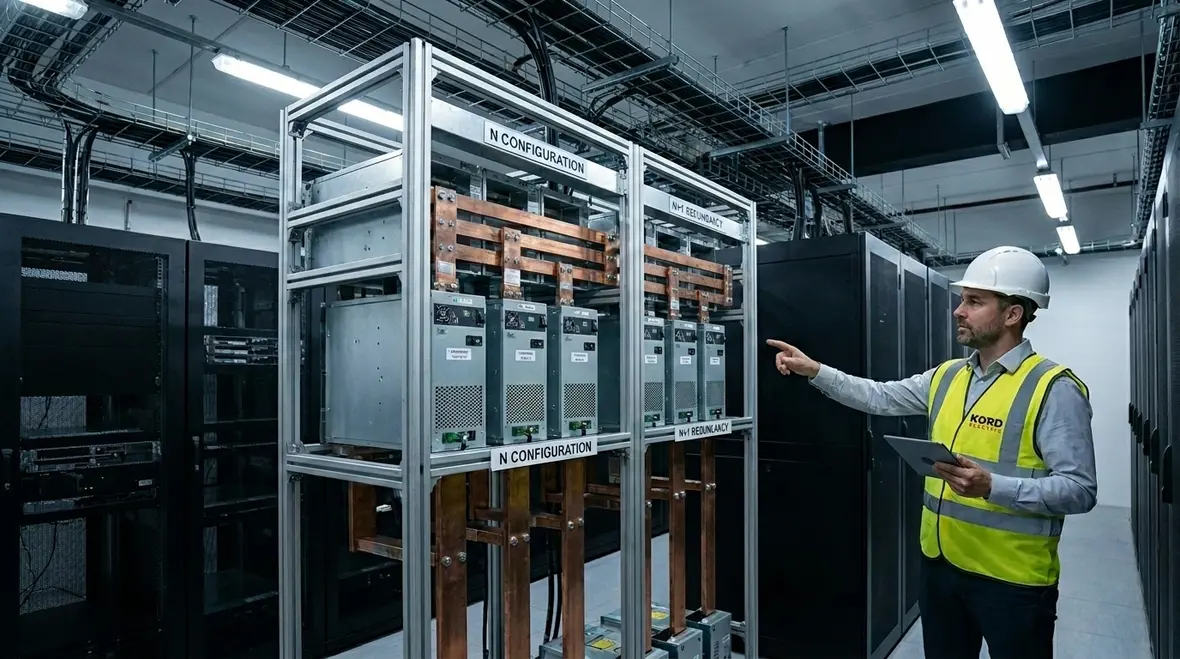
When others talk redundancy, we prefer clear layers. Our team often uses data center power redundancy strategies aligned to common operational needs, such as N, N plus one, or other engineered arrangements based on capacity targets and risk tolerance. The goal is to keep critical loads supplied even after a single failure or a planned maintenance action.
Layering usually starts with independent power sources. Next, it continues through separate distribution paths, protective devices, and transfer mechanisms. Then we verify that control logic and synchronization systems avoid unsafe states during switching. That is where many designs fall short: they assume the equipment will behave perfectly, but real systems need correct settings, coordination, and test results.
To make this practical, our expert service staff review single points of failure and how each path carries the load during abnormal conditions. We also consider the “time factor,” meaning how long transfer takes, how quickly UPS systems cover the gap, and how quickly generators reach stable output under load.
For facility leaders who want a broader view of how redundancy ties into overall electrical design, our commercial electrical systems for modern buildings guide shows how smart infrastructure and dependable power planning work together across large properties.
UPS and fast transfer: the gap you must design for
Even with ideal planning, transfers take time. That is why we treat UPS and fast transfer paths as a bridge, not a decoration. A UPS system handles the short outage window and smooths transitions so that servers and network equipment do not see harmful dips. Then, when transfer occurs, the switching sequence should be predictable and repeatable.
Our technicians explain it in plain terms during commissioning. They show where ride through happens, what alarms should trigger, and which indicators confirm the load moved correctly. Meanwhile, they confirm that bypass operations keep the critical path stable. If the bypass sequence cannot complete safely, the redundancy exists on paper, not in the rack room.
And yes, we sometimes hear a joke in the field: “UPS stands for Universal Saves Power.” In reality, it saves power because someone tested the system last week, not because it feels generous today.
Generator redundancy and the real job of controls
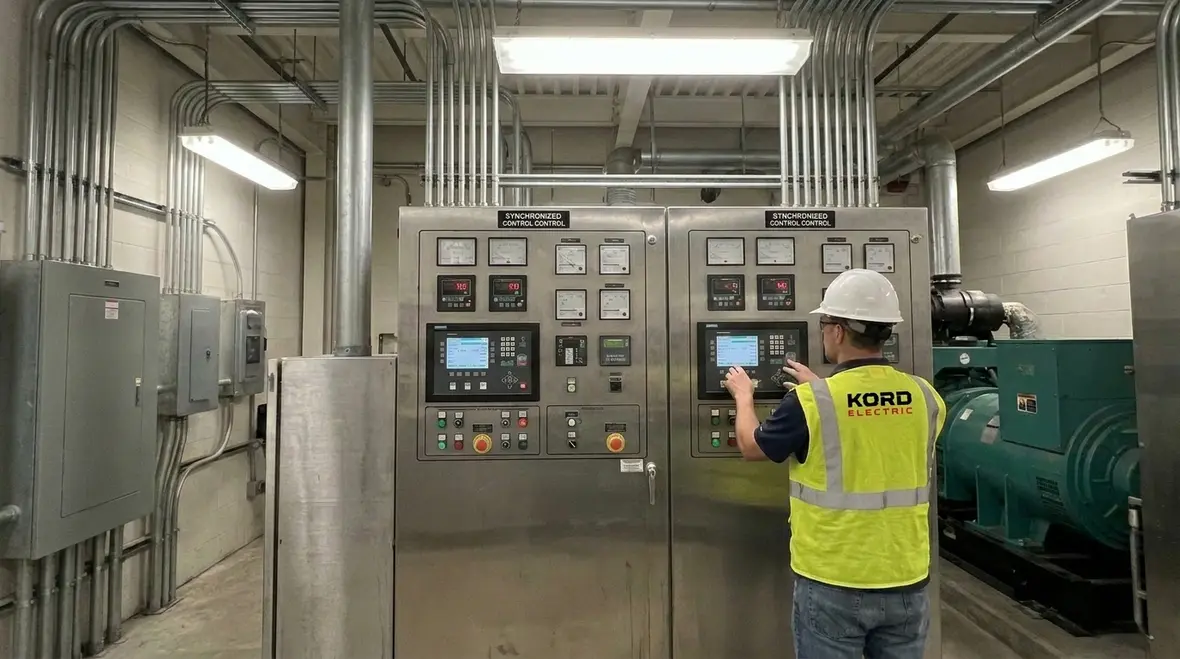
Generators often handle longer disturbances, but they only help if transfer and control logic works as intended. Our team evaluates start reliability, fuel supply strategies, voltage and frequency regulation behavior, and protection coordination across the whole system. Then we examine the automatic transfer scheme to ensure it does not create a cascading delay.
Controls matter most during the moments that stress the system: utility failure detection, generator start sequence timing, load step behavior, and synchronization if applicable. We also focus on how operators interact with the system during events. For example, a transfer plan that works only in a perfect simulation may fail under real maintenance conditions, when operators need to isolate a circuit without disrupting the critical loads.
We also include routine exercise schedules and load testing guidance for major commercial and industrial facilities. When our expert service staff handle these activities, they capture results and adjust settings when needed. That way, the “test” does not become a one time ritual that ends after the report gets filed.
Switchgear, transfer switches, and bypass paths that actually work
Power redundancy collapses when distribution devices cannot operate under stress. That is why we focus on switchgear design, transfer switch selection, and the bypass arrangement that supports maintenance. We help clients plan for safe isolation of components so critical loads stay supported while technicians perform work.
During design and field review, our approach checks coordination and interlocks. We verify that breakers, relays, and transfer switches maintain correct sequence timing. We also ensure the system limits inrush current and avoids unintended trips. In addition, we look at how bus transfer and sectionalizing strategies influence fault clearing times.
Then we bring it home with documentation. Our expert service staff create clear operating steps for major property buildings and data centers, including what operators should do, what they should not do, and what alarms mean. Because in the middle of an incident, people need the right answer fast, not a guess that sounds confident.
Monitoring, alarms, and preventive maintenance that reduce surprises
Redundancy helps you survive failures, but prevention helps you avoid them. Therefore, we combine electrical design with monitoring strategies. That includes integrating metering, status contacts, and fault indicators so the team can spot deterioration early. We also recommend alarm logic that tells operators what matters, not what is merely noisy.
Next, preventive maintenance becomes a structured process. Our technicians do not treat maintenance as a checkbox. Instead, we verify test intervals, check battery health, inspect connections, verify torque and terminations where applicable, and evaluate thermal performance. Then we review generator readiness and UPS performance so that system behavior stays aligned with the design intent.
To reduce downtime, we also support commissioning and post installation verification for critical electrical systems. When we do this work for commercial and industrial facilities, we align settings, confirm component coordination, and confirm that transfers perform correctly in real operating modes. In short, we help others move from “it should work” to “it has proven it works.”
Planning for maintenance mode without killing critical loads
Major propertie buildings and data centers often require planned maintenance during business hours. Yet planned work can still create unplanned outages if the redundancy plan does not cover the maintenance state. That is why we build for serviceability: bypass paths, isolation sections, and clear operational modes that keep critical loads supplied.
Our expert service staff work with client teams to map out maintenance scenarios. For each scenario, we verify power flow, transfer sequence behavior, and protection settings. Then we document the operating steps so the facility team can execute the plan confidently. If an isolation action risks overloading the remaining path, we identify it early and propose adjustments before any equipment gets locked out.
Also, we make sure that the facility can transition between modes without confusion. Like a well choreographed dance, redundancy should feel smooth even when schedules get hectic.
How data center power redundancy strategies support uptime
The strongest data center power redundancy strategies do more than satisfy a drawing set. They support the real uptime requirements of modern IT environments, from edge computing racks to hyperscale facilities. In practice, this means designing and operating power paths that carry the real load profile, recognizing that equipment will age, operators will change, and workloads will grow.
We align our redundancy planning with practical questions: how will the system behave during a utility disturbance, a failed breaker, or a scheduled shutdown of a UPS module? What happens if a generator start is delayed, or an automatic transfer switch hesitates in mid operation? Our technicians walk through these scenarios with facility staff so the team knows what to expect and how to respond without guesswork.
We also coordinate redundancy with other reliability driven initiatives, such as power quality improvements, grounding review, and load management. In many commercial and industrial data centers, solving nuisance trips or unexplained alarms requires looking beyond a single device to the entire power chain.
For data center operators in complex properties, we often connect redundancy discussions to broader distribution planning, building on insights from our work on data center electrical distribution design for reliability and related maintenance programs. That way, redundancy becomes part of a long term strategy, not just a box checked during construction.
FAQ
Conclusion: let’s harden your power system before trouble arrives
Kord Electric helps commercial and industrial data centers protect uptime with practical redundancy design, careful commissioning, and steady expert service staff support. When the power system behaves predictably during abnormal events, operators spend less time reacting and more time running the business. If you are planning upgrades or want to reduce risk in your current facility, contact Kord Electric for a reliability focused electrical assessment and a clear path forward. We will explain what matters, test what counts, and help keep your critical loads secure.
For facilities across the region, our team provides full Los Angeles County electrical services that connect data center reliability goals with broader building needs, from distribution upgrades to long term maintenance planning.
If you are ready to align your data center power redundancy strategies with real world operating demands, our dedicated data center and commercial electrical specialists can help you design, test, and maintain a system that supports your uptime targets today and as your loads grow.


