Emergency Power Backup for Business Planning
How Kord Electric helps you plan for outages with an emergency power backup for business
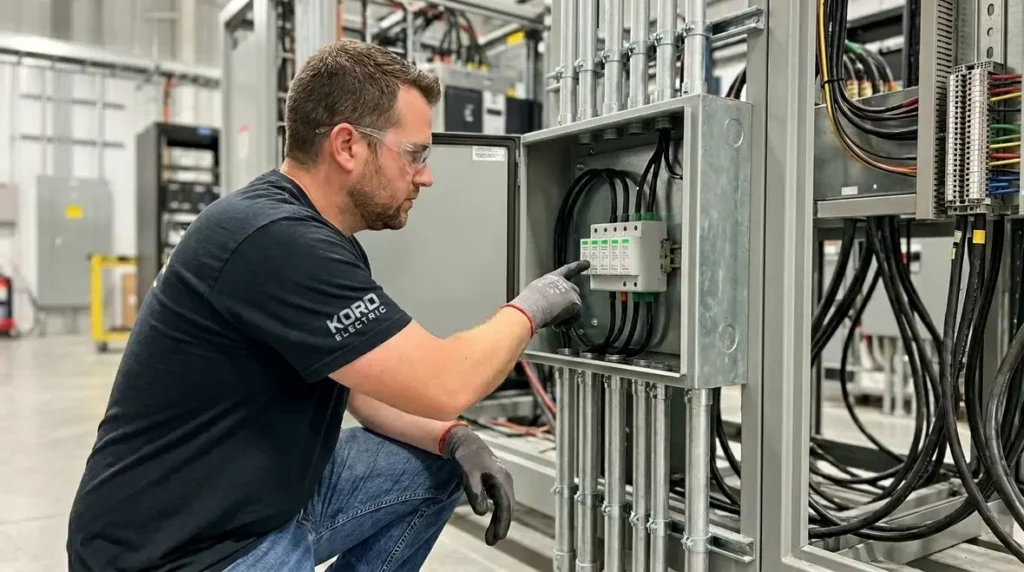
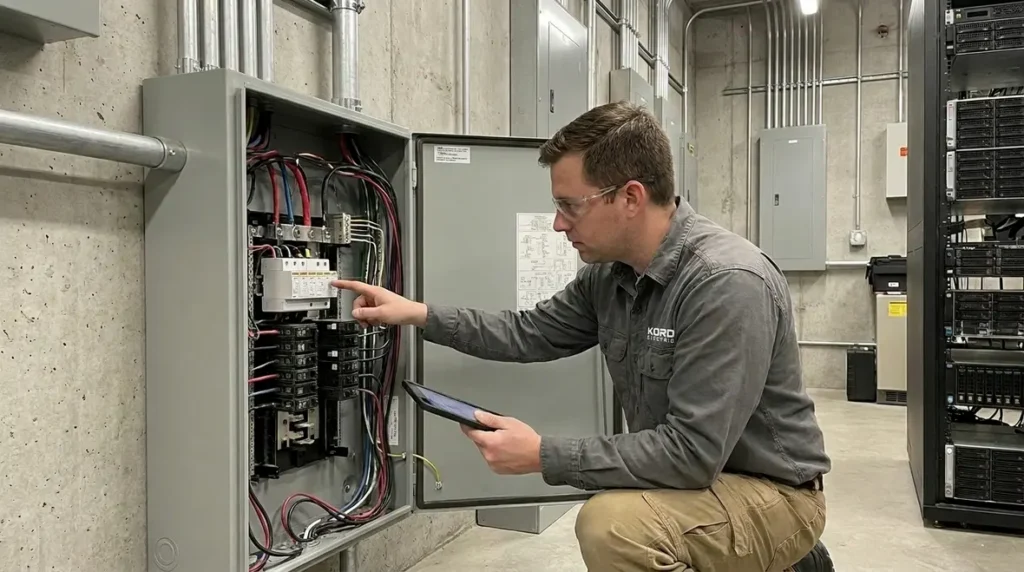
When the lights go out, commercial and industrial work does not pause. At Kord Electric, we design and service emergency power backup for business systems so critical operations keep running when the utility fails. And yes, we also explain what we install in plain language, because “mystery box electricity” is fun only in movies. Our technicians and expert service staff walk facilities through the real risks, the real loads, and the right response plan, so decisions get easier before the next storm, switchgear fault, or unexpected outage hits.
In the sections ahead, we help others choose a backup system that fits their building, their processes, and their timelines. We also address the hidden electrical risks that many property teams miss until it is too late.
What business continuity planning gets wrong in commercial buildings
Most teams do not start with a bad intention. Instead, they start with incomplete information. Then they assume their electrical system will “hold up” the way it always has, which is comforting, like telling a smoke alarm to “take a break.”
First, they underestimate what the outage actually affects. A building does not fail at one point. It fails across doors, elevators, refrigeration, pumps, controls, server rooms, and production lines. So, during planning, we help our clients list loads by time sensitivity, not by convenience. Next, they skip load testing or use vague nameplate values. As a result, the backup system may run, but not for long enough, or it may trip during startup.
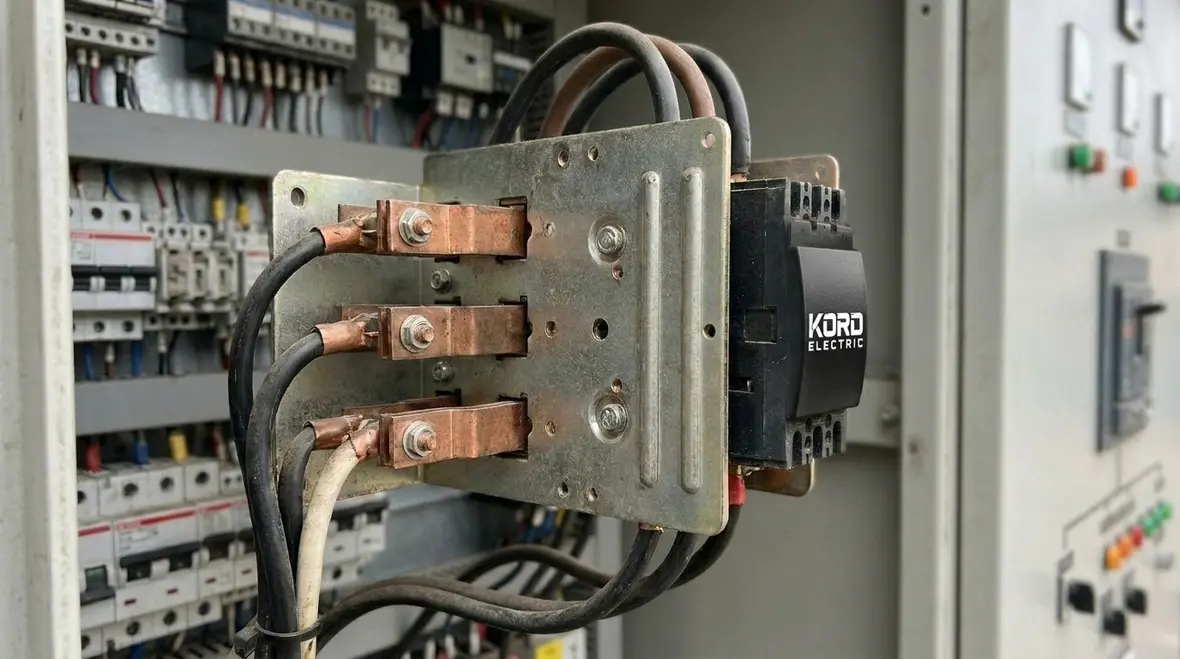
Third, teams often ignore electrical hazards that sit quietly in the background. For example, hidden issues in commercial wiring, panel design, and grounding can create heat, voltage drops, and nuisance tripping. Kord Electric often references the type of risks described in our blog about hidden electrical risks in commercial buildings, because those conditions can reduce reliability right when you need power most.
Finally, some organizations treat the backup system as a one-time purchase. However, business continuity planning requires training, maintenance, and periodic verification. A system that looks perfect on day one can drift out of alignment without a steady service rhythm.
Emergency power backup for business: the load reality that decides everything

Choosing a backup system starts with a simple truth: emergency power backup for business is not about “having power.” It is about powering the right things at the right time. Therefore, our technicians begin with load mapping that reflects the way operations actually run.
They separate loads into categories. Critical loads must stay alive, even at the worst moment. Support loads keep safety and stability in place. Optional loads can wait. For industrial sites, we also account for motor starting behavior, because motors pull current like they are trying to audition for a superhero role.
Once loads get categorized, we evaluate:
- Start and running wattage, including surge current for motors and compressors
- Voltage and power quality needs for controls and sensitive equipment
- Runtime targets based on process timelines and staffing
- Transfer speed requirements, especially for systems that cannot tolerate long dips
Then we stress-test the plan with real constraints. Fuel supply limits, generator sizing margins, and switchgear interactions matter. And so does the building’s electrical health, because weak components can consume capacity or trigger faults.
At this stage, our expert service staff often shows stakeholders a practical model: if you want stability for a server room and safety systems, you do not size “everything you can think of.” You size what must survive. After that, any extra capacity becomes a bonus rather than a false promise.
Diesel, natural gas, batteries, and hybrids: what fits a facility
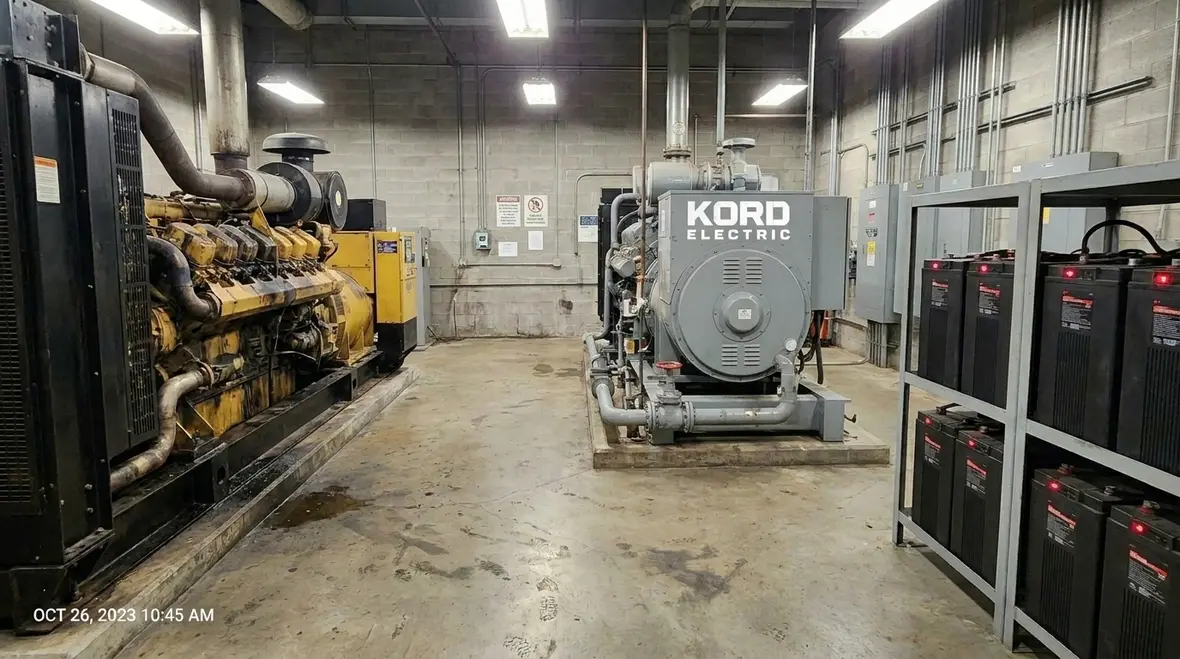
Facilities vary. Some need power for minutes. Others need power for days. So, Kord Electric compares options based on site conditions, load profile, and continuity goals.
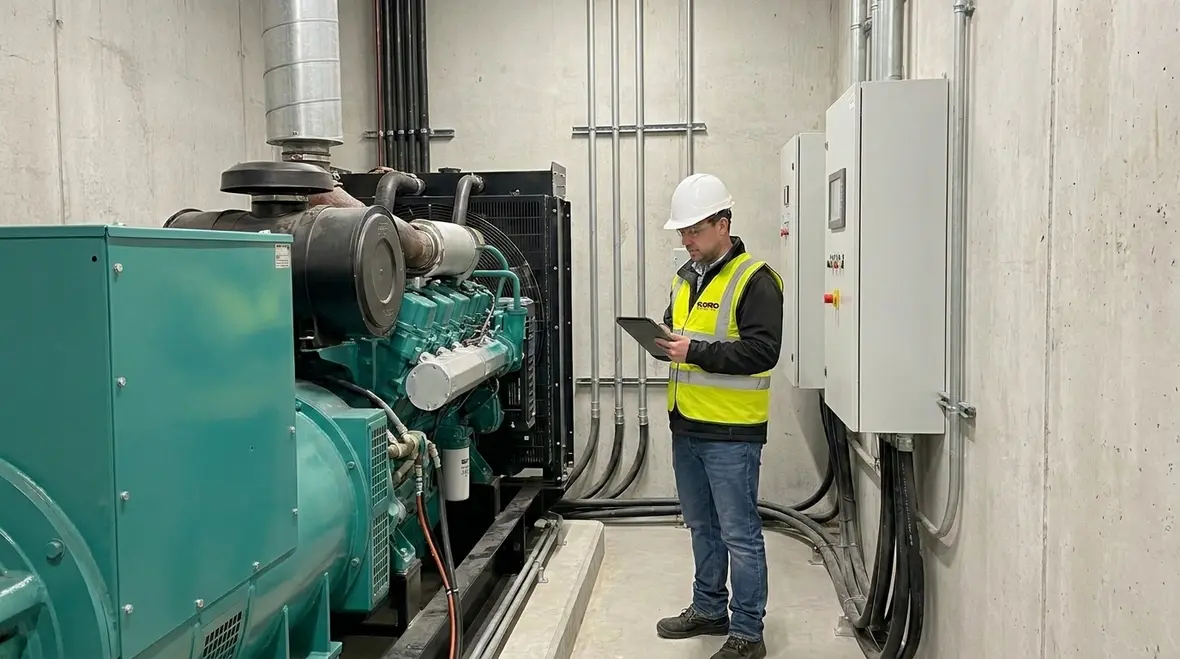
Diesel generators often provide strong runtime flexibility for many industrial and large commercial sites. They can support a wide range of loads, and their operating model suits long outages. However, they require space, fuel logistics, and regular maintenance to keep performance steady.
Natural gas systems offer another path, especially where gas supply already exists. They can reduce on site fuel handling. Still, the building must support reliable gas supply and the equipment must integrate cleanly with controls.
Batteries can cover short transitions, which helps with immediate ride through while transfer and larger equipment come online. They can also support high value loads in facilities that cannot tolerate even brief instability. Yet, battery systems have runtime limits unless they are sized for extended operation, which can affect cost and footprint.
Hybrid setups often combine strengths. For example, batteries handle the first seconds, while a generator carries the load for longer durations. Therefore, the solution can reduce stress on mechanical startup and improve continuity for sensitive equipment.
As our technicians explain it, the best system is the one that matches how the facility fails. If the site loses power and must keep controls, safety, and production stable, then the design should prevent cascading problems. If the facility can start a controlled shutdown, then the system can focus on enough power to get there safely.
Transfer switches and switchgear coordination that prevents chaos
A backup system does not help if the transfer process causes interruptions, trips, or unsafe states. Consequently, we focus heavily on transfer switches and coordination with existing switchgear.
In many buildings, critical circuits pass through panels, breakers, and protective devices that were designed for normal utility power. During an outage, those protective settings still matter. If the system transfers too slowly or too abruptly, certain loads can drop out. Then they can restart in the wrong order, leading to stress, voltage dips, or breaker trips.
Our expert service staff checks for:
- Appropriate transfer method and timing for the loads involved
- Breaker coordination to avoid nuisance trips
- Control logic compatibility with existing building systems
- Detection of abnormal conditions to protect equipment
Also, we verify how the building will behave during generator startup. Motors, HVAC control sequences, and process equipment often create staggered start needs. So, we help clients plan startup priorities. This keeps the system from acting like a crowded kitchen where everyone grabs the stove at the same time.
In the same spirit as our blog on hidden electrical risks, we remind teams that aging connections, overheated terminals, and weak grounding can create failure points under surge conditions. When coordination gets paired with electrical health checks, the system stays calm during the moment it should.
Hidden electrical risks that lower reliability during outages
Some issues remain invisible until the load profile changes. During outages, power comes from a different source, voltage patterns shift, and controls restart. Therefore, hidden electrical risks can suddenly become loud.
Kord Electric often sees problems like poor terminations, overheating at bus connections, weak grounding paths, and inadequate insulation integrity. These conditions can cause voltage drops, harmonics, and trips. They can also reduce the margin a backup system needs to run stable under real demand.
We also look at the broader electrical environment. Facilities with inconsistent maintenance schedules may have small faults that grow over time. Then, when a generator takes over, the system sees the truth. A “minor” condition can turn into a major interruption.
That is why we encourage planning that includes baseline electrical checks before sizing and commissioning. It is less exciting than ordering equipment, but it prevents the scenario where the backup system performs flawlessly and the building still fails because a different component could not handle the moment.
To keep everything grounded, our technicians document findings and recommend upgrades only where they reduce outage risk for commercial and industrial operations. We focus on reliability, safety, and practical outcomes for major property buildings, not one-off fixes. For facilities that want to strengthen everyday performance alongside outage readiness, our electrical preventive maintenance services can align inspections, testing, and upgrades into one clear plan.
Maintenance, testing, and training so the system works when it counts
A backup system that never gets tested is like a fire drill where nobody shows up. You can feel confident, but the building does not get the benefit of preparation.
We build maintenance plans around how the facility uses power. That means scheduled generator checks, battery health verification where applicable, transfer switch inspection, and load bank testing when appropriate. Then we tie those tasks to real outage readiness. If the facility needs to run critical equipment for a specific time window, tests should confirm runtime and stability under load.
Our expert service staff also trains facility teams. We teach how to recognize alarms, what shutdown steps to take for safety, and who should communicate with operators during an event. In many sites, operations and electrical teams share responsibility. Therefore, clear roles and response steps reduce delays when decisions must happen fast.
Finally, we advise clients to review the continuity plan when the building changes. Equipment upgrades, new production lines, and HVAC replacements alter electrical demand. If the load profile changes, the backup system plan should change too. For organizations updating larger portfolios or adding new technologies, our insights on commercial electrical systems for modern buildings and related topics in the Los Angeles County electrical services area can help align reliability goals with local requirements.
FAQ
Ready for a continuity plan that survives the real outage
Kord Electric helps commercial and industrial facilities choose and maintain emergency power backup for business systems that actually perform. Our technicians and expert service staff evaluate loads, coordinate transfer and switchgear, and address hidden electrical risks before they become failure points. If you want a plan built for your operation, not a template, reach out to us for a site-focused assessment. Then we will design a system that keeps your critical work moving, even when the lights decide to quit.
For teams that want to connect outage planning with everyday reliability, you can also explore related insights in our Kord Electric blog, including articles such as Emergency Power Failures in Commercial Buildings and our piece on hidden electrical risks in commercial buildings. Together, they outline how maintenance, load planning, and emergency response fit into one continuity strategy instead of separate projects.
Whether you manage a single major property or a portfolio across the region, aligning your emergency power strategy with dedicated service support in areas like Los Angeles County electrical services helps keep inspections, upgrades, and testing on one clear roadmap. That way, the next outage becomes a measured event your team is ready to handle, not a guessing game in the dark.