Facility Manager LED Retrofit Lighting Guide
Facility manager playbook: LED retrofit lighting guide for real-world projects
In the first leg of every plan, we start with our LED retrofit lighting guide, because a facility manager cannot afford guesswork. We follow a clear path: review the site, map the existing fixtures, set performance goals, and verify that the new system will work with the building’s electrical, controls, and maintenance rhythm. Others call this “a lighting project.” We call it “keeping the lights on and the headaches off.” And yes, we mean both the electrical headaches and the human ones, because change management can feel like herding cats in a server room.
Our approach stays calm and methodical. Then, as the retrofit moves forward, our technicians and expert service staff explain what matters, why it matters, and how we prevent surprises. Below, we walk through the steps facility managers use most often in commercial, industrial, and major property buildings. Along the way, you can connect this LED retrofit lighting guide to other resources like our commercial lighting upgrade cost guide so the financial picture stays as clear as the lighting design.
How we scope a retrofit without disrupting operations
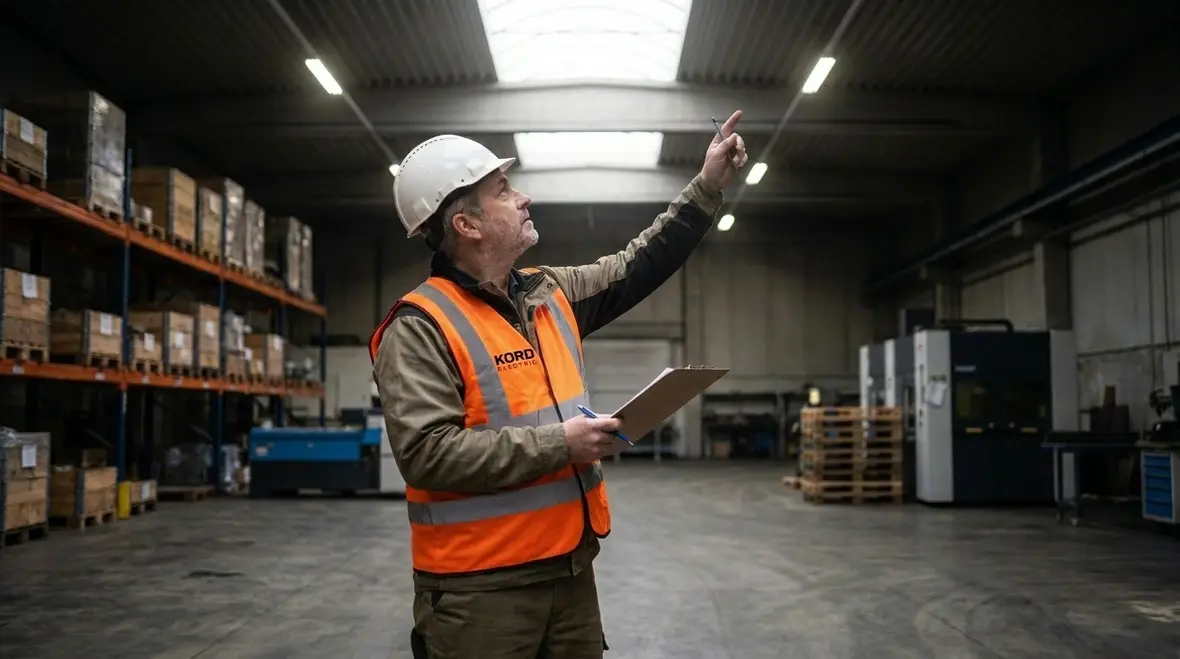
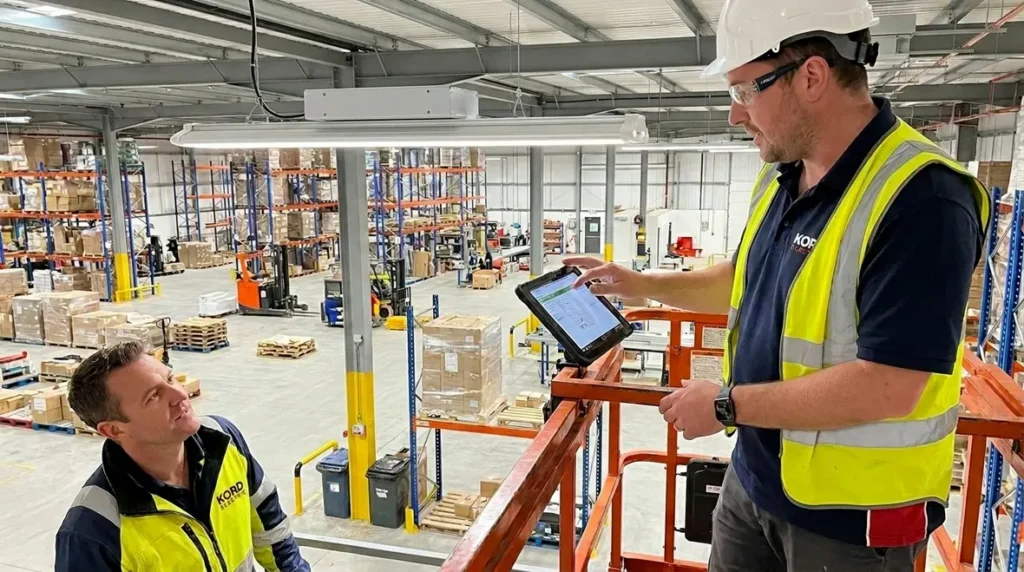
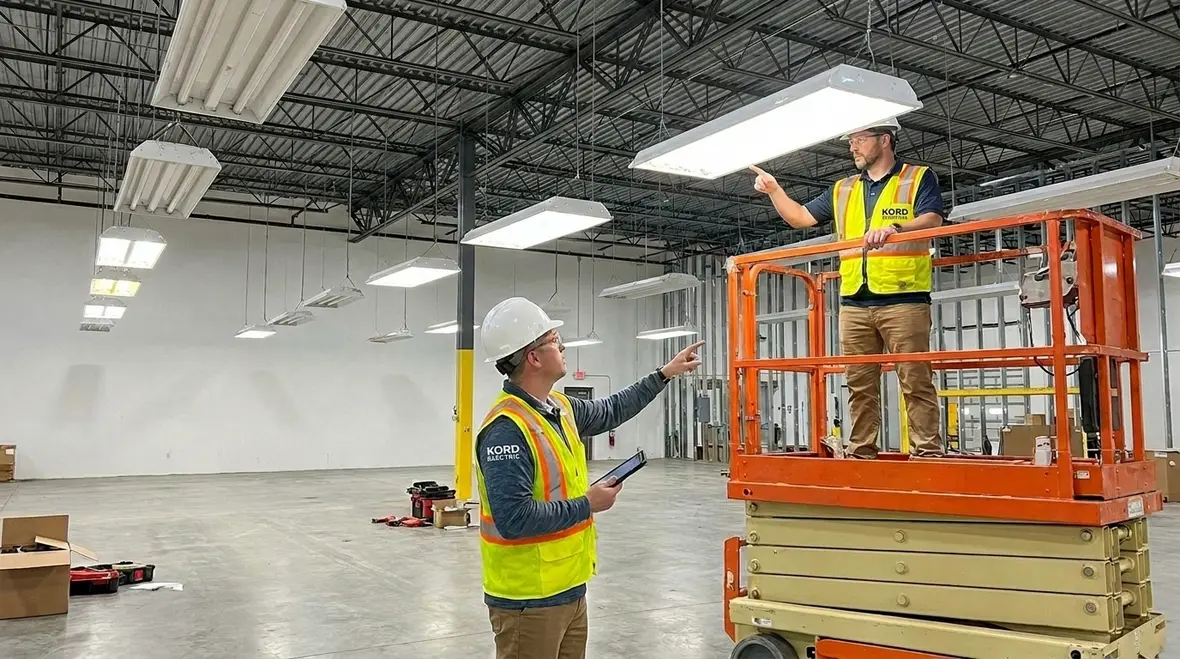
First, we build a scope that matches how a building actually runs. Instead of treating the project like a one size fits all upgrade, we gather details that affect cost, downtime, and results. We confirm building type, hours of operation, ceiling height, and the most used areas. Then we identify the fixtures that will be replaced, the fixtures that may be retained, and any spaces that need a different approach due to glare risk or visibility needs.
Next, we set success criteria. For many facilities, this includes improved uniformity, safer walking paths, better task lighting for work areas, and reduced energy costs. We also include maintenance targets, such as fewer relamp events and easier access for future service. If a manager wants long life, we plan for it from day one, not after the first round of callbacks. Transitioning to new lighting also means planning around controls, so we map that too, including sensors and dimming where it fits the operational schedule.
Finally, we prepare a disruption plan. We schedule work in phases, isolate affected circuits when needed, and coordinate with the site team on access routes. Our service staff stays close to the floor plan, because “minor inconvenience” has a way of becoming “major inconvenience” when a loading bay is blocked longer than expected. For complex facilities, pairing this plan with our broader lighting installation services keeps everything coordinated across other projects and timelines.

What data we collect before we touch a fixture
To make sound decisions, we collect practical data. We start with an inventory of current fixtures and drivers, including wattage, lamp type, ballast information, and age. Then we measure light levels at representative locations. We also check power quality and determine whether existing wiring and panels can support the retrofit.
We often see that managers have utility bills and maybe a simple lighting layout, but not the full picture. So we help close the gap. We review control strategies, including time clocks, occupancy sensors, and any existing dimming setups. If emergency lighting and exit signage sit nearby, we verify compatibility and code requirements as part of the electrical review. That avoids the classic scenario where one system works and the other system throws a fit. And trust us, electrical systems always “tell you later,” usually during peak occupancy.
Then we set a target performance. We define the desired color temperature, glare control needs, and whether the space benefits from dim to off controls. We also note special environments common in industrial and major property buildings, such as wet locations, dusty zones, and areas with higher vibration. By doing this work early, we reduce redesign later. Facility managers who want to go even deeper can align these decisions with layout concepts from our industrial lighting layout optimization for efficiency approach.
Engineering the retrofit: electrical, thermal, and control fit
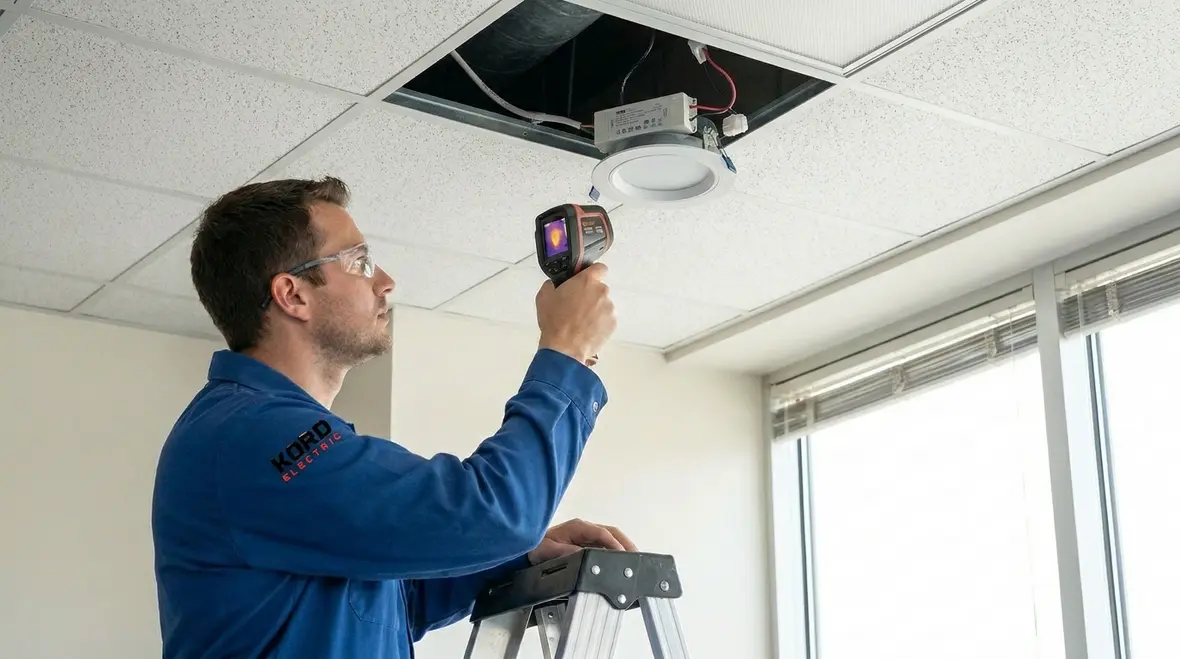
After scoping and data collection, we move into engineering. In this stage, we ensure that the LED retrofit lighting guide decisions translate into safe, reliable installs. We evaluate circuit capacity, consider voltage drop, and confirm driver compatibility. We also inspect housing and mounting conditions, because a “new” fixture that does not fit correctly becomes a “temporary” fixture. Temporary installations are how facilities end up with maintenance tours that nobody asked for.
Thermal management matters too. LEDs and drivers rely on proper heat dissipation. We verify that the mounting surface, ceiling type, and enclosure design support safe operation over the long term. Where facilities use enclosed luminaires, we check seals and ventilation paths. We also consider optics and distribution, because light quality is not only about brightness. It is about how the light lands on floors, work surfaces, and pathways.
Controls finish the technical portion. We align the retrofit with how people move and how equipment runs. For example, we avoid overcomplicated control logic when a straightforward occupancy and daylight strategy will do the job. Still, we do not ignore the opportunities either. When dimming fits the space, we configure it to match business needs, like reducing lighting during low occupancy periods without making workers feel like they are working under moonlight. Our technicians explain the settings and the behavior so your team understands what to expect after the switch-on. When advanced automation makes sense, we can integrate strategies similar to those in our automated lighting control benefits for facilities framework.
Installation planning: phases, access, and quality checks

Once engineering is set, we build an installation plan that protects operations. We phase work by area and by circuit, so production, security, and safety routines stay intact. We coordinate access routes and confirm staging locations for materials. We also define roles: the facility team supports access and lockout requirements, while our service staff handles installation sequencing and verification.
During install, we keep quality checks tight. We verify wiring terminations, confirm polarity, test controls, and ensure fixtures align properly. Then we perform a functional check that goes beyond “it powers on.” We confirm output, dimming performance, and that sensors respond as expected in real conditions. We also review coverage in the field to ensure the retrofit matches the earlier light level plan.
We document changes, including fixture counts, locations, and electrical details. That documentation helps when you plan future phases or when the building changes tenants. And it helps your team avoid the “mystery circuit” problem, where nobody can explain what was done last time because the paperwork vanished like a remote control at a hotel. For facilities in Southern California, this step pairs naturally with ongoing programs like our electrical preventive maintenance services.
Verification, commissioning, and the handoff that actually sticks
After installation, we commission the system so the performance is verified, not assumed. We recheck light levels in representative zones and confirm that the distribution meets the project goals. If the facility uses daylight harvesting or occupancy logic, we test it during different operational times. Then we review any scenes or control schedules.
We also train the people who support the building. Our technicians and expert service staff explain how controls behave, what maintenance looks like, and how to troubleshoot common issues. This includes how to interpret sensor behavior and how to respond to unexpected dimming patterns. We keep the training clear and practical, because facility teams do not need a lecture, they need answers they can use at 2 p.m. on a Tuesday when something acts weird.
Finally, we provide a handoff package. It typically includes as built details, product information, and recommended maintenance steps. We help managers align these steps with their existing maintenance schedules, which reduces “extra work” and improves long term performance. When you combine this with guidance from resources like our workplace lighting safety hazards guide, your LED retrofit becomes part of a broader safety and productivity strategy.
Common risks in LED retrofits and how we prevent them
Every facility has risks. We focus on the most common ones and address them early. One risk is mismatch between fixture optics and space needs. If the project team buys the wrong distribution, the lighting can become uneven or create glare. We prevent that by matching design targets to field conditions before ordering.
Another risk is control instability. If new drivers or fixtures do not align with existing dimming or occupancy signals, you can see flicker, erratic behavior, or unexpected dimming. We reduce this risk by evaluating control compatibility during the engineering phase and validating function during commissioning.
We also prevent electrical surprises. Under sized circuits, poor connections, or incorrect driver configurations can lead to failures or downtime. Our team checks electrical capacity and wiring fit, and we confirm terminations during install. And yes, we tighten everything like we would tighten it for our own facility, because “good enough” is a phrase that never helps when you are managing a business.
Finally, we handle maintenance realities. If the retrofit makes future access harder, maintenance costs can rise even if energy costs drop. We plan mounting and access points to support safe servicing in commercial and industrial settings. That includes respecting code and inspection priorities covered in our lighting installation code compliance guide, so retrofits stay safe and inspection-ready.
Two-column quick look: process and deliverables
Planning and design in one column, site deliverables in the other, so your team can track progress without digging through emails.
Planning and design
- Fixture inventory and condition review
- Light measurement and performance targets
- Electrical checks for capacity and fit
- Control strategy alignment
- Phased installation schedule
Site deliverables
- As built documentation and fixture mapping
- Commissioning and functional testing results
- Control verification and behavior explanation
- Maintenance guidance and handoff support
- Support for future retrofit phases
For facilities planning multiple projects at once, this quick look pairs well with our broader Los Angeles County commercial and industrial electrical services, so lighting retrofits, panel work, and preventive maintenance share the same roadmap instead of competing for downtime windows.
FAQ for facility managers
Facility managers see the same patterns again and again: tight schedules, complex tenants, and a never-ending list of “while you’re here” requests. This FAQ keeps the LED retrofit lighting guide grounded in what actually shows up on your calendar.
Conclusion: Bring your next retrofit plan to Kord Electric
If you manage a commercial or industrial building, you already know that lighting upgrades can either move smoothly or turn into a long sitcom nobody asked to binge. We help you avoid the plot twists by using our LED retrofit lighting guide, detailed electrical checks, staged installation, and commissioning you can trust. If you want a calm process and dependable field results, contact Kord Electric for an assessment and a phased plan built for your facility’s real schedule. Let’s get your lights right, and keep your operation running.
For facilities across the region, our LED retrofit projects often connect with broader improvements like recessed upgrades, layout optimization, or full system overhauls delivered through our dedicated lighting installation services. When you are ready to line up your next LED retrofit with reliable electrical support across Los Angeles County and beyond, our team is ready to build a plan that fits your timelines and your budget.