Emergency Power Supply Switchgear Guide
Understanding Switchgear for Emergency Power Distribution Systems in Real Facilities
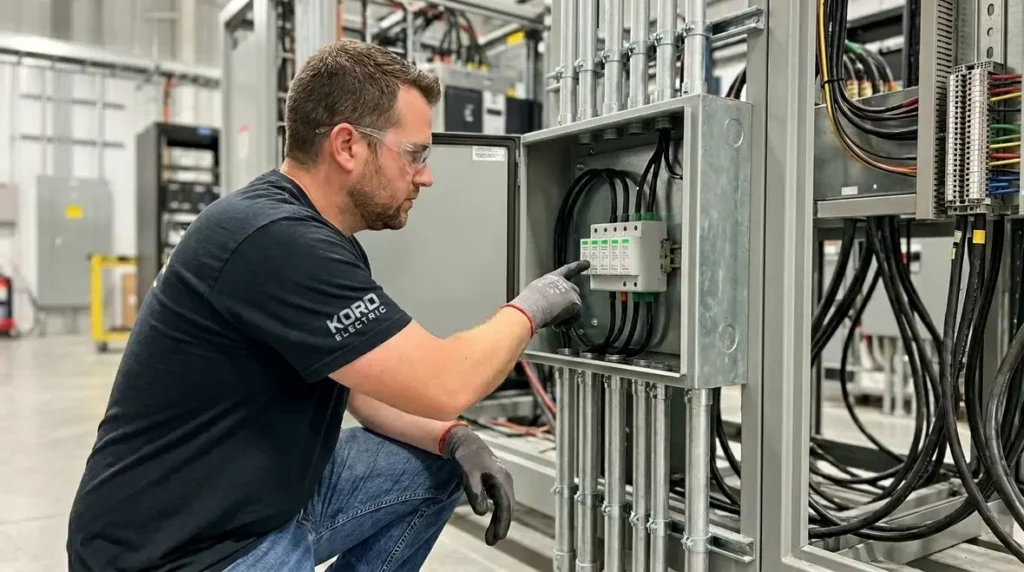
At Kord Electric, we build and support Emergency power supply switchgear that helps commercial and industrial facilities keep critical systems running when the utility power goes away. In a data center, hospitals, and major property buildings, nobody wants a graceful shutdown. They want a steady ride through the storm. That is exactly what switchgear does: it detects trouble, routes power safely, and keeps your emergency distribution organized instead of chaotic, like an office Slack channel at 9:05 a.m. on a Monday.
Our team, made up of skilled technicians and expert service staff, explains how the parts work together, why the design matters, and where failures usually hide. Others may talk in theory. We show the real workflow, because real buildings run on real constraints: code rules, maintenance limits, and the hard truth that systems must perform under stress.
Emergency power switchgear roles that prevent blackouts
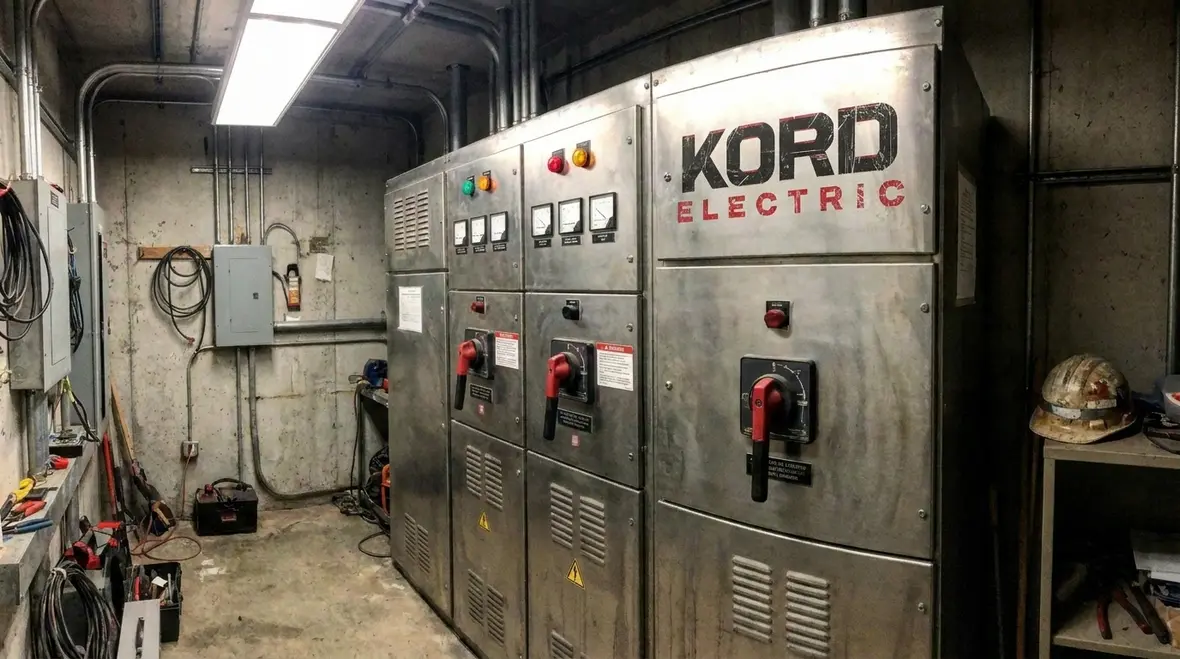
To understand switchgear in an emergency power distribution system, we first look at the job. Switchgear is not just a box with breakers. It is the control center that protects people and equipment, then transfers power to the right places at the right time. As soon as utility voltage drops, the system must move quickly and cleanly, without sending nuisance alarms through the building like a fire drill for no reason.
At this stage, others often focus on the generator. We focus on the entire chain: sensing, switching, busbar routing, feeder protection, and coordination with the standby source. Transition words matter here because the sequence matters. First, detection must happen. Then, switching must occur. After that, downstream protection devices must coordinate so faults clear without taking more loads than needed.
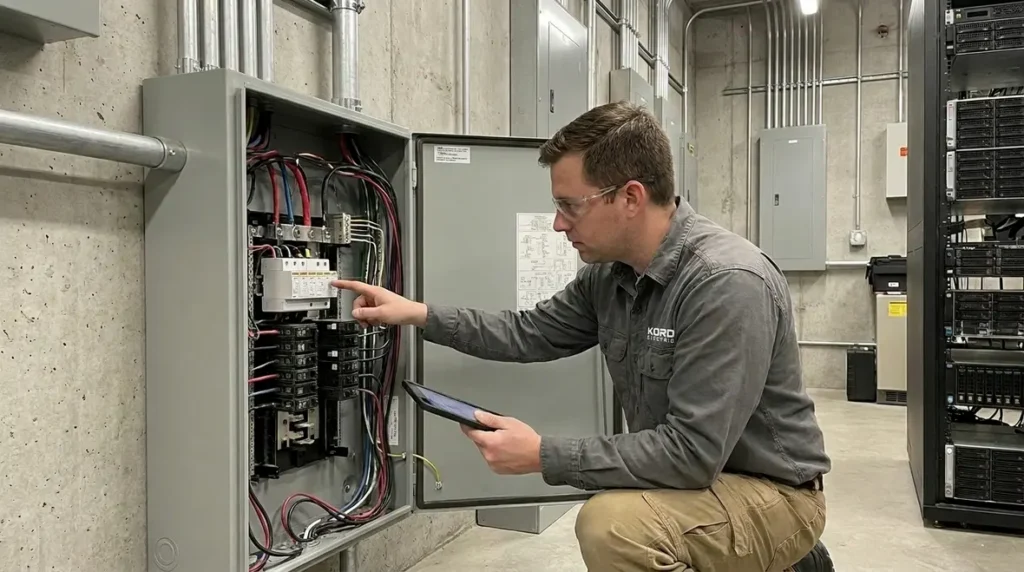
From the service side, our technicians verify that the emergency distribution behaves as designed. They check settings, test interlocks, and verify time delays and logic. In other words, they make sure the switchgear does what it says on paper, even when conditions are messy.
If your emergency system supports data hall or IT loads, you can also connect this planning to the detailed guidance in our Data Center Electrical Requirements for Uptime article, which explains how electrical behavior upstream affects what critical equipment experiences during utility failures.
Core components inside Emergency power supply switchgear
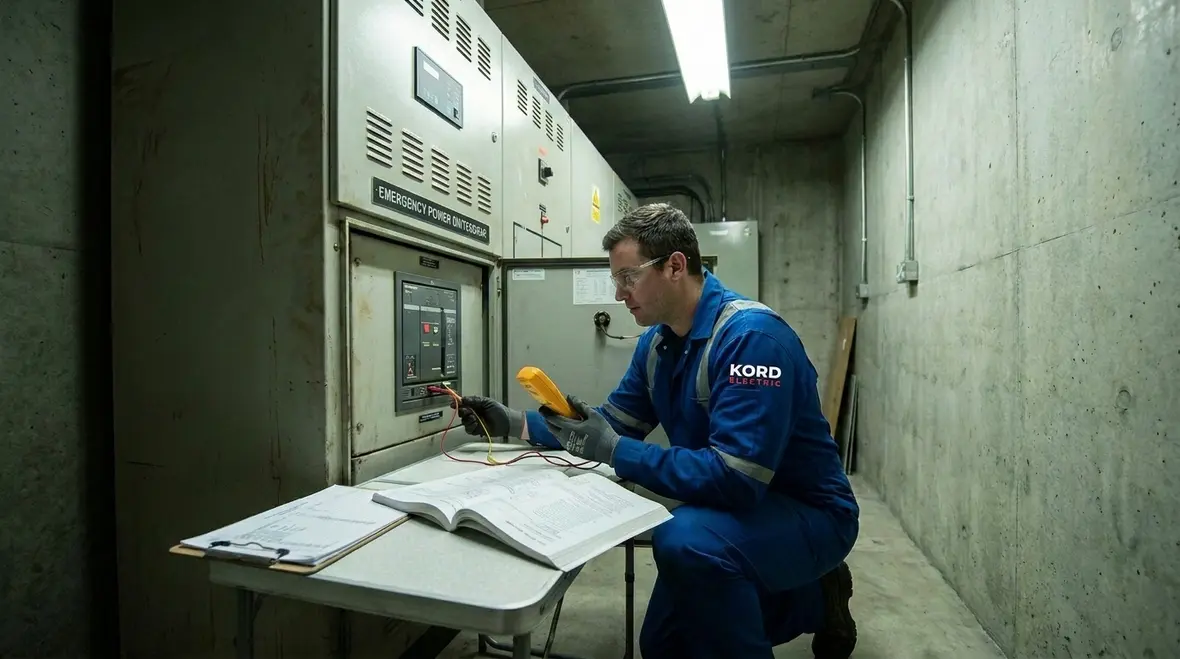
Commercial and industrial sites need switchgear that can withstand repeated starts, fault events, and maintenance cycles. So we break the assembly into the parts that actually do the work. Each component has a job, and when one job is skipped, the entire emergency plan can weaken.
Busbars and distribution paths move power through the switchgear. They must handle current and heat rise under emergency conditions. Because bus systems connect everything, they also connect the risk. Good design reduces hot spots and keeps thermal performance stable.
Switching devices and breakers isolate sections and control power flow. They also protect against short circuits and overloads. Our expert service staff often sees the same pattern: a breaker’s mechanical condition drifts over time, or its protection settings get out of date. Then, when a real event happens, the device may not trip cleanly.
Control and protective relays make decisions. They monitor voltage, frequency, and current. Then they send commands to contactors or breakers. If the relay logic and time coordination are off, the system can trip a larger part of the building than needed. That is where emergency power distribution turns from helpful into harmful.
Interlocks and safety schemes prevent unsafe states during maintenance and switching. These features are not optional. They help technicians service equipment without turning a maintenance procedure into a high risk event.
Monitoring and communications support predictive care. When the switchgear reports health indicators early, we can plan service before a failure. Otherwise, you discover the problem during the one moment you cannot afford downtime.
How uptime requirements shape switchgear design
Uptime is not a slogan. It is a set of electrical and operational needs that major facilities plan around. In the Kord Electric guidance we share for data center electrical requirements, we emphasize how facilities must maintain stable power delivery for mission critical loads. That mindset carries directly into emergency switchgear planning.
First, the design must support clean transfer. Then, it must support selective coordination so upstream protection clears faults without dropping unrelated feeders. Also, it must align with standby generator behavior and transfer scheme timing. Emergency systems must not just work once. They must work repeatedly across real-life test schedules and aging equipment.
In addition, we consider load criticality. Not every load needs the same level of continuity. So we recommend zoning critical loads, then setting protection and switching logic to match the risk. When that is done well, the facility protects life safety and process continuity without carrying the weight of “everything must stay on.”
Finally, maintenance access matters. If service cannot happen safely and on time, the uptime plan becomes a hope, not a system. Our technicians align installation and service strategy from day one so your emergency power distribution stays reliable year after year.
Testing, maintenance, and service that keeps switchgear ready
Switchgear earns its value during events. Yet the real work happens between events. Over time, mechanical parts wear, settings can drift, and insulation ages. Therefore, we support a service approach that treats emergency power supply switchgear like a living system.
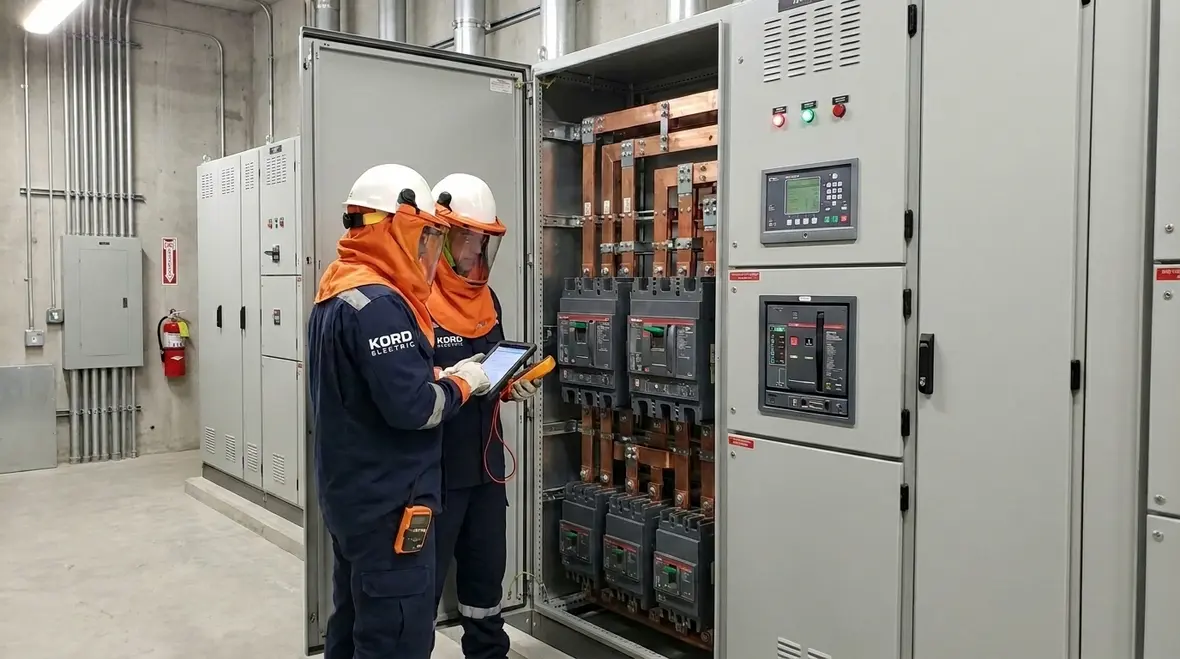
Our expert service staff typically follows a disciplined sequence. First, they review the as-built documentation and the current settings. Then, they inspect the mechanical operation of breakers and interlocks. After that, they confirm relay accuracy and coordination logic using proper test methods.
We also plan for load transfer behavior. Because transfer timing impacts downstream equipment, technicians verify that emergency mode engages as expected. If transfer happens too early, too late, or out of sequence, sensitive loads can show problems even if the power “never went out.” And yes, sensitive loads can be moody. They behave like a celebrity who only appears on the right schedule.
For commercial and industrial facilities, we also recommend inspection cadence that matches usage and environment. Dust, humidity, and vibration change the risk picture. So we align maintenance to the facility’s realities, not to a generic calendar that assumes every site is identical.
When issues appear, our team documents findings clearly and recommends practical corrections. We keep the work focused on safety, reliability, and minimal disruption to the rest of the building. That is how we protect uptime while respecting your operations.
Common failure points in emergency distribution systems
If you ask others what fails most often, you might hear “the generator.” Sometimes yes, but many failures start before the generator ever helps. That is why we look across the entire emergency power distribution path.
Mis-coordination stands out. If protection settings do not coordinate, a fault can trip more than it should. This causes unnecessary outage spread. And in major property buildings, even a small section outage can become a major business problem.
Mechanical wear in breakers can also cause trouble. Contacts can degrade. Springs can lose force. Operators may find that a breaker does not close or trip within expected times. Because emergency systems rely on speed and certainty, mechanical drift matters.
Control logic errors can create false transfers. Relays may interpret signals wrong due to wiring changes or configuration drift. Then the switchgear may transfer when it should not, or fail to transfer when it should.
Interlock and safety scheme gaps are another common risk. If interlocks are bypassed during past work, or if maintenance procedures were rushed, the system can enter unsafe states. Our technicians treat interlocks as non negotiable, because safety failures do not make good headlines, they make lawsuits.
Lack of monitoring hides problems until they become expensive. Without clear health indicators, teams notice faults only after symptoms appear in the field. We help facilities improve visibility so they can address concerns early.
What to ask when evaluating a switchgear upgrade
Facilities often decide on upgrades under pressure. Someone says the equipment “looks old,” and suddenly the project becomes a scramble. We prefer a calmer path where the right questions guide the scope, the testing plan, and the service timeline.
First, ask how the facility achieves selective coordination under emergency mode. Then, ask how the system handles load transfer timing for your critical equipment. Also ask how the control relays and settings will be verified and maintained after installation.
Next, ask about maintenance access and service procedures. Will technicians be able to inspect and test without disrupting critical operations more than required. Then ask about monitoring and alarm reporting, since early warnings reduce emergency surprises.
Finally, ask who owns the service process after startup. In commercial and industrial environments, the quality of ongoing service often predicts long term performance more than the original purchase. Our Kord Electric technicians and expert service staff support that ownership mindset, so facilities can keep uptime as a system goal, not a wish.
FAQ about emergency power switchgear
Conclusion: Get switchgear support that protects business uptime
Emergency power distribution succeeds when the equipment transfers power safely, coordinates protection correctly, and stays healthy through real maintenance. At Kord Electric, our technicians and expert service staff help commercial and industrial facilities plan, test, and support their emergency switchgear with care and clear communication. If you want a practical evaluation of your Emergency power supply switchgear readiness, reach out to us today. We will review your needs, discuss upgrade options, and build a service approach that keeps your critical loads steady.
If your facility is located in Southern California and you need help with new installations, upgrades, or troubleshooting, explore our broader Los Angeles County electrical services to see how our field teams support commercial and industrial sites that cannot afford guesswork with their emergency systems.