Electric Vehicle Fleet Charging Infrastructure Planning
Scaling up can feel like trying to stretch a rubber band into a rope, but for commercial space. At Kord Electric, we help property owners and fleet operators move from scattered charging to a system that works day after day. In our electric vehicle fleet charging infrastructure planning, we align power, layout, schedule, and long term growth so chargers do not become expensive paperweights. And yes, we hear the same worry: “What if our power plan is wrong?” Good news. We handle the hard parts early, so others can focus on operations, not electrical guesswork.
In this guide, we explain how our team builds strategic plans for commercial EV fleets and major property buildings. We also share how our technicians and expert service staff walk partners through each decision, in plain language, before any field work starts. Because no one should need a decoder ring to understand a load study.
Roadmap first, equipment second
When a facility plans for chargers, it should start with a roadmap, not a shopping cart. First, we map the fleet profile: vehicle count, daily routes, charging windows, and how drivers return to the site. Then we look at site constraints like parking layout, cable paths, future expansion space, and where vehicles will queue without blocking operations.
Next, we tie the charging plan to utility capacity. Even if a building looks “ready,” the electrical system may not have the headroom. Therefore, we coordinate load forecasting with the site electrical one line, panel schedules, and any existing demand patterns. This step supports strong electric vehicle fleet charging infrastructure planning that survives real schedules, not just perfect spreadsheets.
Finally, we set a timeline that matches business reality. In many commercial and industrial properties, upgrades must happen in phases to avoid downtime. So we build a staged plan that accounts for permitting, procurement lead times, and installation windows. If your charger plan depends on “someday” power improvements, we recommend rewriting the plan now, before it becomes a long-running sitcom with no happy ending.

Size the power like a pro, not like a fan
Power sizing decides everything. Too small, and chargers throttle or fail to meet demand. Too big, and the budget drifts into the “why are we paying for extra?” zone. To avoid both, we perform an accurate demand analysis that accounts for charging behavior and building load.
Here is what we typically model. First, we estimate simultaneous charging needs based on arrival waves. For example, when multiple vehicles plug in right after a shift, the load curve peaks fast. Then we consider charging power levels, connector counts, and whether charging will be scheduled or managed. After that, we include other facility loads such as HVAC, lighting, manufacturing equipment, and any process loads that spike during operations.
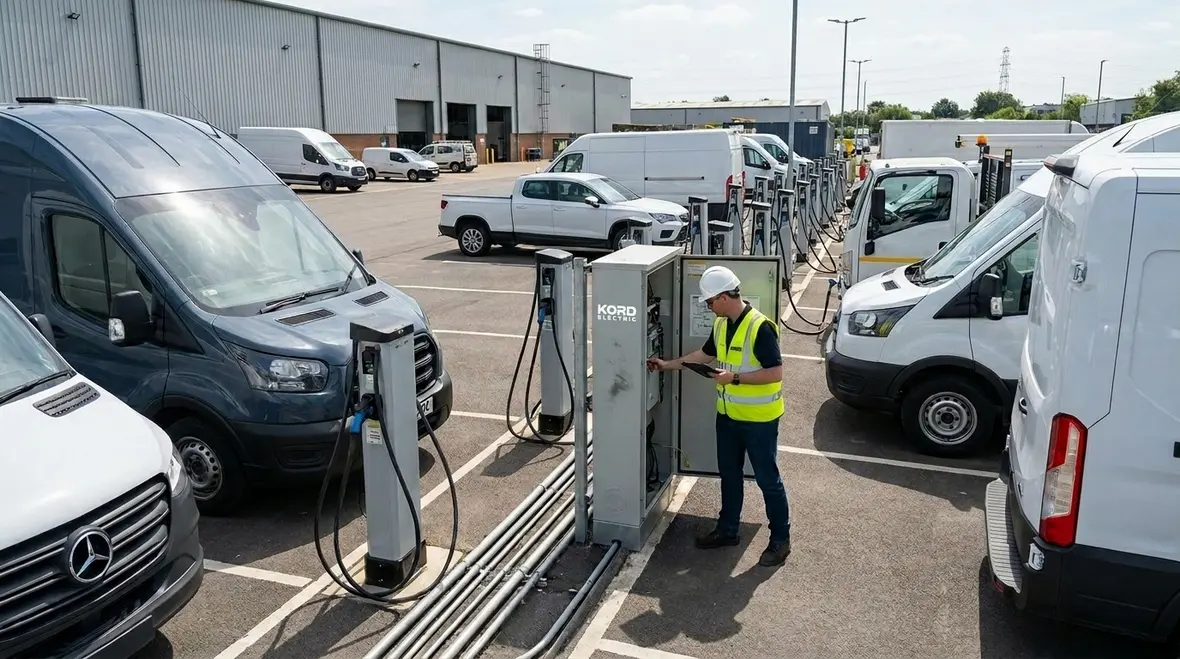
Because electrical systems behave like a city in rush hour, we also review available distribution capacity: transformers, feeders, switchgear, and any existing capacity reservations. As a result, our technicians can design a system with stable performance, even when the building runs hard and the fleet charges hard.
If the facility already has a partial charging setup, we analyze what exists and what needs to change. In other words, we do not just add. We engineer the full system so each new charger improves the overall operation rather than making the rest of the site work harder.
Design for growth, not just day one
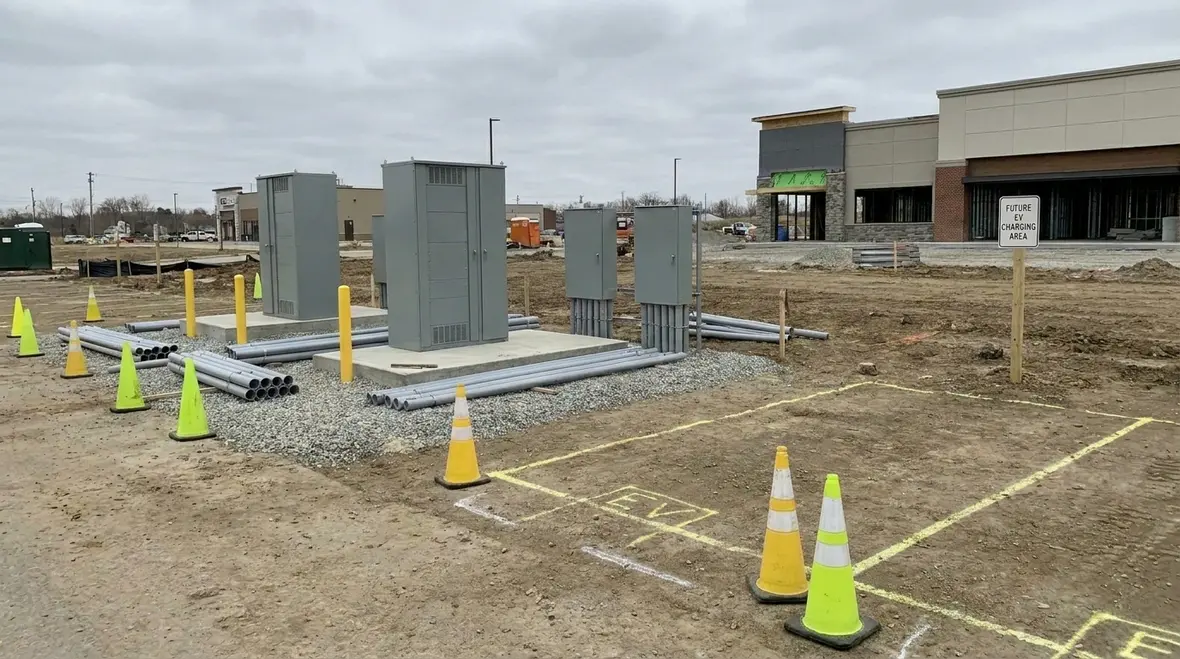
Many facilities install chargers that work today, then stall when the fleet grows. That happens when the design ignores spare conduits, distribution limits, and future layout. Therefore, we build designs that can expand without tearing up the site or repeating electrical upgrades.
We recommend planning for spare capacity and physical growth in the same breath. That means we may add extra conduit pathways, reserve breaker spaces, and select switchgear that can support future loads. We also coordinate charger placement so future units fit naturally within traffic patterns and parking rules for commercial operations.
In addition, we design with service and uptime in mind. If a unit needs replacement, we plan access routes and cable routing that reduce disruption. Meanwhile, we also consider how facilities manage compliance and documentation for inspections. Nobody wants an “installation mystery box” when an inspector asks for a clear record of what was built.
Our expert service staff typically explains these choices with simple language during walk-throughs. Then our technicians confirm field conditions so the final design matches the real world, not the ideal one. That is how you avoid the classic problem: the plan looks brilliant on paper, and the site says, “Not today.”

Coordinate with the building electrical system
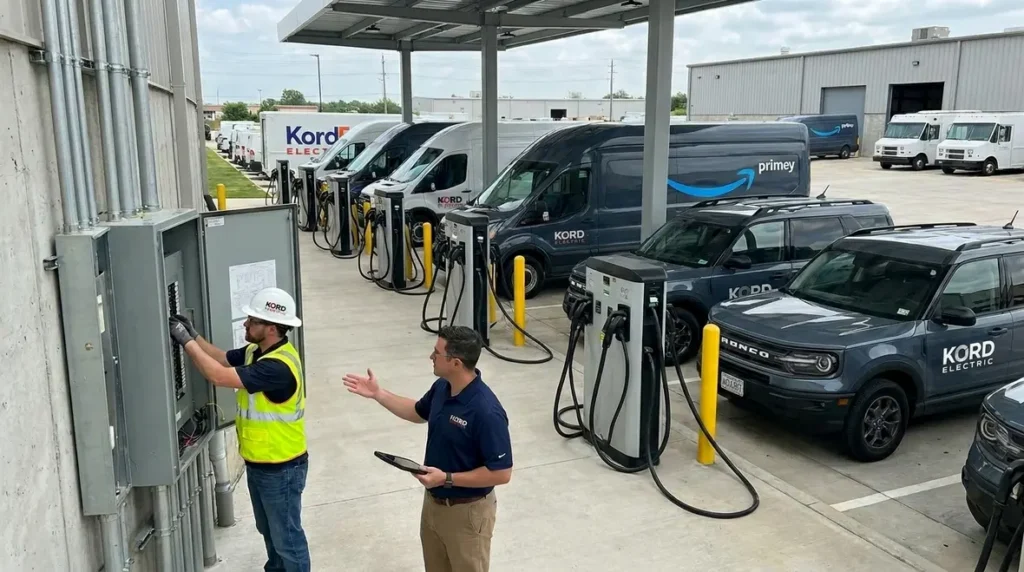
Commercial and industrial buildings rarely run on a clean slate. They have existing panels, equipment loads, and sometimes multiple meters or service entrances. As a result, charging design must coordinate with the building electrical system from the start.
We examine the electrical service capacity, then review how the chargers will connect. We also evaluate whether load management is needed, which can balance charger output based on real-time demand. This approach can help sites add more chargers without oversizing the entire system at the first phase.
Next, we ensure the design includes proper protection, grounding, and safe routing. We verify that the selected components match the duty cycle expected for fleet operations. For example, a depot that charges daily under heavy traffic needs a system designed for frequent use, not a “once in a while” scenario.
Where lighting installation interfaces with electrical scopes, we also align the overall work plan. Our team supports customers with lighting installation services, and we coordinate electrical distribution so project schedules stay clean and crews do not collide in the field. Think of it as traffic control for electrons. The goal is simple: fewer surprises, smoother installs, and a site that stays operational.
Finally, we document the electrical design clearly so building managers and maintenance teams can operate with confidence. When the system is understandable, service calls drop, and uptime rises. It is a boring idea that works like magic.

Plan installation like a commercial project, not a weekend DIY
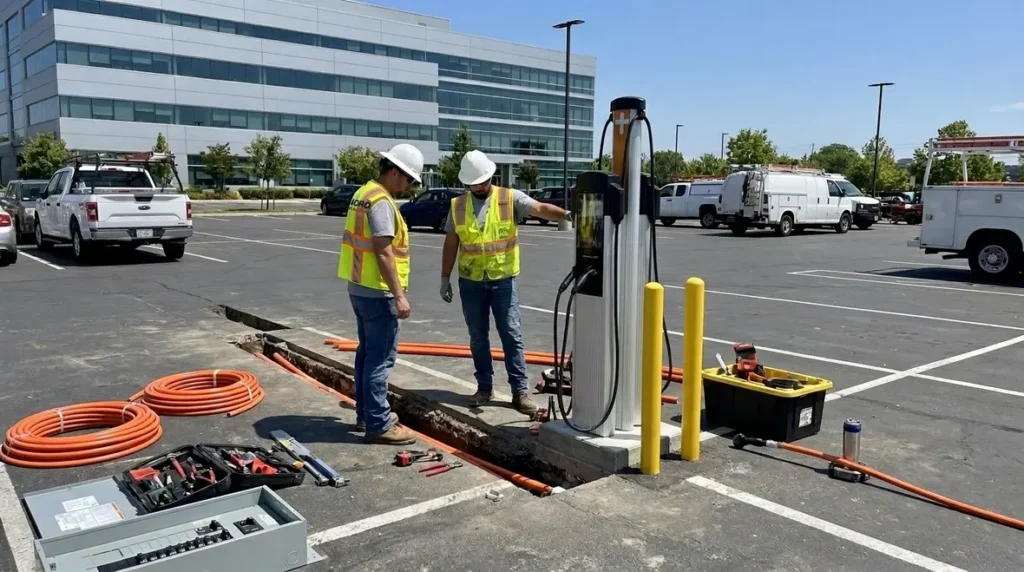
Installation success depends on logistics. We treat a charging project as a commercial delivery, with scheduling discipline, staging plans, and clear responsibilities. First, we confirm site access for equipment delivery. Then we verify cable routing paths, trenching needs, mounting heights, and protection against vehicle impacts.
Next, we align installation phases with facility operations. Many sites cannot shut down during business hours. Therefore, we plan cutovers and commissioning windows so operations continue while crews work. If you have ever tried to change a tire during rush hour, you understand why a thoughtful plan matters.
Then we commission the system with real checks. We test communication, verify power distribution, confirm safety functions, and ensure charging behavior matches the planned usage model. If a site uses load management, we validate the control logic. And if the facility expects scheduled charging, we test the scheduling behavior under realistic conditions.
Throughout this process, our technicians and expert service staff explain what they are doing and why. That keeps building teams confident and ready. It also prevents the “surprise inspection” moment, where someone realizes later that documentation or configuration was never fully verified.
Operations support that keeps fleets charging
A charging plan is not finished when power turns on. For fleets and major property buildings, we support the full lifecycle: monitoring, service planning, and updates that match changes in fleet needs. Because operations change, and reality always edits the plan.
To keep uptime strong, we recommend maintenance schedules that match usage intensity. We also support troubleshooting workflows when issues happen, which they will, because systems are living things with moving parts. However, good planning reduces how often problems occur and shortens how long they last.
We also help facilities prepare for future fleet moves. That includes evaluating when to add chargers, whether to upgrade distribution, and how to adjust load management strategies. If a fleet adds routes or changes shift timing, we can recheck performance and adapt the charging plan accordingly.
And since commercial property teams like clarity, we provide straightforward guidance on reporting, configuration, and operational handoff. Our goal is to make the system feel stable, like the building infrastructure around it, not like a science experiment with a power button.
FAQ: electric vehicle fleet charging infrastructure planning
Make it real with a strategic partner
Commercial EV success comes from planning that matches electrical reality and operational schedules. If you want electric vehicle fleet charging infrastructure planning that supports growth, protects uptime, and avoids costly rework, we are ready. Kord Electric builds charging systems for commercial and industrial facilities and major property buildings, with technicians and expert service staff who explain every step. Reach out for a site review and a phased plan built for your next expansion, not just your next purchase.
For next steps:
Contact Kord Electric to discuss your fleet profile, site constraints, and growth timeline, and we will outline a clear path forward. If you are exploring broader electrical upgrades at the same time, our team can also coordinate with services such as commercial EV charger installation so your fleet strategy and infrastructure plan move together.
Pop quiz for property managers: would you rather fix the plan now, or pay for revisions later like it is a surprise utility bill?
When you are ready to turn planning into action, Kord Electric can help you move from “someday we should add chargers” to a real-world project schedule, complete with power studies, layout coordination, and commissioning support. Thoughtful electric vehicle fleet charging infrastructure planning today makes tomorrow’s fleet growth feel like a controlled rollout, not a scramble for outlets.