Electrical Fire Extinguishers for Live Equipment
At Kord Electric, we treat electrical fire safety like a serious business, because it is. When an incident starts on energized equipment, the right response matters fast, and the wrong choice can make the fire worse. That is why we recommend using Electrical fire extinguishers designed for live electrical hazards. Now, we know most people do not wake up thinking about extinguishers, but when sparks start flying, decisions get real fast. In this guide, our expert service staff and technicians explain what to use, why it works, and how commercial and industrial teams can build a safer plan for major property buildings.
What extinguisher types work on live electrical equipment?
Third person, but still clear and practical, here is what matters most: you only use an agent that can stop burning without turning the electrical system into a better conductor. In most commercial and industrial settings, the core options include carbon dioxide, dry chemical, and clean agents, each with rules that technicians follow.
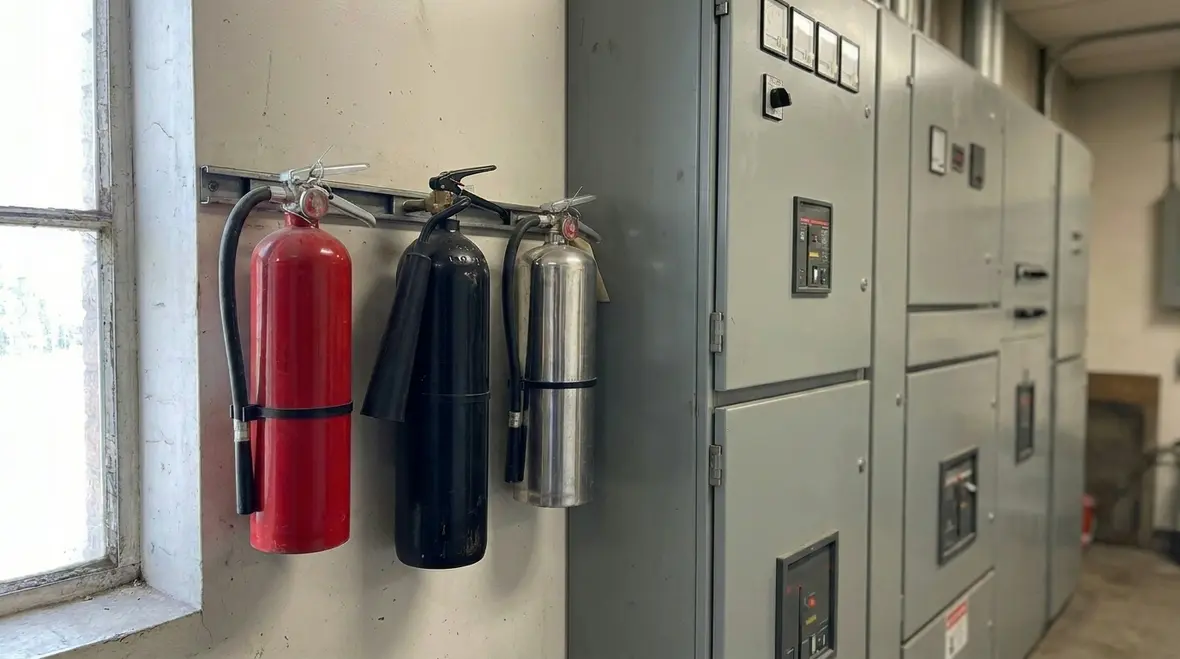
- CO2 extinguishers smother the fire and reduce oxygen around the source. They are common in electrical rooms and switchgear areas where teams want fast knockdown.
- Dry chemical (Class C) interrupts the chemical reaction in the flames. Many facilities use ABC rated units for general coverage, yet live electrical use still requires the correct rating and training.
- Clean agent extinguishers protect sensitive equipment because they leave minimal residue. These often fit server rooms, control systems, and other high value spaces.
- Specialized electrical ratings matter more than the “color label.” The extinguisher must be listed and intended for energized equipment hazards.
And yes, the old myth says you can just grab the biggest extinguisher on the wall. That is like saying you can drive any car with any tire. For live electrical equipment, selection and proper use decide whether your team controls the scene or turns it into a bigger problem.
Why water, foam, and other agents can be risky
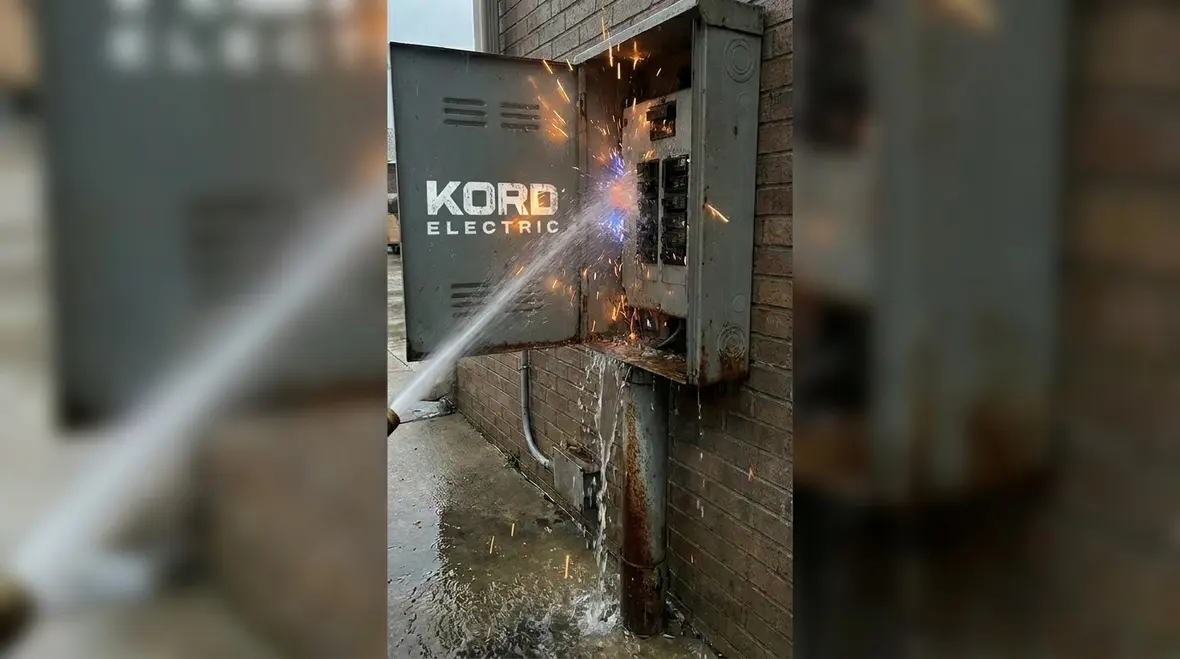
Fire behavior on energized equipment does not follow common sense. Electricity and water together can increase risk. Water and many foam types conduct electricity or create conductive runoff, especially when systems fail and insulation breaks down. That can lead to shock for responders and can spread the fire by moving burning residue.
Additionally, certain extinguishers help only when the electrical power is off or when the fuel is not electrical. For major property buildings with critical infrastructure, we do not guess. Instead, our technicians check the unit listing, confirm the hazard class, and align it with facility needs and response plans.
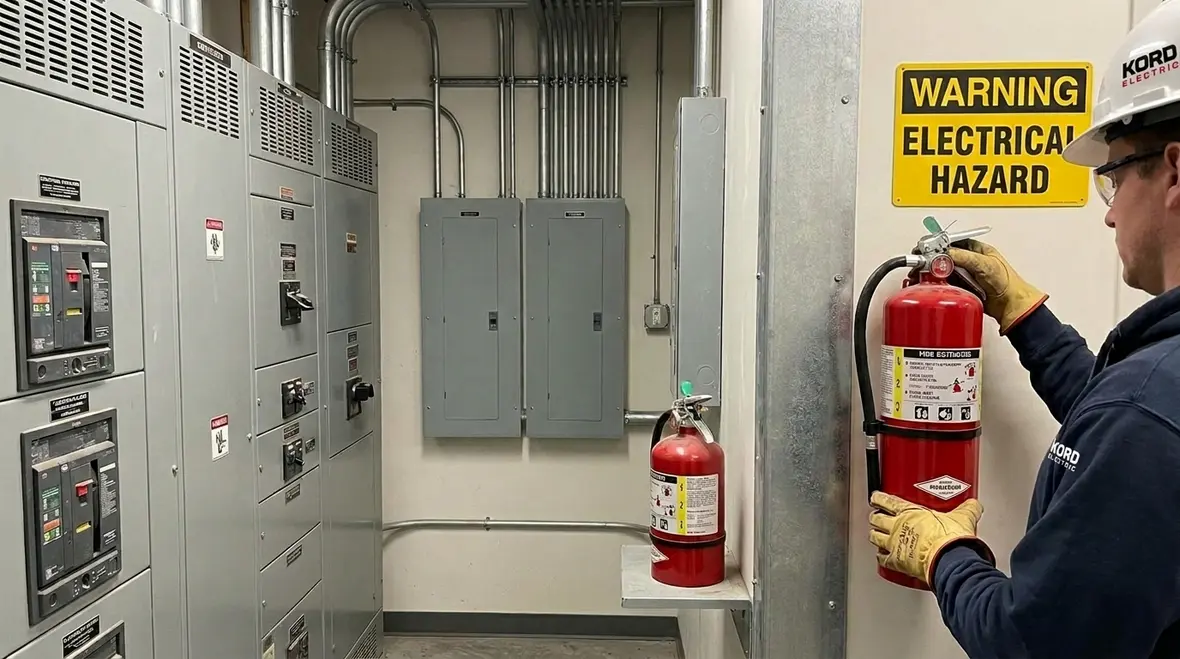
So, the transition is simple: if the extinguisher is not designed for energized equipment, it usually does not belong on live panels, busbars, switchgear, motor control centers, or energized cabling. That decision helps keep people safer and helps prevent the fire from gaining new fuel.
How technicians choose the right Electrical fire extinguishers for industrial spaces
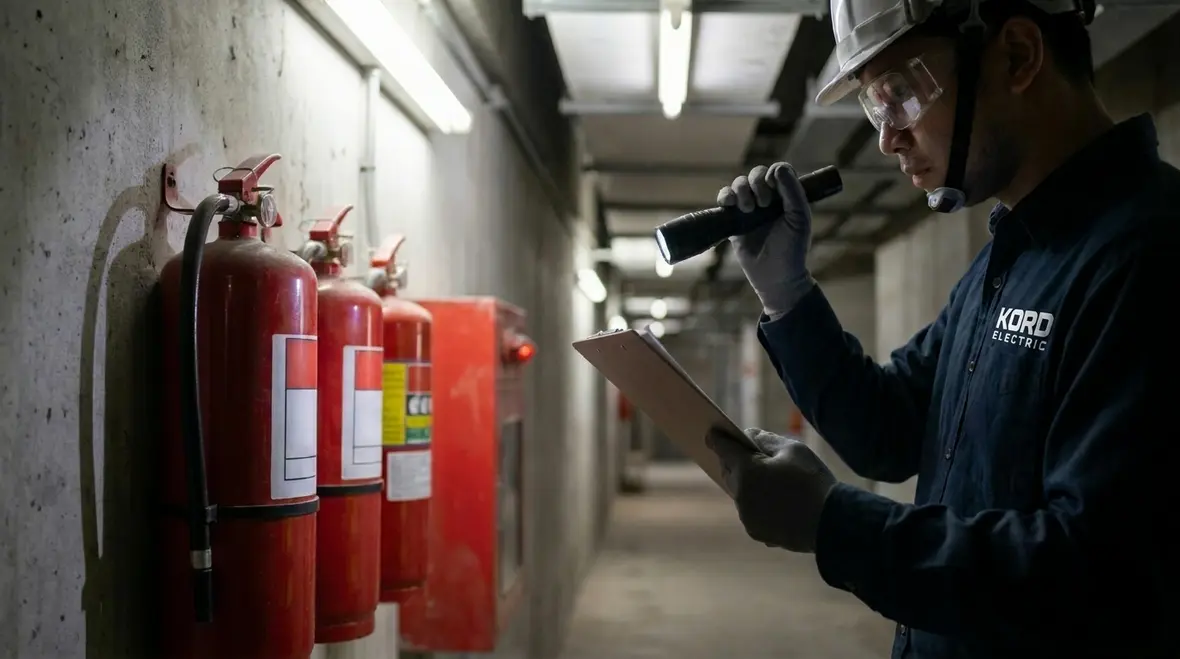
Commercial and industrial facilities vary. A chemical plant does not look like a data center, and a high rise does not operate like a machine shop. Therefore, we do not recommend one “universal” unit. Our expert service staff evaluates the environment, the equipment risk, and the likely fire path.
They also consider installation details that people forget, until it matters. For example, a correct extinguisher mounted in the wrong location can delay action. Also, units with the right rating can fail if maintenance schedules lapse. We keep the focus on real site conditions, including:
- Equipment types and where they fail first, such as panels, transformers, MCCs, or battery backup systems
- Expected fire size, based on the wiring density and enclosure design
- Ventilation conditions that influence smoke and oxygen levels
- Response workflow, including who will use the unit and how fast they can reach it
- Whether occupants will stay in place or evacuate immediately
Then, we apply the logic like clockwork. If teams need to protect sensitive electronics, we steer toward clean agent solutions. If they need quick knockdown in electrical rooms, CO2 or dry chemical may fit, based on the hazard and the facility plan. In all cases, our goal stays the same: proper Electrical fire extinguishers where they belong, with trained handling and clear instructions.
Step by step guidance for first responders in commercial buildings

Even with the best equipment, the human steps decide outcomes. Our technicians often explain this part the most, because everyone wants the extinguisher, but fewer people practice the right sequence. Here is a practical flow we use when advising commercial and industrial teams.
- Confirm the hazard and assume the electrical equipment can stay energized. If the power source is still on, treat it as live.
- Keep distance and stand in a safe position. Electrical hazards do not care about bravery.
- Use the correct extinguisher type for energized equipment, meaning properly rated Electrical fire extinguishers, not random units that “look right.”
- Apply the agent at the right location, aiming at the seat of the fire or the fuel source where flames originate.
- Watch for electrical re ignition and do not keep spraying blindly. If the fire does not shrink quickly, teams switch to evacuation and call emergency response.
We also advise that teams coordinate with alarm and emergency procedures. In major property buildings, fire response does not happen in a vacuum. Our expert service staff helps facilities align extinguisher placement, signage, and emergency roles so people do not improvise under stress. And honestly, improvisation is fine for comedy, but not for switchgear fires.
Common mistakes we see during inspections and training
When our technicians review commercial and industrial sites, patterns show up. Some errors repeat because they come from habit, not from safety logic. Here are frequent mistakes and why they matter.
- Using the wrong class extinguisher because the label looks close enough. On live equipment, “close enough” is how incidents get worse.
- Assuming power is off when nobody has confirmed shutdown or isolation. Many electrical fires restart because the circuit remains live.
- Hiding extinguishers behind storage or placing them in hard to reach areas. During smoke, every second counts.
- Skipping maintenance or delaying recharge schedules. Discharged units can sit there confidently, like a misplaced umbrella in a hurricane.
- Using extinguishers without training because employees “think they know.” Training turns confusion into action.
To reduce these problems, we help facilities build clear practices. Our approach focuses on correct selection of Electrical fire extinguishers, consistent service, and practical instruction so teams can act calmly. In the end, well kept equipment plus real training prevents the most common downfall: a delay caused by uncertainty.
Maintenance and compliance for major property buildings
Commercial and industrial facilities often operate under strict safety requirements. Maintenance is not an optional “nice to have.” It is what keeps rated performance from becoming a story you tell after an incident.
Our technicians support major property buildings by addressing inspection routines, extinguisher checks, and service intervals. We also help facilities confirm that units remain suitable for the hazard they protect. That includes verifying that the Electrical fire extinguishers installed match the equipment risks in each area.
Maintenance also includes the details people miss, such as ensuring accessibility, checking tamper seals, and confirming pressure indicators. If a unit looks fine but fails pressure checks, it fails when needed most. So we treat each extinguisher like a tool with responsibility, not like decor.
Then, we encourage facilities to connect extinguisher service with training updates. When equipment changes, hazard profiles change. New cabinets, new loads, updated switchgear, or renovated rooms can shift what the best response looks like.
For facilities that want a structured approach to inspections, testing, and coordination between electrical systems and fire risk, pairing extinguisher planning with dedicated programs such as electrical preventive maintenance for commercial and industrial facilities helps keep critical infrastructure aligned with real world operating conditions.
Connecting extinguisher strategy with broader electrical support
Electrical fire safety does not live in isolation. The same conditions that create the need for Electrical fire extinguishers often come from overloaded panels, aging infrastructure, and voltage problems behind the scenes. That is why many building teams treat extinguisher selection, panel maintenance, and voltage stability as parts of the same conversation, not separate projects competing for attention.
In practice, this means reviewing how extinguishers are placed around critical equipment, how panel labeling supports fast shutdown, and how preventive inspections stay ahead of failures that could lead to arcing or ignition. Kord Electric regularly helps facility managers coordinate these layers so a panelboard, a label, and an extinguisher all tell the same story during an emergency instead of sending responders on a scavenger hunt.
For large properties in busy regions, especially those served by complex utility feeds and heavy internal loads, that unified approach makes it easier to justify upgrades and document compliance. It also turns once a year inspections into part of a living plan instead of a rushed chore before audit season.
FAQ about Electrical fire extinguishers for live electrical equipment
Conclusion: build a safer response with Kord Electric
Live electrical fires demand the right plan, the right extinguisher, and the right training. At Kord Electric, our technicians and expert service staff help commercial and industrial facilities choose suitable Electrical fire extinguishers, align placement, and keep maintenance current so units work when they matter. If your building manages switchgear, server rooms, or critical electrical systems, contact us to review your extinguisher coverage and safety approach. Let us turn uncertainty into a practiced response, without the drama.
For facilities that rely on complex electrical distribution, pairing extinguisher planning with broader regional support such as Los Angeles County electrical services for commercial and industrial sites helps keep fire readiness aligned with day to day operations, outage response, and long term infrastructure upgrades.
Whether your priority is reducing electrical fire risk in panel rooms, safeguarding sensitive electronics, or coordinating extinguishers with panel labeling and preventive maintenance, Kord Electric is ready to help your team build a response plan that feels calm, rehearsed, and effective instead of improvised under pressure.