Electrical Maintenance Program Best Practices for Commercial Facilities
In commercial and industrial facilities, an electrical system does not forgive shortcuts. That is why Kord Electric builds our approach around Electrical Maintenance Program Best Practices for Commercial Facilities. Within the first 100 to 150 words, we want to be clear: a strong maintenance program reduces failures, protects people, and keeps operations steady. We set expectations early, document everything, and follow a schedule that fits how your building actually runs. Meanwhile, our technicians explain each step in plain language, because “trust us” should never be the whole plan. Think of it like preventive healthcare for your switchgear, breakers, and wiring. And no, it is not as fun as a superhero movie, but it does save the day more often than you think.
1. Start with a risk based electrical inventory and clear goals
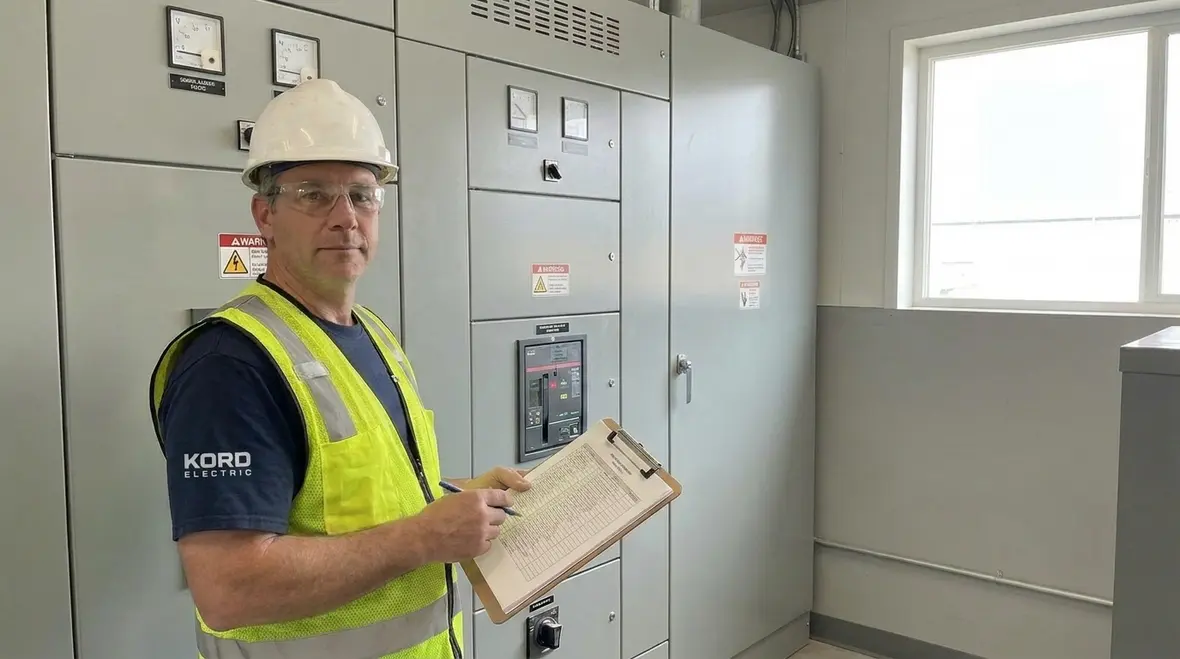
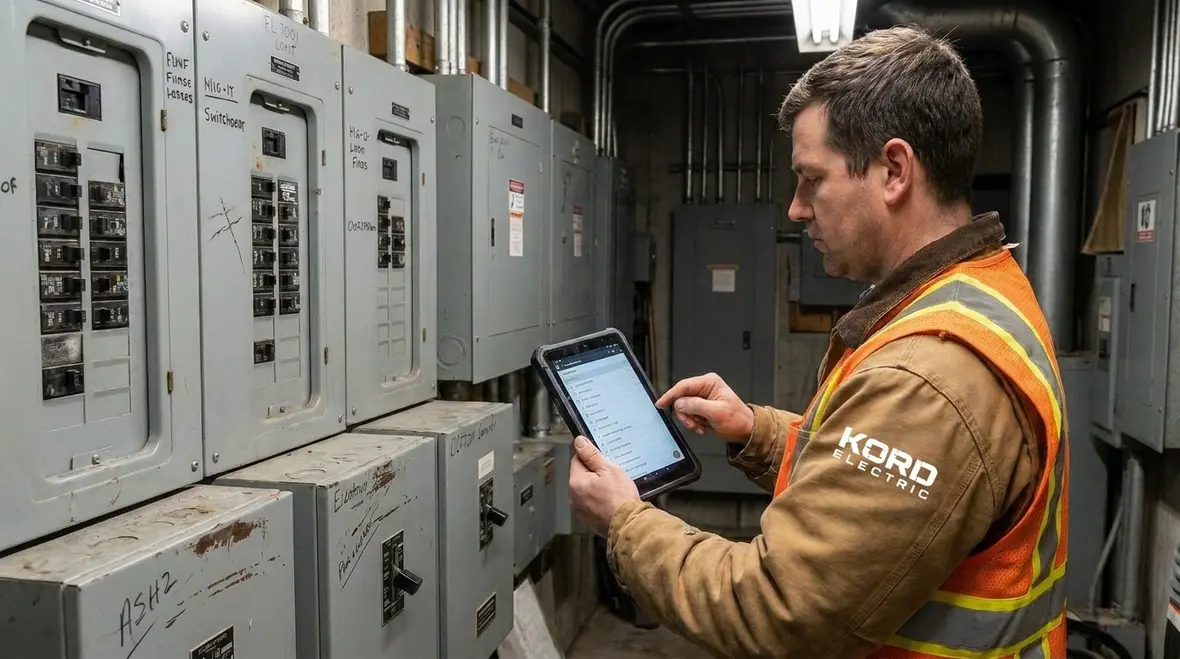
First, we help clients move beyond generic checklists. Then we create an accurate electrical inventory: service panels, switchgear, transformers, feeders, distribution boards, ATS systems, generators, UPS units, grounding systems, and critical circuits. After that, we sort components by risk, not by what is easiest to access.
In practice, our expert service staff looks at how a failure would affect your operations. For example, a fault on life safety circuits matters more than a non critical receptacle circuit in an office hallway. Next, we examine operating load, duty cycle, age, past repairs, and any history of nuisance trips or overheating. As a result, the maintenance program becomes targeted and practical.
We also set goals that leaders can track. Goals include reduced unplanned downtime, lower fault rates, compliance readiness, and safer working conditions. And because managers like numbers, we translate findings into actions, schedules, and priorities. If a piece of equipment is on borrowed time, we say so. With proper planning, it is less “surprise, disaster” and more “predictable, managed.” For a broader overview of how this fits into larger planning, many facility teams also reference resources like Kord Electric’s Commercial and Industrial Electrical Maintenance Plans to align maintenance strategy with long term reliability.
2. Define inspection cycles that match your equipment and your usage
Next, we align maintenance frequency with real conditions. Many facilities do not operate at the same load all year. Therefore, we adjust schedules for seasonal surges, shift changes, production runs, and peak demand periods. We avoid the mistake of treating every location and every panel like it experiences the same stress.
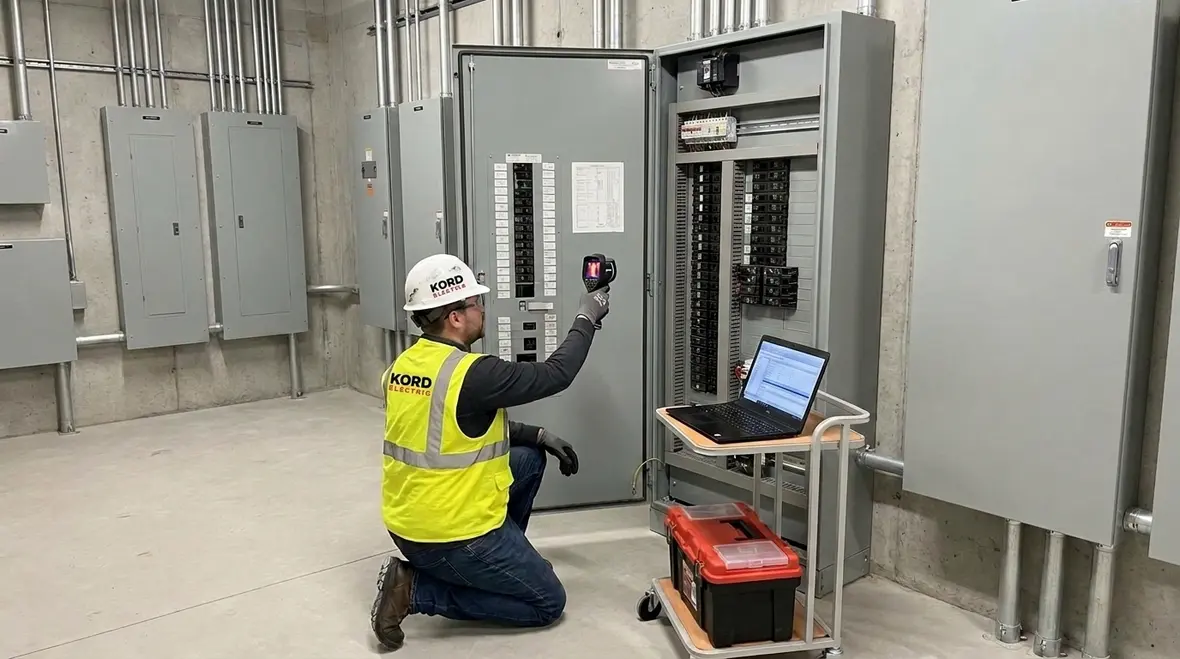
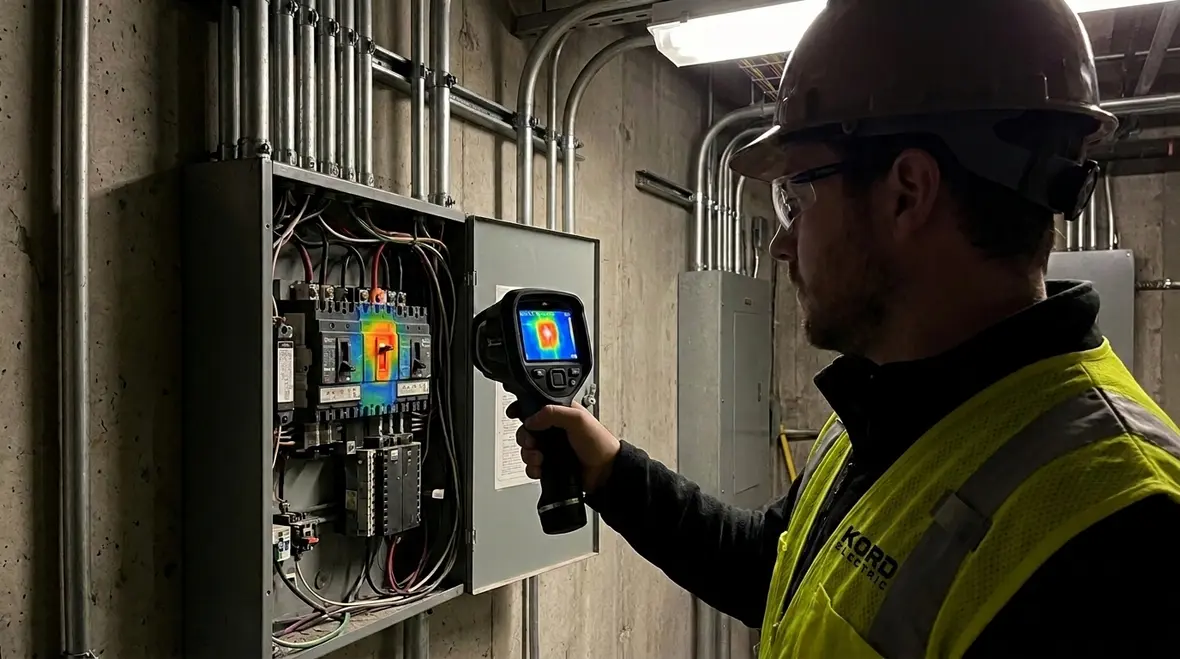
Our approach typically includes layered checks. Visual inspections catch early signs like discoloration, corrosion, loose terminations, damaged insulation, and abnormal labeling. Thermal scanning can reveal hot spots before they become failures. Electrical testing can confirm load balance, breaker performance, and insulation condition where applicable. When facilities want a deeper dive into visual and thermal inspection workflows, we often pair this plan with guides like the Commercial Electrical Preventative Maintenance Checklist so teams can see how individual tasks roll up into a full program.
Then we decide what needs more attention. Switchgear and motor control centers may need tighter cycles in dusty or high vibration environments. Meanwhile, damp areas require a different focus on corrosion control and enclosure integrity. Additionally, facilities with sensitive operations, like data or process control spaces, require more careful attention to power quality and grounding integrity.
As a light joke, some people treat maintenance like cleaning their phone screen. You do it when things look bad. We treat it like changing the oil, because the engine does not care about your schedule, it only cares about time and heat.
3. Use test results to drive repairs, not just paperwork
Inspections without outcomes become expensive habits. So we design the program so that every test leads to a decision. For example, if thermal scanning shows a recurring hot spot at a connection, we do not simply record “high temperature.” We trace the circuit, confirm load conditions, and evaluate the termination quality. After that, we schedule corrective action before the failure spreads.
Likewise, if circuit breaker performance shows trends like frequent nuisance trips, we look deeper. We do not blame “bad luck.” We check calibration, contact wear, mechanical operation, and upstream loading. Then we coordinate with facility operations to minimize downtime while still completing the repair window.
Our technicians also verify that fixes stay fixed. That means we re inspect and, when needed, re test after repairs. In addition, we document findings in a way that maintenance leaders can use, not just “for the binder.” When organizations want a structured format for this, we often reference Kord Electric’s Commercial Preventative Maintenance Programs to show how inspection data, test results, and repairs flow into a clear playbook.
In short, data drives the plan. And the plan protects uptime, safety, and budget. Nobody likes surprise line item charges, and we can prevent a lot of them when the program is built correctly.
4. Build safe work practices and compliance readiness into daily operations
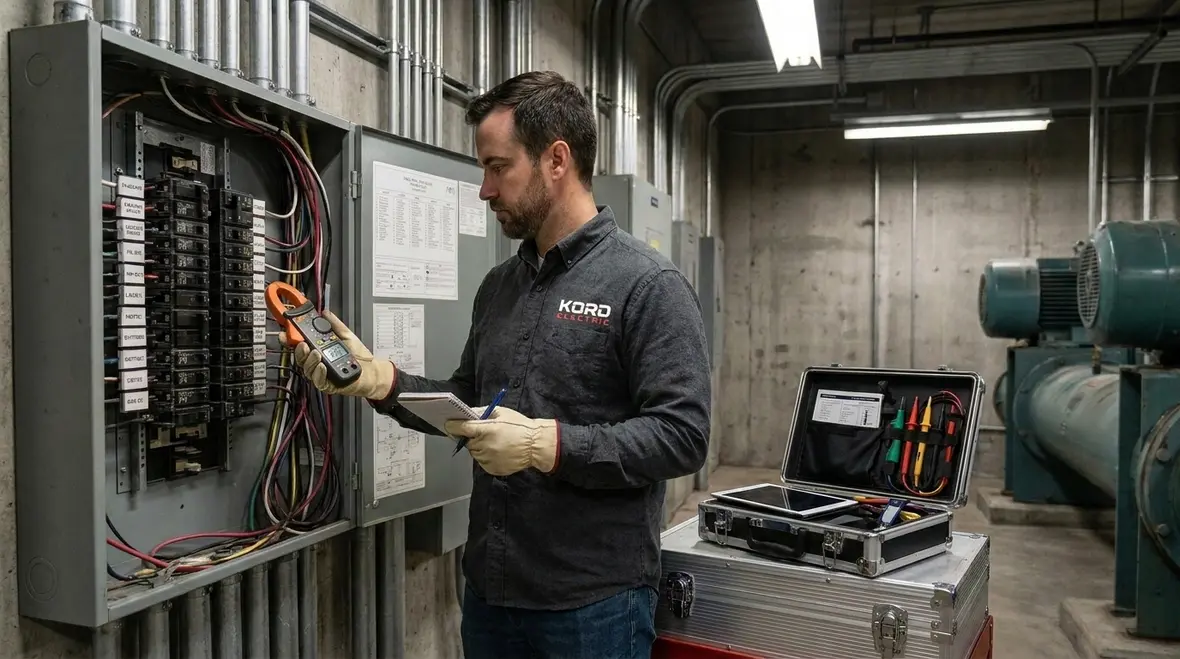
Safety cannot sit in a policy document while the real work happens elsewhere. Therefore, we embed safe work practices into the program: lockout tagout coordination, arc flash awareness, proper PPE, safe access, and clear boundaries around energized work when it is required.
Commercial and industrial facilities often involve contractors, shifts, and overlapping trades. So we set expectations for coordination. We outline who controls the scope, how permits are handled, and what de energizing steps occur. Additionally, we ensure that labels and single line diagrams reflect the actual field condition so technicians can act fast during emergencies.
When people say “compliance,” they sometimes mean “paperwork.” We mean protection. We help clients maintain electrical documentation and readiness, so audits and inspections do not feel like a pop quiz nobody studied for. And yes, sometimes the quiz is still unavoidable. But we make sure you are not walking in without a pencil.
5. Manage power quality, grounding, and critical loads like your uptime depends on it
Now we shift from what breaks to what disrupts. Many facilities can tolerate minor outages, but critical loads need stable power. That includes life safety systems, process equipment, controls, servers, and communication infrastructure. Even when equipment stays “on,” poor power quality can cause hidden damage.
So we assess grounding integrity, neutral loading, harmonics risk, and voltage stability where conditions call for it. We also review conductor sizing, termination quality, and protection settings. Then we check whether the facility’s distribution design matches the actual load profile.
Moreover, we plan for continuity. Generator and UPS systems must be tested with the right approach so they will perform when called upon. We coordinate test windows, confirm transfer sequences, and verify that critical circuits remain protected. Meanwhile, we ensure that emergency lighting power paths and life safety circuits receive attention based on their function, not on their location. For sites that rely heavily on redundancy and backup systems, articles like Kord Electric’s Critical Power Redundancy Architecture Guide show how preventive maintenance keeps those designs reliable over time.
Our expert service staff explains the “why” behind each step, because a maintenance program only works when the people supporting it understand it. That reduces confusion and speeds up decision making when the next issue appears.
6. Set up documentation, work orders, and feedback loops for continuous improvement
After the inspections and tests, the work is not done. Therefore, we focus on documentation and systems that help teams execute. We capture findings, photos, test results, and defect descriptions in a consistent format. Next, we connect results to work orders with clear scopes and estimated impact.
We also track trends. If certain panel types show recurring issues, we flag patterns. If a facility has repeated thermal anomalies in specific areas, we recommend targeted upgrades or connection repairs. Over time, the maintenance program becomes more accurate, and corrective actions become more efficient.
Feedback matters too. We ask facility leaders what caused downtime, which areas feel risky, and what equipment operates most heavily. Then we adjust cycles. As a result, the program keeps pace with changes in load, process, occupancy, and equipment age.
This is how electrical maintenance becomes less of a recurring expense and more of a performance tool. And unlike some spreadsheets, it actually delivers value.
7. Roll out the plan with technicians who communicate and teams who act
Even a perfect plan fails if the field execution is weak. So we roll out the program with a clear scope, an inspection calendar, and a repair timeline. Our technicians arrive prepared, follow safe work steps, and explain observations as they go. Then they confirm next steps with the facility point of contact so everyone knows what happens next.
In addition, we coordinate with operations to reduce disruption. That includes planning outages, staging parts when possible, and aligning with production or business hours. We also help owners and facility managers understand the difference between urgent repairs and items that can be monitored, because not every “issue” needs a full emergency response.
For large property buildings, we treat the program like a living system. It stays organized, it stays measurable, and it stays aligned with real risks. In the end, a facility feels steadier, teams feel more confident, and maintenance stops acting like firefighting.
FAQ: electrical preventive maintenance for commercial and industrial facilities
Conclusion: let’s build your next maintenance win
If you want fewer electrical surprises and steadier uptime, we will help you build a plan that works in the real world. Kord Electric supports commercial and industrial facilities with risk based maintenance, clear documentation, and technicians who explain what we find and what we do next. Reach out to schedule an assessment of your electrical program best practices, then we will outline a practical inspection and repair roadmap. Your facility deserves calm power and confident decisions, not guesswork. Call us and get started.
For facilities across the region, Kord Electric’s Los Angeles County electrical services connect these Electrical Maintenance Program Best Practices for Commercial Facilities with data driven design, responsive field execution, and dedicated preventive support. If you want a deeper dive into how structured planning protects larger campuses and major properties, you can also explore our in depth Electrical Preventive Maintenance Services Guide and see how a long term program keeps critical systems ready, documented, and resilient.
When you are ready to move from theory to action, Kord Electric’s electrical preventive maintenance services turn these ideas into scheduled inspections, targeted testing, and clear reporting for your specific facility. Together, we can turn “we hope the system holds” into “we know how the system behaves.”