Electrical Overload Signs in Commercial Buildings
In a commercial space, the lights, HVAC, elevators, computers, and kitchen gear all run like a well rehearsed band. Then one day the music skips. That is often when electrical overload signs commercial building show up, and they usually do not ask permission. The first clues can look small at first: frequent breaker trips, outlets that feel warm, a burning smell near panels, flickering lights, or circuits that refuse to stay steady. However, those symptoms also point to deeper problems like bad sizing, worn components, or poor connections. At Kord Electric, we send expert technicians who explain what they see in plain language, so building owners and facility managers do not have to guess. And if you are thinking “we have a breaker, so we are fine,” well, that breaker is basically doing overtime and filing a complaint.
What causes overloads in commercial panels
Electrical overloads rarely happen for one single reason. Instead, they show up when current demand climbs past what a circuit, breaker, bus bar, or wiring can safely handle. In many commercial and industrial facilities, that demand changes through the day and through the seasons. For example, a store may add space heaters during winter, a warehouse may run forklifts and high draw tools at the same time, and a manufacturing site may start a new production cycle that loads a phase unevenly.
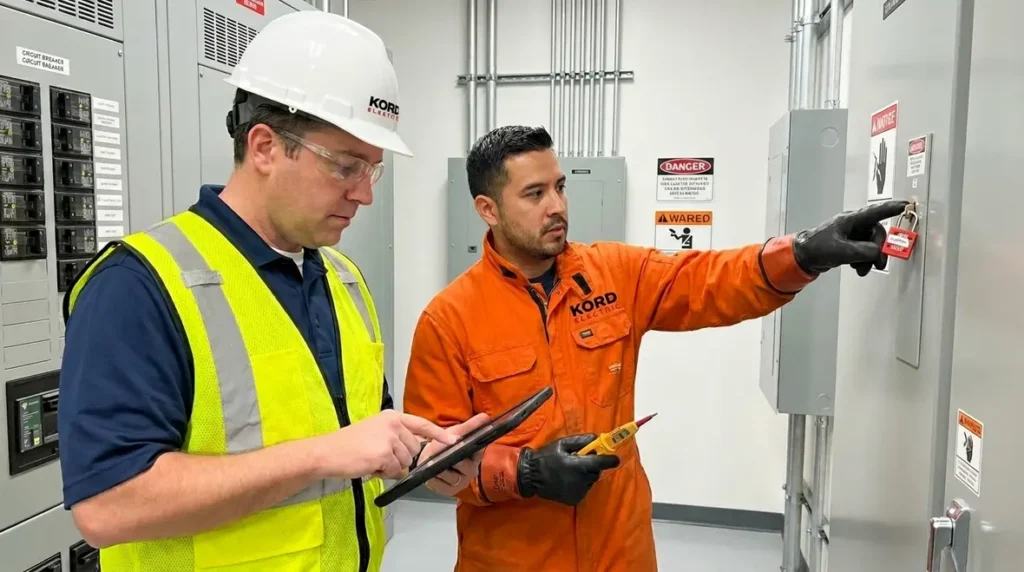
At this point, the experts on our service staff often walk through the timeline with the customer. We ask what was added, when the symptoms began, and whether the issue appears in certain hours. Then we explain the most common causes, such as:
- Too many devices on one circuit
- Equipment with starting surge that stresses the breaker
- Loose or corroded connections that create heat under load
- Deteriorated wiring insulation that increases resistance
- Panel aging, failed lugs, or misbalanced phases
Just like a pop quiz, the problem can seem random at first. Yet electrical faults usually follow patterns once our technicians check the panel, verify load history, and measure temperature and performance under real conditions. And once you see the pattern, you can fix the right thing, not just reset the breaker and hope.
Electrical overload signs commercial building managers spot first
When we talk to facility teams, we hear the same early stories in different words. That is because the first warning signs usually appear where heat and instability start to build. In a commercial electrical overload event, the system often shows several symptoms together rather than one isolated issue.
Here are common signs that our technicians look for during service calls, including what staff often notice before we arrive:
- Breakers trip more often, especially when equipment starts
- Lights dim or flicker when motors or compressors engage
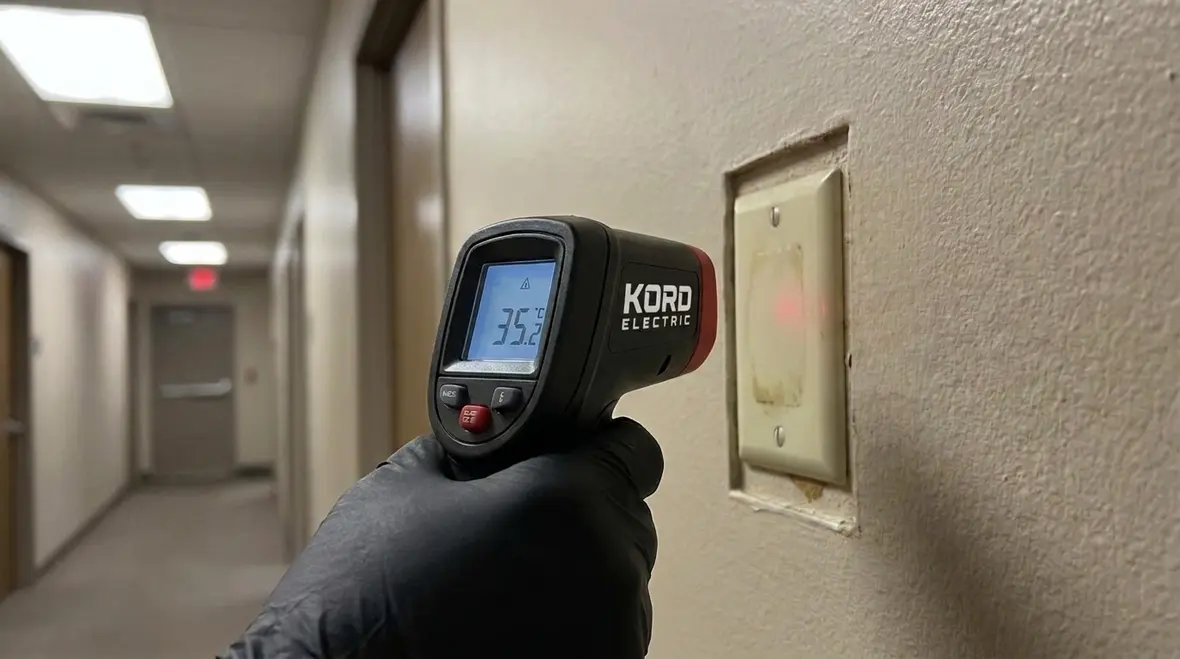
- Warm outlets, warm switch plates, or warm sections of conduit
- Buzzing, crackling, or a sizzling odor near panels and junction boxes
- Discolored wiring, char marks, or hot spots visible at access points
- Uneven temperatures in panels, bus bars, or breaker handles
Now, here is the part people miss. A circuit can trip because it is overloaded, but it can also trip because connections are failing or components have aged. So even if the breaker shuts the load down, the heat problem may already have started. That is why our expert service staff does not treat tripping as the whole story. We identify the real cause, then we prevent the next event from repeating.

Safe prevention starts with load planning and smarter distribution
Prevention does not rely on luck. It relies on planning, measurement, and careful distribution. For commercial and industrial properties, we start by reviewing how the building uses power across zones and times. Then we map loads so teams do not accidentally overload a circuit during peak activity.
Our technicians typically work through practical steps such as:
- Verifying circuit amp ratings and breaker sizing against real equipment draws
- Assessing starting surges from motors, HVAC compressors, and refrigeration
- Checking that high draw loads do not crowd one phase or one panel section
- Balancing loads when a three phase system runs unevenly
- Improving labeling and load documentation so staff know what sits where
Furthermore, we explain simple operating habits that reduce stress on panels. For instance, if a building frequently starts multiple motors at once, sequencing can reduce the surge. If a site plugs additional equipment into the same area, staff can spread usage. These steps do not replace engineering. However, they do support safe operation while upgrades are scheduled.
And yes, we say this with a calm voice because someone always asks: “Can we just add more breakers?” Sometimes you can, but only if the conductors, panel rating, and upstream service support the change. Otherwise, you just move the fire from one room to another.

Breakers trip often. Now what fixes it for commercial buildings
When breakers trip, the first action is to make the area safe and stop repeated resets. Then our technicians focus on the most common repair paths that keep commercial systems stable. If you want a deeper walkthrough, Kord Electric also covers this in our blog post on Circuit Breaker Tripping Fixes for Commercial Buildings, and our field approach aligns with those findings.
In the field, we often see that tripping connects to one of these repair themes:
- Loose wiring or lug issues that heat under load
- Worn breakers that no longer trip correctly or that degrade contacts
- Misapplied breakers or wrong trip curves for the equipment type
- Overloaded circuits caused by late changes in equipment or usage
- Damaged conductors from moisture, vibration, or aging insulation
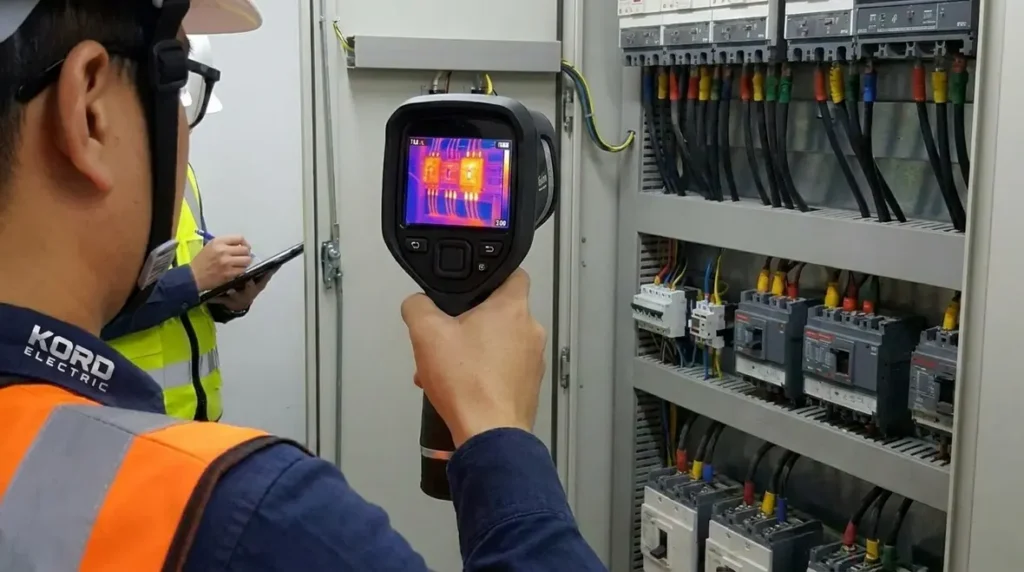
Next, we explain what our team checks before replacing parts. We confirm the symptom, verify load measurements, and inspect thermal patterns. Then we retest. That matters because a “new breaker” on a bad connection can still trip. And a replaced component does not fix an underlying sizing or balancing problem.
To keep the conversation practical, our expert service staff also helps facility managers plan the work without disrupting operations. We schedule tests during windows that reduce downtime. We also document findings, so the next service visit does not start from scratch.
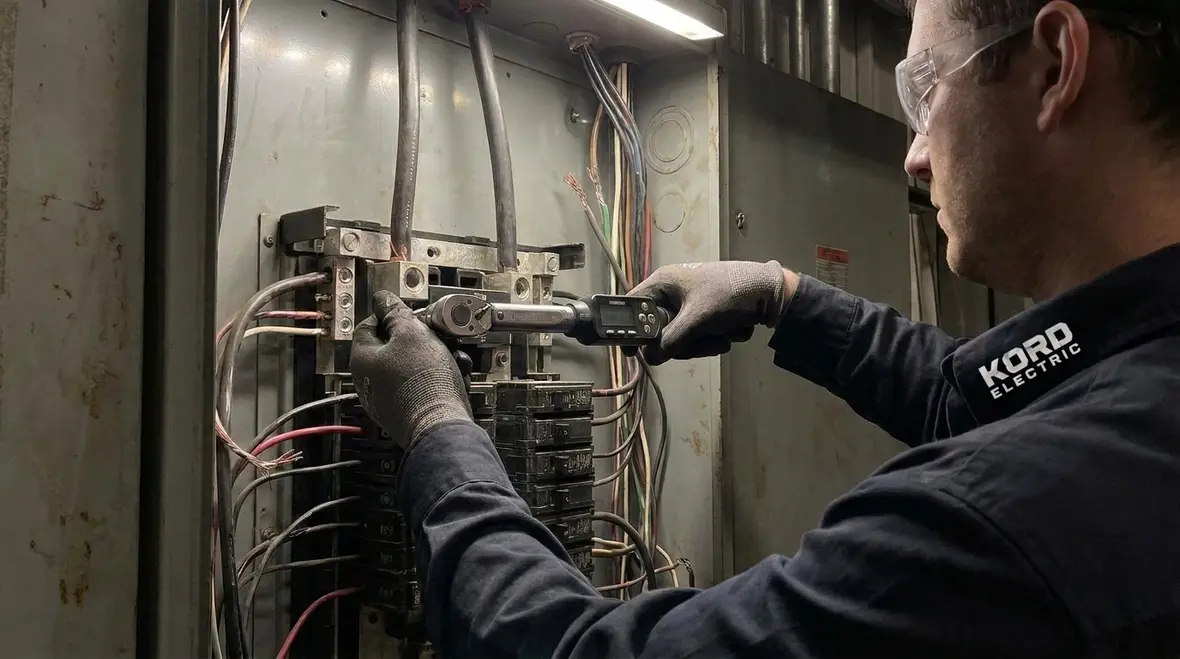
Prevent heat and damage with inspection, tightening, and maintenance
Electrical overload often shows up as heat, and heat quietly damages insulation, connections, and bus bars. Therefore, prevention includes inspection and maintenance that looks beyond the breaker label. In many commercial and industrial facilities, routine checks miss the areas that fail first: terminations, panel interiors, and connections at junction points.
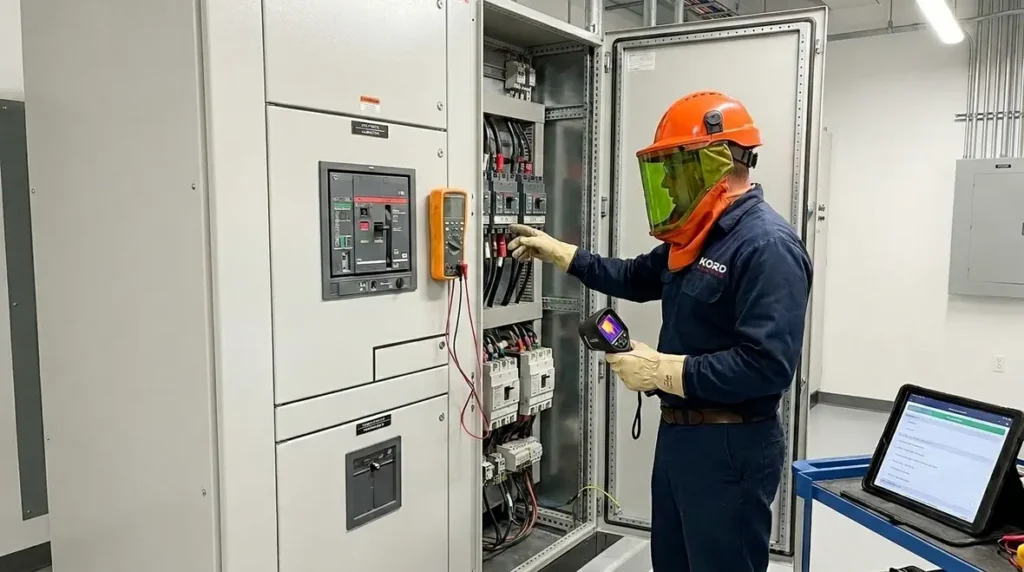
During planned service, our technicians commonly perform steps like:
- Visual inspection for discoloration, corrosion, and signs of arcing
- Torque verification for terminations and breaker connections
- Thermal scanning to find hot spots under actual load
- Bus bar and panel component checks for stability
- Verification of grounding and bonding integrity
As a result, maintenance becomes less about reacting to trips and more about spotting early risk. Also, our technicians teach staff what to watch for between visits. For example, if a room smells “electrical” after equipment starts, that detail can guide the next inspection.
And we keep the tone professional. Still, we also have to say it: resetting breakers like a gaming controller is not a maintenance plan. If a breaker trips, the building tells you something. Kord Electric reads that message and resolves the root issue.
When overload signs show up, respond like a pro
Facility teams often face a tradeoff: keep operations running, or shut down to protect the equipment. Our guidance stays focused on safety. If staff notice a burning smell, visible damage, smoke, or persistent arcing sounds, power should stop right away until our technicians assess the panel and circuit.
When the warning is less dramatic but still clear, such as repeated tripping or warming outlets, response can still be immediate. Here is a clear sequence that our team recommends for commercial and industrial sites:
- Record what was running when the breaker tripped
- Do not repeatedly reset the breaker
- Check for heat at outlets, covers, and panel areas
- Isolate the affected load if safe to do so
- Call Kord Electric for inspection and load verification
Then our technicians explain what they find, and we translate measurements into decisions. If the fix involves load rebalancing, we outline the steps. If it involves replacing breakers, lugs, or conductors, we show why. If it requires panel upgrades, we explain the timeline and what the building can expect.
In short, we help people move from panic to a controlled plan. Because when commercial electrical overload signs commercial building show up, the goal is not drama. The goal is safe power that keeps running.
For facility leaders planning broader reliability improvements, it can help to zoom out from single breaker events and look at the health of the entire electrical system. Resources like Kord Electric’s guides on commercial electrical load management, smart building energy management, and emergency readiness show how load planning, monitoring, and response procedures all work together so panels, feeders, and equipment are not left carrying more than they were ever designed to handle.
If your portfolio includes properties across the region, you can also align overload prevention with a structured program through Kord Electric’s Los Angeles County electrical services for commercial and industrial facilities. That alignment turns scattered overload incidents into a clear maintenance and upgrade roadmap instead of a patchwork of urgent calls.
FAQ
Closing CTA for facility teams
If your building shows frequent tripping, flicker, heat, or any electrical smell near panels, do not treat it like an annoying routine. Kord Electric supports commercial and industrial facilities with expert diagnosis and prevention focused on the real cause. Our technicians inspect, measure, and explain the findings in clear terms, so your team can act with confidence. Whether you manage one site or many, our commercial services across Los Angeles County and Southern California connect troubleshooting, maintenance, and upgrades into a plan that keeps your electrical infrastructure ahead of demand instead of chasing it.
If you are planning broader improvements, you can also pair overload troubleshooting with larger projects like service capacity upgrades, emergency power strategies, or lighting and EV charging changes. By coordinating that work with a dedicated commercial electrical team, you keep your panels, feeders, and critical equipment within safe limits while your facilities grow.
Call Kord Electric today to schedule an inspection and stop overload risk before it turns into downtime.
For facility decision makers who want to see how overload prevention fits into a broader reliability roadmap, our team can also walk you through related services like commercial electrical preventive maintenance, emergency response planning, and upgrades to distribution equipment that silently carries your building every day.
To connect the dots across your portfolio, our technicians can review existing reports, breaker histories, and thermal scans, then show where targeted work will make the biggest impact. That way, your overloaded circuits and tired panels become part of a solved problem instead of a recurring headline.
If your facilities team is based in or around Los Angeles, Studio City, Burbank, or the greater Southern California region, Kord Electric’s commercial and industrial specialists can align inspections, upgrades, and projects with your operating calendar so safety, uptime, and electrical code compliance support the way you do business every day.