
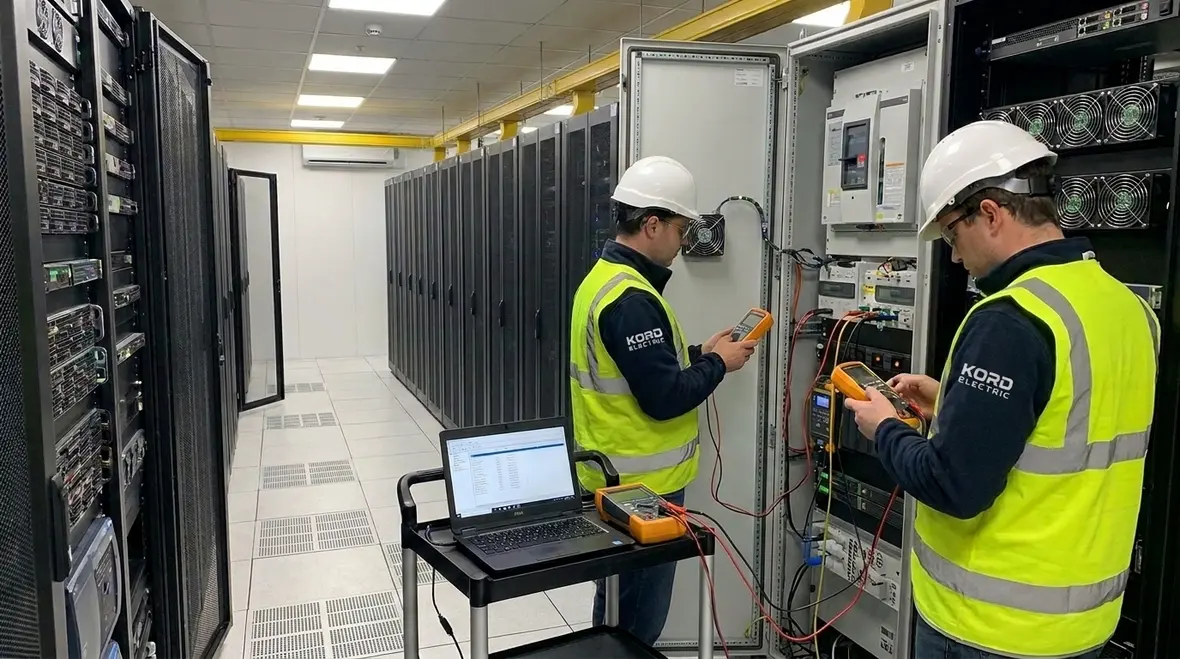
Electrical Reliability Testing for Data Centers and Critical Facilities
Electrical downtime does not look dramatic on paper, but in real life it can feel like the lights are plotting against you. What Is Electrical Reliability Testing for Data Centers and Critical Facilities? is the set of checks we run to confirm electrical systems will perform under real load, real heat, and real time. At Kord Electric, our goal is simple: we help commercial and industrial facilities, as well as major property buildings, reduce surprises that can interrupt operations. While other teams may simply “inspect,” we test, document, and verify. Then, we help you act on what we find. And yes, we know some people treat testing like it is a dentist appointment, but with better snacks and fewer awkward jokes.
In the rest of this article, we explain what reliability testing is, how our expert service staff approaches it, and how it supports power resilience across the full site.
What Is Electrical Reliability Testing for Data Centers and Critical Facilities? and why it matters right now
What Is Electrical Reliability Testing for Data Centers and Critical Facilities? describes a structured series of field tests, measurements, and performance checks run on your electrical infrastructure so it proves it can carry real-world loads without drama. Instead of waiting for a surprise outage to tell you what is weak, we use testing to reveal loose connections, aging insulation, misapplied protection settings, and equipment that no longer performs the way the one line diagram suggests it should.
In critical sites such as data centers, production environments, and major property buildings, a few seconds of electrical instability can translate into hours of recovery work. Reliability testing makes that instability less likely by forcing the system to “show its work” under controlled conditions. Our technicians apply that approach across utility interfaces, standby sources, and distribution equipment, then explain the results in language that operations, maintenance, and finance teams can all understand.
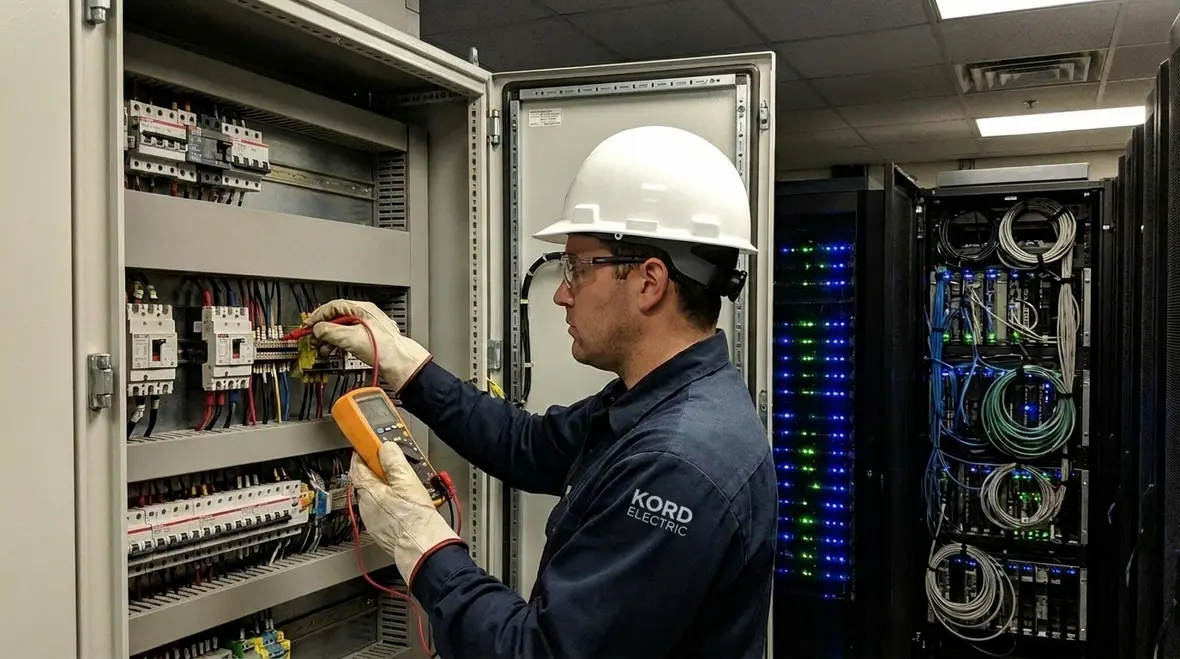
Right now, many facilities are adding new loads, new IT equipment, and new backup systems faster than their electrical infrastructure was originally designed to handle. Reliability testing answers the question, “Can our system still carry this responsibility safely and consistently?” instead of leaving everyone to guess. It turns invisible risk into specific action items, and in critical facilities, that difference often decides whether a short interruption becomes a headline or a non-event.
How we define reliability testing for power systems
In most commercial facilities, electricity behaves like a well trained crew. It shows up, does its job, and expects everyone else to do theirs. However, over time, equipment ages, connections loosen, insulation dries out, and protective devices drift out of spec. Therefore, reliability testing focuses on verifying that critical parts of the electrical chain still work together.
Our technicians at Kord Electric treat reliability testing like a stress test for the entire electrical path, not just one component. For example, we look at the supply side, then the transfer points, then the distribution system, and finally how loads respond during abnormal conditions. In other words, we confirm that when something goes wrong, the system moves to the next plan without hesitation.
To keep it practical, we align testing with your facility risk profile. A data center may care most about uptime and clean power quality. A major property building may care about life safety support circuits, elevators, and steady service through planned and unplanned events. Either way, our work stays tied to the way your facility actually operates, not to a generic checklist that ignores what actually keeps your site in business.
We also connect reliability testing to long-term planning. The trends we capture in test results help you decide when to schedule upgrades, how to phase equipment replacement, and where to prioritize limited capital so you eliminate the highest risk first. Over time, that approach builds a more predictable, resilient electrical infrastructure instead of a patchwork of emergency fixes.
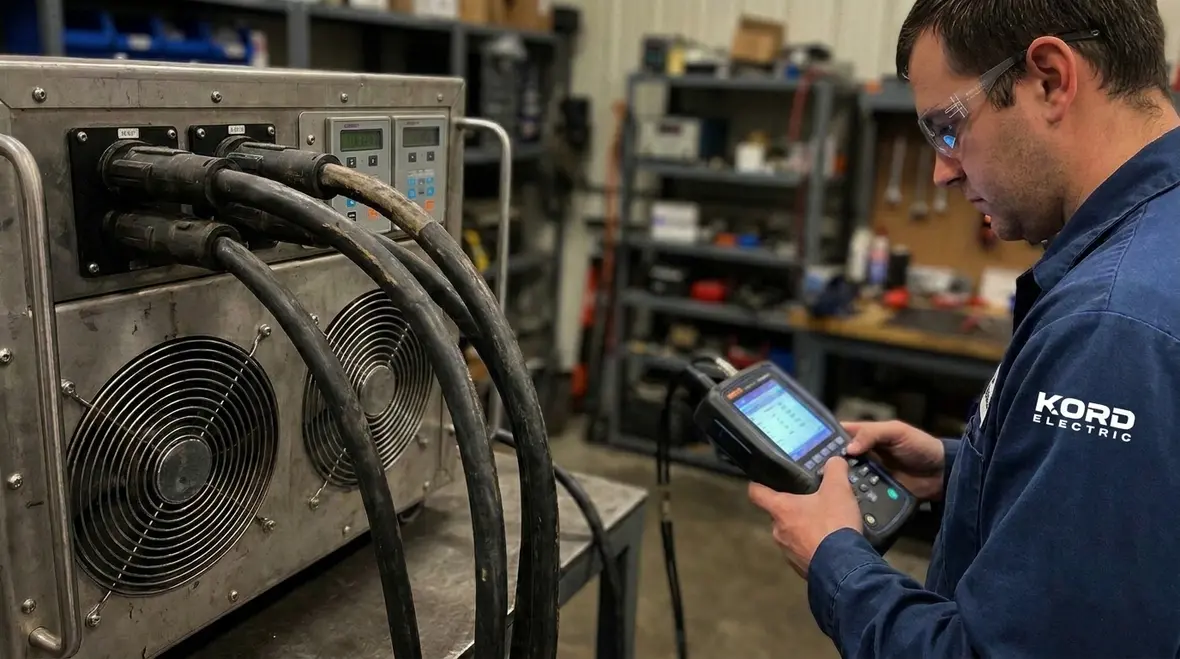
Where we test in a data center and critical facility
When people ask “where does testing happen,” they usually imagine a single panel and a clipboard. In reality, we test a connected series of elements. First, we evaluate upstream power, such as utility interfaces and switchgear. Next, we verify standby sources and switching mechanisms. Then, we examine distribution at the level where failures tend to cascade, including busways, ATS systems, and downstream feeders.
Here is a clear view of the common areas we evaluate in commercial and industrial settings:
- Switchgear and switchboards: we check performance and condition so faults do not escalate into outages
- Transfer switches and ATS systems: we confirm timely and correct switching under simulated stress
- Transformers and distribution components: we verify health indicators that affect voltage stability
- UPS systems and power conditioning: we confirm battery related and output related behavior
- Generators and paralleling equipment: we confirm controls, starting behavior, and load response
- Cable and termination points: we validate insulation and connection integrity where heat often hides
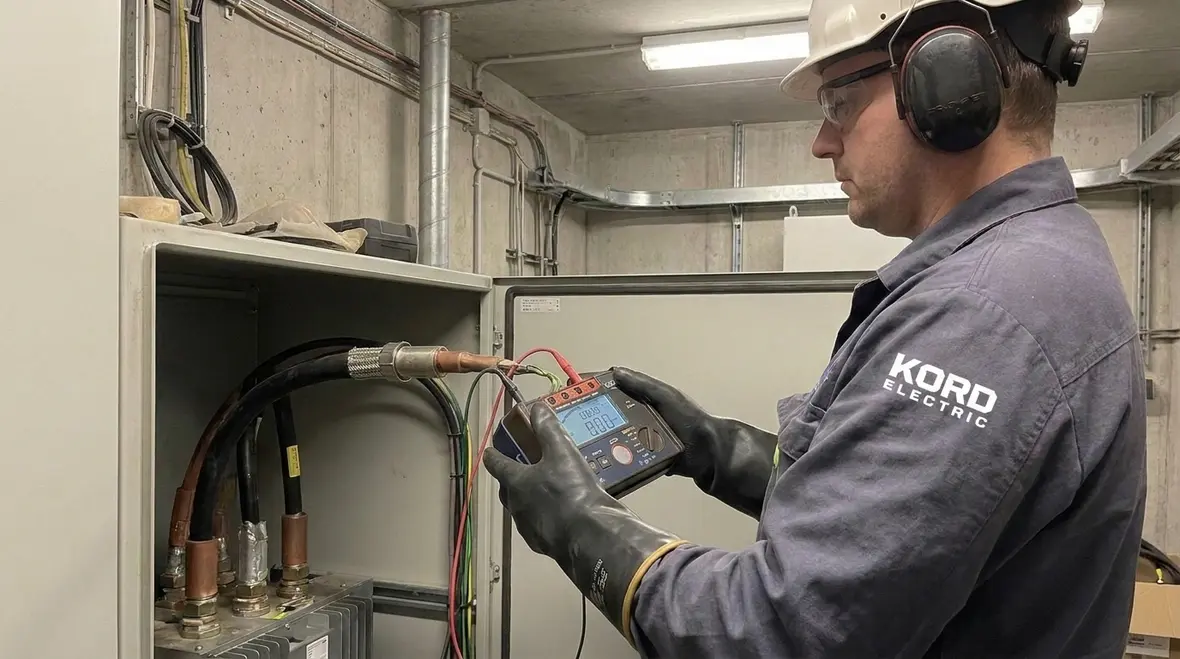
And yes, if you have ever watched a tiny wire become a giant problem, you already understand why we focus on the connection points. They are small, they get neglected, and they love drama. In data centers and critical facilities, those connection points sit inside gear that may run 24/7, which is why we combine visual checks with thermal scans, torque verification, and performance testing.
For facilities that rely on complex backup architectures, like N+1 or 2N data center designs, we also test how those redundant paths behave in practice. The goal is simple: when one path fails or is removed for maintenance, the alternate path should carry the load without hesitation, surprise alarms, or unexpected interactions between protection settings.
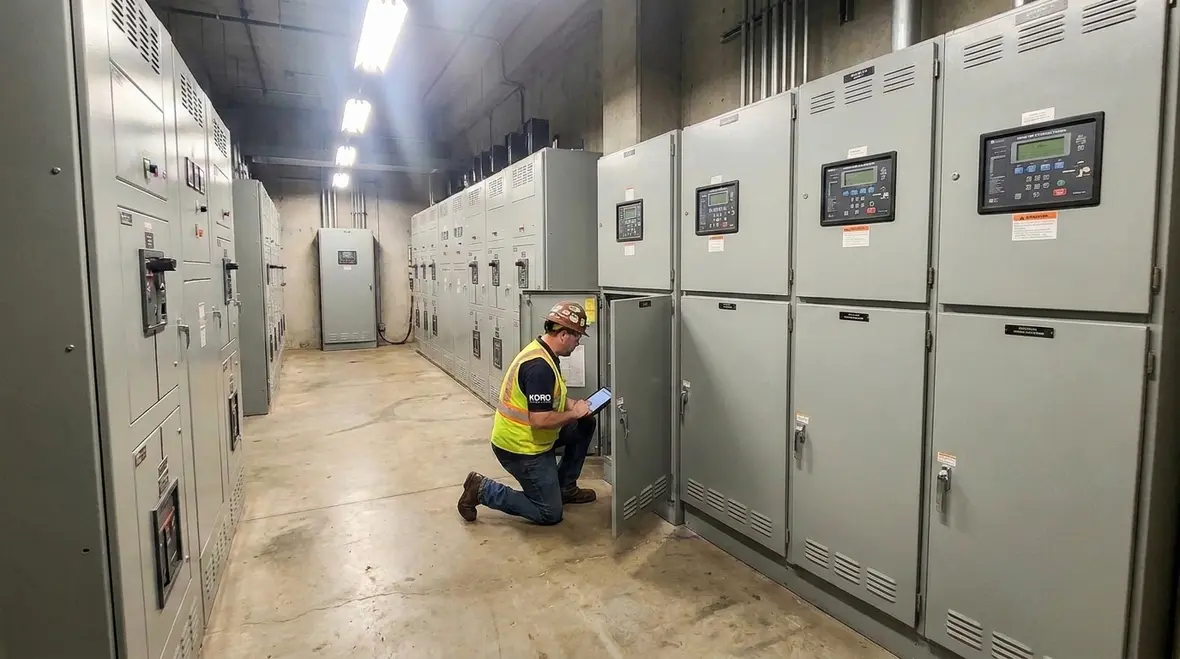
Because so many issues trace back to the “middle” of the electrical chain, we pay close attention to how distribution breakers coordinate, how feeders run through the building, and how branch circuits support IT racks, process loads, and life safety systems. Testing the whole chain makes it easier for your team to see exactly where an issue sits instead of treating the entire facility as one big question mark.
What our technicians verify during testing
Now we get to the part that matters: what we actually verify. We do not run tests just to collect numbers. Instead, our expert service staff explains the results in plain language and ties them to operational impact. Then, we help you understand what needs attention first, not everything at once.
Depending on your system design and your operational goals, we typically verify items such as:
- Insulation condition: we evaluate insulation health so leakage and breakdown risks drop
- Continuity and conductor integrity: we check paths that must carry current reliably
- Protective device operation: we confirm breakers and relays act correctly when conditions change
- Grounding and bonding performance: we verify control of fault currents and stable reference points
- Voltage and current behavior under load: we ensure the system keeps equipment within safe operating boundaries
- Power quality trends: we look for harmonics and voltage disturbances that can stress sensitive gear
As we test, we also watch how the system behaves in sequence. For example, it is not enough for a generator to start. It must also synchronize properly, then carry load without instability. Likewise, an ATS must transfer at the right time, with the right signaling. Our team tests the logic and response, not just the headline equipment.
Additionally, we document every finding. That documentation becomes your map for future work, and it helps teams plan upgrades with fewer surprises. When managers ask for proof, we provide it. When operators ask for clarity, we explain it. When everyone asks, “can this wait,” we answer with risk based guidance that respects uptime requirements as much as it respects budgets.
Kord Electric also connects reliability testing to broader programs, such as electrical system documentation best practices and structured maintenance planning. When test results, one line diagrams, and field records all tell the same story, it becomes much easier for a facility team to act confidently instead of guessing their way through decisions.
Why critical facilities cannot afford guesswork
Reliability issues rarely announce themselves. Instead, they build quietly. A loose termination warms up, insulation degrades, and protective devices may still operate, just not as reliably or quickly as they should. Then, during a higher demand period or a transition event, the weakness shows up like a pop quiz no one studied for.
That is why What Is Electrical Reliability Testing for Data Centers and Critical Facilities? should not stay as a concept. It should become a routine practice tied to your change cycles. If you upgrade equipment, add racks, expand floors, or modify power routing, you change the behavior of the electrical system. Therefore, testing helps confirm that your new configuration still protects uptime goals and operational safety.
In commercial and industrial environments, these tests also support planning. They help you estimate how long components can continue safely. They also reduce the chance of emergency work, which tends to cost more and disrupt operations. In short, testing buys you time, and time is the one resource everyone wants, even when they pretend they do not.
From another angle, many failures come from mismatched expectations. A project team may assume a device is suitable because it looks right. Our approach proves performance through evidence. Then, our technicians guide the next step, whether that step is maintenance, tightening connections, replacing worn parts, or adjusting protection settings.
For organizations that depend heavily on uninterrupted power, like colocation data centers, healthcare facilities, and major property portfolios, this reduction in guesswork supports everything from service level agreements to tenant satisfaction. It also complements broader strategies such as comprehensive commercial electrical services across Los Angeles County, where reliability testing becomes a core tool for long term resilience.
How our process keeps testing clear and actionable
Kord Electric runs reliability testing with a method you can follow. First, we start with your facility layout, one line diagrams, and operating requirements. Next, we coordinate access with your schedule so production and operations keep moving. Then, we test in a logical sequence so our results make sense as a chain, not as isolated data points.
After testing, we do something that too many teams skip. We explain. Our expert service staff breaks down what the results mean, where risk sits, and what actions reduce risk fastest. Then, we prioritize recommendations based on impact and urgency.
When you work with us, you get a practical path forward. You do not just get a report that reads like a science textbook. You get a decision tool. And if you need to align with your internal maintenance team, your facilities manager, or your engineering staff, we help translate the work into tasks they can plan and budget.
Also, we understand that in major property buildings and data centers, testing must stay coordinated with safety procedures and operational constraints. Therefore, our team plans each step with care so testing remains safe for people and safe for equipment. It is calm, controlled work, the kind that prevents “why did this happen” meetings. For facilities that want to go even further, we can pair reliability testing with complementary services like emergency power planning and broader critical infrastructure electrical reliability testing strategies.
Reliability testing results: what we deliver and how you use them
Good testing does not end when the meter shuts off. Instead, it continues through how you use the results. Our deliverables focus on clarity, traceability, and next steps. Typically, we provide documented findings, test values, and an interpretation that connects to system performance.
We also help you turn results into maintenance and upgrade planning. For instance, if we identify an insulation concern on a critical feeder, you can address it before it turns into a failure. If protective device performance shows drift, you can plan adjustments before a fault event. If we detect voltage instability trends, you can reduce power quality risks that may affect sensitive loads.
When a facility shares ownership across multiple stakeholders, documentation becomes even more valuable. It helps align finance, operations, and engineering on what matters. In the end, our goal is to support decisions that protect uptime and reduce costly disruptions for commercial and industrial sites.
For facilities that want to integrate reliability testing into a wider risk management plan, Kord Electric can align testing cycles with other initiatives, such as emergency power for business continuity design and structured electrical preventive maintenance. That way, every outage drill, generator test, and panel inspection feeds into one coherent strategy instead of scattered notes on a calendar.
FAQ
Closing: Let us help you prove your power will hold
Electrical reliability testing is not a one time task. It is a disciplined approach that keeps power systems performing when your facility needs them most. Kord Electric brings expert service staff and experienced technicians who explain results clearly, prioritize action, and help protect uptime for commercial and industrial data centers and major property buildings. If you want less guesswork and more verified performance, contact us for a reliability testing plan. We will map the right tests to your systems, your schedule, and your risk. And yes, we will keep the paperwork calm.
Whether you are planning a new critical facility or improving an existing site, our team can align reliability testing with broader services like emergency power design, load balancing, and preventive maintenance. For facilities across the region, that integrated approach supports resilient operations, safer electrical rooms, and fewer late-night surprises for the people responsible for keeping the lights on.
If you are ready to move from “we hope it holds” to “we know it will,” our electrical reliability testing services are designed to fit the real conditions in your building, from data rooms and production floors to the main switchgear lineup that quietly carries everything. We are here to help your team prove that the power you count on every day is ready for whatever comes next.
To explore how this fits into your broader electrical strategy, you can also review Kord Electric resources on documentation best practices, emergency power planning, and commercial electrical distribution uptime. Together, these tools give facility leaders a full picture of how their systems perform today and how to keep them reliable tomorrow.


