Smart Industrial Lighting Controls: Benefits, Applications & ROI for Commercial and Industrial Sites
At Kord Electric, we focus on commercial and industrial facilities and major property buildings, because that is where lighting energy use quietly grows teeth. Our Smart Industrial Lighting Controls: Benefits, Applications & ROI help organizations cut waste, improve safety, and keep occupants comfortable without “set it and forget it” surprises.
We often explain this in plain language with our expert service staff on site. In the pages below, others will see how we plan, install, and maintain control systems that adapt to real work patterns. And yes, we promise: the controls do not need a PhD to operate, though sometimes the facility team feels like they do after years of manual switching.
Why industrial lighting needs more than a switch
In many plants, warehouses, and large office buildings, lighting stays on longer than it should. At first, it looks harmless. Then the utility bills arrive and the building manager stares at numbers the way someone stares at a slow-loading streaming app. Meanwhile, occupants deal with inconsistent brightness, glare, and uneven coverage.
Smart control changes the whole rhythm. Instead of treating lighting like a single on off decision, we tie it to actual activity. We use sensors, schedules, and logic so light levels match the space’s needs at each moment. As a result, the same fixtures provide better visibility while consuming less energy.
Our technicians often walk the site first, not last. Then we map areas by usage: loading bays, production lines, corridors, storage zones, and stairwells. After that, we set up control strategies that fit how people really move and work, not how the floor plan looks on paper.
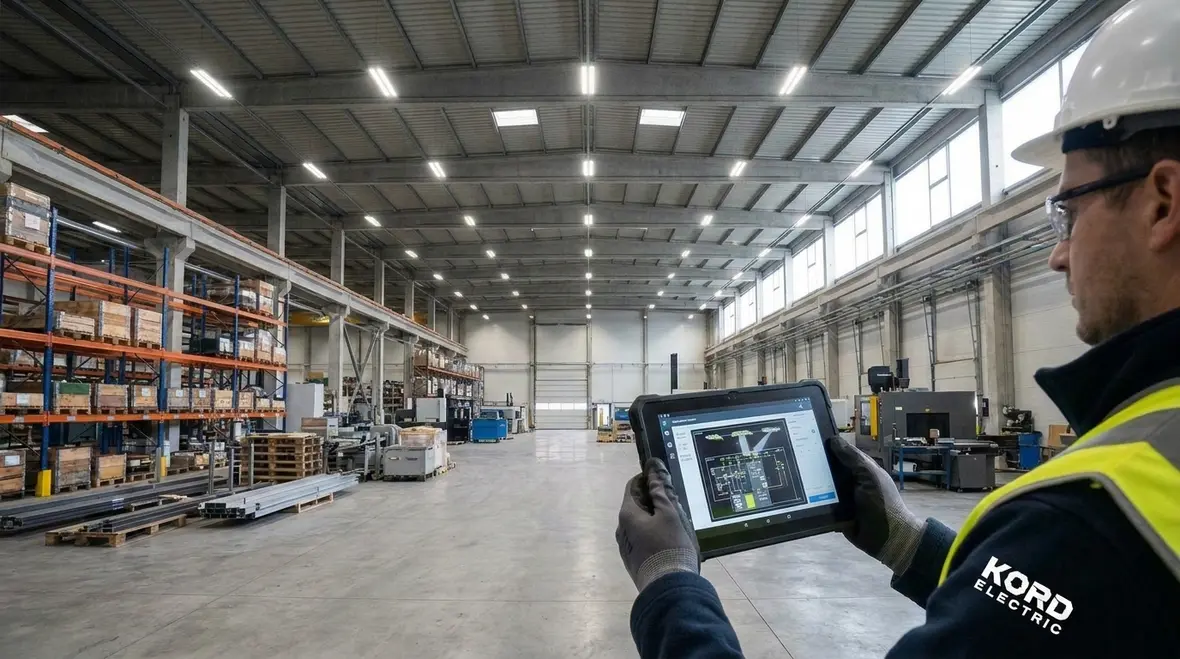
Core building blocks of advanced lighting control systems
Smart systems typically include several pieces that work together. We design the system so it can start simple and grow later, which is how many major property buildings avoid expensive rebuilds.
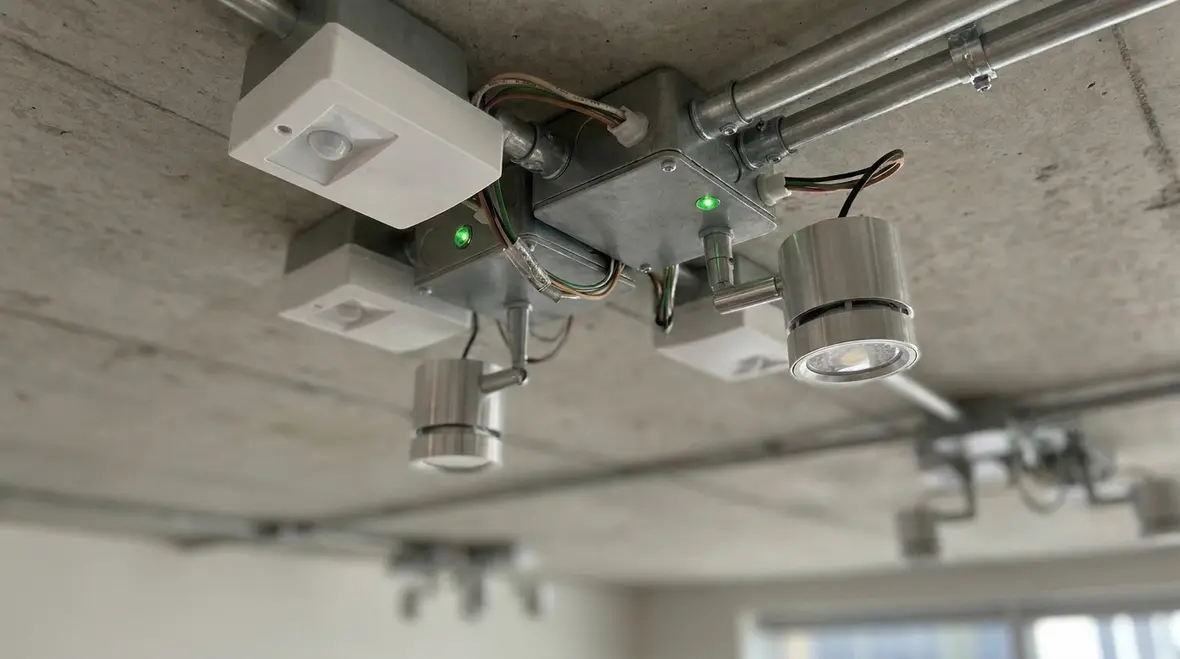
Sensors detect motion and occupancy, and some also measure daylight. This means lights dim when enough natural light reaches the work area. As a result, lighting responds to reality instead of guesswork.
Controllers decide when to dim, when to turn off, and how quickly to react. Because industrial spaces vary, controllers follow customized rules by zone and usage type. We program settings so the lights feel stable to occupants, not jumpy like a cheap haunted house prop.
Addressable networking ties zones together for monitoring and scheduling. With proper setup, facilities can track energy patterns and spot malfunctioning devices early. We also make sure the design fits the building’s existing electrical layout and controls infrastructure.
Software and commissioning help ensure the system performs correctly from day one. And this is where our expert service staff shines. They test sequences, verify coverage, and explain the logic to the facility team so operations staff does not feel locked out of their own system.
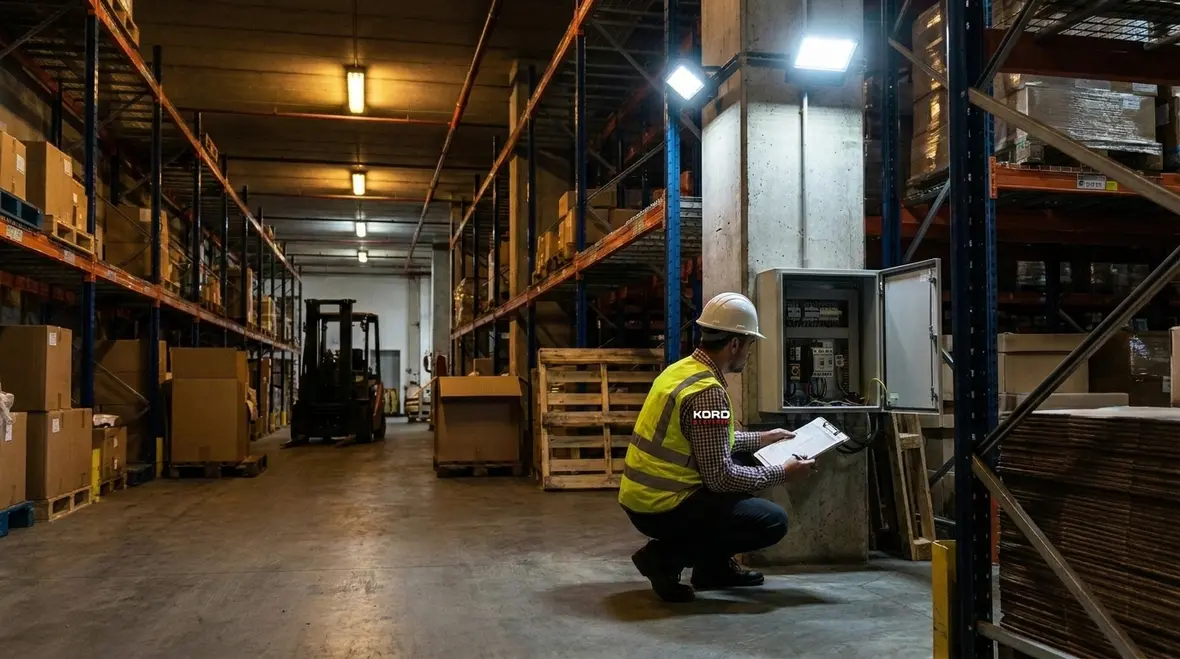
How we design Smart Industrial Lighting Controls: Benefits, Applications & ROI into the plan
We treat ROI like an engineering goal, not a marketing promise. First, we review lighting inventory, fixture types, mounting heights, and existing controls. Then we evaluate usage schedules, shift patterns, and how often areas sit idle.
Next, we select control strategies that match each zone. For example, production spaces may need steady levels during active periods, while storage areas can ramp down more aggressively when activity stops. In addition, we factor in daylight access for areas near skylights or exterior walls.
After that, we commission the system with careful testing. We validate occupancy detection zones so lights do not shut off in the middle of a task. We tune dimming curves for comfort and visibility, and we confirm that timers and reset delays match real workflow. Only then do we walk the team through what happens under different conditions.
So yes, the path is more thoughtful than “install sensors and hope.” And no, the building does not have to live with flicker, odd behavior, or mystery settings. We build a system that behaves predictably, because predictability reduces calls, reduces downtime, and keeps the lights from becoming the most confusing employee on site.
For facility teams that want to go deeper into strategy, this work pairs well with broader energy planning, such as the approaches in Kord Electric’s article on industrial smart lighting controls to cut costs, where smart zoning and controls turn into measurable savings across departments.
Where advanced control delivers the biggest impact
Commercial and industrial facilities rarely behave the same way in every corner. Therefore, we target areas with the most operational swing and the highest hours of unnecessary lighting.
Warehouses and distribution centers
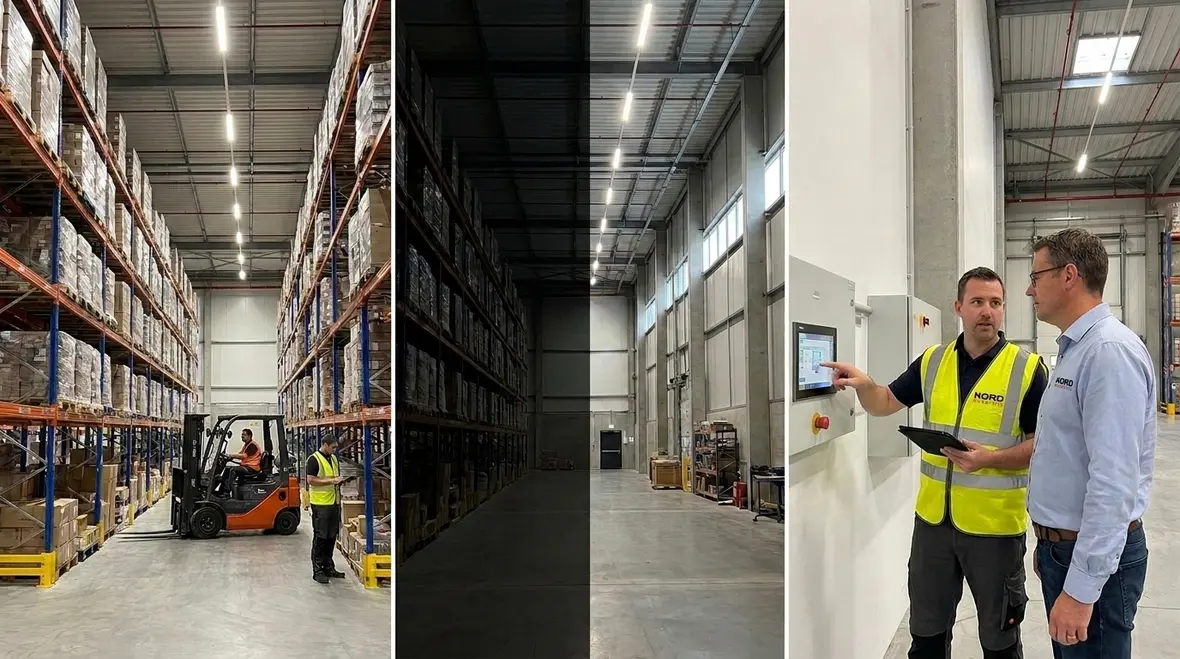
High ceiling spaces and long aisles benefit from occupancy-based control and scheduling. As shifts end, lights dim or turn off based on actual movement, which cuts energy without harming safety.
Production facilities
Factories need consistent visibility for quality and safe work. We use zone-based tuning so active lines stay bright while adjacent idle areas reduce output. This approach supports stable working conditions and lowers energy waste.
Loading docks and exterior walkways
Exterior areas often stay lit all night. With smart scheduling and sensor strategies, lighting adjusts to vehicle traffic and activity rather than fixed timer schedules. Then, security stays reliable.
Offices inside mixed-use industrial buildings
Even in major property buildings with administrative spaces, daylight sensing can reduce unnecessary output. Occupancy logic helps rooms stop lighting when no one is there.
Stairwells and corridors
These areas can draw power for long stretches. With the right settings, they provide safe illumination during occupancy and reduce output when spaces sit empty.
When we implement Smart Industrial Lighting Controls: Benefits, Applications & ROI at the zone level, we avoid a common mistake. The mistake is treating a warehouse like a lobby. People do not need the same brightness patterns, and neither does the building.
If your facility team is also planning broader efficiency work, smarter lighting controls often connect naturally with strategies like those in Kord Electric’s warehouse energy saving retrofits ROI guide, where controls, fixtures, and electrical stability all work together.
Cut costs without hurting performance: practical ROI drivers
Cost reduction comes from multiple angles, and we explain each one clearly. Energy savings matter, but performance savings matter too.
Reduced run time
Occupancy detection and scheduling reduce the hours lights run when spaces sit idle. Then, dimming lowers power during partial-day needs.
Lowering light levels when conditions allow
Daylight harvesting uses natural light to reduce artificial output. This keeps work areas comfortable while trimming energy use.
Better maintenance planning
If the system flags unusual behavior, facilities can service devices earlier. As a result, you prevent small failures from turning into bigger outages or safety concerns.
Commissioning that avoids costly rework
The ROI drops when controls do not work right and crews start adjusting settings blindly. Our technicians test and tune so the first installation behaves as expected. And during handoff, our expert service staff explains the sequences in a way that operations teams can trust.
For many sites, the payback timeline depends on existing lighting, operating schedules, and how much time areas spend unoccupied. However, we typically see meaningful savings once controls match how the facility runs each day.
In some cases, these ROI drivers also support compliance and long-term planning, as covered in resources like Kord Electric’s California commercial lighting code guide for 2026, where smart controls pull double duty for savings and code alignment.
Implementation, commissioning, and training for long term success
Most facilities do not need a theory lecture. They need smooth installation, stable performance, and clear ownership after the job ends. That is where we focus.
Pre install planning
We coordinate with electrical contractors, facility managers, and safety teams. We map zones and confirm wiring pathways where needed.
Commissioning and functional testing
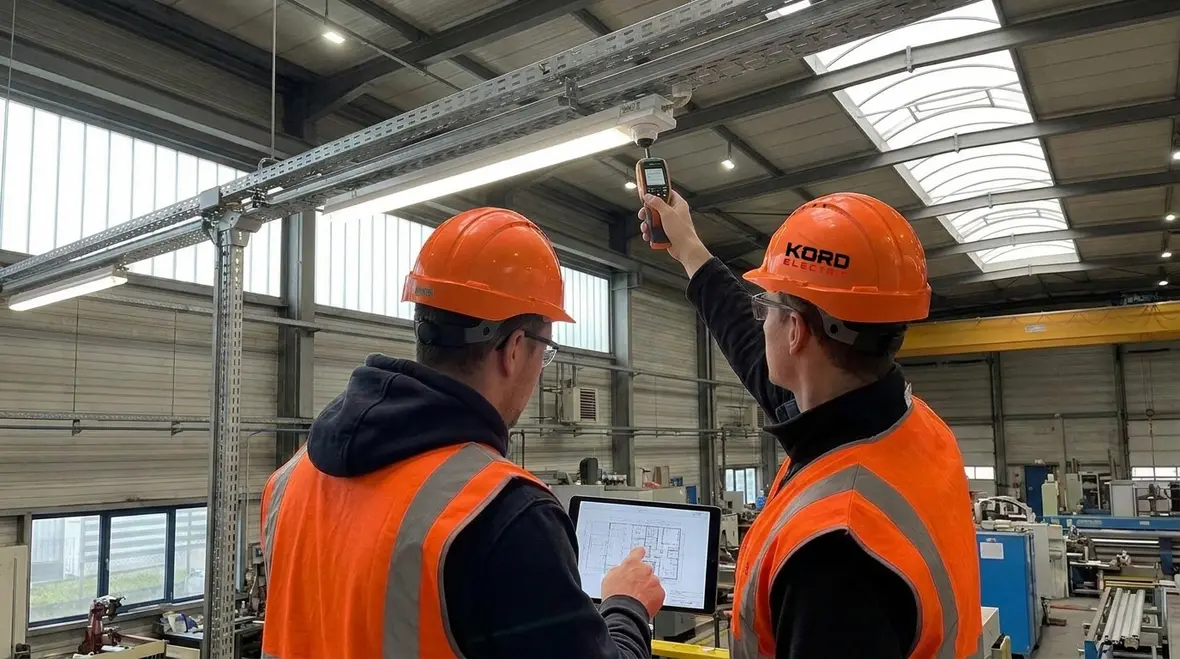
Next, our technicians verify sensor coverage and correct control logic. We test transitions: turning on, dimming, and off behavior. We also check daylight response in relevant areas.
Training for operations and maintenance
Then we explain system behavior and day to day adjustments. Our expert service staff walks the team through how settings should work and what changes should not be made without guidance. This protects performance and avoids accidental “turn it all to max” moments that make energy managers sigh.
Ongoing support
Finally, we help facilities keep systems tuned over time. Because occupancy patterns change, and so does building use. Smart lighting control stays valuable when it remains aligned with the site’s real operations.
For facilities across Southern California, these implementation steps fit naturally alongside broader electrical upgrades described in Kord Electric’s Los Angeles County electrical services, so lighting controls integrate cleanly with panels, distribution, and safety systems.
FAQ
Bring smarter lighting to your facility
If a building runs lights longer than it needs, the cost shows up fast. Kord Electric helps commercial and industrial sites install control systems that reduce waste while keeping performance steady. Our technicians plan zone strategies, commission the system, and explain everything so your team can operate with confidence. Call us to review your layout, schedules, and lighting needs. Then we will map a practical path toward smarter output and measurable ROI, without drama and without turning your lighting into a mystery novel.
To see how lighting controls fit into a broader energy strategy, you can also explore related topics like energy efficiency for offices, where smart controls, electrical upgrades, and maintenance work together to keep buildings efficient without sacrificing comfort.
When you are ready to connect smart lighting with panels, distribution, and other critical systems, Kord Electric’s commercial and industrial services across Los Angeles County keep everything under one roof, from design and installation to commissioning and long-term support.