Electrical Safety Audit Checklist for Commercial Buildings
At Kord Electric, we start every serious safety conversation with our Electrical Safety Audit Checklist. In the first 100 to 150 words, we mean this literally: we review what is live, what is accessible, what is overloaded, and what is ready to fail. Then we document it in plain language so property managers and owners can act with confidence. If you run a commercial or industrial facility, you already know one hard truth: electrical problems rarely announce themselves with confetti. They show up as flicker, heat, nuisance trips, or worst case, an incident. So, we use our checklist to protect people, keep operations steady, and help your team avoid surprise downtime.
Why a regular checklist lowers risk in commercial buildings
Most facilities do not lose power because electricity suddenly gets creative. They lose power because small issues build up quietly. Electrical Safety Audit Checklist work targets those small issues early, before they grow into outages, fires, or insurance claims that no one wants to discuss at 2 a.m. To be clear, our focus stays on commercial and industrial property, not residential work. That matters because the electrical loads, operating schedules, and safety expectations in these sites differ, often dramatically.
Next, a consistent audit cycle builds a clear record of equipment condition. So even when conditions change, like new production schedules or added tenant loads, others can see what changed and what stayed stable. Meanwhile, our expert service staff explains what we find and why it matters, so decision makers can prioritize repairs without guessing.
And yes, we get it. Some teams see audits as “paperwork.” But electricity does not care about your paperwork, it cares about heat, insulation, and connections. One loose termination can behave like a slow leak in a tire. It does not ruin your day all at once. It ruins your budget over time.
What our Electrical Safety Audit Checklist covers in the field
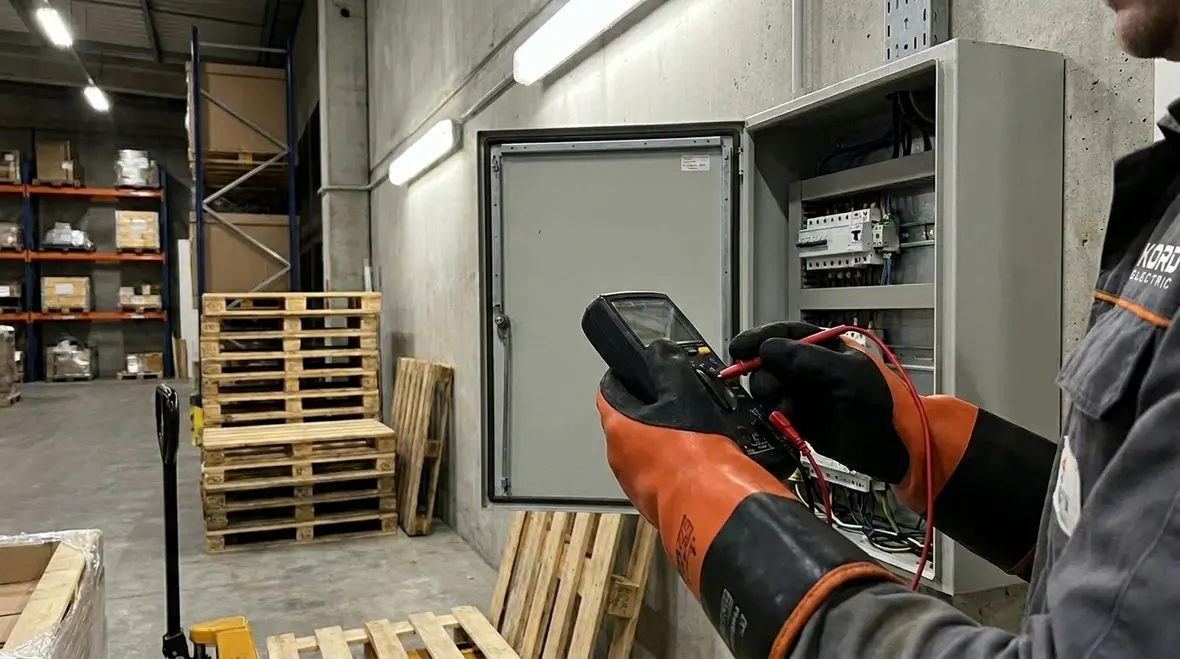
Our technicians use a structured approach so audits stay consistent across sites. We look at components that most often cause real problems in commercial and industrial systems. Then we test and inspect in ways that match how your facility actually runs.
Here is what we typically evaluate as part of our process:
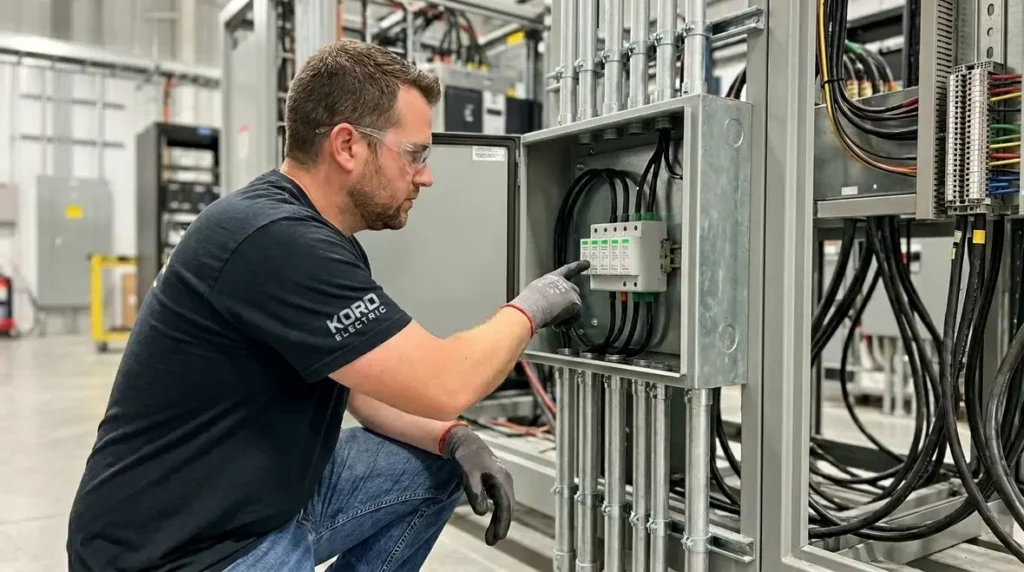
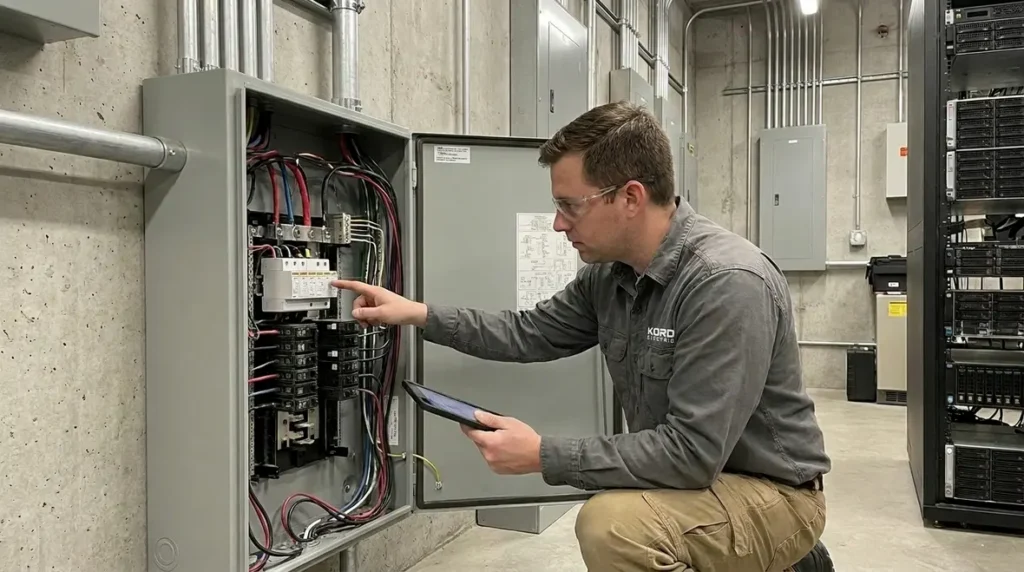
- Panel and distribution conditions, including signs of overheating, corrosion, and loose connections
- Grounding and bonding to confirm fault paths remain reliable under load
- Protection devices like breakers and fuses, ensuring they coordinate with the system design
- Wiring integrity, including visible damage, improper terminations, and aging insulation
- Safety labeling and access practices, so staff can respond fast and safely
- Load behavior, since real electrical risk often shows up when demand peaks
Then our team ties findings to operational impact. For example, a repeated breaker nuisance trip might seem “minor,” but it often signals a deeper issue that can create a bigger failure later. Our expert service staff takes time to explain the cause, not just the symptom, so your team can prevent repeat events.
How audits prevent downtime you cannot afford
In commercial and industrial environments, downtime has a cost that hits fast. You lose production, you miss deadlines, you drive overtime, and you deal with cascading failures. Therefore, we treat electrical safety auditing like a risk control plan, not a one time chore.
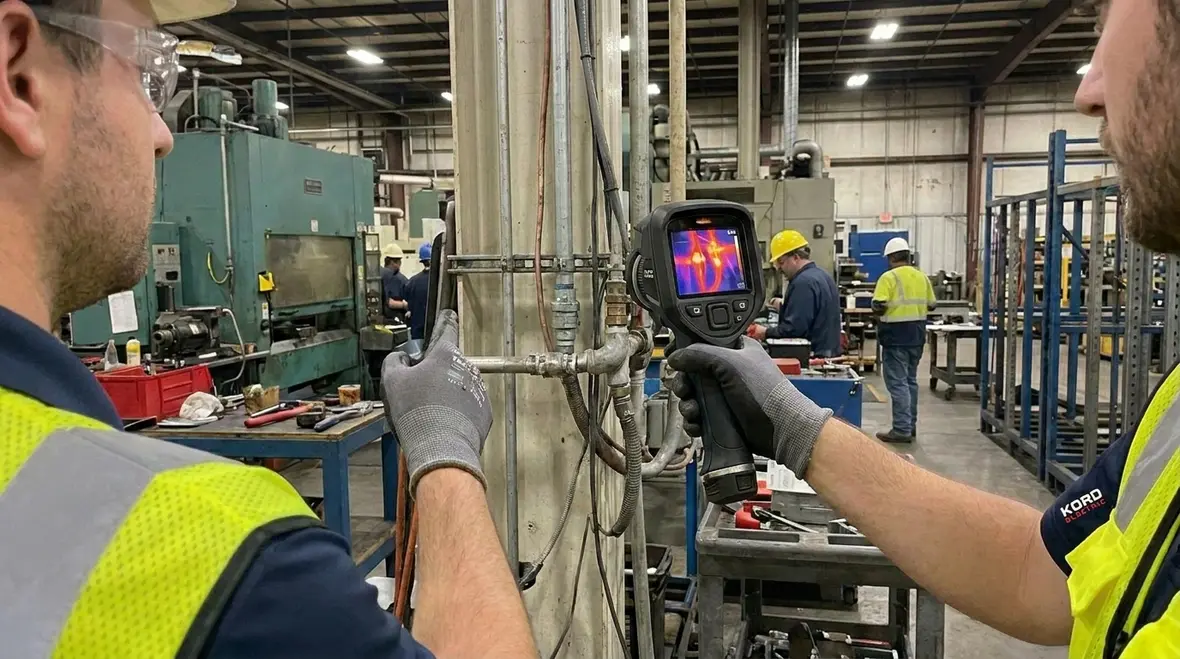
When we inspect your system regularly, we spot early warning signs. Heat at connections can develop long before a failure. Small insulation issues can weaken safety margins under increased load. Even changes like added machines, new signage, or expanded lighting can shift demand patterns, which means older assumptions no longer hold.
Also, audits can support better planning. So when a team schedules upgrades, they do it with a full picture. They can align repair dates with facility shutdown windows. And they can avoid “emergency only” spending, which always feels like paying extra to ride the elevator in a horror movie.
Speaking of upgrades, if your facility also plans lighting work, it helps to understand whole cost drivers and system condition. Our blog on commercial lighting upgrade costs outlines what teams often overlook when budgeting for change. While that guide focuses on cost factors, it reminds owners of one key reality: you cannot separate electrical health from upgrade success.
Technicians explain the findings in plain business language
Some contractors drop a report on the desk and disappear. We do the opposite. Our technicians communicate results clearly and guide the next steps. We explain what we observed, what it could lead to, and how risk changes if repairs wait.
Moreover, we help teams connect audit outcomes to practical decisions. For example, we can recommend targeted fixes for the highest risk items first. Then we can map follow up actions to your facility schedule. That reduces disruption and keeps your team focused on running the operation.
In addition, we offer a calmer path through a stressful topic. Because when staff understand what they are seeing, safety becomes easier to manage. It turns electrical risk into a plan, not a mystery. If you have ever tried to explain a breaker like it is a plot twist from a streaming show, you know why this matters. We make the storyline make sense.
Electrical Safety Audit Checklist and insurance and compliance reality
Insurance requirements and safety expectations keep tightening. Even when you meet every rule on paper, real world conditions matter. Connections loosen. Equipment ages. Environmental factors increase corrosion. And teams change, meaning documentation and visibility must stay current.
That is where a Electrical Safety Audit Checklist becomes valuable beyond immediate safety. It creates a repeatable method and supports a defensible maintenance approach. So when questions arise, others can point to documented inspections, findings, and corrective actions. This reduces risk during underwriting reviews or incident investigations.
At Kord Electric, we stay focused on commercial and industrial sites because those facilities face different compliance expectations and operating demands than smaller properties. We help property owners treat audits as part of lifecycle management, not random events.
And for the record, no one wants an “oops moment” during an inspection. Electricity already has enough personality. The last thing you need is human confusion on top of that.
Dual column priorities: what to fix first and what to monitor
Not every finding demands the same urgency. So we prioritize based on risk, impact, and likelihood of failure. Below is a simple example of how our approach supports clear decision making.
Fix first
- Signs of overheating at connections
- Loose or degraded terminations
- Grounding and bonding defects that reduce safety margin
- Protection device issues that can fail to trip correctly
- Damaged wiring or missing safety covers
Monitor closely
- Minor labeling or access issues that affect safe operations
- Normal wear items with stable measurements
- Load related items that need trend tracking
- Equipment with small deviations that have low immediate impact
Then our expert service staff explains the “why” behind each priority. Because a checklist is only useful when it leads to action that matches your risk level.
FAQ for commercial and industrial electrical safety audits
Connect audits with long term maintenance and reliability
A strong Electrical Safety Audit Checklist becomes even more powerful when it connects to an ongoing maintenance strategy. When findings flow directly into scheduled work orders, preventive tasks, and future capital planning, you avoid the trap of “one and done” reports that sit on a shelf.
For commercial and industrial facilities that rely on continuous uptime, pairing your audit process with a structured electrical preventive maintenance program helps keep risk visible and controlled. That way, the same data that flags a hot connection or overloaded circuit can guide follow up inspections, budget timing, and upgrades across your portfolio.
When your Electrical Safety Audit Checklist and preventive maintenance plan work together, you gain a living record of system health. That record makes it easier to answer questions from insurers, regulators, and executives who want to see not just policy, but proof.
Call Kord Electric for a safety audit that protects operations
If you want a safer facility and fewer electrical surprises, schedule an electrical safety audit with Kord Electric. Our technicians use a structured Electrical Safety Audit Checklist, then explain findings in business language your team can act on. We focus on commercial and industrial facilities, where downtime hurts and safety cannot wait. Don’t leave electrical risk to chance, or to whatever “mood” the breakers feel like that day. Contact us now, and let’s build a clear plan for the next maintenance cycle.
To align your audit with future improvements, you can also coordinate safety findings with targeted projects like lighting installation services for commercial and industrial properties. Combining upgrades with a data driven checklist helps your team tackle risk, efficiency, and compliance in the same strategic conversation.