Electrical Surge Protection for Industrial Equipment
At Kord Electric, we take electrical surge protection seriously, especially when a commercial or industrial facility cannot afford equipment downtime. That is why we offer an electrical surge protection commercial approach designed to guard sensitive systems from voltage spikes caused by lightning, utility switching, and even internal faults. In this article, we focus on how we protect sensitive industrial equipment from surges in a practical, field proven way. And yes, we also explain it in plain language, because no one should need a PhD to understand what protects a motor controller. Others may talk in theory, but we back our work with technician expertise, careful planning, and inspections that treat your business like it matters, because it does.
Why surges damage industrial systems in real life
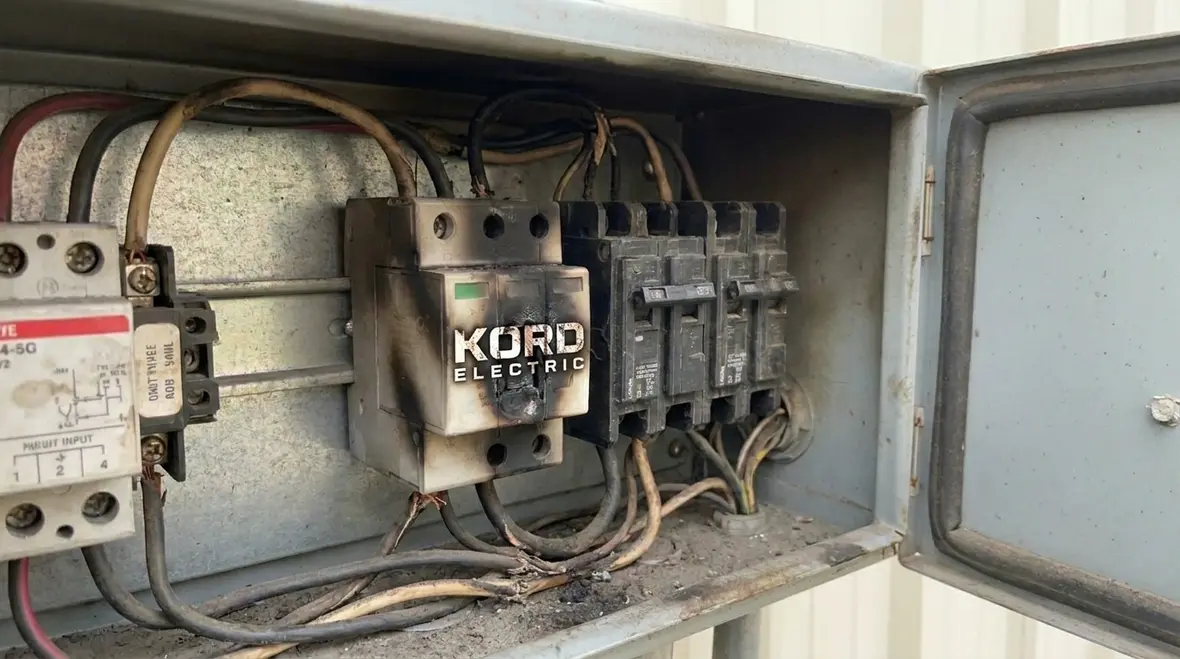
In industrial environments, sensitive equipment rarely fails in a slow, dramatic way. Instead, it gets hit in the blink between normal power and a spike, and the damage shows up later as random shutdowns, sensor errors, control board failures, or nuisance trips. We often see this after storms, generator transfers, utility reclosures, or changes in load like starting large pumps.
Voltage surges are not just “extra electricity.” They are fast, high energy events that stress insulation and electronics. While a fuse might protect a circuit from sustained overcurrent, it does not reliably stop short, high peak spikes from reaching the devices that can’t handle them. Then, the equipment keeps running, but its lifespan shortens. So, the problem becomes a slow leak, like that mystery coolant in your maintenance pit. Not fun, and it always shows up at the worst time.
Because we work with commercial and industrial facilities and major property buildings, we plan protection around actual equipment behavior: drives, PLCs, variable frequency systems, HVAC controls, critical communication gear, and power supplies that feed automation networks. In other words, we do not rely on luck.
Where surges enter a building and where we install protection
To protect equipment effectively, we treat the building like a network, not a single panel. Electrical surges can enter through multiple paths, and we address them where they matter.
Common entry points we plan for
- Incoming utility service and main distribution panels
- Branch circuits feeding motors, drives, and HVAC controls
- Low voltage power supplies for controls and lighting systems
- Data and communication lines that connect automation and monitoring equipment
- Grounding paths and bonding points that affect surge reference voltage
Then, we coordinate protection so the system works together instead of fighting itself. In a typical facility, one device cannot do all the work. Therefore, we apply electrical surge protection commercial methods across stages, from service entrance to downstream distribution. This staged approach reduces the residual voltage stress that sensitive electronics experience.
If you are reviewing the rest of your power reliability strategy, this staged surge protection also fits alongside broader infrastructure planning, including how your distribution supports uptime in data-intensive or automation-heavy facilities. For additional context about keeping critical power stable, you can explore how Kord Electric approaches data center electrical requirements for uptime as part of a larger reliability picture.
How our technicians design surge protection for real equipment
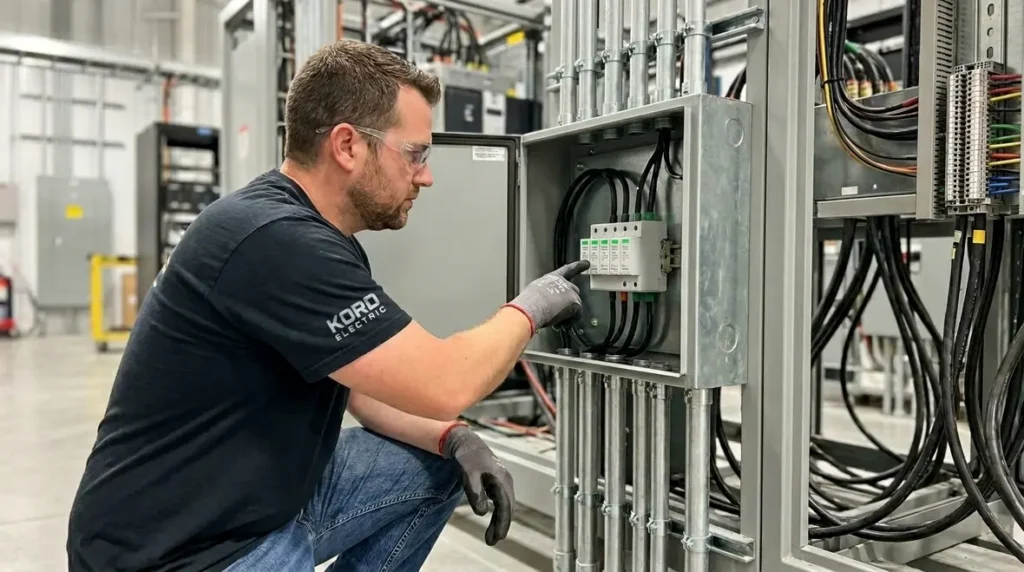
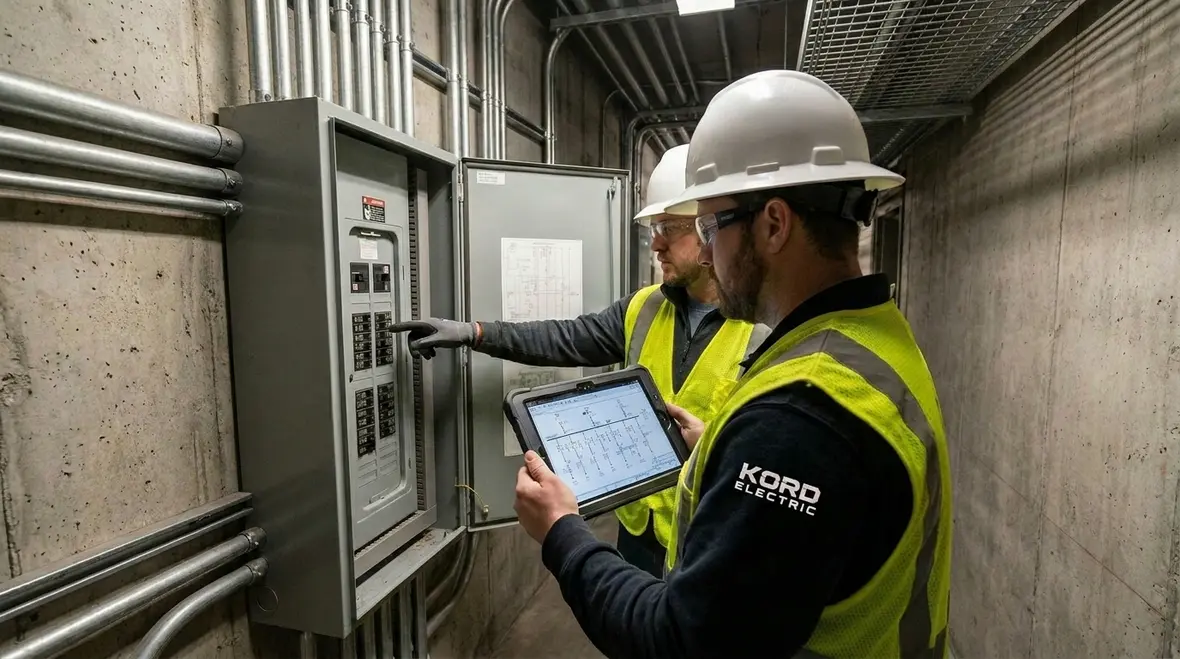
Our service staff does not treat surge protection like a box you add at the end. Instead, we design it around your facility’s electrical one line, your equipment list, and your operating risk. We schedule review with your team, walk the site, and ask the practical questions other providers often skip, like where the drives and PLC racks sit and how the control wiring routes back to panels.
Our technicians also explain the logic in plain terms. For example, we show how surge protectors work as a controlled path for energy, and we describe why proper grounding and bonding improves performance. In addition, we discuss device coordination, so a protector upstream does not leave downstream devices “holding the bag.” That is the electrical equivalent of giving everyone a helmet but only one person a chin strap.
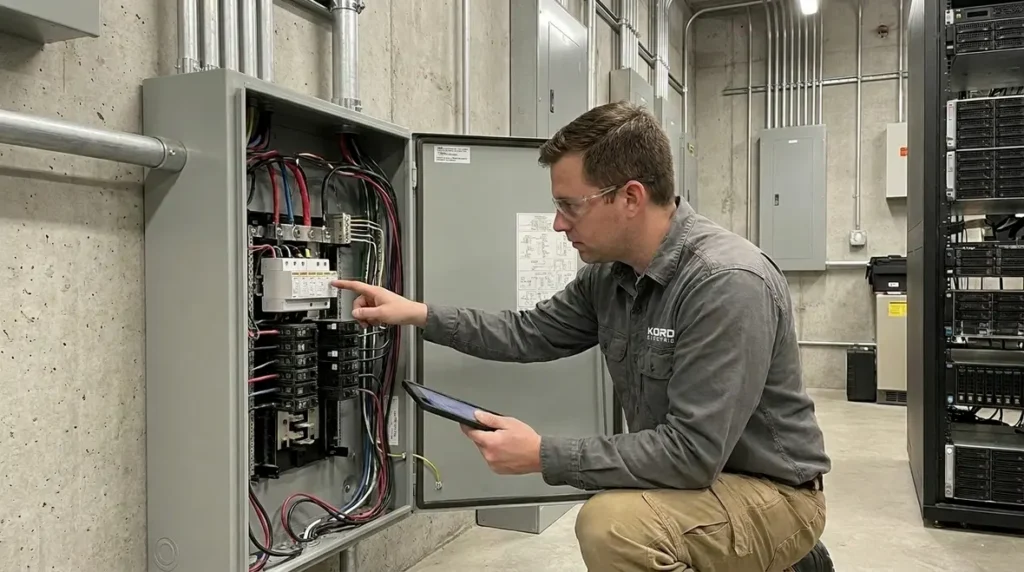
When we install, we verify connections and we inspect component selection. Then, we test systems where appropriate and document what we did. This matters for owners, facility managers, and maintenance teams who want predictable results, not mysterious failures.
Because many surge-related failures show up later as nuisance trips, voltage swings, or unexplained resets, our surge design also connects naturally with ongoing reliability work. Facilities that already track voltage fluctuations in commercial and industrial facilities often see even better results when surge devices, grounding, and distribution design all pull in the same direction.
Grounding and bonding: the calm foundation that keeps spikes in check
Surge protection relies on more than protective devices. If grounding is weak or bonding is incomplete, surges can rise to voltages that equipment cannot tolerate. We see this when grounding conductors run loosely, when bonding jumpers get skipped during retrofits, or when building grounding systems do not match the electrical design.
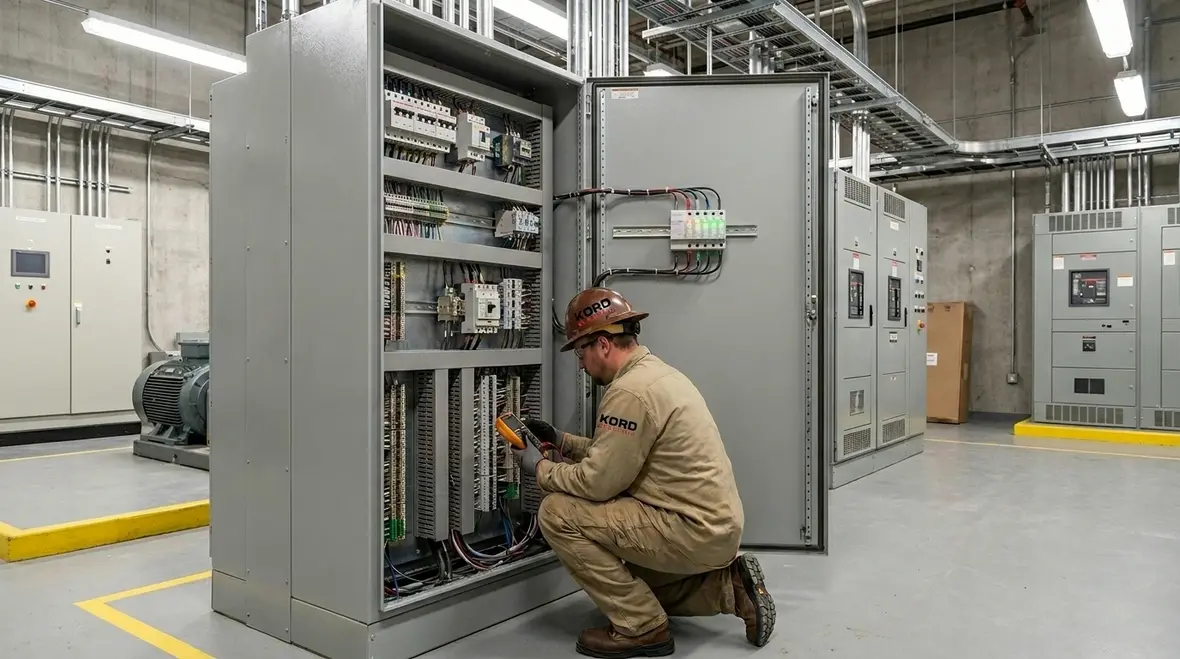
So, we verify grounding topology and continuity. Then we correct where needed, before we finalize surge protective installation. We also pay attention to the quality of connections, because corrosion and loose terminations can turn a safe pathway into a high resistance obstacle. That obstacle makes surges harder to manage and easier to cause damage.
Because we focus on commercial and industrial facilities and major property buildings, we align our grounding work with applicable standards and the existing electrical architecture. We avoid “quick fixes” that look good on day one but fail during the next storm or power transition. And yes, we have heard the joke about grounding being “the boring part.” Boring is good. Boring means stable performance.
Good grounding also plays nicely with other reliability efforts, like preventive maintenance and NFPA-aligned inspections. When teams schedule electrical preventive maintenance, we can integrate surge checks and grounding verification into the same visit, so you are not chasing issues panel by panel.
Lightning, utility switching, and internal faults: three surge sources we plan around
Not every surge comes from the sky, even though lightning gets all the screen time in movies. In practice, we plan for multiple causes that hit facilities on different schedules.
- Lightning induced surges: These often couple through service conductors and external systems, especially when buildings face open exposure. We coordinate protection at the service entrance and downstream panels to limit residual stress.
- Utility switching surges: Utilities switch capacitor banks, transfer loads, and perform maintenance operations. These events can cause fast voltage changes that sensitive electronics feel sharply.
- Internal switching and fault events: Motor starters, contactor operations, drive commutation, and even short faults can generate transients that travel along feeders and into control circuits.
As a result, our electrical surge protection commercial design accounts for both the source and the path. We do not only pick devices, then walk away. Instead, we match protector characteristics to equipment sensitivity and wiring routing. That is how we reduce recurring failures and stop the cycle of “it worked yesterday, so we will just wait.” We prefer planning over hoping, and we think your equipment should too.
Maintenance, verification, and what to expect after installation
After we install surge protection, our work does not end at the punch list. Protectors can degrade over time if the facility experiences repeated surge events. Also, renovations and equipment upgrades can change the electrical layout, which affects how protection performs.
Therefore, we recommend verification schedules for commercial and industrial settings based on risk and operating conditions. Our technicians can inspect key components, check indicator status where present, and review terminations. We also help facility teams understand what to look for during routine maintenance.
We explain it like this: surge protection is not a “set it and forget it” accessory. It is part of a reliable power strategy, like fire systems and safety interlocks. When you treat it as infrastructure, you protect uptime and avoid the kind of surprise that makes a call at 2 a.m. feel like a prank. Then, you are not guessing, and you are not scrambling.
For facilities that already manage complex electrical systems and standby power, it is often helpful to align surge verification with a broader checklist. If you are responsible for a power-intensive site, Kord Electric also shares practical guidance in resources like their data center electrical maintenance checklist, which pairs naturally with a proactive surge protection plan.
Featured FAQ about surge protection for facilities
Ready to protect your facility before the next surge hits
At Kord Electric, we help commercial and industrial facilities reduce surge related downtime with a coordinated approach that includes device selection, staged protection, and verified grounding. Our technicians and expert service staff explain the plan clearly and install with care, so your motors, controls, and automation systems get the protection they deserve. If you want fewer mystery failures and more dependable operation, contact Kord Electric today. Let us review your electrical setup and recommend the right electrical surge protection commercial strategy for your building.
Surge protection also pairs naturally with other reliability upgrades, from transfer schemes and standby power to maintenance-driven inspections. If your facility is in Southern California and you are planning a broader electrical review, you can also look at Kord Electric’s service coverage for Los Angeles County electrical services to see how surge protection, preventive maintenance, and power quality support fit together in one coordinated plan.
Whether you run a manufacturing line, a data-heavy operation, or a major property building with mixed-use loads, the goal is the same: keep power clean, predictable, and kind to your equipment. With the right surge protection design, grounded in real field experience, your facility does not have to accept surprise failures as “just part of the job.”
If you are ready to move from reacting to surges toward preventing them, Kord Electric can help you build a plan that fits your risk, your operations, and your budget while keeping uptime front and center.