Emergency Electrical Disaster Recovery Plan
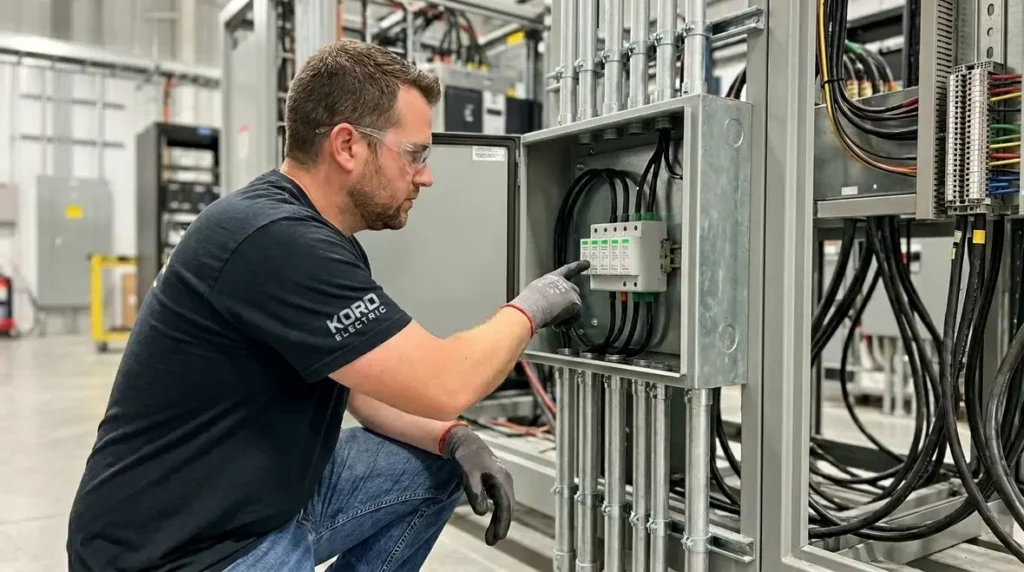
When a storm hits, a fire starts, or the grid does something weird, emergency electrical disaster recovery becomes the difference between “we got through it” and “we are still stuck next week.” At Kord Electric, we help commercial and industrial facilities plan for the worst, respond with speed, and restore power in a way that protects equipment, people, and revenue. We do not treat emergency work like a last minute call center script. Instead, our technicians and expert service staff build clear steps, document real risks, and train teams so downtime does not turn into a long, expensive saga.
And yes, we know the power has a sense of humor. It flickers right before the big meeting, then behaves perfectly when the auditors walk in. Still, we plan so your facility does not have to “guess” what comes next.
Why commercial and industrial power plans fail
Many facilities believe that having a backup generator means the lights will come back automatically. However, that is like assuming a spare tire fixes your car by itself. It is not just about having backup power. It is about making sure the whole system works together under stress, including the main switchboard, transfer gear, grounding, branch circuits, and key controls.
When disaster arrives, the first problem is often uncertainty. Teams search for labels, electricians chase missing drawings, and operations staff try to start equipment without verifying safe conditions. Meanwhile, equipment can suffer from voltage swings, damaged controls, and stranded loads. In other words, the failure does not always start at the breaker. It starts at the plan.
Furthermore, some emergency planning focuses only on immediate survival power, not on what happens after the first hour. As a result, a facility gets through the first night but loses productivity for weeks because the restoration path was unclear.
Voltage stability risks during disasters
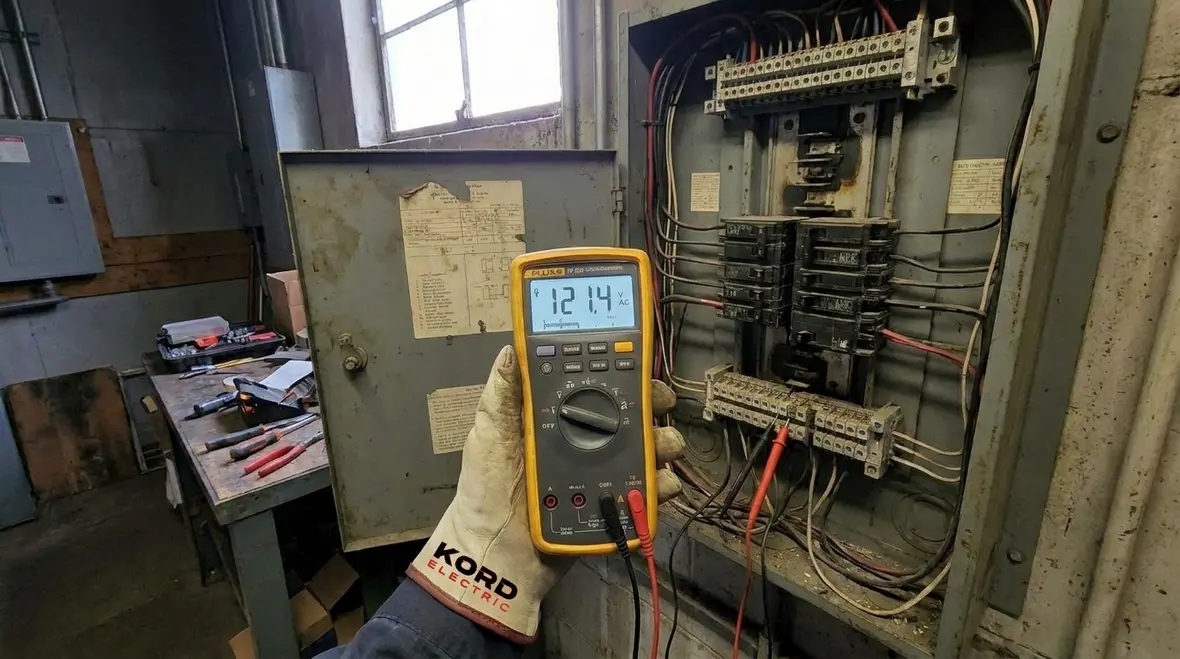
Even if the power returns, unstable voltage can keep major systems from operating correctly. Our team often sees this after events like storms, feeder interruptions, and utility reconnections. The equipment might run, but it runs wrong. That is how motors overheat, drives fault, and sensitive controls complain quietly until they fail loudly.
In commercial and industrial settings, voltage fluctuations also create hidden problems. For example, intermittent power can stress compressors, HVAC controls, refrigeration systems, elevators, and process controls. And if your facility depends on variable frequency drives, soft starters, or automation panels, you need tighter checks than a casual “it seems fine” test.
That is why Kord Electric approaches emergency electrical disaster recovery with a stability mindset. We review what loads are critical, we map where voltage problems can show up, and we confirm that protective devices and monitoring work during abnormal conditions. If voltage fluctuates, we treat it as a real hazard, not as background noise.
For a closer look at how these conditions affect commercial and industrial setups, we reference our guidance here: Voltage Fluctuations in Commercial and Industrial.
Build an emergency electrical disaster recovery playbook that gets used
Planning only matters if people follow it while stress is high. Therefore, we build playbooks that teams can use in real time. We make them simple, job based, and tied to your actual equipment. We also ensure the document matches how your facility operates, not how a generic template assumes you work.
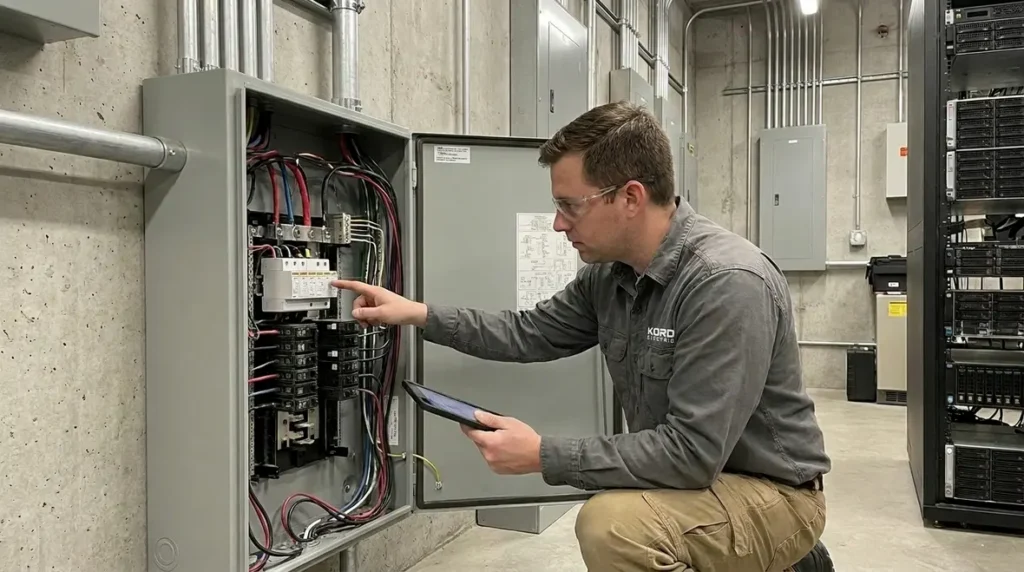
Our expert service staff typically helps you create sections that cover what happens before, during, and after an event. For example, before a disaster, we help you confirm access to single line diagrams, panel schedules, generator specs, and transfer switch settings. During the event, we define who shuts down what, who verifies safe conditions, and who authorizes reconnection.
After power restoration begins, we document the step by step checks that prevent repeat failures. This includes verifying grounding integrity, checking protective device behavior, confirming transformer health, and testing that critical loads draw the expected current. In short, we turn “hope and pray” into a checklist you can execute.
Here is how we structure the playbook for commercial and industrial facilities:
- Critical load list that identifies what must run first and why
- Switchgear and transfer path steps for safe operation and isolation
- Spare parts plan for common failure points in commercial systems
- Verification routine for grounding, phase balance, and stable operation
- Communication flow for operations, safety, and electrical leadership
- Reconnection rules that prevent premature return to full load
And yes, we also write it so the night shift can follow it without needing a PhD in electrical mythology. Like a good map, it works when you are tired and the clock is loud.
Train technicians and site leadership for decision speed
In an emergency, the fastest plan is the one people trust. That is why we train both technicians and site leadership. Our technicians explain the “why” behind each step, because when the reason makes sense, the work stays consistent.
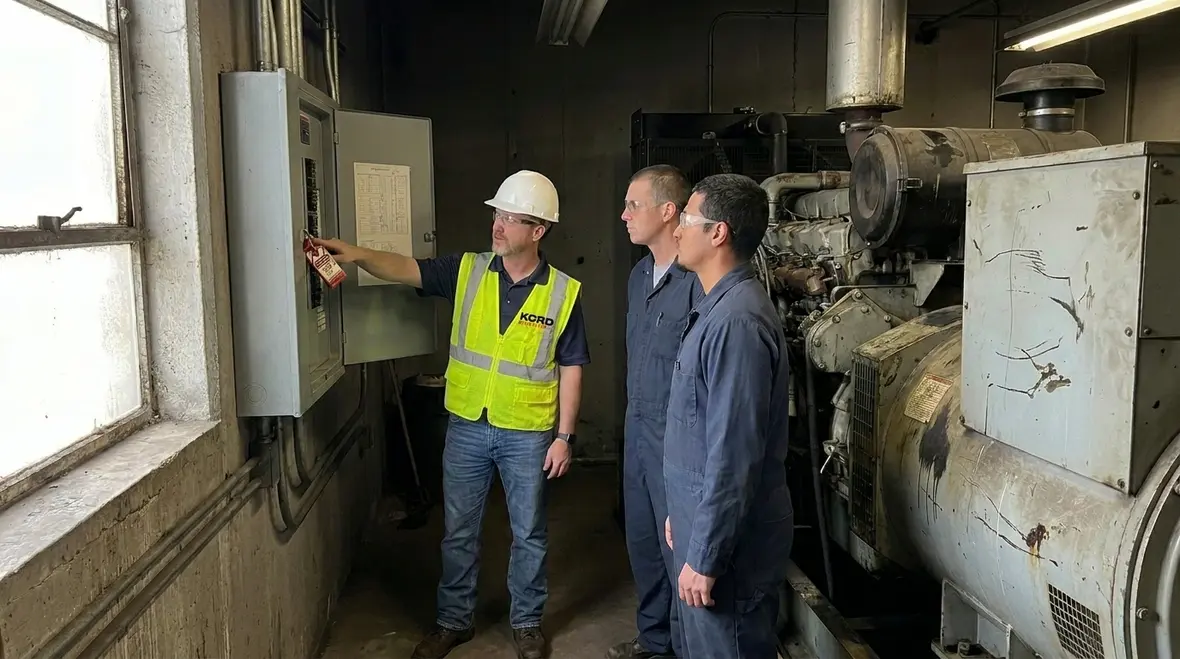
We run practical sessions that cover safe isolation, verification of conditions, and how to confirm that emergency systems function as designed. We also teach teams what to look for when voltage stability may be drifting. So rather than guessing, your staff follows measurable signs: readings, device statuses, temperature indicators, and load behavior.
We also set boundaries. For example, some tasks should only run under qualified electrical authority, even if someone “feels confident.” In a commercial or industrial building, that kind of control prevents unsafe restarts and reduces liability exposure.
To keep people engaged, we use clear examples from real field work. Our team might explain how a quick reconnection attempt can trigger control faults, or how a generator can run but still fail under specific load profiles. Then we show the verification steps that prevent those mistakes.
Think of it like safety drills for electrical systems. You do not want a fire drill where everyone panics and runs in random directions like it is a zombie movie. You want calm, organized action that still moves quickly.
Design restoration steps around critical operations
Restoration is not a single moment. It is a process. Therefore, emergency electrical disaster recovery should prioritize how your facility keeps operating, not just how it turns lights back on.
First, we help facilities define the earliest operational targets. That may mean keeping life safety systems and communications running, restoring security and access control, or maintaining refrigeration and product handling. Then we identify the systems that can wait without damaging equipment or quality.
Next, we plan the sequence for reconnecting loads so inrush current does not spike and knock out the very systems you worked to restore. We also address how the facility should handle non critical systems while power stability returns to normal. If a process line depends on stable power, we delay it until we verify acceptable conditions.
In addition, we guide a careful approach to troubleshooting. After a disaster, a facility might face multiple issues at once. A damaged feeder can create voltage instability, which can stress drives and trip panels. So we confirm root causes with measured checks, not only visual inspection.
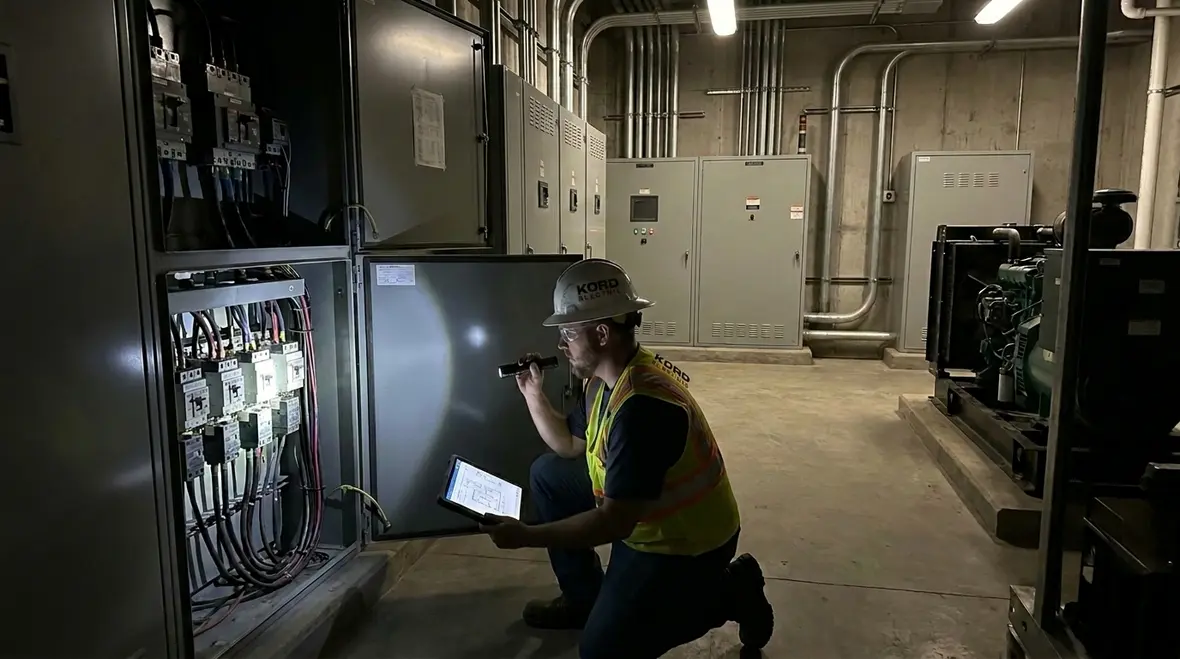
As for generators and transfer gear, we focus on more than starting them. We verify transfer logic, protection settings, and operational behavior under realistic loads. That is where many plans fall apart. The generator may start, but it may not hold stable output when your facility truly needs it.
Use the right communication and documentation during response
During a disaster, communication breaks first. People forget who has the diagrams, which vendor has the parts, and where the shutoff procedures were last updated. Meanwhile, phones die, radios get clogged, and everyone argues politely while time passes.
Kord Electric helps commercial and industrial facilities keep documentation usable during emergencies. We recommend practical formats, labeled locations, and version control so the right information stays current. Then we connect it to a clear communication flow between building leadership, safety officers, and electrical teams.
We also encourage facilities to designate roles. For instance, one person manages incoming reports, another manages field coordination, and another handles approvals for reconnection. That keeps the team from creating new “processes” while it should be restoring power.
Additionally, we build reporting habits into the response. Technicians record what they observe, what they test, and what they find. This shortens future troubleshooting because everyone works from the same facts.
In calmer moments, we also help facilities update the playbook after each drill or real event. Because the next disaster will not follow last year’s script. It will follow your updated one.
FAQ for emergency electrical disaster recovery
Final word: partner with Kord Electric for a recovery plan that holds
Emergency electrical disaster recovery works best when it is planned, trained, and tested before trouble arrives. Kord Electric helps commercial and industrial facilities build a restoration playbook that prioritizes critical operations, verifies stable power, and reduces repeat failures. Our technicians and expert service staff guide your team through safe decision making, clear documentation, and practical response steps. If you want a plan your staff can execute calmly, even when the rest of the world panics, contact Kord Electric today and start building your recovery path.
For facilities that want ongoing stability rather than one time fixes, it also helps to pair your emergency planning with structured programs like Electrical Preventive Maintenance and targeted support for Voltage Fluctuations in Commercial and Industrial Facilities. Together, these services strengthen your infrastructure so emergency electrical disaster recovery becomes faster, safer, and far more predictable.
If your building needs immediate support or you want a partner ready for the next storm, explore Kord Electric’s dedicated Emergency Electrical Services for commercial and industrial properties. Aligning a practical recovery plan with a 24/7 response team gives your facility a clear path from outage to stable, verified operation.