Warehouse Lighting Energy Efficiency Guide
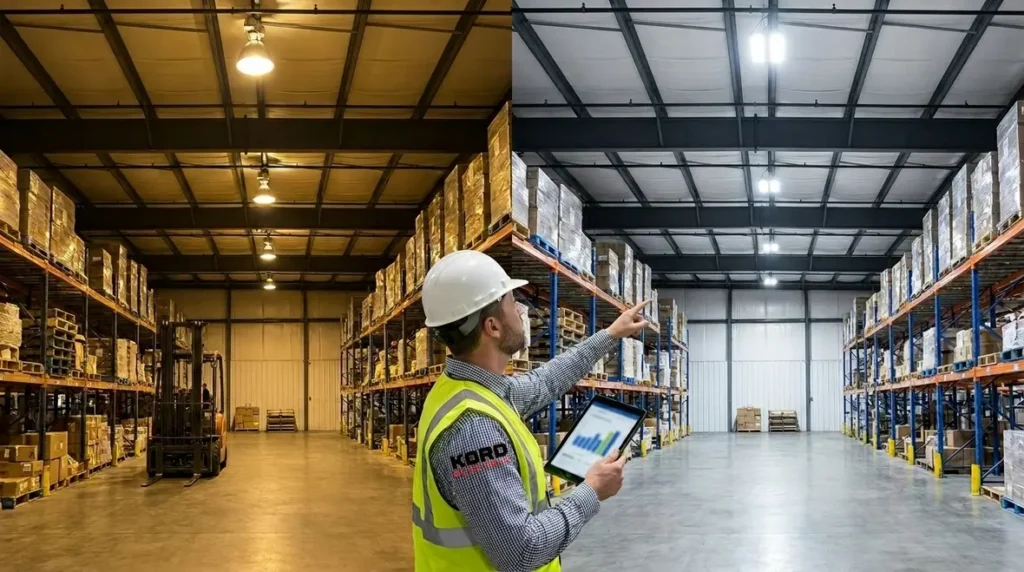
When a commercial warehouse runs day after day, warehouse lighting energy efficiency becomes more than a buzz phrase. It shapes operating costs, worker comfort, and safety, all at the same time. We at Kord Electric focus on commercial and industrial facilities, plus major property buildings, because those spaces earn real savings when lighting works smarter, not louder. And yes, the lights can feel like they are on a schedule they do not tell anyone about. That is usually a sign of outdated fixtures, poor controls, or maintenance gaps. In this guide, we explain how our team and experienced technicians plan lighting upgrades that support both productivity and power reduction, while keeping your facility running without drama.
Why warehouse lighting affects safety and output
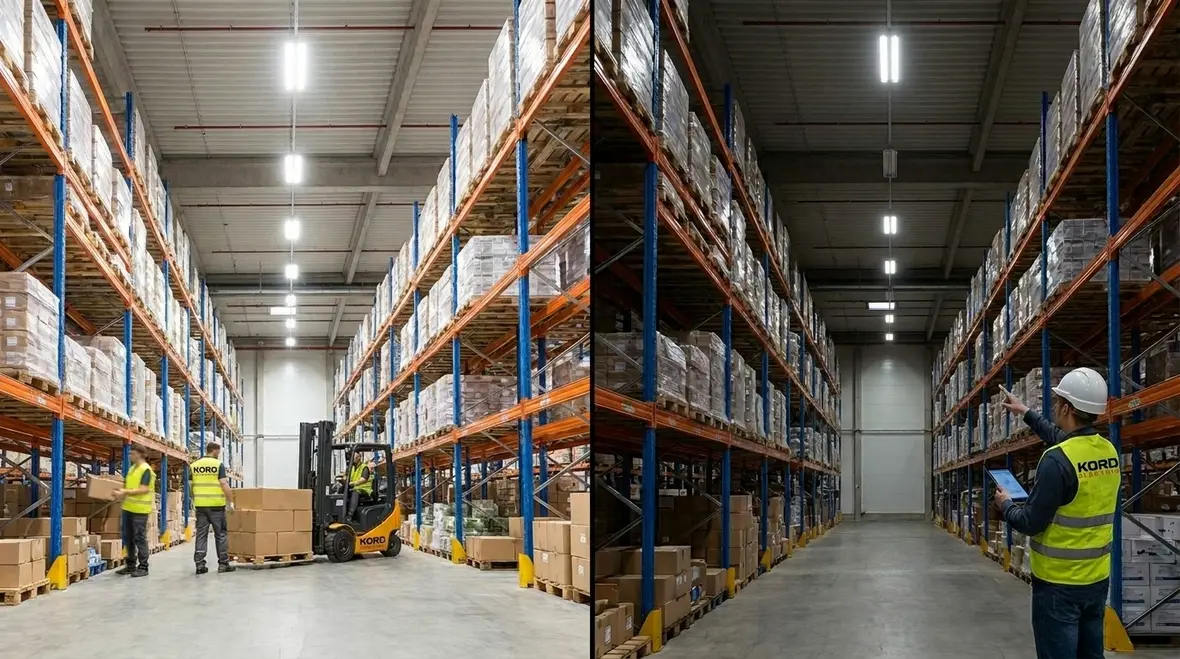
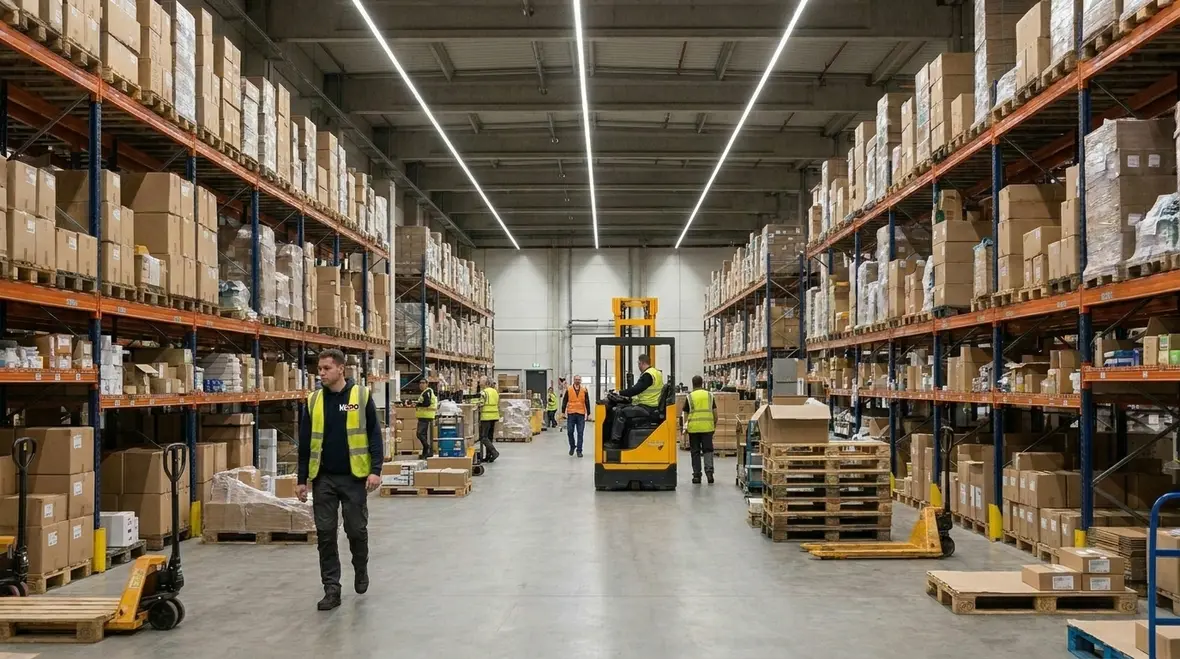
In the warehouse, light does not just help people see. It helps them make fewer mistakes, move with more confidence, and spot hazards earlier. When illumination drops, workers tend to compensate by slowing down or walking different routes. Then managers notice “mystery delays,” and someone somewhere says, “The building feels different today.” Well, it often is the building. Older lighting systems can create glare, hot spots, and uneven coverage, which increases eye strain and reduces task accuracy.
Now consider the other side of the story. When staff see clearly, they place pallets faster, read labels correctly, and follow safety lines without hesitation. Even small improvements can add up across shifts. And if a warehouse runs multiple floors, docks, or mezzanines, consistent lighting supports safer forklift traffic and calmer daily operations.
We also keep a simple rule in mind: lighting choices should support the work, not fight it. Therefore, we design solutions that align with aisle widths, storage heights, reflective surfaces, and the types of tasks being performed.
Start with a lighting audit that maps real conditions
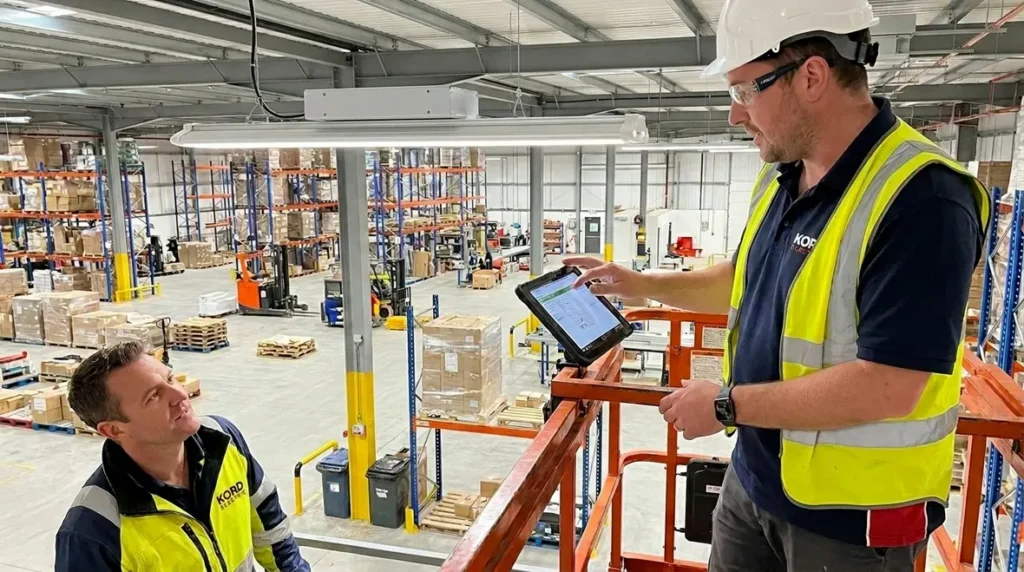
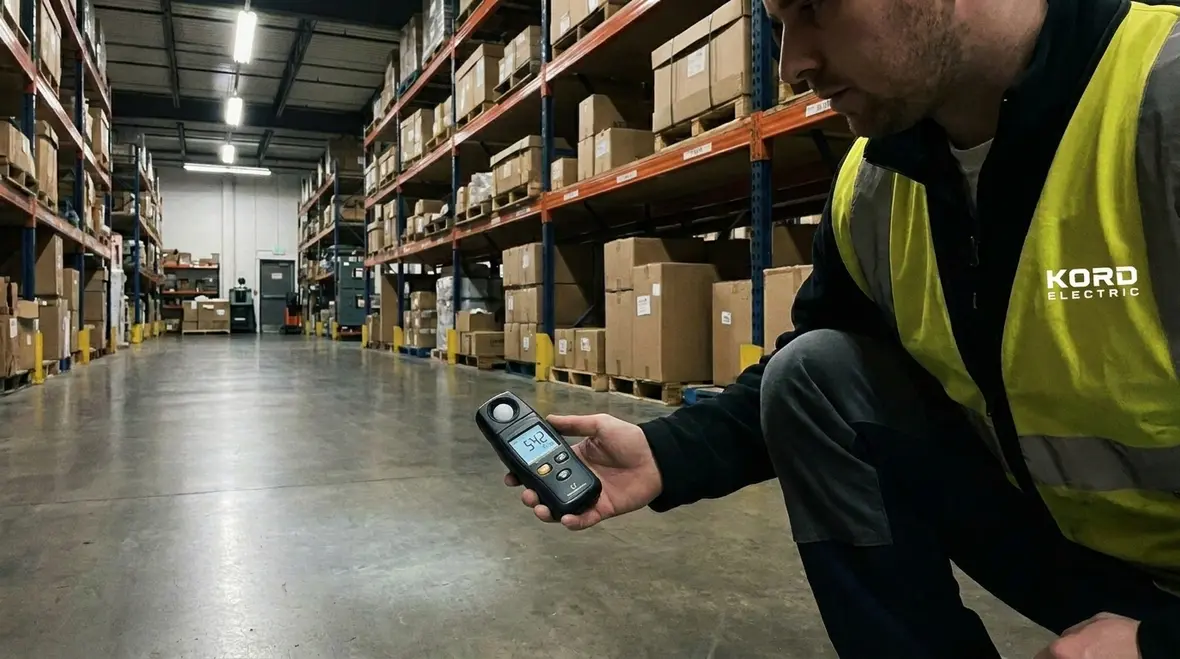
Before anyone buys fixtures or swaps out anything, we do an audit that measures what the warehouse actually experiences. That means more than checking brightness on one day in one area. Our technicians look at current fixture type, mounting height, lamp or LED condition, wiring health, and control devices. Then we measure light levels across the facility, including aisles, staging zones, loading areas, and break rooms if the building includes them.
We also evaluate how light behaves across seasons. Sunlight enters docks and perimeter walls at different angles, so the effective illumination changes. If your system does not respond, you pay for power while still failing to deliver usable light where you need it most.
Additionally, we review maintenance history. If a fixture has been “working” but failing gradually, it can lower output for months. That is like using a half-charged battery and calling it energy efficient. Sure, it is not empty, but it is not doing the job either.
Finally, we document target levels by task area and compare them to what the building delivers today. Then we recommend changes with clear reasoning and a practical schedule. This is how we avoid the classic mistake: upgrading fixtures without fixing the control logic or layout issues.
How controls and scheduling cut costs without hurting performance
Once we know the baseline, we focus on controls because that is where energy savings scale. Warehouses often run variable hours. Yet many sites keep lighting at full output long after activity ends. Meanwhile, bright lights in empty aisles do nothing except glow like a bad late night diner commercial.
We install and tune lighting controls such as occupancy sensors, time scheduling, and daylight dimming where it makes sense. However, we do not just throw sensors onto poles and call it a day. Our technicians explain how controls should behave around workflow patterns. For example, loading docks may need reliable light during short bursts, while offices or storage corridors may benefit from occupancy-based dimming.
We also verify that controls work with your existing electrical system. If voltage drops, poor wiring creates inconsistent behavior, or circuit design causes nuisance switching, savings shrink and staff get annoyed. And no one wants “lights that act funny.” It feels like a sci-fi movie, not a logistics operation.
By balancing control settings with motion patterns and task needs, we support warehouse lighting energy efficiency while keeping safety levels stable. The goal is steady, usable light, not dimming that surprises people mid shift.
Upgrade fixtures the right way: layout, optics, and heat
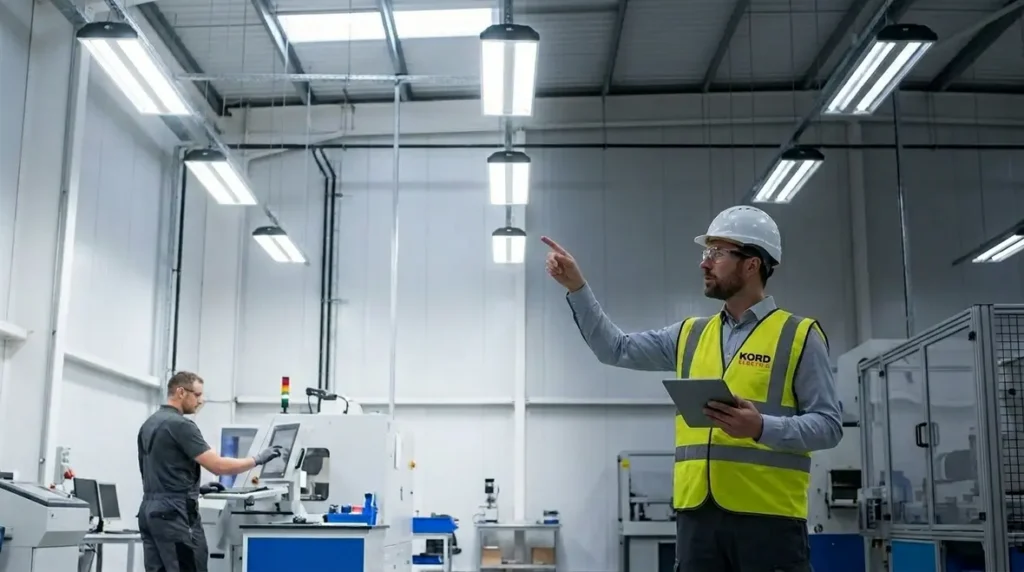
LED upgrades can deliver strong results, but the most important step is the right fit for the space. We pay attention to optics and light distribution. A fixture can be bright and still miss critical areas if beam angles do not match aisle geometry or if mounting positions create shadows from racks and equipment.
Therefore, our team evaluates reflector type, diffuser design, and shielding needs. Loading bays may require glare control, while high-bay areas need good vertical illumination. We also consider color temperature and lumens delivered at the task plane, not just “spec sheet brightness.”
Heat management matters too. When drivers run hot or ventilation is poor, performance can drift over time. We select components that match your environment, including dust exposure and humidity in major property buildings. In warehouses, air movement and ceiling obstructions can change how fixtures operate.
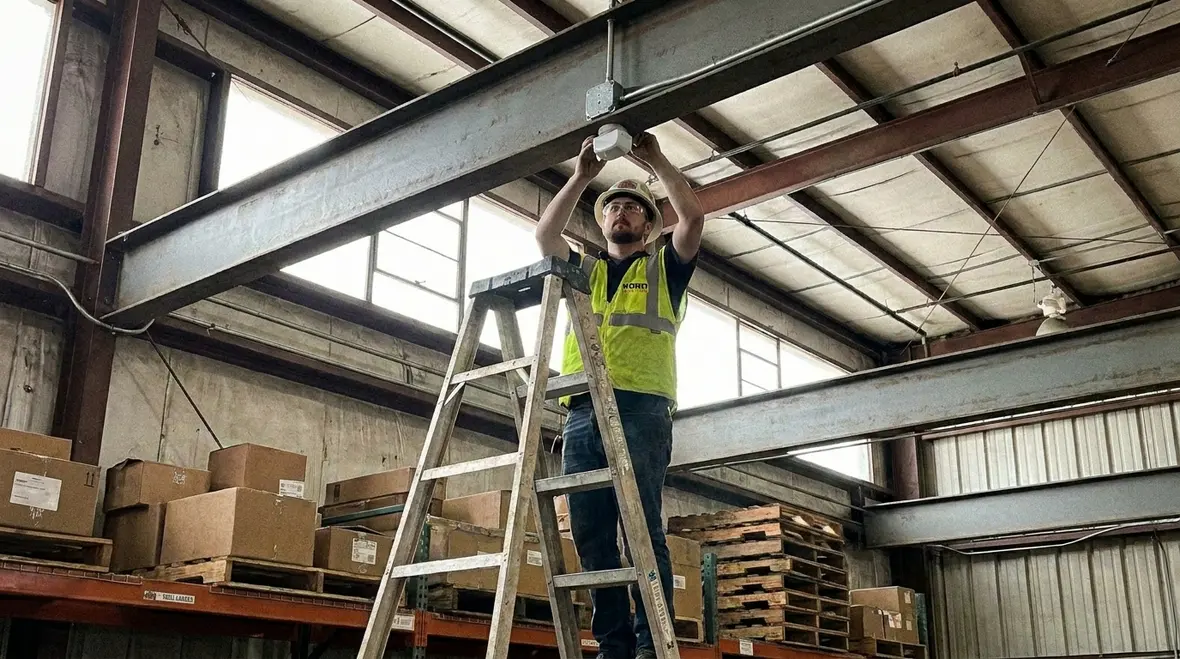
Then we plan installation to reduce downtime. We work around shift schedules so operations keep moving. That is where our expert service staff helps a lot, because they do not simply explain the plan. They coordinate the execution and communicate progress clearly, so your site does not feel like it is under construction for weeks.
As a result, the upgrade supports worker comfort, reduces rework, and supports long-term savings.
Plan maintenance to keep performance stable over time
Lighting is not a “set it and forget it” system. It changes as components age, as drivers degrade, and as dust settles on lenses. Even LEDs lose output slowly. If you track that decline, you can restore performance before it becomes a safety issue or a productivity drain.
That is why we recommend commercial and industrial electrical maintenance plans. In our approach, preventive work matters because it keeps your system reliable, and it avoids the kind of surprise outage that makes managers run around like it is the final act of a sitcom. One moment everything works, and the next moment the lights act like they forgot what they are for.
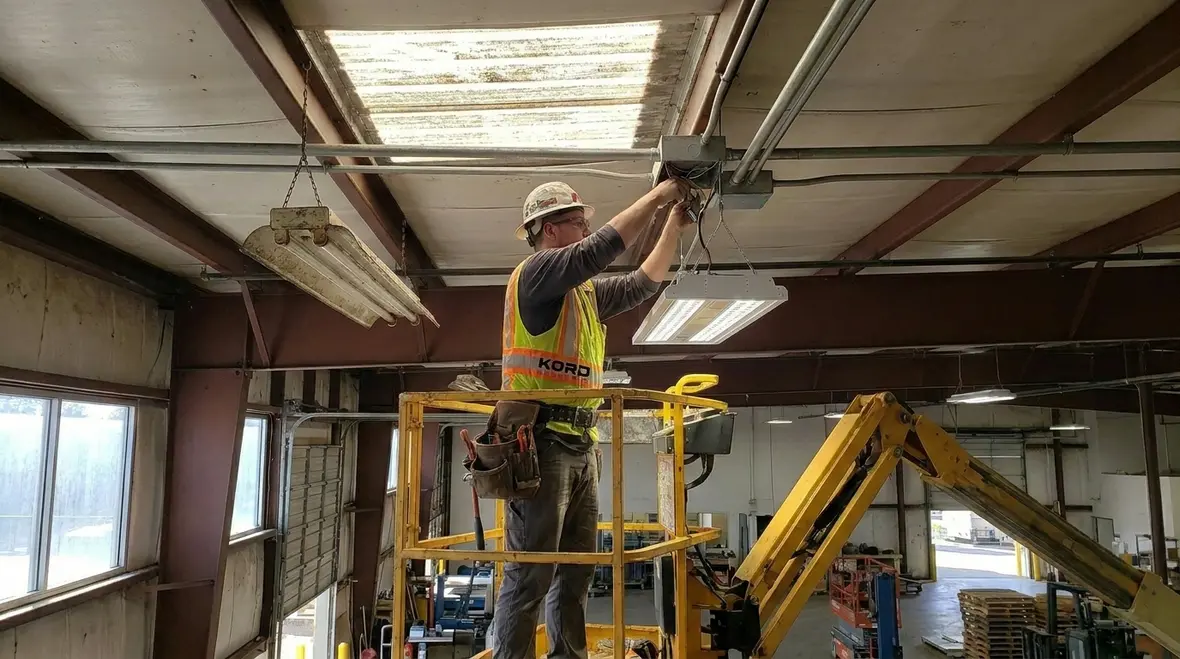
We follow a practical process: we inspect, we clean where needed, we verify connections, and we test controls. We also review how circuits and panels perform so electrical issues do not silently reduce lighting performance. When our technicians explain each step, staff understand what to expect and why it matters, which reduces confusion during maintenance windows.
In other words, maintenance protects the investment. It also supports warehouse lighting energy efficiency by keeping output closer to the intended level instead of relying on “good enough” until the next emergency.
If you want specifics, Kord Electric supports maintenance planning for commercial and industrial facilities, including major property buildings, and we tailor schedules to the realities of your operation. For a deeper look at how this works across large properties, explore our Commercial and Industrial Electrical Maintenance Plans guide.
Measure results and keep improving with data
After upgrades and control tuning, we track outcomes. We review power use, compare it to expected reductions, and verify that light levels meet targets across task zones. Then we look at how the facility behaves under different operating patterns. For example, a system might perform well during full shifts but need adjustment for weekends or partial operations.
We also watch for operational feedback. If workers report glare, shadows, or inconsistent brightness, we investigate quickly. Our expert service staff explains the likely causes in plain terms, so people do not guess. That fast response prevents small annoyances from turning into bigger problems.
Finally, we document what changed. That makes it easier for property managers and operations teams to plan future upgrades. When data tells the story, decisions become calmer and more confident.
FAQ
Conclusion: ready to modernize your warehouse lighting?
We at Kord Electric help commercial and industrial facilities reduce costs while improving worker visibility and safety. We start with a real audit, then we upgrade fixtures with the right optics and controls, and we protect results with planned maintenance. If you want steadier light, lower energy bills, and fewer “why is this zone so dim” surprises, we can map a clear plan. Reach out to Kord Electric today for a tailored lighting upgrade and maintenance strategy for your facility.
If your warehouse is ready for a true lighting refresh, our dedicated Lighting Installation Services team designs and installs commercial and industrial lighting systems built for performance, safety, and long-term efficiency.