Emergency Electrical Infrastructure Protection Plan
When critical systems go dark, commercial and industrial facilities are not dealing with an “oops” moment. They are dealing with people in stairwells, production lines stalled mid-run, life safety systems under stress, and a clock that does not care how complicated the wiring diagram looks. That is why an Emergency Electrical Infrastructure Protection Plan should be treated as operational infrastructure, not optional paperwork.
Kord Electric approaches emergency electrical infrastructure protection as a full lifecycle effort: mapping critical loads, tuning protection, testing transfer systems, training people, and documenting everything so the next outage plays out like a drill, not a guessing game. The goal is simple: protect people, protect equipment, and keep your operation as close to “controlled” as possible when the utility or internal systems decide otherwise.
Emergency electrical infrastructure protection, and why outages still have a plan
When the power fails, commercial and industrial sites do not get to “wait and see.” That is where emergency electrical infrastructure protection matters, and Kord Electric treats it like a mission, not a slogan. We build outage readiness around real field conditions: switchgear behavior, generator startup timing, critical loads, and the quiet hazards that show up when systems are stressed. Then, we send our technicians and expert service staff to explain what they are doing in plain language, because nobody wants an outage to come with a mystery quiz. Yes, we will keep it professional and calm, but no, we will not pretend the stakes are low.
In the rest of this article, we outline best practices that help facilities protect people, equipment, and production during outages. We also cover what to inspect before trouble strikes, what to do during the first minutes, and how to recover safely when power returns.
Map critical loads before the lights go out

First, facility leaders must define what “critical” means for their operation. In many major properties, teams assume they know, but assumptions break under pressure. Kord Electric recommends building a load map that identifies which circuits, panels, and systems must stay alive during an outage. This includes process controls, safety systems, communications, refrigeration or pharma support, security, elevators tied to life safety, and any equipment that can create a risk if it shuts down abruptly.
Then we align that map with protective devices and backup power. If your generator feeds the wrong loads, you do not get resilience, you get expensive chaos. Our expert service staff typically works with your electrical engineer, facilities lead, and operations team to verify that the load list matches the single line diagrams and the actual wiring field data. For properties that have already experienced unexpected trips or selective outage issues, pairing this mapping exercise with broader electrical preventive maintenance can uncover weak points before they turn into shutdowns. Electrical preventive maintenance programs help keep those mapped circuits honest over time.
Finally, we assign priorities. Critical loads tiered as essential, important, and non essential give standby systems a chance to carry the right circuits without overload. And that is how we prevent the classic problem of “everything was important,” which is a fun phrase right up until the utility trips again.
Use layered protection that behaves during failure
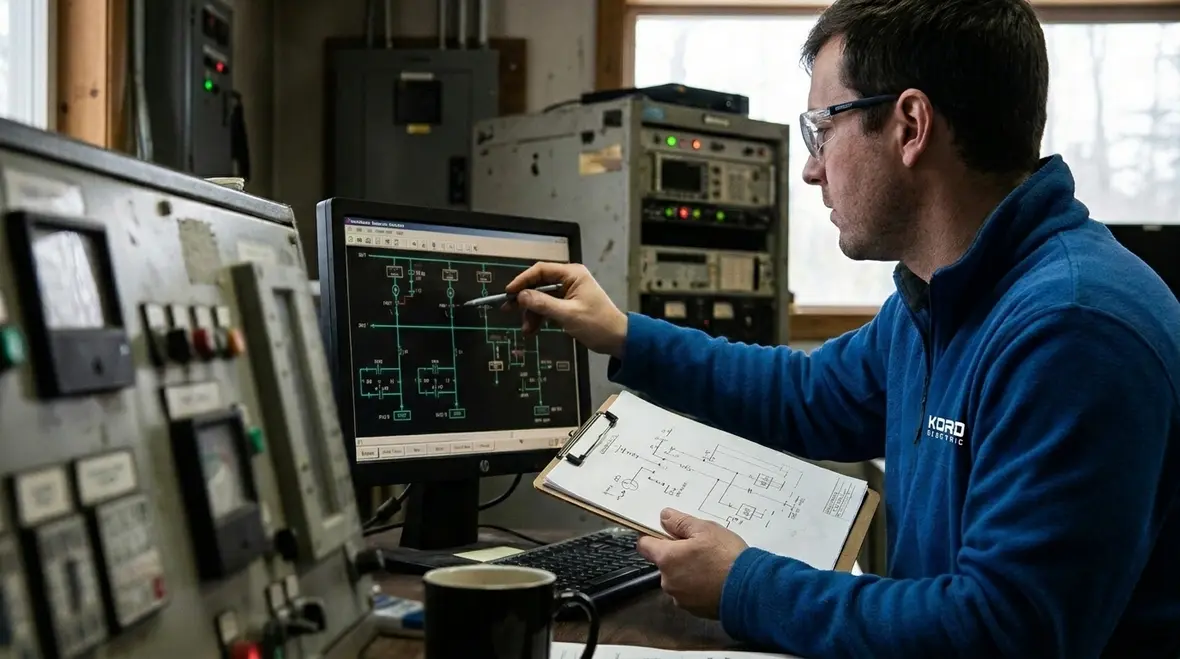
Next, layered protection keeps electrical systems stable when conditions change. Outages create unusual states: undervoltage, phase imbalance, frequency swings, and switching transients. Kord Electric focuses on how protective elements respond, not just that they exist. For example, we review coordination between upstream breakers, downstream protection, and transfer equipment so the correct device clears a fault without shutting down the entire facility.
We also pay close attention to transfer schemes. If your facility relies on automatic transfer switches, paralleling switchgear, or load banks, the system needs tight timing and clear sequencing. When transfer logic fails, operators end up in the dark making decisions that should have been designed in advance. Our technicians explain the logic steps and the signals involved so staff can verify status quickly.
In addition, we confirm ground fault protection settings where applicable. During an outage, moisture, condensation, and temporary wiring changes can increase nuisance events. Adjustments must remain within code and manufacturer requirements. This is not guesswork. Our field experts validate settings based on load type, cable characteristics, and current operational conditions. If your facility has experienced nuisance trips or unexplained shutdowns, pairing this review with a focused look at voltage fluctuations in commercial and industrial facilities can reveal whether protection, power quality, or both need attention.
Meanwhile, we keep an eye on surge protection and transient suppression for sensitive equipment. Outages are not only about losing power; they also bring back power with a different electrical “personality.” The best systems handle that transition without slamming sensitive electronics into failure.
Inspect switchgear, transfer equipment, and backup power like your schedule depends on it
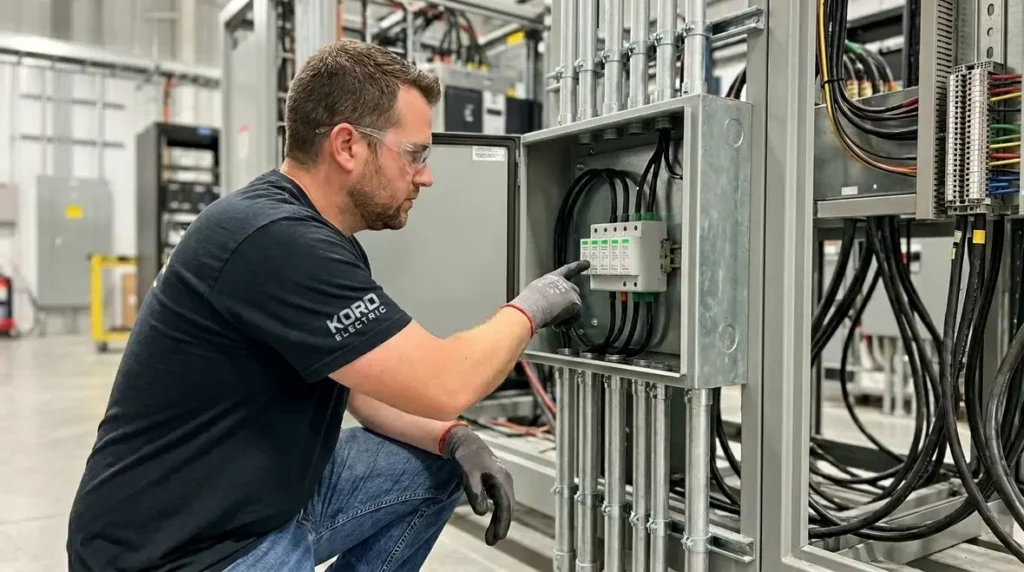
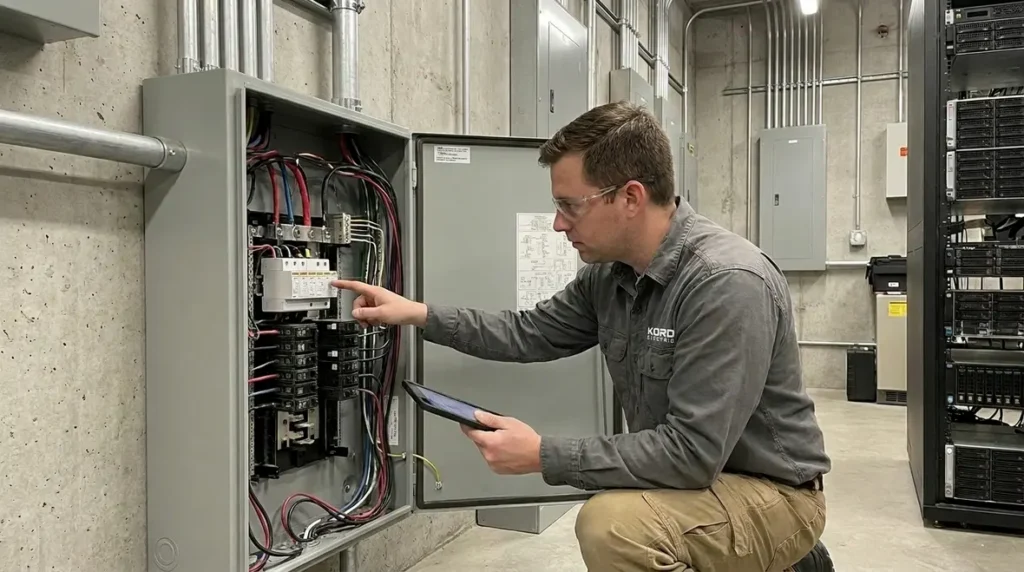
Before an outage happens, prevention requires discipline. Kord Electric schedules inspections that verify mechanical and electrical readiness. Switchgear is not a decorative wall panel. It needs testing for breaker health, insulation condition, control power reliability, and proper labeling for rapid response. That includes making sure every handle, label, and mimic diagram tells the truth so teams are not hunting through panels by flashlight when seconds matter.
Transfer equipment receives special attention. Our service staff checks actuator movement, contact condition, interlocks, and control wiring integrity. We verify that the “happy path” functions, but also that the system shows clear fault and status indicators. During an outage, operators cannot afford to interpret vague lights and shrug.
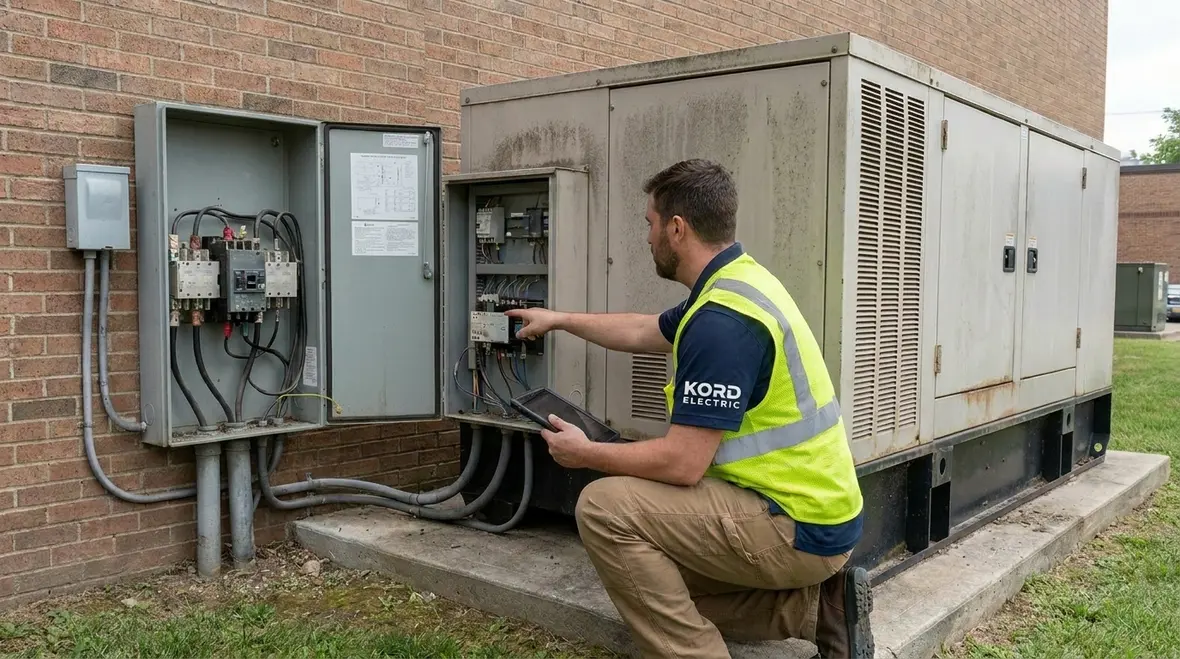
Backup generators require more than fuel availability. We verify startup sequence performance, battery health for cranking, oil and coolant condition, and load acceptance behavior. Load acceptance matters because generators can start strong and then sag when real loads come online. We confirm that the transfer process does not create an overload moment that trips protection.
And yes, we include a real conversation about fuel contracts, tank monitoring, and delivery windows. If your facility depends on emergency electrical infrastructure protection, fuel logistics need to be treated as part of the electrical system, not a separate business problem. For sites that want fewer surprises, integrating generator and ATS inspections into a broader electrical preventive maintenance program turns “we hope it works” into documented performance data.
Finally, we validate controls and communications. If remote monitoring exists, we ensure alerts route to the right people and that logs capture the data needed for fast troubleshooting. That way, post-event analysis is based on evidence, not memory.
First 15 minutes: the calm checklist that prevents secondary damage
During an outage, speed matters, but so does order. Kord Electric encourages facilities to follow a first 15 minute checklist that covers safety, status verification, and load control. Our expert service staff often helps clients build and rehearse this plan, so it becomes muscle memory rather than improvisation.
In practice, teams should confirm the outage type and source. Is it utility loss, bus fault, switchgear failure, or an incorrect transfer state? Then they verify that critical loads are on the intended power source, not half on, half off like a bad movie sequel.
Next, operators should check alarm panels, transfer status, and generator run indicators. If protective devices trip, staff must avoid repeated manual resets that can deepen damage. Instead, they should document events, note which breakers operated, and identify likely causes based on the sequence of events. When those notes are paired with an established relationship with a dedicated emergency electrical services team, support moves faster because everyone is reading from the same playbook.
Then we manage loads intentionally. If the system includes load shedding, it must activate as designed. If it does not, we recommend pausing non essential processes when needed to keep voltage stable and avoid equipment stress. That protects motors, drives, and power supplies from abnormal conditions.
Throughout these steps, safety stays primary. Staff should follow lockout and permit procedures, especially where panels are opened. If an electrical condition looks uncertain, our technicians prioritize safe verification methods before anyone reaches for a “quick fix.”
Recovery and return to service: keep the comeback controlled
When power returns, many facilities focus on restoring operations and ignore the electrical transition. Yet return to service creates risk: reconnection inrush currents, motor restart surges, and potential re-energization of faulted circuits. Kord Electric treats recovery as a planned sequence.
First, we confirm utility stability and correct voltage conditions before retransfer. Then we return loads in stages, starting with essential systems and then important ones. This staged approach reduces the surge that can trip breakers or damage power electronic devices. In facilities that have previously seen lights flicker or drives fault during re-energization, tightening this sequence can be the difference between a smooth restart and a second outage.
We also review the transfer event data. Our expert service staff checks logs for transfer timing, any abnormal alarms, and whether protective devices behaved as expected. If anything looks off, we do not just clear it and move on. We investigate, because “it worked once” is not a strategy.
After restoration, we recommend follow-up inspection and testing. Batteries may need replacement, control wiring may show stress, and relays can need verification after abnormal events. For major property buildings, we often provide post event reports that help leadership document what happened and what changed.
And if an outage caused a fault, we plan repair work with clear documentation. That way, next time the facility can rely on emergency electrical infrastructure protection instead of relying on hope. Over time, this approach pairs naturally with larger upgrades such as panel labeling improvements, rewiring projects, or switchgear modernization so today’s recovery becomes tomorrow’s resilience.
Emergency response training that actually sticks
Best practices fail if people do not know what to do under stress. That is why Kord Electric helps commercial and industrial facilities build training around real equipment and real procedures. We run sessions with technicians, facilities staff, and operations leaders so everyone understands the system from the inside out.
During training, our team explains how protective devices operate, what status indicators mean, and how transfer and generator modes should look. We also teach “what not to do,” such as repeated resets, bypassing alarms, or manually forcing states without confirming safety.
Then we add tabletop exercises. These simulate common outage scenarios: partial load loss, nuisance alarms, generator fails to accept load, or communications drop with monitoring. Because people respond differently when a screen goes blank, these exercises help them keep their footing.
Finally, we document everything. Clear checklists, wiring diagrams, and contact lists are kept where staff can reach them fast. When leadership supports the training schedule, the organization does not panic. It performs. For facilities across the region, especially those that lean on Los Angeles County electrical services, this kind of preparation turns regional grid events into managed operational challenges instead of uncontrolled emergencies.
FAQ
Conclusion and call to action
Outages do not ask permission, and your electrical system should not rely on luck. Kord Electric helps commercial and industrial facilities strengthen emergency readiness with practical inspection, clear operating procedures, and expert technicians who explain every step. If you want your critical loads protected and your return to service controlled, schedule an assessment with us. We will review your switchgear, transfer equipment, backup power, and outage response plan, then recommend improvements you can act on right away. Let us turn downtime from a crisis into a controlled event, backed by emergency electrical infrastructure protection that behaves when conditions are at their worst.
If your facility is ready to connect outage planning with long-term reliability, Kord Electric can combine preventive maintenance, emergency response, and project work into one coordinated strategy. Whether you are dealing with recurring nuisance trips, aging switchgear, or simply want a sharper plan for the next utility event, our team is ready to help.