Emergency Electrical Response Planning for Offices
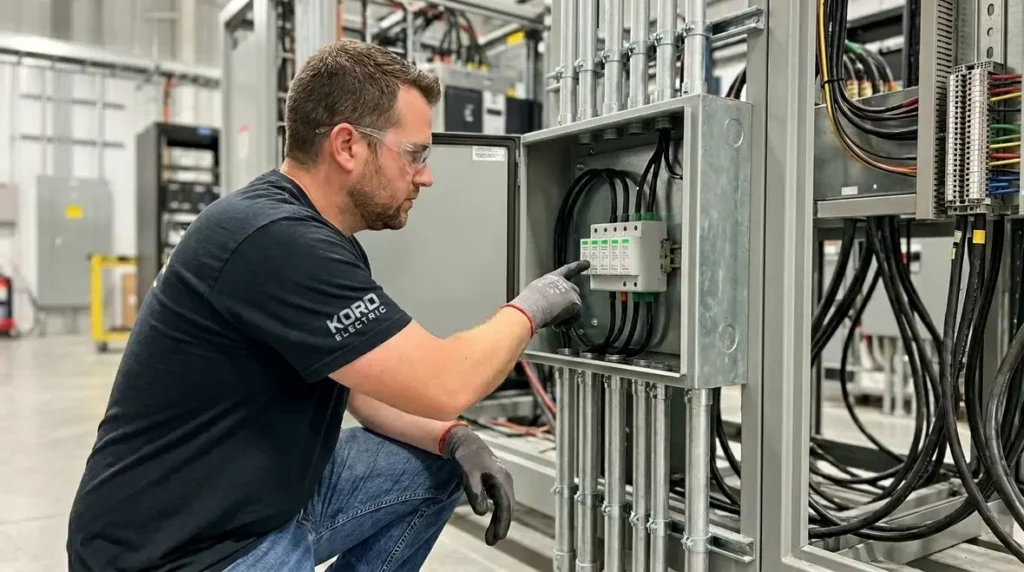
At Kord Electric, we treat emergency electrical response planning like we treat safety in normal operations: as a daily practice, not a once-a-year poster. When an office faces an outage, arcing event, overloaded circuits, or a partial failure after storms, we help facilities move fast and stay calm. Our approach builds a clear action plan, assigns roles, and sets testing and communication steps before something bad happens. Then, when the lights flicker and people start acting like it is the season finale of their favorite TV show, the team follows a script instead of panic. This article explains how commercial and industrial facilities and major property buildings can develop an effective emergency plan, using practical steps our technicians and expert service staff apply in the real world.
Why offices need emergency electrical response planning that actually works
Offices rarely fail in a neat, convenient way. Usually, the problem arrives during peak activity, with staff returning to their desks, equipment humming, and visitors asking, “Is this part of the experience?” That is exactly why a plan must cover not only total power loss, but also partial outages and abnormal electrical conditions. In commercial buildings, even short disruptions can affect life safety systems, communications, security, elevators, critical servers, and cleanroom style processes in mixed-use sites.
Meanwhile, emergency electrical response planning also reduces decision time. Instead of debating who calls the utility, who confirms the breaker status, and who coordinates life safety, the plan already defines the steps. As a result, staff act early, we document properly, and technicians can restore power or isolate hazards without guesswork.
Map risks and define what “emergency” means in your building
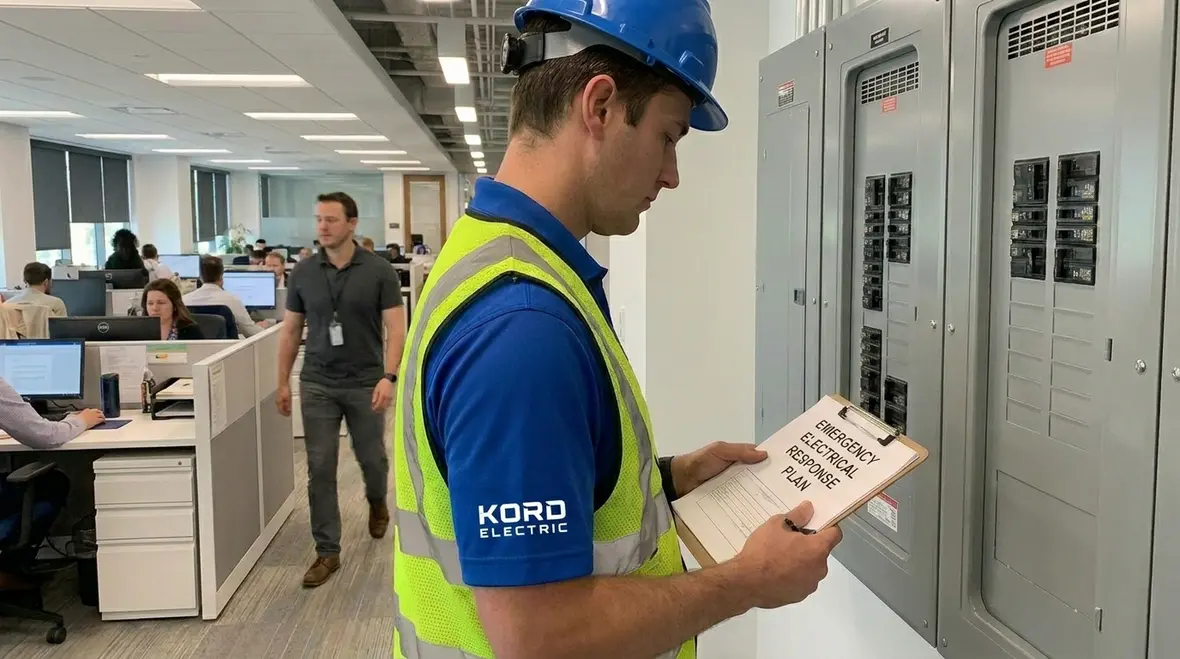
To build an effective plan, we first define scenarios using building realities. Kord Electric helps facilities identify the electrical events most likely to happen, then we link each event to a response path. In an office environment, common triggers include storm damage to feeders, water intrusion in electrical rooms, loose terminations that produce heat, generator transfer issues, breaker trips that repeat, and control power loss that stops critical loads.
Next, we create a simple emergency classification so staff know what to do without training day one. For example, we categorize events by severity and impact. A short flicker with normal recovery might be “operational disruption,” while arcing, burning odor, smoke, repeated tripping, or suspected equipment damage becomes “electrical hazard.” We also include time based triggers. If the power stays unstable after a defined period, staff stops attempts and escalates.
Also, we do not treat offices as identical. Major property buildings often share systems across tenants. Therefore, the plan must include how your site coordinates with property management, security teams, and other electrical contractors who may respond too.
Set roles, escalation steps, and communication in a way people follow
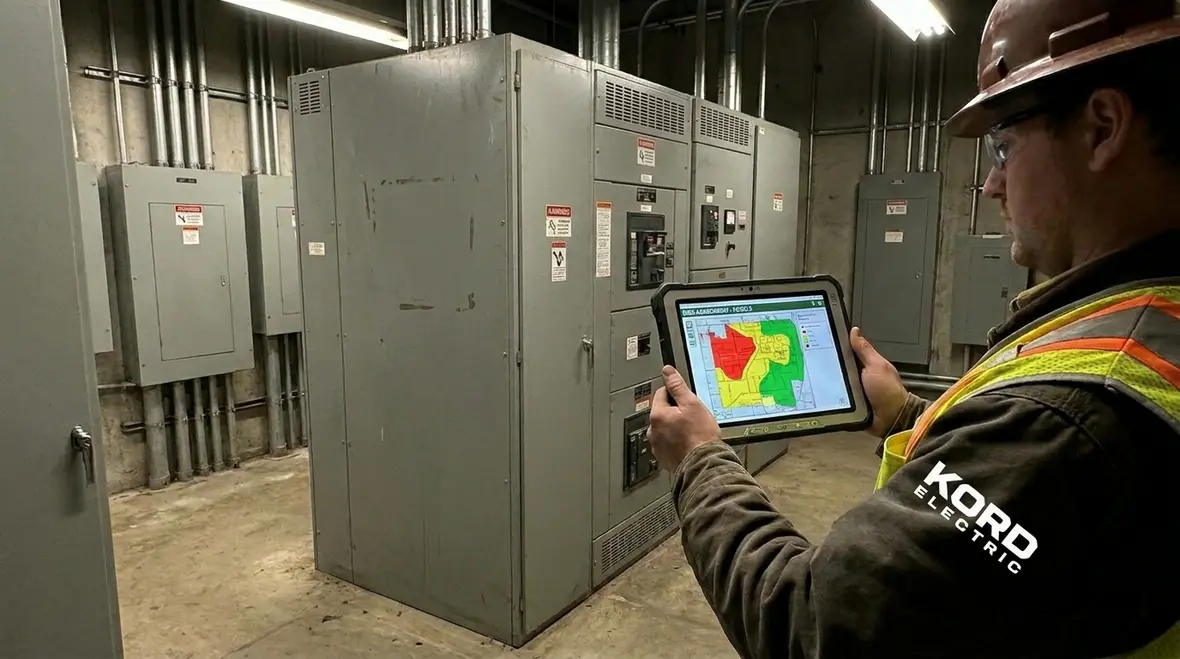
Many plans fail because roles look good on paper but break under stress. So we design responsibilities around who can act quickly and safely. Our technicians and expert service staff encourage facilities to name a specific chain of command. For example, the plan should clearly state who initiates the event report, who contacts the utility, who contacts Kord Electric or the service team, and who coordinates life safety and evacuation support.
Then we build escalation thresholds. If breakers trip more than once in a short interval, staff should stop manual resets and call for technical support. If elevators lose power, the plan should direct security to manage access areas immediately. If a suspected electrical fire appears, staff follows life safety procedures first and then requests specialized electrical intervention.
For communication, we use plain language and multiple channels. We include phone trees, radio use where available, and simple message templates for staff. After that, we define what information to share, such as location of the electrical room, observed symptoms, whether smoke exists, and which areas lost power. This reduces back-and-forth and helps our technicians arrive with the right tools and documentation.

How to prepare switchgear, panels, and life safety loads before an outage
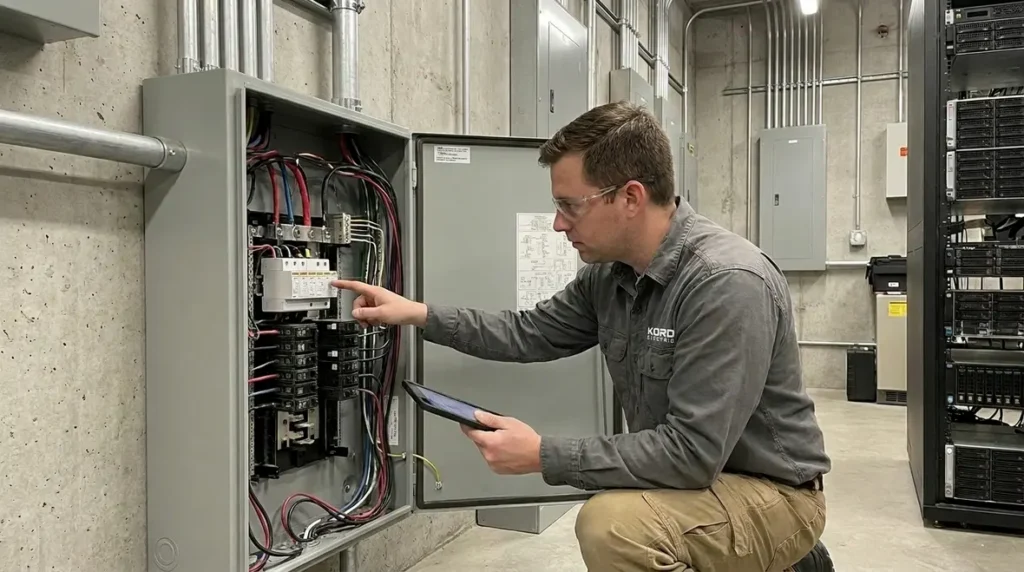
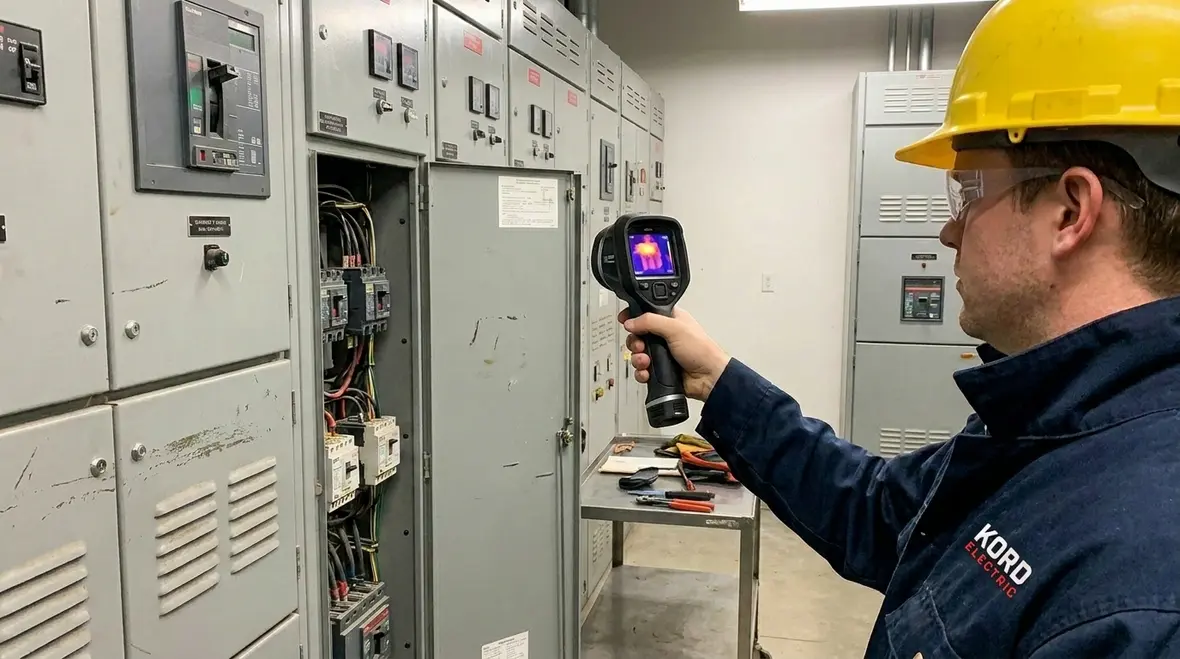
A plan is only as strong as the readiness behind it. Therefore, we recommend that facilities align their maintenance and verification steps to emergency needs. For switchgear and main distribution, we focus on cleaning and inspection schedules, thermal imaging where appropriate, and review of protective device settings. For office loads, we verify that critical circuits remain powered or restart properly after a transfer.
Life safety systems demand extra attention. In commercial and industrial facilities, fire alarm components, emergency lighting, exit signage, and certain control loads often require strict assurance. We advise facilities to confirm that these circuits either maintain power through transfer equipment or restore within the required time windows. When systems include generators or UPS, the emergency plan should include transfer test schedules, load bank planning where permitted, and clear rules about when staff must halt tests.
Also, major property buildings benefit from shared system checks. If tenants rely on shared infrastructure like risers, data rooms, or hallway power, the plan should include how your teams coordinate during a disruption. Otherwise, everyone believes someone else already handled it. In an emergency, that is a fun theory. It is also a bad one.
What technicians do during an electrical emergency, step by step
Our technicians follow a methodical flow that supports both safety and restoration. First, we confirm the report and gather facts from the site team. We ask for symptoms, the time the issue started, whether there is smoke or burning odor, and which panels or rooms show abnormal conditions. Then we secure the area. That means we treat electrical rooms like a restricted zone until we confirm safe status.
Next, we identify the source using a combination of visual checks, device status review, and test equipment suited to the risk. If breakers have tripped, we review patterns instead of resetting everything. Repeated trips can indicate deeper issues such as fault conditions, damaged components, or wrong protective coordination. Meanwhile, for power quality problems like unstable voltage or frequency issues, we verify readings and isolate the likely cause path.
After that, we coordinate restoration. If the building has critical loads, we prioritize them in a controlled sequence. For example, we restore power to life safety circuits and communications first, then to business systems, then to general receptacles. Finally, we document findings and provide the site team with clear notes on what occurred, what we tested, and what must be corrected before normal operations resume.
Throughout this process, we keep communication active. Even when the work looks slow to non technical staff, it speeds things up overall. Nobody wants a rushed repair that turns into a repeat performance. That is how you end up with a power outage that follows you like a sitcom plot twist.
For office properties that want those emergencies handled by a dedicated partner, Kord Electric’s Emergency Electrical Services team is built specifically for rapid, code-compliant response across commercial and industrial buildings.
Training, drills, and documentation that keeps the plan alive
Emergency electrical response planning should not sit in a binder. So we help facilities keep it current using training and drills. We suggest a schedule tied to staffing changes and major electrical work. When new employees join, we provide an overview of responsibilities and escalation. When equipment gets replaced, the plan updates immediately.
Drills should simulate realistic pressure. For example, run a tabletop exercise for a partial outage during the workday. Include how security manages access, how staff reports issues, and how the electrical lead escalates. Then run a second drill for a hazard scenario, such as a burning odor in an electrical room. In that drill, staff should demonstrate that they stop manual actions, isolate the area, and contact specialized support.
Documentation matters just as much. We encourage facilities to track maintenance history, test results for generators and transfer equipment, breaker inspection logs, and last known stable settings. When the plan includes this history, our technicians can make faster decisions in the field. It also helps the facility meet internal quality requirements and reduces uncertainty for insurers and property managers.
For many organizations, a structured program such as Kord Electric’s Electrical Preventive Maintenance service helps keep those records, inspections, and test schedules aligned with emergency readiness instead of scattered across spreadsheets and emails.
FAQ about emergency electrical response planning for offices
Final thoughts and next step with Kord Electric
When an office faces electrical trouble, the best outcome comes from preparation, not improvisation. Kord Electric helps commercial and industrial facilities and major property buildings build emergency electrical response planning that staff can follow, technicians can execute, and management can trust. If you want a plan that supports life safety, speeds restoration, and keeps communication clear, we can review your current setup and map a stronger response flow. Contact Kord Electric today to start an assessment and bring calm back to your next outage.
If your organization is actively addressing recurring issues like breaker trips, unstable voltage, or unexplained shutdowns, pairing your planning efforts with services such as Voltage Fluctuation Diagnostics for Commercial & Industrial Facilities and dedicated Emergency Electrical Services gives your team both a written roadmap and a field-ready response partner for the next real event.