Emergency Power Failure Recovery Plan Guide
When the lights go out, the clock starts, and our emergency power failure recovery work begins fast. At Kord Electric, we help commercial and industrial teams build a plan that keeps critical systems alive, protects equipment, and restores power with less guesswork. In this guide, we walk through a rapid recovery approach that supports business continuity, because downtime does not just cost money, it costs momentum. And yes, we have heard the jokes about “turning it off and on again.” Unfortunately, in a facility full of pumps, controls, and life like systems, that joke wears out quickly.
Build a business continuity plan that actually works
We start by defining what must keep running and what can wait. Then we connect that to how power is lost, how backup power starts, and how crews restore normal operations. Rather than writing a document that sits on a shelf, we develop a plan a site team can follow under real stress. To do that, we map each load by criticality, voltage level, and restart behavior.
Next, we name an owner for each step. For example, one person calls the utility contact, another verifies generator status, and a third checks switchgear. After that, we outline the order of operations so the team does not run in circles like it is a microwave door prank from a 90s sitcom.
What our technicians check first during emergency power recovery
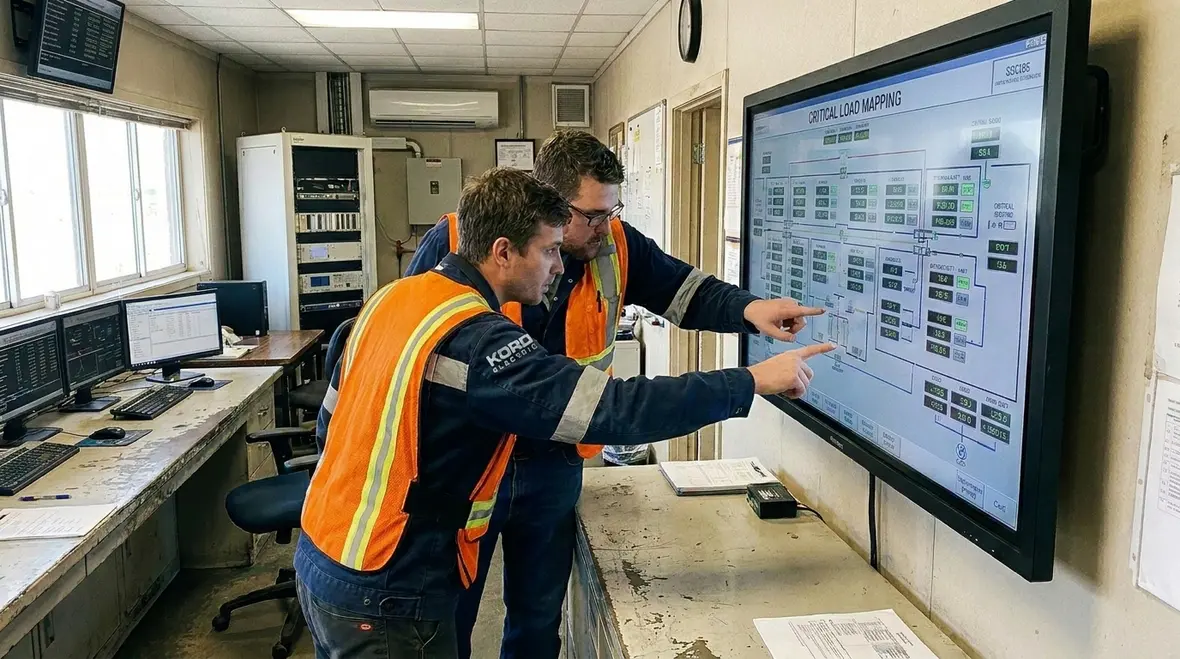
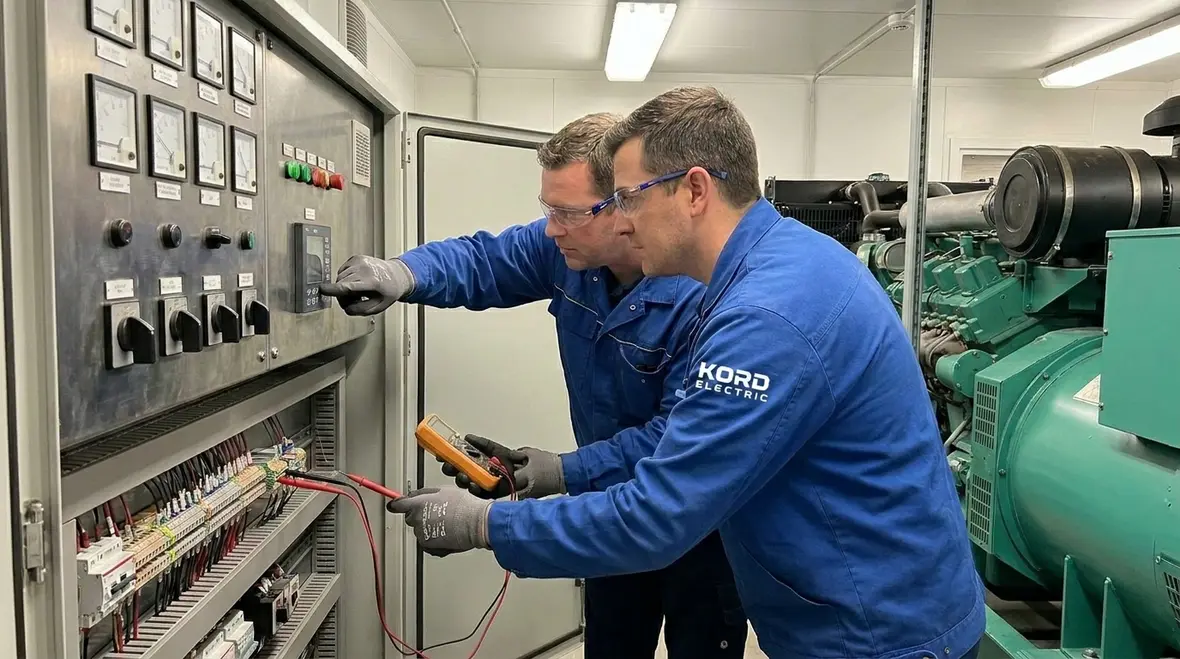
Our expert service staff brings calm, then structure. When an outage hits, they begin with the basics that keep bad decisions from multiplying. First, they confirm the fault type, such as utility failure, breaker trip, or transfer failure. Then they check that ATS or transfer equipment moves correctly and that loads are reconnected in the right sequence.
After that, they verify engine generator controls, fuel supply, battery health, and protective relays. We also focus on switchgear and feeder status, because hidden trips often show up later as “mystery” shutdowns. If a facility has sensitive motors or variable speed drives, our technicians also confirm restart settings to prevent a sudden current surge that can trip upstream protection.
Finally, we log every action and reading. This is how the recovery plan learns. And when the same outage happens again, the response improves instead of repeating the same mistakes with a different time stamp.
Design the recovery timeline with smart load sequencing
To keep continuity, you need a recovery timeline that matches how your systems behave. We help teams build two timelines. One timeline covers the first critical minutes, when safety and life safety systems must stay powered. The second timeline covers longer stabilization, when normal operations resume in phases.
That phased approach matters. For instance, large HVAC equipment, process motors, and compressed air systems can all restart at once and overwhelm the generator. Therefore we design a plan for staggered restart, load shedding, and priority bands. We also include manual override steps for situations where automation fails.
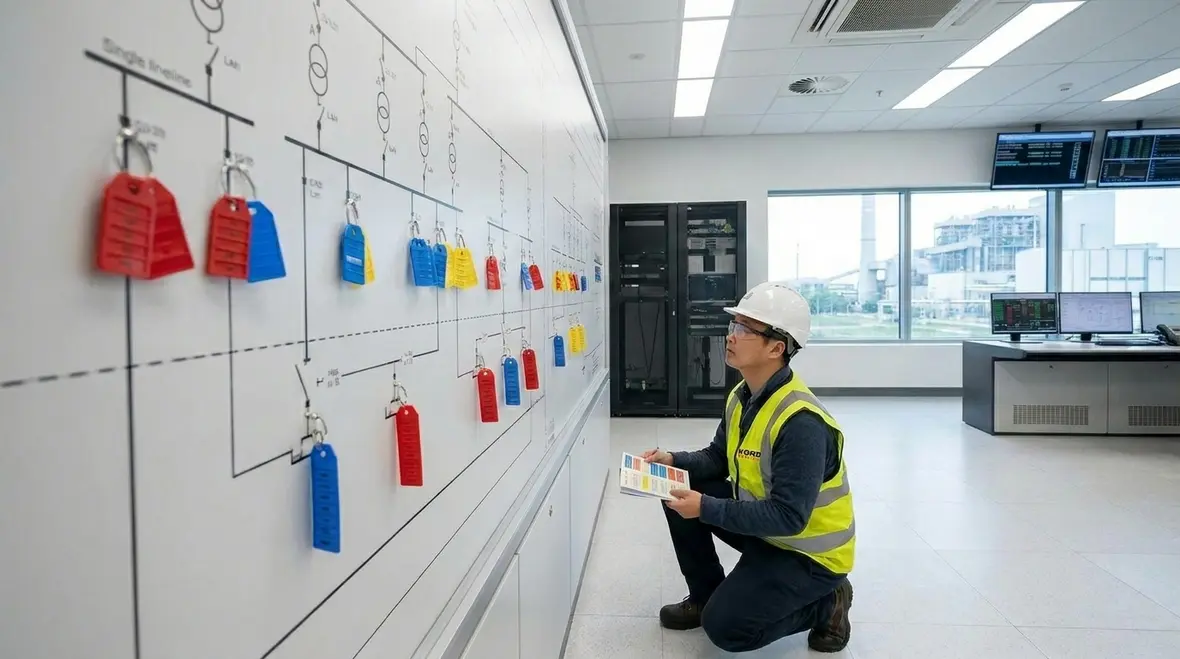
In many commercial and industrial buildings, the electrical system includes different power paths, and each path needs its own restart logic. So we review single line drawings, panel schedules, and transfer schemes. Then we turn that into practical steps: what closes first, what waits, and what must be verified before the next action.
Meanwhile, we make sure the team knows what “success” looks like. For example, success might mean fire alarm and egress lighting are stable, critical controls stay up, and refrigeration or process monitoring stays online while non essential loads remain off until later.
Emergency transfer equipment and protection: where plans often break
Many businesses assume the transfer switch just does its job. In real life, that switchgear and protective devices are part of a system, and the system can drift over time. So we evaluate the components that control the transition from utility to backup and back again.
Our teams review ATS and transfer contactors, mechanical interlocks, and signal wiring. Then we check protective relay settings that influence whether the backup system can carry loads without nuisance trips. We also look at grounding and bonding paths, since a poor or changing connection can cause unexpected behavior during recovery.
Just as important, we validate that test procedures match the plan. If a facility runs generator tests but does not exercise transfer logic under realistic load conditions, the first real outage becomes the trial run. And if you want a real pop culture moment, that is how you get one, except the villain is physics and it always wins.

Budgeting for reliability and rework: use the cost facts
When teams plan emergency power failure recovery, they often avoid the hard question: how much will this cost? At Kord Electric, we help clients plan with real ranges and clear scope, so upgrades do not surprise the budget later. If you need cost context for commercial electrical work, our team has shared a detailed guide on rewiring costs for commercial systems, including factors that influence price. You can explore that in our Rewiring Cost Guide for Commercial Electrical Systems to better understand the investments behind a more resilient infrastructure.
For example, project cost changes based on panel size, conductor quantity, shutdown needs, and how much existing equipment needs to be upgraded. That matters because emergency readiness often requires more than a generator. It can require updated feeders, revised breaker coordination, and improved controls so the facility can recover faster and cleaner.
We also help teams avoid “cheap now, expensive later” decisions. If you cut corners on wiring routes, labeling, or control wiring quality, troubleshooting takes longer under pressure. And longer troubleshooting means longer downtime. Therefore, we plan the scope around continuity goals rather than only hardware replacement.
If a facility has older commercial infrastructure, the rewiring guide can help you understand why modernization may involve more than changing one component. Then we connect that logic to emergency transfer and load management, so the end result supports both safety and operations.
Training, drills, and documentation that teams can follow
A plan without practice is just fiction. We build recovery documents that read like instructions, not like a policy handbook. In other words, we make them quick to follow and easy to verify. Our technicians and expert service staff explain each step during site sessions, so the right people can take action even when the facility is under pressure.
We recommend drills that include several realistic scenarios. These can include utility loss during a peak load window, a failure of transfer signaling, or a partial load restart that reveals hidden dependencies. After each drill, we review what happened, adjust load sequencing, and update the timeline.
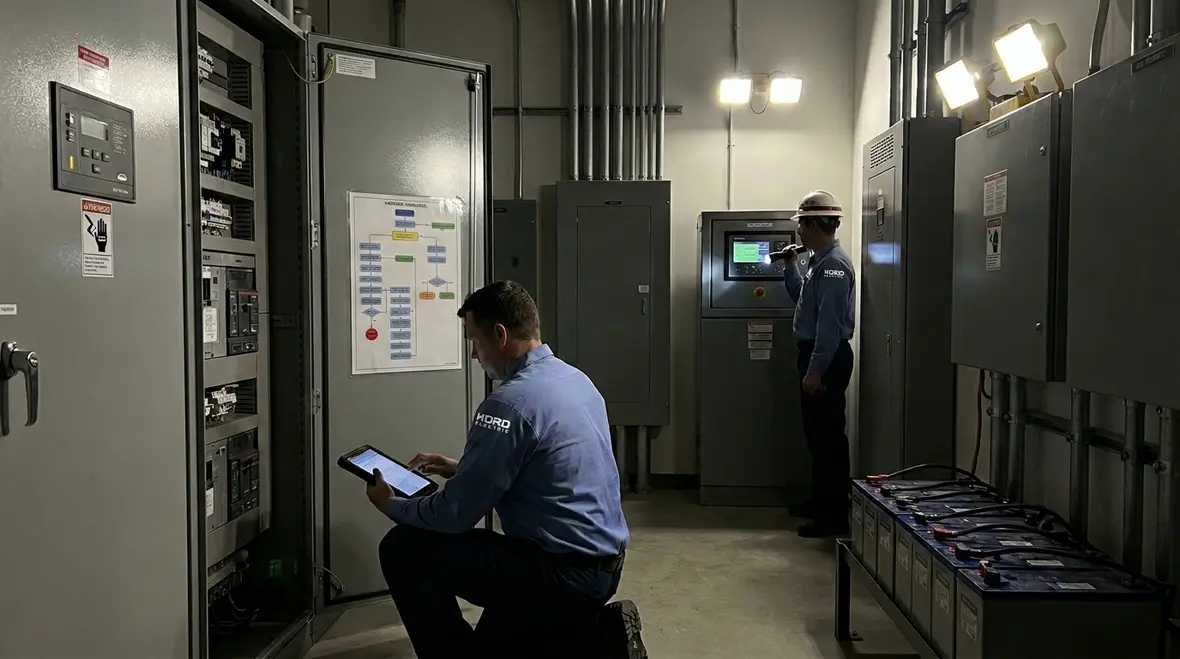
Also, we maintain a control room ready checklist. It should include key readings and status points, such as generator run state, ATS position, breaker positions, and critical load confirmation. When transition to backup power occurs, the team needs confidence and clarity, not a scavenger hunt through cabinets labeled “misc.”
Finally, we keep documentation current. We update schedules after equipment changes, panel swaps, or process upgrades. This step keeps emergency power recovery aligned with how the facility actually runs today, not how it ran last year.
Dual column emergency readiness planning for commercial facilities
To make action easy, we often organize the plan into two focused views. One view drives operational steps. The other view drives electrical verification tasks.
Operations and response steps
- Confirm outage cause and time stamp
- Notify internal leadership and utility contacts
- Start backup sequence and verify transfer
- Restore critical loads in priority order
- Stabilize systems before restoring non essential loads
Electrical verification tasks
- Check ATS position and interlock status
- Verify generator alarms, fuel level, and controls
- Confirm breaker states in switchgear and feeders
- Validate relay settings and protection behavior
- Log readings and update next action
FAQ
Make recovery fast, calm, and repeatable with Kord Electric
When your facility faces an outage, you do not need guesses. You need a recovery path that stays consistent under stress. At Kord Electric, we help commercial and industrial teams build emergency power failure recovery plans that include load sequencing, transfer verification, and technician led training. If you want your site to recover with less downtime and more control, contact us for an assessment and a practical plan your teams can follow the moment the lights change.
If you are also looking to strengthen your day to day reliability, explore our structured Electrical Preventive Maintenance services. Pairing a resilient emergency power failure recovery strategy with ongoing preventive maintenance and Emergency Electrical Services support gives your facility coverage for both planned upkeep and unplanned outages.