Emergency Power Loss Prevention for Facilities
When a facility loses power, the lights don’t just go out. Operations stall, safety systems can weaken, and data can vanish like a phone battery at 2 percent. That is why our focus at Kord Electric starts with emergency power loss prevention before anything goes wrong. In the first stages of planning, we help others reduce the risk of outages by strengthening how power is monitored, protected, and restored. We also prepare for the moment the grid falters, because that moment always arrives faster than people expect.
In the sections below, third person readers will see how our technicians and expert service staff build reliability step by step. They explain things in plain language, then back it up with real-world checks, practical upgrades, and clear documentation. Think of it as disaster prevention with fewer dramatic speeches and more measured action.
Quick note: This article targets commercial and industrial facilities and major property buildings. That is where the stakes are highest and the systems are complex enough to require real engineering, not guesswork.
What proactive planning looks like in commercial and industrial buildings
Proactive power planning begins with a simple question: what fails first, and why. Facility teams often assume the generator or UPS will save the day. However, our technicians know that most problems start earlier in the chain, at interfaces like distribution panels, transfer switches, protection relays, and control logic.
First, Kord Electric maps the facility’s electrical pathways and identifies weak points. Then, we review how load, heat, and demand change throughout the day. A manufacturing floor with variable motor loads behaves differently from a data heavy building with steady server demand. After that, we compare real operating conditions against design expectations.
Next, we set a risk baseline. In plain terms, we estimate how likely failures are and how severe they would be. Then we choose actions that reduce both probability and impact. The goal is emergency power loss prevention without relying on wishful thinking. The grid can be moody. Electrical systems should not be.
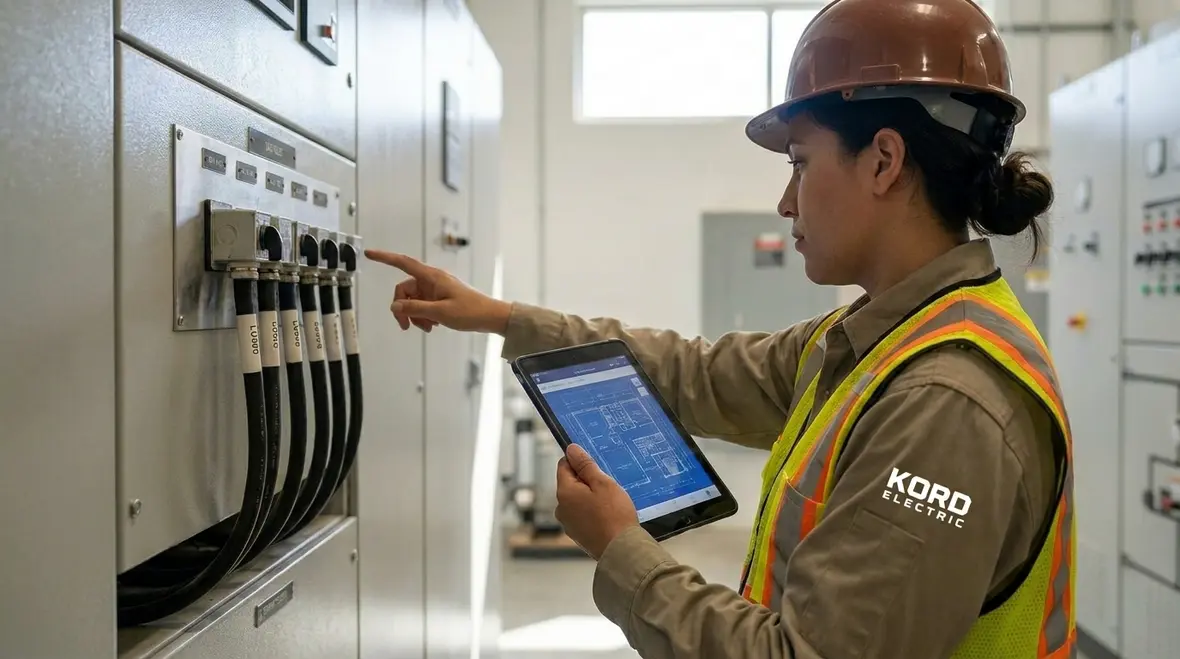
For facility managers who are already juggling aging infrastructure, mixed tenant needs, and tight capital budgets, proactive planning often ties directly into broader electrical strategy. Deeper dives into topics like hidden electrical risks or formal maintenance programs can help connect the dots between today’s decisions and tomorrow’s reliability.
That is why many property teams pair early planning with structured programs similar to those outlined in Kord Electric’s commercial and industrial electrical maintenance plans. Those programs focus on inspection, documentation, and long term scheduling so critical rooms, panels, and feeders stay ahead of wear instead of waiting for the next surprise.
How facilities reduce failure risk before it turns into an outage

To prevent emergency power loss from escalating, a facility must reduce the chance of failure at every layer. Kord Electric uses a layered approach because one fix rarely covers everything. For example, improving backup readiness without addressing switchgear health can still lead to problems during transfer.
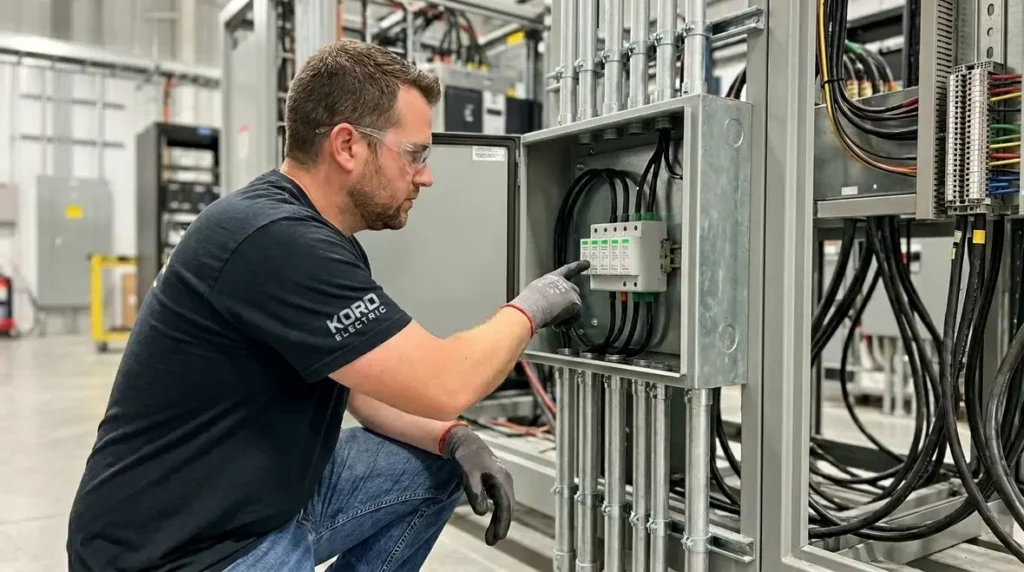
Our expert service staff helps others implement a routine that includes the basics and the details. That means tightening loose connections where heat already has a history. It means verifying cable ratings and checking terminations that look fine but behave poorly under load. It means testing and calibrating protective devices so they trip when they should, not when they feel like it.
In addition, we help facilities manage surge events and harmonics. Those issues often create slow damage that builds until an event triggers a bigger failure. So instead of waiting for a dramatic moment, the facility corrects the hidden problem source.
- Maintenance aligned to load reality, not a generic calendar
- Thermal checks on connections, busbars, and switchgear components
- Protection relay review to improve selectivity and reduce nuisance trips
- Transfer pathway verification so backup power starts correctly
And yes, we include the human side. A system can be perfect on paper, yet a misunderstood control sequence can still cause a bad transfer. That is why our technicians explain the logic clearly, and they leave teams with written steps they can follow under stress. Unlike pop songs, documentation should not be skipped.
This kind of maintenance-first mindset fits naturally with electrical preventive maintenance programs built for commercial and industrial environments. By combining inspections, infrared scans, and structured task lists, facilities steadily lower the odds that a loose lug or aging breaker will decide to retire in the middle of a production run.
Monitoring and diagnostics that catch problems early

Even well maintained systems drift over time. That is why early detection matters. Kord Electric supports facilities with monitoring and diagnostics that help others spot issues before they become visible failures.
We encourage teams to watch for patterns in voltage quality, frequency stability, load imbalance, and transfer timing. When trends change, something is moving in the system. Sometimes that movement is small at first, like a loose contact heating up more each week. Sometimes it is bigger, like a control board that slowly loses reliability.
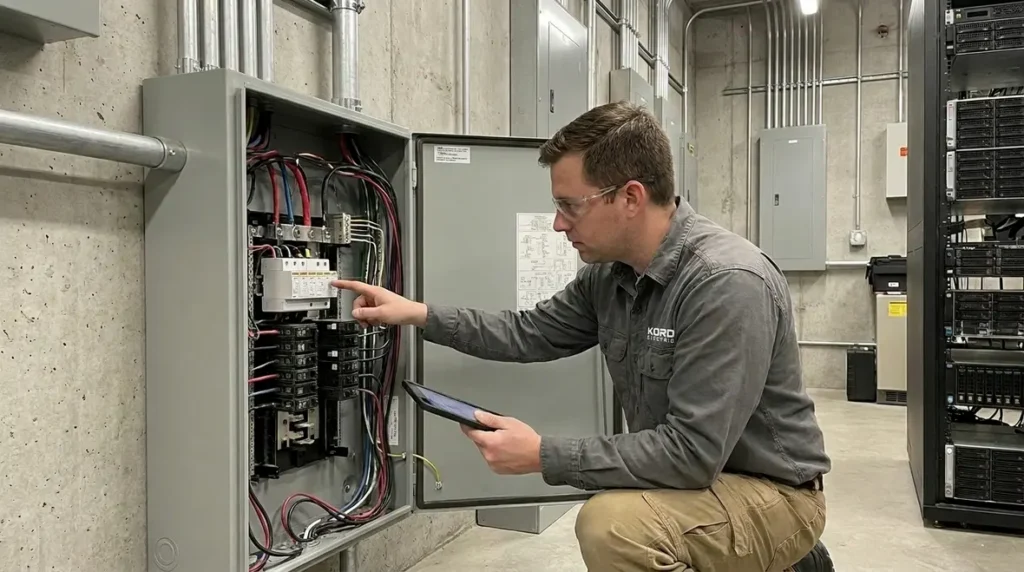
Our expert service staff also looks at event logs and alarm histories. Those records tell the story of what the electrical system experienced. Then we connect the dots between what occurred and what likely caused it. This helps the facility fix the root cause, not just the symptom.
Meanwhile, diagnostic testing must stay aligned with safety and downtime limits. Our technicians plan tests to minimize disruption in commercial operations. They also document results so facility teams can track progress and make informed upgrades.
When monitoring works, emergency power loss prevention shifts from reactive cleanup to calm, scheduled action. It feels like replacing smoke alarms with an early warning system that predicts the fire. One is good at screaming. The other is good at preventing the whole situation.
In many facilities, this monitoring naturally ties into preventive programs and code-based maintenance guidance. Frameworks like NFPA 70 and NFPA 70B are not just rulebooks; they offer structure around how often equipment should be inspected, how test results are interpreted, and what thresholds trigger corrective work. When those standards meet real time data, reliability stops being a guessing game.
Emergency transfer systems and UPS readiness checks

For many facilities, the real test happens at the transfer moment. When utility power drops, the facility must move to backup power quickly and safely. If transfer systems struggle, even a healthy generator can underperform during an actual event. That is why Kord Electric pays attention to transfer hardware and control sequences.
Our technicians review transfer switch operation, verify interlocks, and confirm settings. They test transfer timing and observe whether loads transfer cleanly. They also verify that UPS systems, where present, can sustain critical loads through transitions. Because if the UPS stops too early, the facility does not just lose comfort, it loses control systems, safety equipment, and critical operations.
In addition, we check load management. Some sites need load shedding plans so the generator or standby system does not overload at start. However, this only works if the shedding sequence is engineered correctly and proven during testing.
- Transfer switch functional testing with controlled scenarios
- UPS discharge and runtime validation for critical loads
- Start and load sequencing review for generator and ATS coordination
- Battery health checks and replacement planning
Our expert service staff then walks others through what the tests mean. They explain expected behaviors and what signals show risk. Because when operators understand the why, they can respond faster during real events. That kind of readiness beats “good luck” every time.
This work often pairs with structured electrical preventive maintenance, where generator and automatic transfer switch inspections, emergency lighting checks, and compliance documentation live in the same plan. When all of those pieces talk to one another, emergency power loss prevention stops being a stand alone project and becomes part of everyday operations.
Design upgrades that reduce outage impact
When prevention requires hardware improvement, Kord Electric helps facilities choose upgrades that fit the site, the budget, and the operating schedule. Not every building needs the same changes. Yet many facilities benefit from consistent themes: better protection coordination, improved distribution design, and more reliable backup integration.
For example, selective protection can prevent a single fault from causing a whole facility blackout. Better segmentation of electrical distribution can keep critical areas powered even when other sections face issues. Proper grounding and surge protection can reduce stress during disturbances.
We also support modern approaches like monitoring connected to maintenance workflows and documented commissioning standards. That means less “we think it works” and more “we know it works,” backed by test results.
Importantly, upgrade planning must consider real downtime windows. Facilities cannot always shut down for a long commissioning cycle. Therefore, our technicians plan staged work and careful verification to keep critical systems stable.
Upgrades, when done right, strengthen emergency power loss prevention in a way that goes beyond equipment replacement. They reduce the cascade effect of a failure. So even if the grid stumbles, the facility stands its ground.
Some facilities use major upgrade windows as a chance to align with current national electrical code requirements and to rethink how new systems like solar, advanced lighting, or automation integrate with existing distribution. Kord Electric’s broader commercial electrical experience helps keep those conversations grounded in both reliability and long term flexibility.
Training, documentation, and response readiness
Emergency preparedness is not only equipment. It is people, process, and clarity. Kord Electric helps others build response readiness by training staff and creating documentation that teams can use when time is short.
Our expert service staff explains system behavior in a calm, structured way. That matters because during an actual outage, stress can turn simple tasks into mistakes. When operators know what alarms mean, how to verify transfer status, and when to escalate, the response becomes controlled rather than chaotic.
Documentation must include system maps, operating sequences, test schedules, and contact trees. It must also include “what not to do,” which is often overlooked. For example, incorrectly resetting protective devices can delay recovery or create additional faults.
To keep everything practical, we help facilities set tabletop exercises and post event reviews. After each test or real incident, the facility updates procedures based on what happened. That is how emergency power loss prevention becomes a living program instead of a binder nobody opens.
And as a bonus, well trained teams communicate better. That can prevent finger pointing, which is the electrical version of blaming the weather. Everyone hates it. No one fixes it.
This people centered approach also makes it easier to bring outside partners into the loop. When Kord Electric supports emergency electrical services, preventive maintenance, or larger capital projects, clear documentation and shared terminology keep every technician, manager, and stakeholder aligned during high pressure moments.
FAQ
Ready to strengthen power reliability with Kord Electric
If a facility wants fewer surprises, it needs an ongoing plan, not a last minute scramble. Kord Electric helps commercial and industrial teams with emergency readiness, system checks, diagnostics, and upgrades that support true emergency power loss prevention. Our technicians and expert service staff explain each step, validate performance with real testing, and document results your team can trust. Contact us to schedule a site assessment and build a reliability program that keeps critical operations steady, even when the grid decides to act unpredictable.
For organizations that want emergency planning to sit inside a larger, long term strategy, Kord Electric’s dedicated electrical preventive maintenance services provide a structured way to align inspections, testing, and upgrades under one coordinated program. That means less guesswork, clearer reporting, and year over year improvements in reliability instead of one off fixes.
Whether the next project involves tightening up existing switchgear, planning new distribution for a growing campus, or pairing emergency power loss prevention with lighting, solar, or other electrical changes, the goal stays the same: give critical facilities a calm, predictable relationship with their power systems.
When you are ready to move from “we hope it holds” to “we know it is ready,” partner with a team that treats reliability as a discipline, not a slogan.