Emergency Power Restoration for Commercial Facilities
Rapid emergency power restoration procedures for commercial facilities
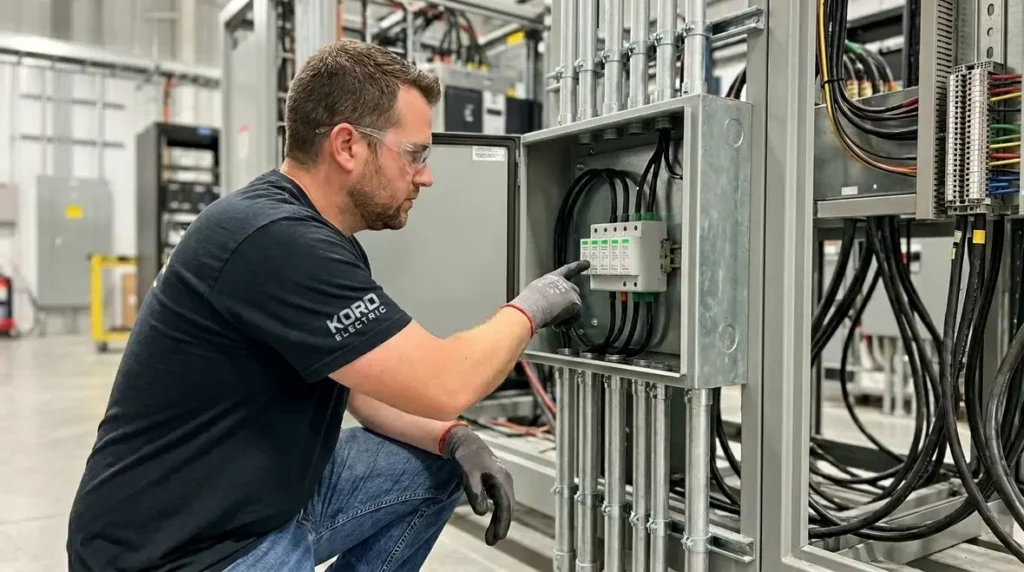
When lights go out in a commercial building, people feel it fast and trust vanishes faster. That is why we follow clear emergency power restoration procedures from the moment an outage begins. First, our service team confirms what failed and where, while we protect safety and prevent backfeed. Next, we isolate the problem using switchgear and transfer paths, then we restore power in the right order to the right loads. After that, we stabilize the system, verify key signals, and document what happened so the next event costs less time and less money. Our technicians explain each step in plain language, because we know most facility managers do not need a lecture, they need results. And yes, we promise we will not treat your building like a giant science fair project.
Why SOPs matter when the clock starts ticking
In commercial and industrial facilities, outages rarely stay simple. One breaker trip turns into a cascade of alarms. One bad contact becomes a repeated start stop cycle. However, a strong standard operating procedure keeps the response calm, fast, and consistent. When our expert service staff follow a defined workflow, we reduce guesswork and avoid risky shortcuts. In addition, we set clear roles so the right person owns each task. This prevents the classic “everyone thinks someone else is checking the panel” problem, which is funny only in sitcoms.
Also, SOPs support better communication. We track the timeline, log readings, and confirm which loads should come back first. As a result, we restore essential services while keeping non critical circuits stable. And because we work for major property buildings, data heavy sites, and industrial operations, we treat critical infrastructure as a living system, not a box of parts.
Assess the event, then control the chaos
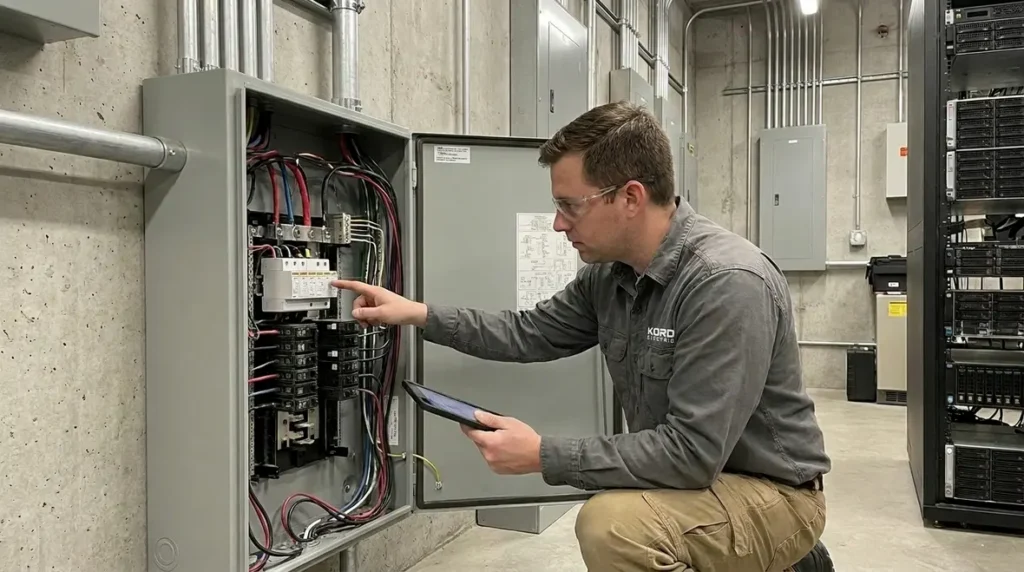
Our technicians start with a structured assessment, not a scramble. First, we confirm the outage type using field observations and control system logs. Then we check for common triggers such as utility issues, generator failures, ATS or transfer faults, and switchgear trips. If alarms point to a transfer problem, we verify interlocks and position status before we touch anything else. That one habit saves time, because forcing a transfer without confirming conditions can worsen the fault.
After the initial scan, we establish an action boundary. We choose what to energize now and what to leave alone for later. At the same time, we confirm safety controls such as lockout tagout, voltage verification, and remote isolation. Even when the team feels the pressure, we never skip the safety basics. Finally, we assign a restoration plan that includes sequencing, load priorities, and verification checkpoints.

Power restoration sequencing that protects equipment
Restoration needs order. Otherwise, sensitive loads act like they just woke up and chose chaos. In our approach, we restore in stages, following a load priority map agreed during planning. Typically, we bring life safety and critical controls online first, then we add business critical systems like process drives, HVAC for occupied zones, and network or building management loads. Once those stabilize, we expand to general power.
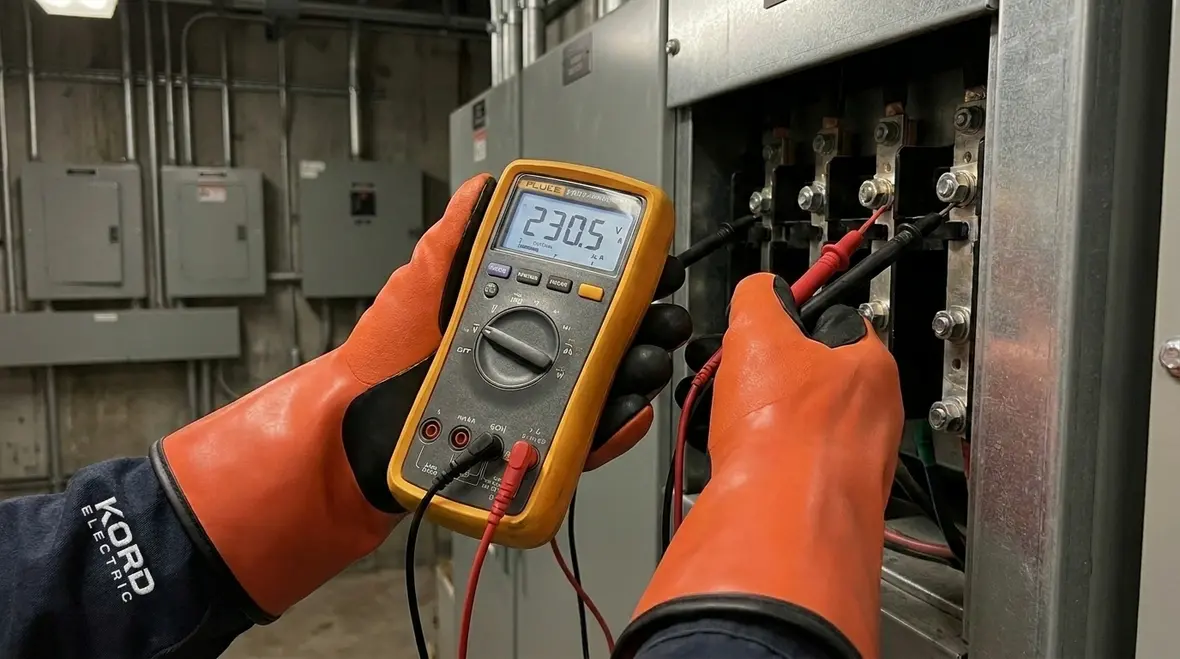
To make this work in the real world, we use verification steps at each stage. We monitor frequency, voltage, phase balance, and load current. If the generator and transfer system behave differently under partial load, we catch it early. Moreover, we check for nuisance alarms and contactor chatter that can signal a failing component. Our team also confirms that protective devices act as designed. Therefore, the building does not just “turn on,” it returns to stable, predictable operation.
In facilities with data center electrical infrastructure, we pay extra attention to redundancy paths and distribution health. If your site uses A and B systems, we restore one side at a time, confirm synchronization, and then validate that the failover logic works as intended. For the practical electrical infrastructure essentials that support this, we draw on the same core planning ideas we share in our article on data center electrical infrastructure essentials from our blog.
Isolation, switching, and transfer control
When we restore power, we avoid random switching. We use isolation to contain faults, then we restore through controlled transfer paths. Our technicians inspect switchgear status, confirm breaker positions, and verify ATS or transfer equipment conditions. If a breaker failed to close or tripped again, we do not simply reset and hope. Instead, we trace the trip cause and check for underlying issues like overload, ground faults, or wiring faults.
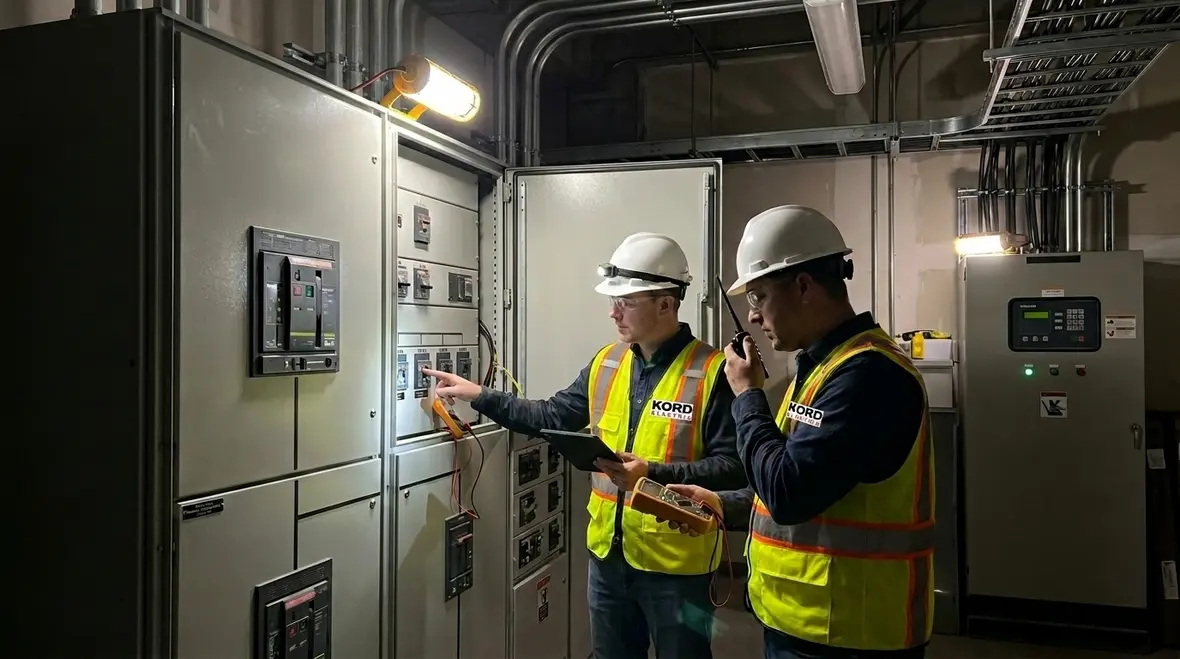
In many commercial sites, operators need to coordinate with multiple stakeholders. So, we provide clear updates on what we changed, what we measured, and what we plan to do next. Meanwhile, we keep the switching sequence aligned with your facility’s approved design and labeling. That labeling matters because in a real building, the panel names you inherit at 2 a.m. can feel like a dare.
We also manage backfeed risk. We verify source and load paths before energizing. If utility and generator sources can interact, we confirm interlocks and signaling. This prevents damage and keeps the restoration safe. And if a transfer path does not behave, we shift to a safe alternate plan instead of forcing the system to comply.
Verification, documentation, and “make it stick” steps
After power returns, our job does not stop. We treat verification as part of restoration, not a final checkbox. We check that voltage and frequency remain within accepted limits. We verify that critical systems start correctly and run without repeated resets. We also confirm that alarms clear, that protective devices do not keep nuisance trips, and that control system statuses match field conditions.
Then we document the event in a way facility teams can use. Our report typically includes the timeline, affected equipment, readings taken, switching actions performed, and component observations. If we find a likely cause, we describe it with practical next steps. That way, the facility team can plan maintenance before the problem returns. In short, we help you turn a bad day into a cleaner future event.
And yes, we sometimes hear, “Can we just fix it and move on?” We understand the urge. However, skipping documentation is like taking off a smoke alarm battery to “see if it still works.” It feels fast, but it rarely ends well.
How we staff rapid restoration for major property buildings
Our team model supports urgency without chaos. We plan for rapid response across commercial and industrial facilities and major property buildings. When an event starts, our technicians follow the same restoration flow, so a new arrival still plugs into the process instantly. That continuity matters because systems do not fail in a neat order.
Also, our expert service staff do more than move equipment. We explain each stage in plain terms, including what we are checking and why. As a result, facility managers and operations leads make better decisions during the event. We also coordinate with on site contacts for access, equipment requirements, and any operational constraints. Therefore, our restoration work stays aligned with business needs, not just electrical theory.
Because outages often impact schedules, we keep communication steady. We use short updates, clear action items, and confirmation of what is next. That tone keeps stress down and trust up, even when the building feels like it is auditioning for a disaster movie.
FAQ on emergency power restoration in commercial facilities
How fast can you start emergency restoration? We respond based on your site needs and the event type, then we start field verification and safe switching immediately once access and safety checks allow it.
Do you restore power in a specific order? Yes. We restore in stages using a load priority plan so life safety and critical systems come back first, followed by business critical loads.
What do you verify after power returns? We verify voltage, frequency, stability, protection behavior, and control system status. We confirm critical loads run without repeated resets.
Do you document the outage? Yes. We provide a timeline, readings, switching actions, findings, and recommended next steps to support maintenance planning.
Frequently asked questions
Related maintenance and emergency services
Emergency events hit harder when electrical systems are already stressed. Many commercial and industrial facilities pair their emergency power restoration procedures with structured electrical preventive maintenance programs and dedicated emergency electrical services. Together, these strategies reduce surprise failures, tighten response times, and help each outage become a little less dramatic than the last.
If you are responsible for a portfolio of major property buildings or a single high consequence site, aligning preventive maintenance, emergency electrical services, and clear emergency power restoration procedures builds a stronger safety net. Instead of scrambling from one event to the next, your facility runs on a defined playbook backed by technicians who already understand your infrastructure.
Conclusion and CTA
Outages do not wait for anyone, but your response can. Kord Electric builds rapid, repeatable emergency power restoration procedures for commercial and industrial facilities, with technicians who verify, document, and explain every step. If you want a restoration plan that protects equipment, prioritizes loads, and lowers downtime stress, contact us today. We will review your electrical setup, align load sequencing, and help you prepare for the next event before it becomes your headline. Let’s keep your power reliable, calm, and controlled.
For facilities that need a service partner on call when the unexpected happens, Kord Electric’s dedicated emergency electrical services provide 24/7 support across Los Angeles and surrounding areas. Combine that coverage with clear emergency power restoration procedures and proactive maintenance, and your building is far better prepared for whatever the grid, the weather, or the calendar decides to throw at it.