Factory Machine Electrical Troubleshooting Tips
Factory machine electrical troubleshooting tips you can use today
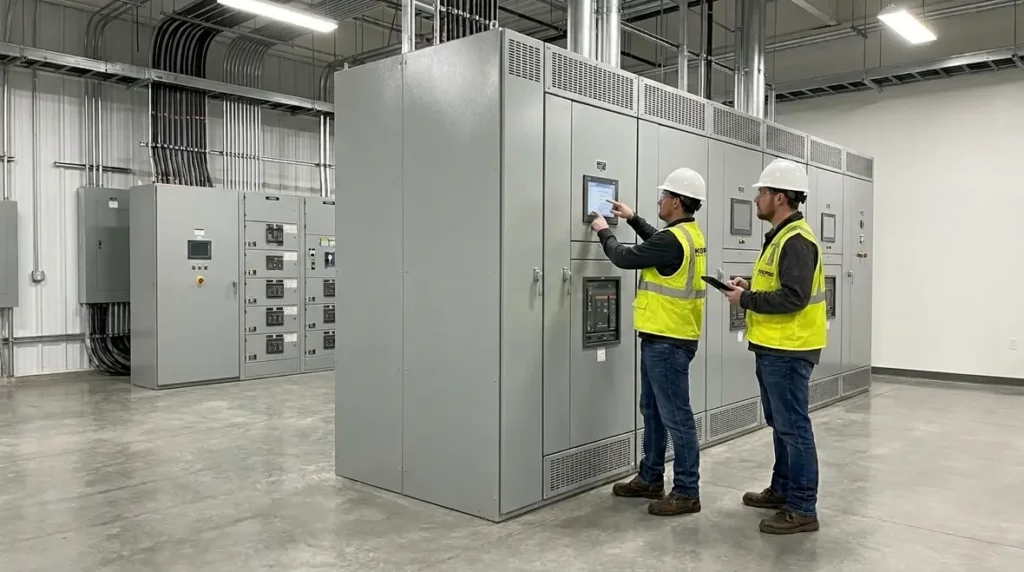
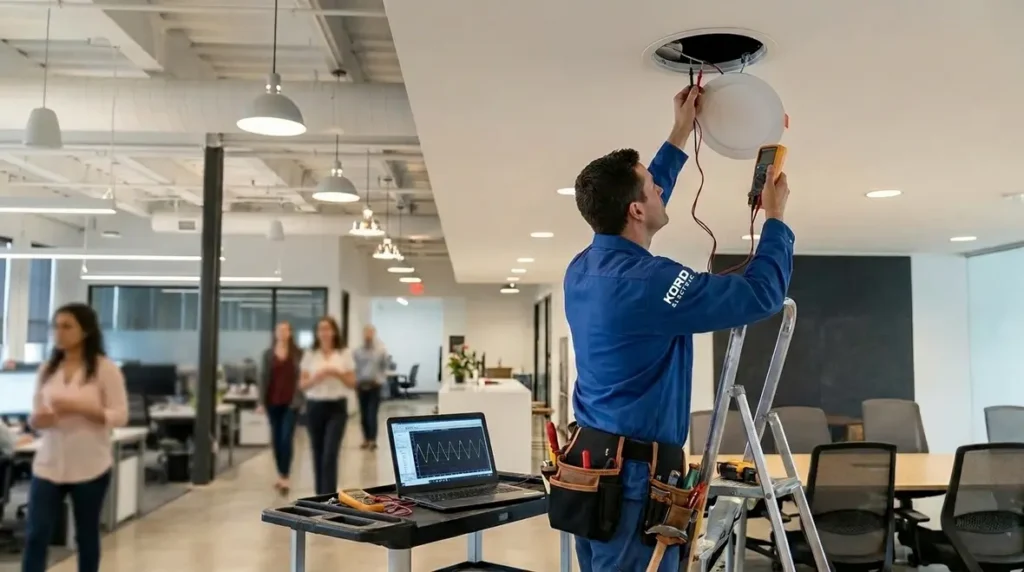
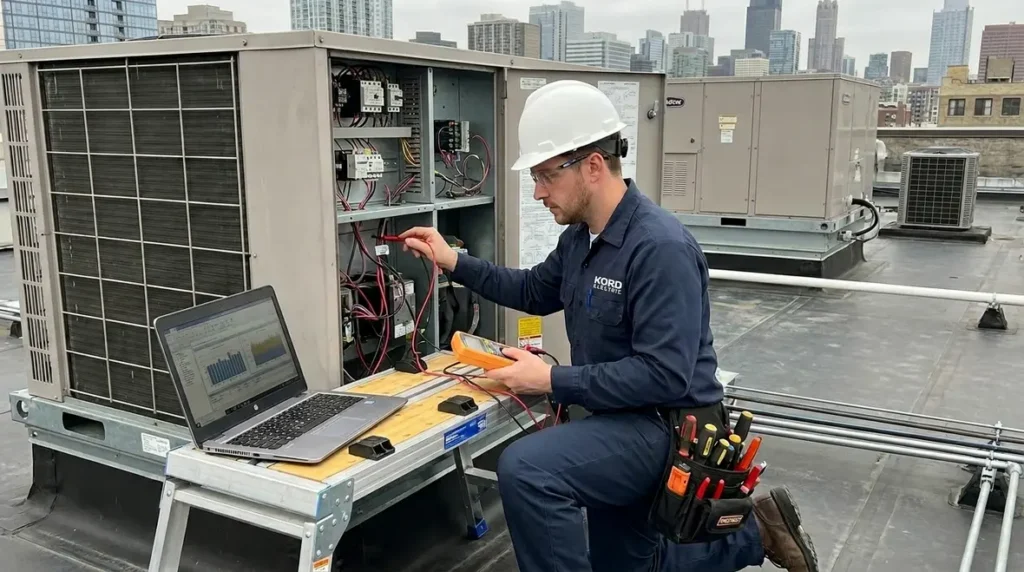
In many commercial and industrial facilities, the same electrical problems show up like clockwork. First, Kord Electric recommends factory machine electrical troubleshooting tips that start simple: verify power quality, check for loose terminations, confirm the machine control voltage, and then trace faults by symptoms, not by guesswork. We also teach technicians to document what they see and when it happens, because a problem that “comes and goes” often leaves a paper trail in logs, alarms, and motor starts. And yes, we have seen cases where someone reset a breaker so many times it felt like they were trying to reset the universe. We do not do that. Instead, we slow down, measure, and fix the root cause.
Below, Kord Electric shares common industrial machine electrical faults and how to troubleshoot them, with explanations from our expert service staff and our field-tested approach for commercial and industrial maintenance.

How Kord Electric approaches industrial electrical faults without guesswork
When a machine trips, stops, or runs poorly, our technicians treat it like a controlled investigation. First, they collect the basics: the exact fault code, the time of day, the process conditions, and whether other equipment shows the same behavior. Next, they inspect the “quiet causes” like vibration damage, heat stress, contamination on enclosures, and cable strain at moving points. Then, they use measurements to confirm what the senses already hint at.
Importantly, we do not rely on one test and hope for the best. We move step by step, so the team can separate a real electrical failure from a control or mechanical issue that only looks electrical. This method reduces repeat downtime, and it also protects the facility from costly escalation.

Fault 1: Tripped breakers and nuisance shutdowns
Nuisance trips rarely happen for no reason. Usually, a breaker trips because current exceeds the trip curve, but the real story lives underneath. Our expert service staff often finds overheating at terminations, insulation breakdown, or a load that draws extra current at startup.
To troubleshoot, we start with pattern. Does the breaker trip immediately on start, after a delay, or only during certain cycles? Then we confirm the load. If a motor starter trips the upstream device, the culprit may sit in the motor overload, contactor contacts, or a shorted cable section.
Next, we inspect the electrical path. We check torque on lugs, look for discoloration, and examine for water intrusion. After that, we test. Current signatures, megger tests on cables, and voltage drop checks help our technicians determine whether the fault belongs to the power side, the motor circuit, or the control circuit. In a lot of commercial and industrial sites, this is where the “mystery trip” turns into a clear fix.

Fault 2: Motor failure, overheating, and starting problems
Motors handle harsh reality: heat, dust, torque changes, and long duty cycles. So when a motor fails, the electrical fault might be in the motor, but it can also come from the drive, wiring, or upstream power quality. Kord Electric helps property owners and maintenance teams avoid guessing by using structured checks.
We first verify the basics: correct supply voltage, phase balance, and proper starter settings. Then we examine how the motor behaves. If it stalls, draws high current, or heats quickly, our technicians check for rotor issues, bearing drag, and airflow blockage. Even though this sounds mechanical, we connect it back to electrical symptoms, because a dragged load often makes the electrical system look guilty.
In addition, we check the starting circuit. A worn contactor can cause voltage dips at the instant the motor needs stability. Likewise, a damaged capacitor or faulty relay contacts can create repeated start failures that look like “bad luck.” Our service team measures, compares, and confirms. And yes, when the motor keeps overheating, we do not simply swap parts until the problem disappears. We identify what changed and why.

Fault 3: Blown fuses and frequent short circuits
When fuses blow, a short circuit or overload exists, but the location matters. A fuse that blows during a specific step often points to a component that fails at that moment, such as a solenoid coil, heater, motor winding, or a control transformer secondary.
To troubleshoot, Kord Electric uses isolation. We pull out circuits one by one, then test continuity and insulation to narrow the short zone. We also check for wiring damage at bends and cable entries where vibration wears insulation. Moisture and oil contamination can create leakage paths that quietly turn into failures.
Then we look at the “why.” Sometimes the short results from a component that aged out. Other times it comes from a mechanical jam that forces a load beyond normal limits. That is why our team ties electrical evidence to machine behavior. It keeps the fix from being temporary, like patching a roof while ignoring the ceiling leak.
Fault 4: Control circuit issues, sensors, and intermittent operation
Intermittent faults feel like they run on a sense of humor. One day everything works, the next day a sensor seems “possessed.” In truth, intermittent issues usually come from loose connections, failing sensors, worn relays, or control power instability. Our expert service staff handles this with patience and a plan.
First, we confirm the control voltage. Then we check terminal blocks for looseness, inspect for corrosion, and examine cable jackets for micro cracks. After that, we test signal integrity, not just presence. A sensor can report a value that “seems right” but drifts under load or during temperature changes.
We also review logic behavior. A control that changes states at the wrong moment often triggers alarms that look like electrical faults. By tracing the sequence of events, we separate a genuine electrical failure from a control logic mismatch. That is one reason our technicians emphasize documentation and proper alarm review. It turns chaotic downtime into a solvable timeline.
Fault 5: Grounding problems, shocks, and erratic readings
Grounding issues create risks and headaches. They can cause erratic readings, nuisance trips, blown surge protection, or even dangerous shock conditions. Kord Electric treats grounding as a safety priority for commercial and industrial facilities.
To troubleshoot, our technicians inspect bonding and continuity paths. We verify ground straps, check for corrosion at connection points, and confirm that equipment enclosures connect to the grounding system properly. Then we test. We look for voltage leakage, measure continuity, and evaluate whether the grounding network matches the original design.
In many major property buildings, grounding problems also show up after renovations, new equipment installs, or cable reroutes. Therefore, we check what changed. We connect the dots between construction work and electrical behavior, because the timeline matters. If grounding fails, everything else becomes unreliable, like trying to drive with a foggy windshield and a bad GPS.
Maintenance plans that reduce machine electrical downtime
Faults do not always start as major failures. Often, they begin as heat buildup, loosened connections, and component aging long before anyone sees a trip alarm. That is why Kord Electric supports commercial and industrial maintenance planning for property managers who want fewer shutdown surprises.
We reference our approach from the commercial and industrial electrical maintenance plans discussion, where our focus stays clear. Scheduled inspections, targeted testing, and documented follow-ups help teams catch problems early, before the equipment becomes a recurring headline. When maintenance follows a plan, it reduces emergency callouts and protects critical uptime.
Our expert service staff also aligns the plan with the machine’s operating profile. Then we define the checks that make sense for that environment, such as enclosure inspections, cable stress checks, breaker and contactor health reviews, and control cabinet cleaning. In other words, we do not treat every facility the same. We treat your equipment like it matters, because in a major building, it does.
Industry grounded: what to monitor before a failure hits
For factory and plant teams, monitoring prevents the “run it until it breaks” mindset. Kord Electric helps clients track electrical signals that reveal early weakness. Here, we use practical indicators that maintenance teams can understand quickly, without turning the plant into a science fair.
To keep things clear, we share common targets across power and controls. When one indicator drifts, we act sooner.
Power side
Actions we check
- Voltage drop trends
- Phase balance and harmonics signs
- Breaker and contactor performance indicators
- Cable insulation health trends
Controls and load side
Actions we check
- Control power stability
- Sensor signal consistency
- Relay contact wear indicators
- Drive or starter behavior during cycles
With this monitoring, our technicians can schedule corrective work before a fault forces a hard stop. And when downtime happens, the diagnostic path becomes shorter and calmer.
FAQ
Conclusion: let us prevent the next electrical surprise
Industrial machine electrical faults rarely announce themselves politely. Kord Electric helps commercial and industrial teams catch problems early, troubleshoot with clear measurement, and restore equipment with lasting fixes. Our expert service staff handles everything from breaker trips to motor and control failures, and we support maintenance planning that reduces emergency shutdowns. If your facility wants fewer stoppages and safer operation, reach out to Kord Electric today. We will review your situation, recommend a practical plan, and get your machines running like they mean it.
If your plant is already fighting unstable voltage, overheating panels, or factory machine electrical troubleshooting tips that never seem to stick, pairing these practices with targeted service can help. Kord Electric’s dedicated voltage fluctuation repair and electrical preventive maintenance services for commercial and industrial facilities give your team a direct path from symptoms to permanent solutions, not just temporary resets.
For facilities planning long term upgrades alongside troubleshooting, structured programs like our commercial and industrial electrical maintenance plans and related services such as voltage fluctuation repair for commercial and industrial facilities work together. They keep distribution equipment, machine power feeds, and control systems aligned with current demand, code requirements, and reliability targets.
When you are ready to move from constant firefighting to a calmer, data-driven approach, Kord Electric’s commercial and industrial service team is ready to help you design a troubleshooting playbook and a maintenance roadmap that fits your building, your production lines, and your risk tolerance.