How to Prevent Commercial Power Outages and Fire Risk
At Kord Electric, we help commercial teams prevent commercial power outages before they become a headline, a ruined shift, or an angry email thread that starts with “Per our last call.” And yes, we know power interruptions can feel like a plot twist nobody asked for. Still, we stay calm, because the best outages are the ones that never happen.
In this guide, our goal is simple. We explain how businesses in commercial and industrial buildings can spot weak points early, harden electrical systems, and keep critical loads running. Meanwhile, our technicians and expert service staff walk you through practical steps, with clear language and real-world checks. Let’s get the power story under control.
Step by Step: Where Outages Really Start
Step by step: where outages really start
Most commercial power failures do not begin at the main switch like a dramatic villain. Instead, they usually grow out of small problems inside the electrical system. For example, loose terminations can heat up under load. Then, insulation can break down, and a fault can trip protection. In other cases, water intrusion, dust, or vibration slowly degrades wiring and panels.
To prevent commercial power outages, our technicians typically start with the “before and after” story of the building. We review utility records, prior alarms, and any repeating trouble spots. Then, we map those findings to the distribution path. That means feeders, transformers, switchgear, ATS systems, and final branch circuits all get attention. After that, we test and inspect in a way that matches how your business actually operates.
In other words, we do not chase random symptoms. We track root causes. And if you think that sounds boring, that is fair. But boring is what keeps the lights on when the rest of the city is sweating.
How to Protect Commercial Power in the Long Run
How to protect commercial power in the long run
When teams discuss outage prevention, they often stop at backups like generators alone. Those help, but they do not fix the original risk. For long-term protection, we focus on reliability and fire safety together. As our team notes in our electrical fire prevention guidance for commercial buildings, electrical faults can lead to overheating and, in worst cases, fire. Therefore, system design and maintenance must treat heat and arcing as urgent hazards, not occasional annoyances.
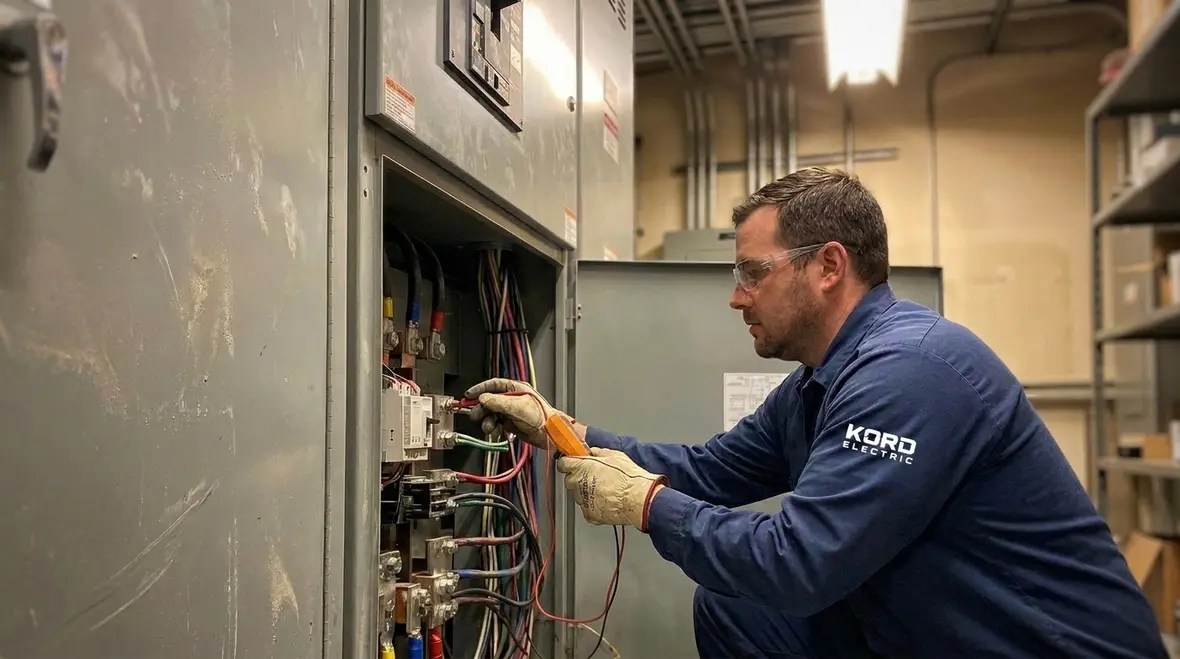
Our expert service staff often sees risk signals like frequent breaker trips, rising thermal hotspots, burning smells, or discoloration in panels and cabinets. However, many issues do not show up until load conditions change. So, we verify performance under realistic use. Then, we confirm that protective devices coordinate correctly.
To prevent commercial power outages that also reduce fire risk, we commonly address:
- Thermal aging in connections, bus bars, and terminations
- Wrong settings or outdated coordination on breakers and fuses
- Moisture and contamination that can lower insulation strength
- Panel and switchgear wear from dust, vibration, and heat cycles
Next, we help your team build a maintenance rhythm that matches the building’s workload, not a generic calendar that nobody respects.
Fire and Electrical Faults: A Safety Checklist That Works
Fire and electrical faults: a safety checklist that works
In commercial and industrial facilities, electrical fire risk and power reliability share the same enemies. Heat, arcing, and poor connections. Thus, a smart safety checklist is also an outage prevention tool.
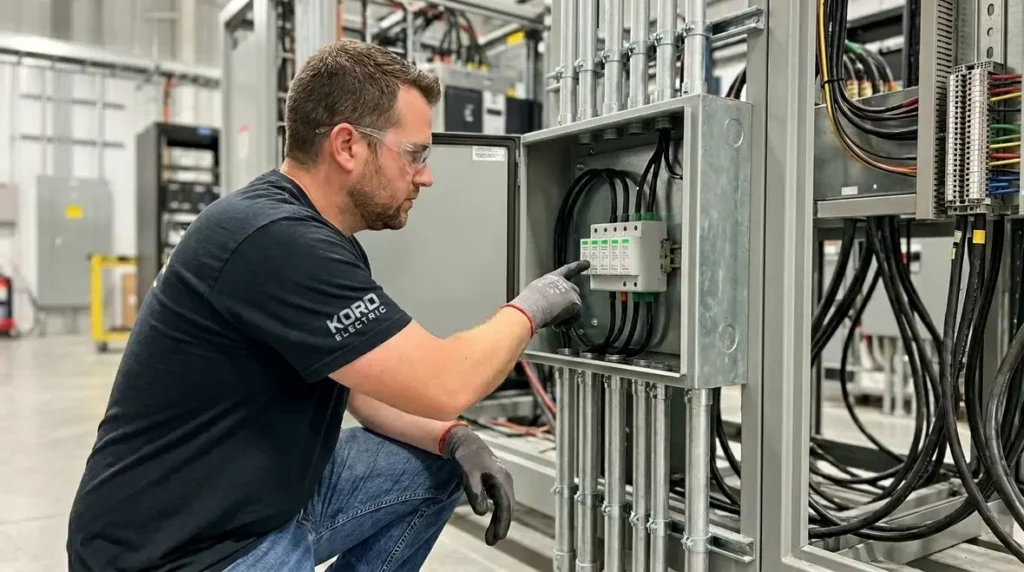
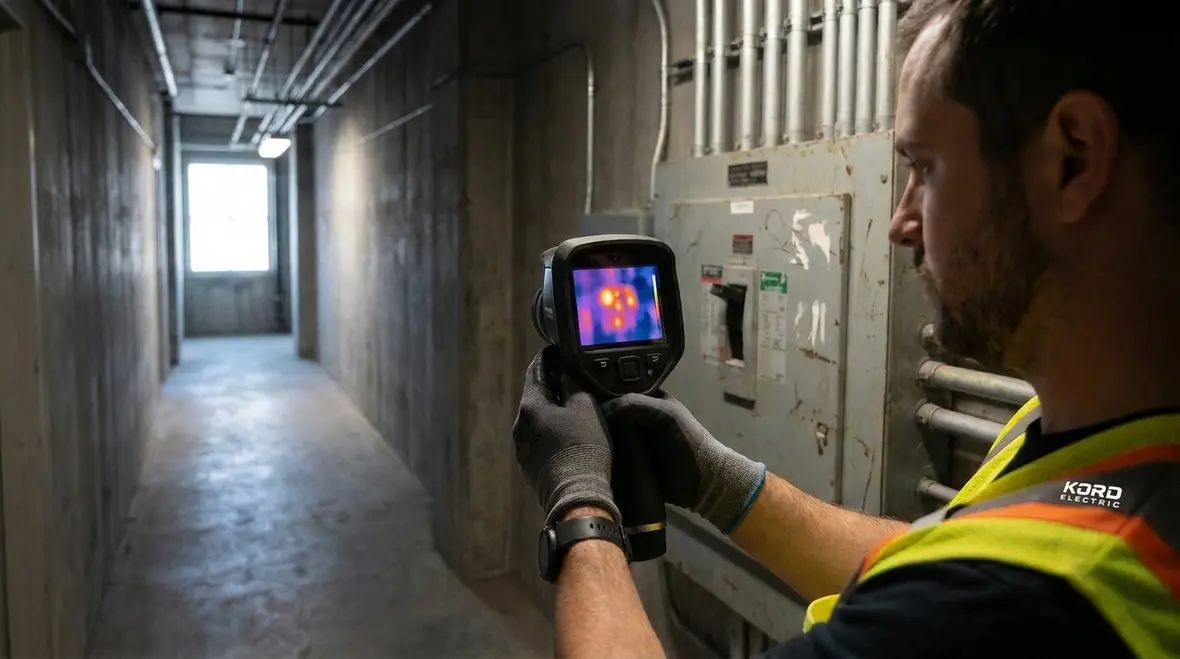
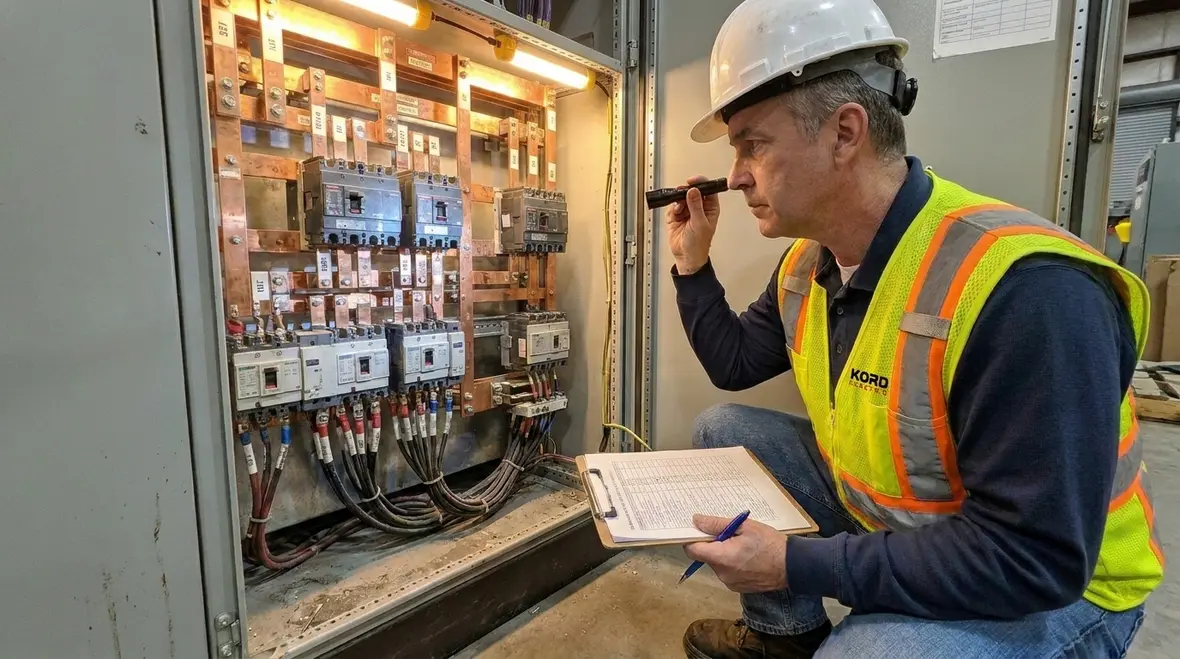
Our technicians use a clear inspection flow. First, we check accessible equipment for signs of overheating. Then, we verify torque and connection integrity where appropriate. After that, we perform targeted diagnostics to find insulation problems, damaged components, or abnormal load behavior. If your facility has critical operations, we plan this work around production windows, so downtime stays minimal.
We also train staff on what to notice, because your team sees the building every day. Even though our service staff handles the technical work, the best program includes quick reporting. For example, if someone notices a panel cover that feels unusually hot, that becomes a prompt action item, not a shrug.
To keep things practical, here is a short set of what we emphasize for commercial and industrial buildings:
- Look for discoloration, loose hardware, and melted insulation around terminations
- Listen for crackling, buzzing, or unusual breaker behavior
- Track alarms and trends from monitoring systems
- Document findings so maintenance improves over time
And yes, if you ever hear a breaker “singing” like it is auditioning for a talent show, that is not normal. It is a warning.
Reliability Planning for Commercial Loads That Cannot Pause
Reliability planning for commercial loads that cannot pause
Different buildings carry different risks. A small office can tolerate short interruptions more easily than a hospital, data center, cold storage, or industrial process line. So, we help businesses plan reliability in layers.
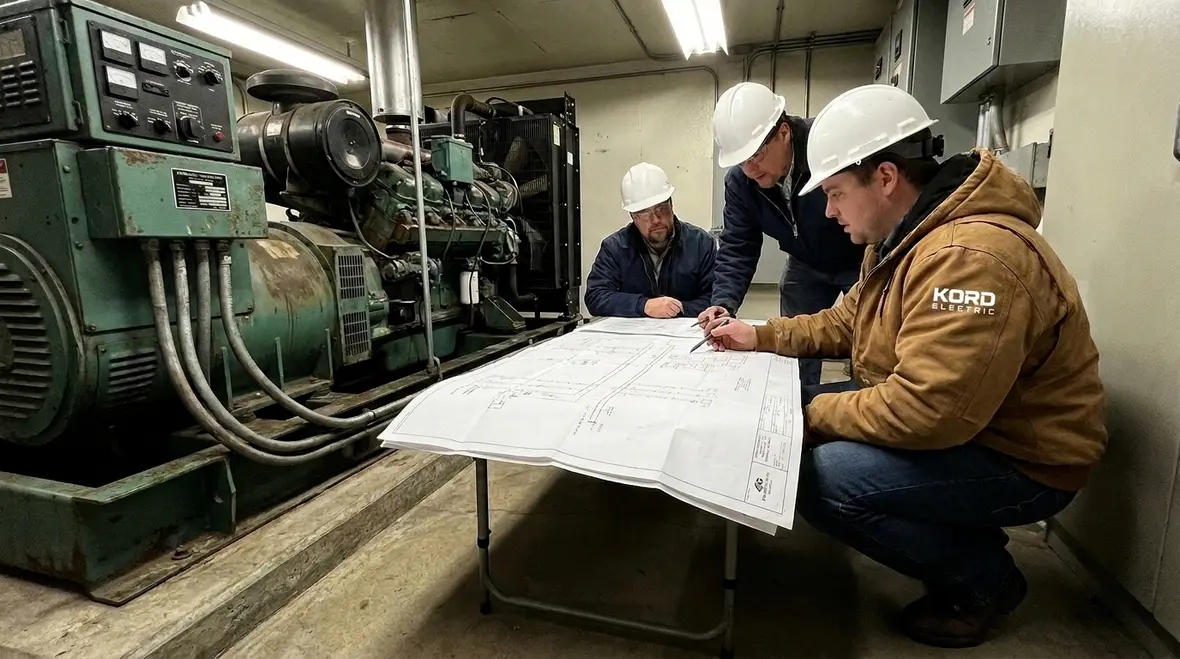
First, we confirm that the electrical distribution system supports the connected load. Then, we review how surge events, harmonics, and motor starting impact voltage and heat. After that, we validate transfer and backup paths, including generator and ATS coordination when you have them.
Many teams also assume that “the backup will start” is enough. Yet, backup systems require commissioning, correct startup timing, and proper testing. Otherwise, a system might work in theory but fail under real load. Therefore, our technicians schedule testing that reflects your actual critical circuits.
We also talk with operations leaders about what “critical” really means. A facility might label everything important, but not every load needs the same protection. When you rank loads, you can prevent commercial power outages from turning into a full shutdown.
To support this process, we often use a structured approach that aligns electrical design, monitoring, and maintenance with business priorities. If your facility is in Los Angeles County or the surrounding region, this approach pairs well with our broader commercial electrical services for Los Angeles County businesses, so your reliability plan and project work stay in sync.
Testing and Maintenance That Reduce Surprises
Testing and maintenance that reduce surprises
Maintenance can either be a quiet guardian or an expensive guess. We aim for the first option. That means we use testing and inspection methods that match the equipment and the risk level.
For commercial and industrial facilities, our expert service staff may recommend work such as:
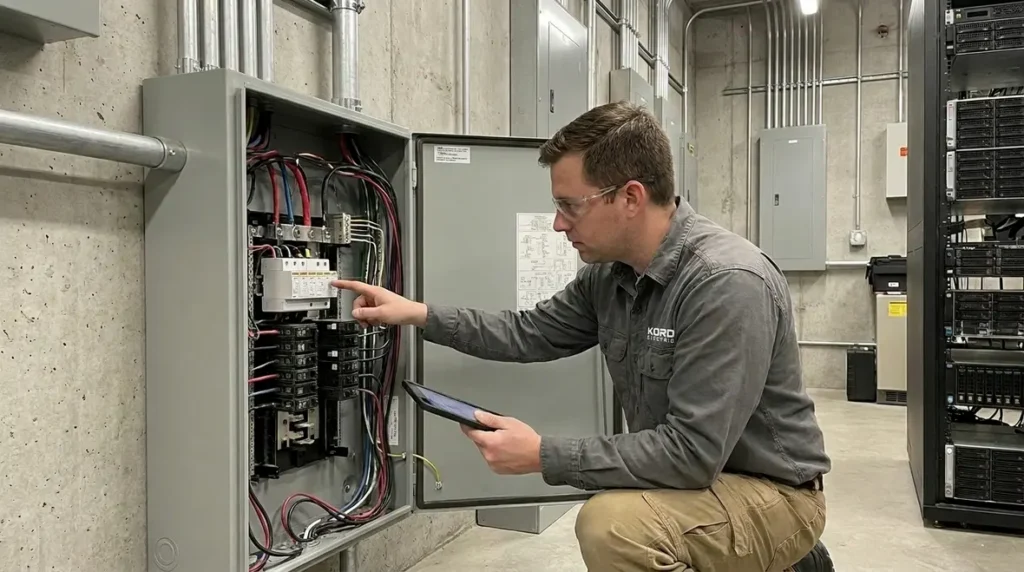
- Visual inspections for panel condition, labeling, and enclosure integrity
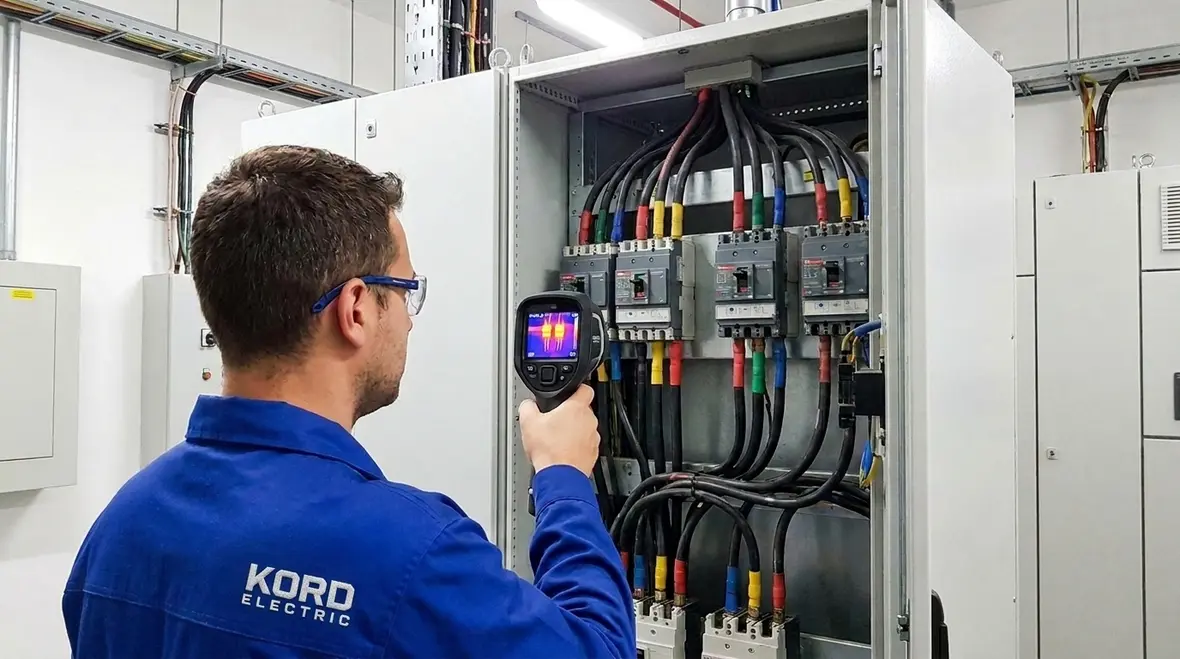
- Thermal checks to find hotspots before they become failures
- Load and protection reviews to confirm correct breaker behavior
- Coordination validation so upstream and downstream protection works as intended
- Preventive work like cleaning, tightening where allowed, and component replacement
Then, we help you create a maintenance plan that your team can follow. Most outages happen when “next time” becomes “never.” So, we document priorities and timeframes clearly, and we communicate what changes each step brings.
To show how we connect inspection to action, Kord Electric sometimes shares the same findings in two ways so leadership and technicians can act quickly:
| What we find | What we do next |
| Hotspot around a termination | Inspect, verify connection integrity, correct the issue |
| Breaker trips under load | Review load, settings, coordination, and system conditions |
| Signs of moisture intrusion | Improve sealing, clean affected areas, assess insulation health |
As a result, you stop treating outages like random luck. You treat them like predictable outcomes you can manage.
Quick Wins You Can Apply This Month
Quick wins you can apply this month
Even without major upgrades, you can reduce risk right away. These quick wins support reliability and help prevent commercial power outages triggered by avoidable issues. And because they are practical, many teams can start immediately.
First, assign a single point of contact for electrical alarms and panel issues. Then, make sure staff knows where to report heat, odors, and repeating breaker trips. Next, confirm that access to electrical rooms stays clear and that enclosures remain closed. Dust and clutter love electrical equipment. They just do not pay rent.
After that, ask for confirmation that labels, schedules, and single-line diagrams match reality. When documentation is outdated, response time slows down, and troubleshooting becomes guesswork.
Finally, schedule a focused assessment with Kord Electric. Our technicians and expert service staff can review your distribution system, identify weak points, and recommend the right sequence of actions. Not everything needs immediate replacement. Yet, many issues do need correction before they fail. You can also explore our broader planning insights in resources like our emergency power and reliability guides, which show how backup systems, protection settings, and maintenance all work together to keep facilities online instead of in crisis mode.
FAQ: Preventing Commercial Power Outages and Fire Risk
Conclusion: Let’s Harden Your Power System Before It Hardens Your Patience
Conclusion: let’s harden your power system before it hardens your patience
Power reliability does not come from hope. It comes from inspections, correct settings, and maintenance that actually matches your load and risk. If your commercial or industrial facility wants to prevent commercial power outages, Kord Electric is ready to assess your electrical distribution, identify heat and fault risks, and recommend a clear plan. Call us for a focused evaluation today, and let’s keep your business running while the rest of the grid plays catch up.
If you are planning broader upgrades or risk reduction work, pair this guidance with Kord Electric’s preventative and emergency power resources, and consider scheduling a commercial electrical safety audit or preventative maintenance walkthrough. Aligning inspections, design decisions, and service work now keeps tomorrow’s outages and fire risks from turning into another “Per our last call” conversation nobody wants to repeat.