
Industrial Electrical System Safety Audit Benefits
How an industrial electrical system safety audit protects commercial and industrial operations
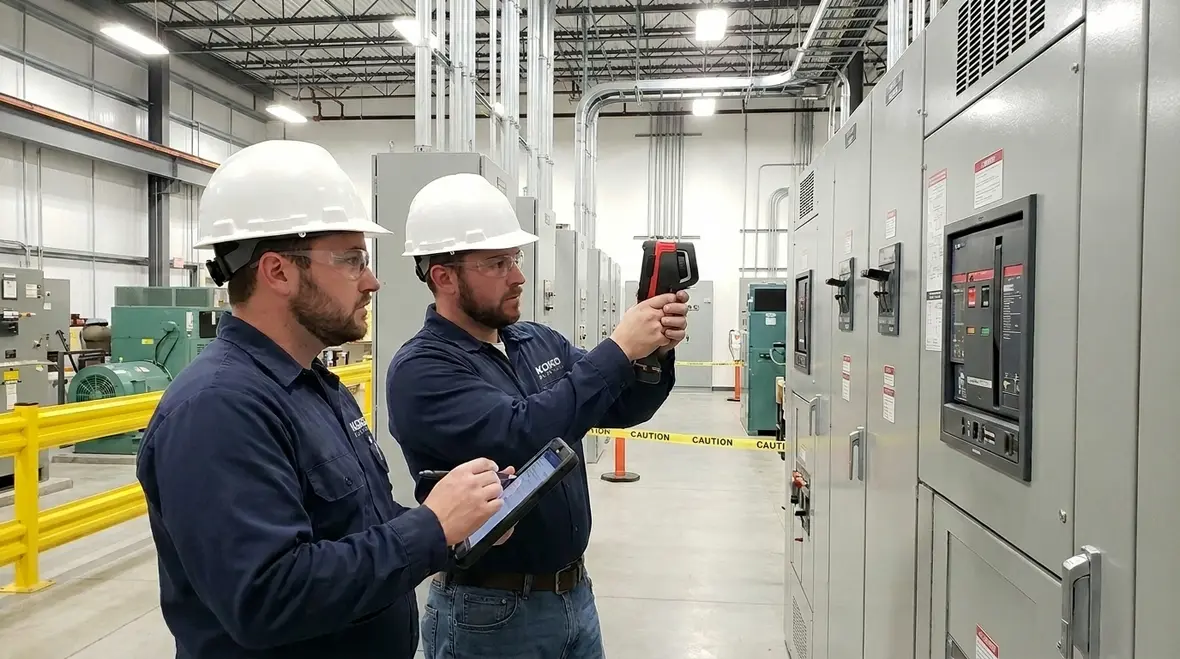
At Kord Electric, we start with an industrial electrical system safety audit to help commercial and industrial facilities reduce risk before problems grow teeth. In the first meeting, our trained technicians and expert service staff walk through the site, review equipment history, and look for hazards that often hide in plain sight. Then, we document findings and recommend fixes that fit real operations, real budgets, and real timelines.
Because let’s be honest, electrical issues do not clock out at 5 pm. They show up when nobody wants them. And when a hidden failure becomes an outage, a fire, or downtime that costs real money, the “later” plan turns into a “why didn’t we do this sooner” plan. This article explains what benefits periodic audits bring, and how we help facilities stay ahead.
For facility leaders who want to dig deeper into how unseen issues develop, we also reference the kinds of hidden risks outlined in our dedicated article on hidden electrical risks in commercial buildings, which pairs closely with our safety audit approach.
Periodic audits catch issues before they become expensive failures
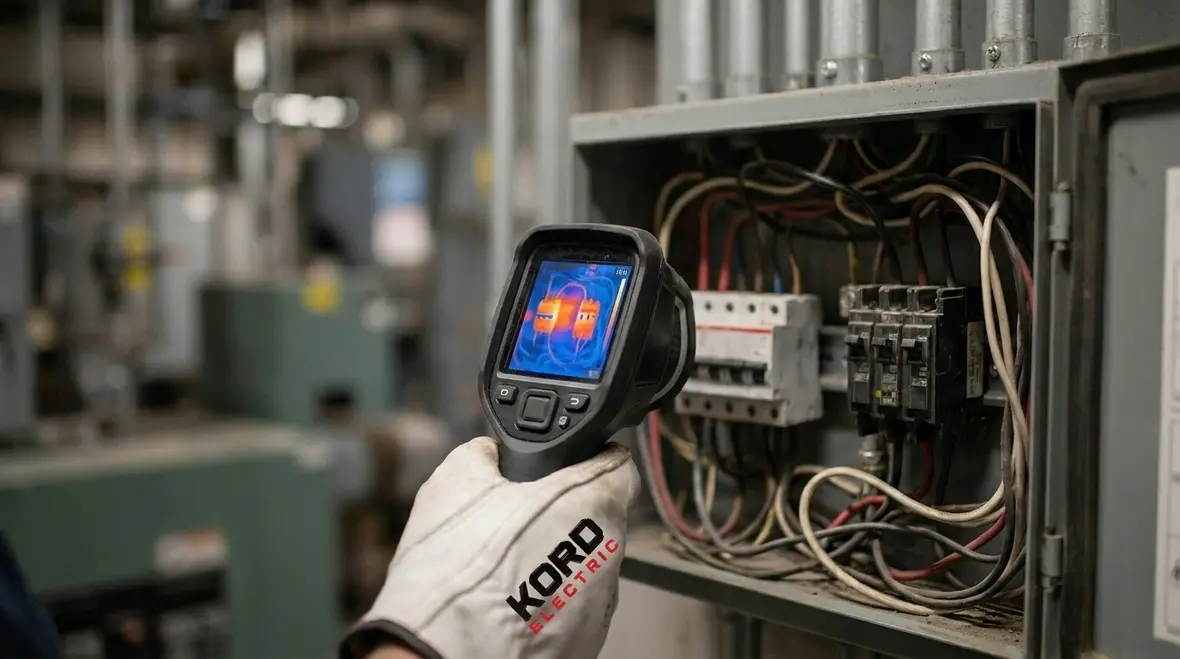
Others might call it preventive maintenance. We call it risk control with receipts. Periodic audits let us spot early warning signs across the system, from how power flows to how protective devices behave under load. As a result, teams can address defects before they turn into failures that disrupt production.
In many commercial and industrial buildings, problems start small. A loose connection produces heat. Heat degrades insulation. Insulation degradation raises resistance. Resistance increases heat again. That cycle can accelerate quietly, especially in areas that rarely get inspected. Our technicians use structured checks so they do not rely on luck or memory.
To support this, we reference the kinds of hidden electrical risks we commonly see in commercial facilities, including issues like damaged wiring, improper grounding, and aging components that appear “fine” until they do not. When we catch these early, we help others avoid the classic scenario where the lights flicker once, then decide to stop altogether.
Periodic audits also sync naturally with our ongoing electrical preventive maintenance services, turning one-time inspections into a measurable, long-term strategy for keeping critical systems healthy.
What our service team evaluates during a safety audit
Our industrial customers deserve audits that go beyond a quick visual glance. Therefore, our approach targets both safety and system performance. We evaluate how the electrical system is built, maintained, and protected so it performs as designed.
During a comprehensive industrial electrical system safety audit, our expert service staff typically examines distribution equipment, grounding and bonding, panel integrity, conductor condition, protective device settings, and signs of overheating. We also look for evidence of past modifications that may not match current standards. Then, we correlate what we find with what the system has been doing, not just what it looks like today.
Because every site runs differently, we tailor the audit scope for major property buildings and industrial work environments. For example, facilities with higher duty cycles need more attention to thermal stress and load behavior. Meanwhile, properties with frequent renovations benefit from a focus on how new work integrates into older infrastructure.

How an audit connects to real-world operating conditions
On paper, an electrical system might look straightforward. In practice, it tells a more complicated story. Loads change, schedules stretch, and production lines migrate from one area to another. That is why our team looks at how equipment is actually used, not just how it was originally specified.
We match field conditions with documentation, verify that panel schedules and labeling are accurate, and confirm that protective devices are sized and set according to real demand. If we find gaps, we highlight them clearly so facility leaders can update drawings, labeling, and procedures to match what is happening in the field. It is the difference between thinking you know how power flows and actually knowing it.
Key checklist items in an industrial electrical system safety audit
- Condition and accessibility of main service equipment and distribution panels
- Grounding and bonding integrity for equipment, enclosures, and structural steel
- Panel cleanliness, torque on terminations, and signs of overheating or corrosion
- Conductor insulation condition, routing, and support in high-traffic areas
- Protective device ratings, coordination, and settings under real load profiles
- Quality of previous modifications, tie-ins, and temporary fixes that became permanent
- Emergency and life safety circuits, including egress lighting and critical loads
How hidden electrical risks raise safety and downtime costs
Some risks do not announce themselves. Instead, they simmer. In our work, we often see conditions that align with the hidden electrical risks described in our blog, such as unnoticed damage, poor connections, and grounding weaknesses. These problems can escalate in ways that affect people and operations.
First, safety hazards increase when protective paths fail. When grounding and bonding do not meet requirements, metal enclosures can become energized under fault conditions. That risk matters most for maintenance staff, contractors, and anyone who works near electrical equipment.
Second, uptime suffers when equipment operates outside safe limits. Overheated components can lead to nuisance trips, equipment failure, and shortened lifespans. Then, you get the dreaded call at the worst time, the one that ruins schedules and forces emergency work. If electrical problems were sitcom characters, this one would always show up uninvited during the season finale.
Finally, compliance risks can grow when documentation and conditions drift over time. Periodic audits help others close the gap between “paper compliance” and “real world conditions.” They make it easier to support reporting, insurance requirements, and any follow-up work that ties into emergency electrical repair or longer-term upgrades.
From small warning signs to major disruption
Most facilities see small flags long before a major event: breakers that trip “only once in a while,” lights that dip when large motors start, panels that feel warmer than they should, or equipment that occasionally resets for no apparent reason. On their own, any one of these might be chalked up to “quirks.” Together, they spell out a pattern.
An industrial electrical system safety audit ties those clues together. Instead of reacting to individual symptoms, we look at the whole system and how each component contributes to risk. That allows us to recommend focused corrective actions instead of guessing, swapping parts, and hoping the problem goes away on its own.

Why periodic audits improve safety culture and accountability
Safety does not live only in equipment. It lives in habits. When a facility commits to routine electrical audits, the organization builds a culture of accountability. Teams start to treat electrical risks like real work, not like an occasional fire drill.
Our technicians also explain the “why” behind the findings. That matters because people manage risk better when they understand the mechanics. For example, if we identify a connection issue, we explain how resistance creates heat, and how that heat damages insulation over time. We do not just point at a defect. We help others understand the chain reaction that follows.
As a result, facility leaders can prioritize fixes with clear reasoning. Maintenance teams can plan around downtime windows. And safety managers can communicate more confidently. That is how audits become part of the operating system, not just a one time event.
Turning findings into repeatable safety practices
The real value of an audit shows up long after the technicians leave. We organize findings into practical recommendations and help teams bake those lessons into procedures and standard work. For example, if we discover recurring issues with specific panels, we might suggest adding them to a higher-frequency inspection route, adjusting lockout/tagout documentation, or pairing them with targeted training.
Over time, this cycle—inspect, explain, correct, and verify—creates a feedback loop that tightens safety culture. Audits stop feeling like “someone checking up on us” and start feeling like “someone helping us keep the place running safely.”
Reducing electrical risk in commercial and industrial facilities
To reduce risk effectively, we focus on both detection and improvement. Detection helps us find faults. Improvement helps us correct them in a way that supports long term performance, not quick fixes that “seem good” for a while.
After the audit, we provide findings in a practical format so others can act fast. Then, we recommend next steps based on urgency and impact. Some items require immediate attention for safety. Others follow a planned timeline to keep operations stable while still lowering future risk.
Because commercial and industrial environments carry higher loads and heavier usage, the margin for error shrinks. Our team plans with that reality in mind. We coordinate with facility schedules and other trades, so repairs do not create new problems.
In short, the goal of routine review is not to frighten anyone. It is to bring certainty to decisions. Like a good safety briefing, it turns vague worry into a clear plan.
For facilities building a structured program around those plans, our article on commercial and industrial electrical maintenance plans outlines how recurring service, audits, and upgrades work together to keep major properties ahead of failures.
Connecting audits with long-term reliability upgrades
For some facilities, an industrial electrical system safety audit is the first step toward larger modernization work. If an audit reveals aging infrastructure, recurring power quality problems, or panels that no longer match current operations, we help leaders prioritize upgrades such as targeted rewiring, new distribution equipment, or power quality corrections.
That roadmap might include coordination with services that focus on voltage stability, ongoing preventive maintenance, or structured repair programs. The point is not to replace everything at once. It is to use data from the audit to guide smart investments that deliver the most safety and uptime for every dollar spent.
Featured FAQ: industrial electrical system safety audit questions
Conclusion: book a safety audit with Kord Electric
Commercial and industrial facilities do not need guesswork. They need a disciplined approach. Kord Electric delivers periodic evaluations through an industrial electrical system safety audit, so your team can reduce risk, protect people, and prevent costly downtime. If others are waiting for the “big failure,” they will usually pay for it. Let us help you act sooner with clear findings, practical recommendations, and technicians who explain every step. Contact Kord Electric to schedule your audit today.
When you are ready to turn insights into action, our electrical preventive maintenance services provide a structured path for implementing audit recommendations, planning repairs, and protecting critical systems across your commercial or industrial facility.


