Emergency Power Distribution Continuity Planning
Emergency power distribution continuity planning for C and I facilities
When a critical grid outage hits, a business cannot afford guesswork. That is why Kord Electric builds emergency power distribution continuity planning into how commercial and industrial facilities keep operating. In the first moments, people want two things: calm decisions and reliable power. We help others plan for both, from risk review to switchgear readiness, and we do it with a method our team can defend at 2 a.m. when the lights go out and every alarm decides to sing. Also, yes, we hear the “just run a generator” line often. It sounds simple, but continuity planning is what keeps operations steady instead of turning into a very expensive group project.
Know what must stay on and what can wait
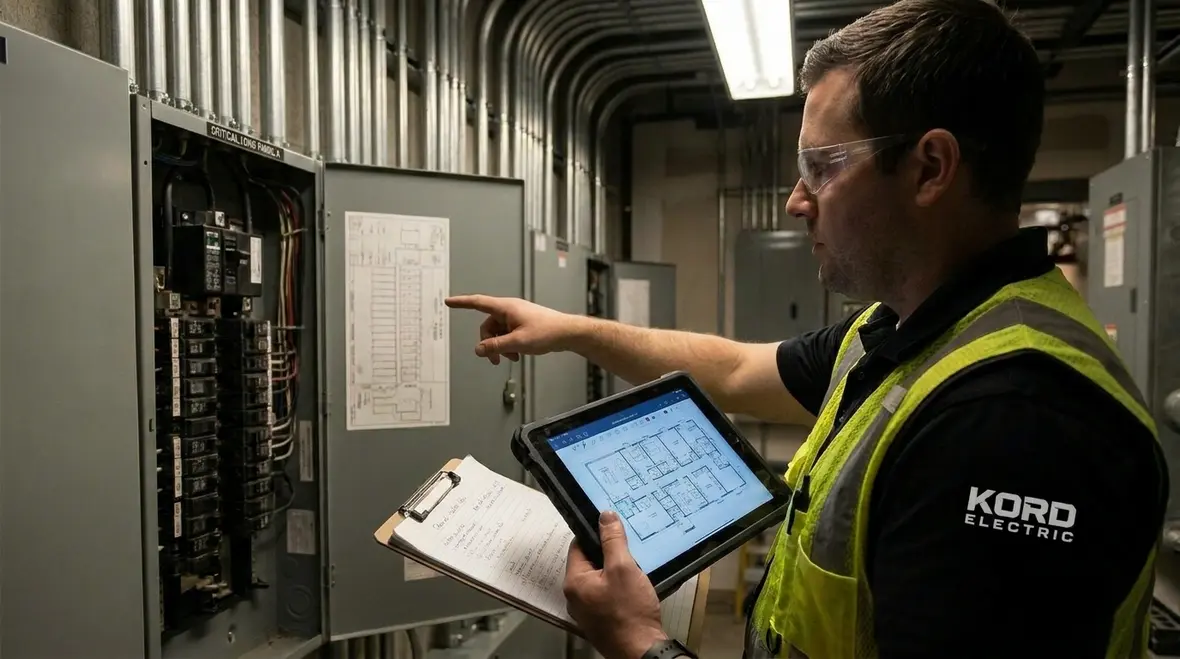
Before anyone touches a panel, our technicians start by mapping what truly needs power. Then they rank loads by safety, production, and life-safety requirements. This step matters because emergency distribution systems do not exist to power everything. They exist to power what keeps people safe and keeps the facility from failing.
Next, our expert service staff works with facility leaders to list critical loads such as fire alarm power, egress lighting, process equipment, refrigeration for product safety, communications, and control systems. After that, they confirm runtime needs so the plan matches real conditions, not best case stories.
Finally, we document operating rules. For example, nonessential circuits may shed during the first minutes. That creates room for critical equipment to start without voltage dips. In other words, the plan should tell you what happens when the outage begins, not after you start guessing.
Design the distribution path so it stays stable
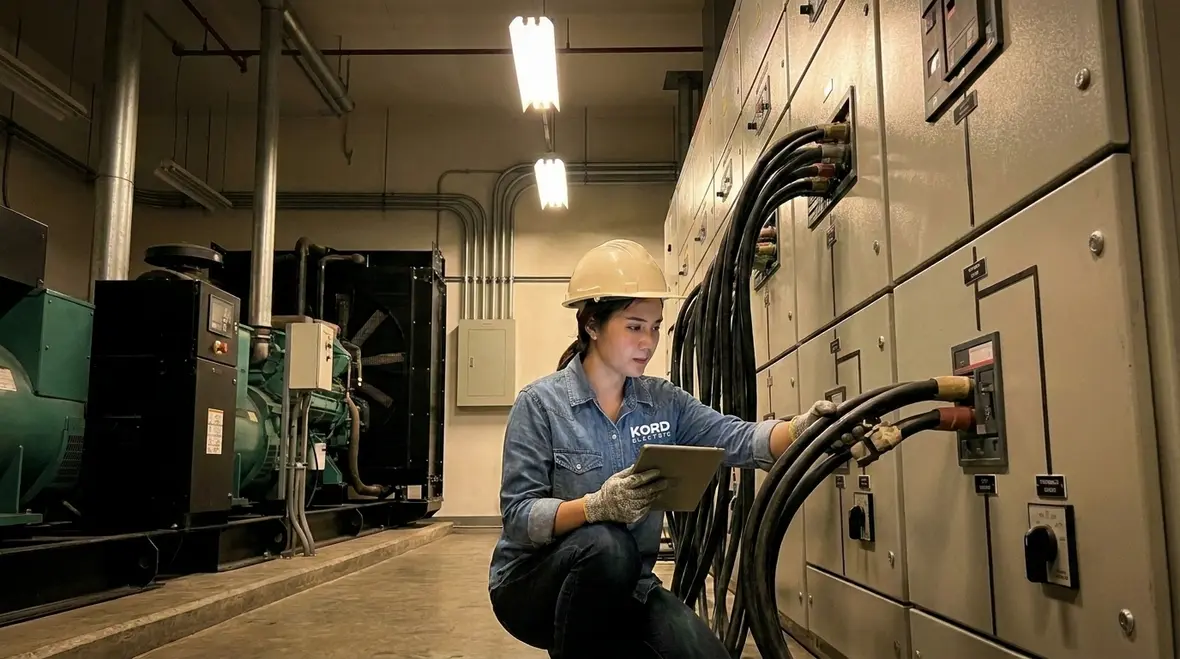
Stability comes from good design and disciplined operation. During outage conditions, the distribution path faces higher stress: starting motors, transfer dynamics, and load step changes. Therefore, our team examines how power flows from the emergency source through transfer equipment into switchboards and distribution panels.
We focus on selectivity and coordination so the right protection device clears when a fault happens. If selectivity fails, a single short can knock out more than one area. That is how continuity plans turn into power outages with extra steps.
In addition, our technicians look at voltage regulation, harmonic load impacts, and the starting requirements of motors and drives. Then they validate that conductor sizing and panel ratings support the emergency loads. This is where many plans get thin. They talk about backup power but do not fully check how power behaves under real load.
And because we serve commercial and industrial facilities, we also account for multi-tenant and phased operations where loads shift across buildings and floors. A modern facility does not always have one steady demand. So the emergency strategy must handle change without drama.
Transfer switches, switchgear, and controls must be ready

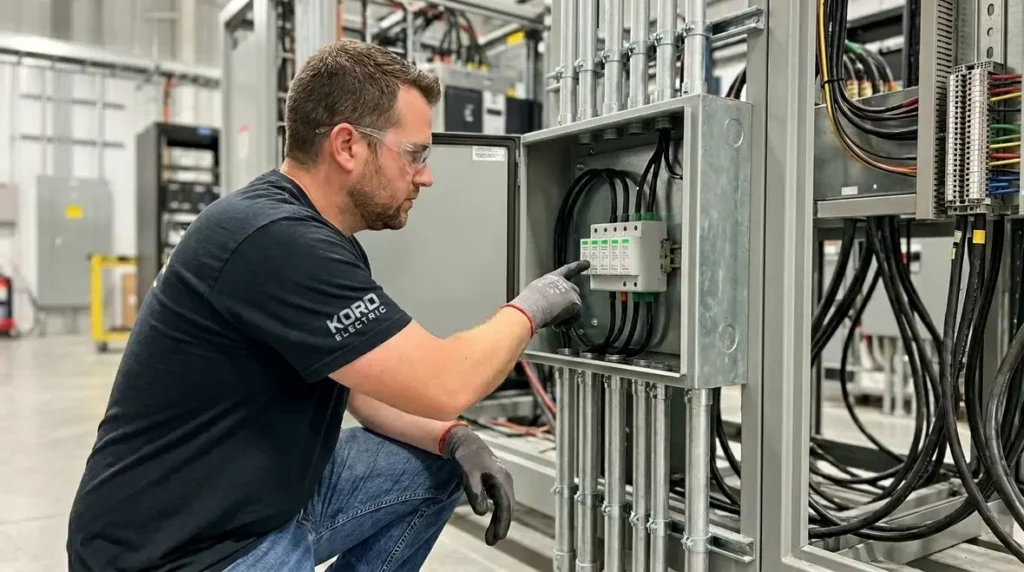
Emergency power continuity lives or dies with transfer equipment and the switchgear that distributes emergency circuits. Our technicians do not treat these systems like set and forget devices. They inspect, test, and maintain them so they can perform on demand.
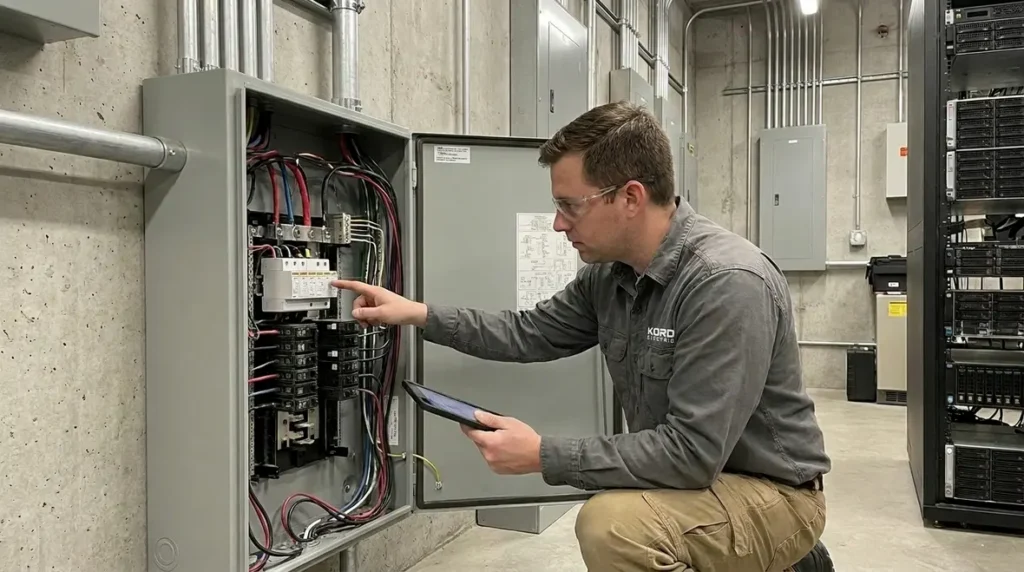
In our field work, we reference the same maintenance discipline described in our article on NFPA 70B electrical panels and switchgear maintenance. That guidance supports a practical approach: we follow a plan for inspections, cleaning, and verification of protective and control components. Then we test operational function so transfer action and breaker operation happen the way the design intends.
For example, we verify control power reliability, since a transfer system that loses control power is just decorative hardware. We also check breaker mechanisms, contact conditions, and interlocks. Those interlocks prevent unsafe backfeed and help keep operations safe when systems transition between normal and emergency modes.
To keep things clear, our team explains what they find in plain terms. Facility managers do not need a textbook, they need a decision. So we tell them what is acting up, what is degrading, and what needs attention now versus later.
Maintenance rhythm that supports continuity planning
Maintenance needs a rhythm, not a panic button. That is why Kord Electric develops service schedules aligned with the facility’s risk and operating profile. We also coordinate with downtime windows when owners can safely take sections of equipment offline for testing.
Our technicians often start with a baseline: last service records, alarms history, and inspection findings. Then we build a cycle that includes visual inspection, torque checks where needed, functional testing, and documentation updates. When maintenance becomes consistent, failures become predictable, and unpredictability is the enemy of continuity.
Next, we plan for corrective work. If a component shows wear, we address it before it becomes a performance problem during an outage. Because after the lights go out, parts do not magically recover. They only get more expensive.
To support commercial and industrial operations, we also consider how maintenance affects production. Our expert service staff communicates in advance, tracks test results, and keeps leadership informed so the plan does not interrupt critical operations more than necessary.
Testing and drills that prove the plan works
A good strategy is not proven until it gets tested under controlled conditions. Therefore, we help customers plan outage simulations that mirror realistic events. These drills confirm transfer timing, breaker operation, control logic, and load pickup behavior.
We also verify sequences with stakeholders. For instance, emergency circuits should energize in the right order so sensitive systems start safely. If the sequence is wrong, the facility may lose critical functions even though the emergency source was available. That is the kind of failure continuity planning tries to prevent.
During testing, our technicians observe stability, measure response, and check any protective device actions. Then they document what worked and what did not, so the next iteration improves. And yes, we keep it practical. We want outcomes that help the next outage go smoother, not a binder full of “interesting” data that nobody uses.
To keep clarity high, we sometimes use a structured review format that fits how many facilities think, like this dual view once during planning and once at the end of a service cycle.
Continuity check view
Technical verification: transfer function, breaker operation, protective coordination, control logic, voltage and load pickup response.
Operational readiness: defined start order for critical loads, staff roles, communication path, and documentation that leaders can use fast.
Common failure points and how to fix them
Every facility has weak spots. In emergency distribution systems, the failures often share a theme: small issues build until the system performs poorly when it matters most. One frequent example is degraded controls and signaling. Another is missed maintenance on switching components. Also, protective coordination gaps can cause the wrong breaker to trip, cutting power to equipment that should have stayed alive.
Another common issue involves load assumptions. Facilities sometimes plan for peak loads incorrectly or forget that processes change over time. Therefore, Kord Electric reviews critical load lists during service visits, especially after equipment upgrades, motor additions, or control system revisions.
We also address spares and readiness. If equipment fails, response time matters. For major property buildings and industrial sites, having a plan for parts, troubleshooting steps, and vendor coordination reduces downtime. That is not “extra.” It is continuity.
Finally, we improve communication so the plan is usable during an incident. Our expert service staff explains system behavior to those responsible for decisions, so when alarms come in, people understand the meaning and the next action. This cuts confusion and keeps response focused.
FAQ: Emergency power strategy for major buildings
Conclusion and call to action
Emergency power strategy succeeds when planning stays active, not when it sits on a shelf. Kord Electric helps commercial and industrial facilities build emergency power distribution continuity planning that holds up during real outages through design review, disciplined maintenance, and testing that proves performance. If you want your switchgear, transfer systems, and critical loads to behave the way your operations need, our expert service staff is ready. Contact Kord Electric today to schedule an assessment and build a continuity plan you can trust.
For facilities that want continuity planning tied directly to service support, explore how our broader electrical maintenance and outage response capabilities reinforce the same goals. From emergency power failures to proactive emergency power failures planning in commercial buildings, we help you move from reaction to readiness.
If your site is ready to translate strategy into field work, our commercial and industrial electrical services team can support inspections, testing, and corrective projects that keep emergency power paths ready for the next event, not just the next checklist.
To connect planning with day-to-day operations, our electrical service offerings help you align emergency power distribution continuity planning with regular maintenance, upgrades, and documentation. You can learn more about how we support commercial and industrial facilities on our electrical maintenance inspection services page and see how those services fit into your long-term reliability strategy.