Industrial Electrical Troubleshooting Guide for Facilities
When a piece of industrial gear acts up, the downtime bill shows up fast and nobody likes surprise invoices. In our industrial electrical troubleshooting guide, we lay out a calm, step by step way to track faults before they spread. We start with what operators can confirm, then we validate with safe tests, and finally we isolate the root cause instead of guessing. In other words, we help teams stop chasing ghosts through panels.
At Kord Electric, our expert service staff and technicians use advanced troubleshooting techniques built for commercial and industrial facilities and major property buildings. And yes, we still laugh at bad habits like “replacing the breaker first.” That method is popular the way “throwing spaghetti at the wall” is popular. Sometimes it sticks. Most times, it just makes more mess.
1) The industrial electrical troubleshooting guide approach that prevents costly guesswork
In most plant and building systems, electrical problems rarely start as a single failure. They evolve. First, we collect symptoms the right way. Then next, we align those symptoms with the system design. After that, we choose tests that answer a specific question rather than burning time.
To keep the work clean and defensible, our team documents each step. Therefore, when a maintenance lead asks why a motor, a starter, or a feeder was tested in a certain order, we can show the logic. Additionally, this documentation helps reduce repeat callouts because the next team has a real trail, not a vague note that says “check everything.”
2) How we read symptoms like a signal, not a story
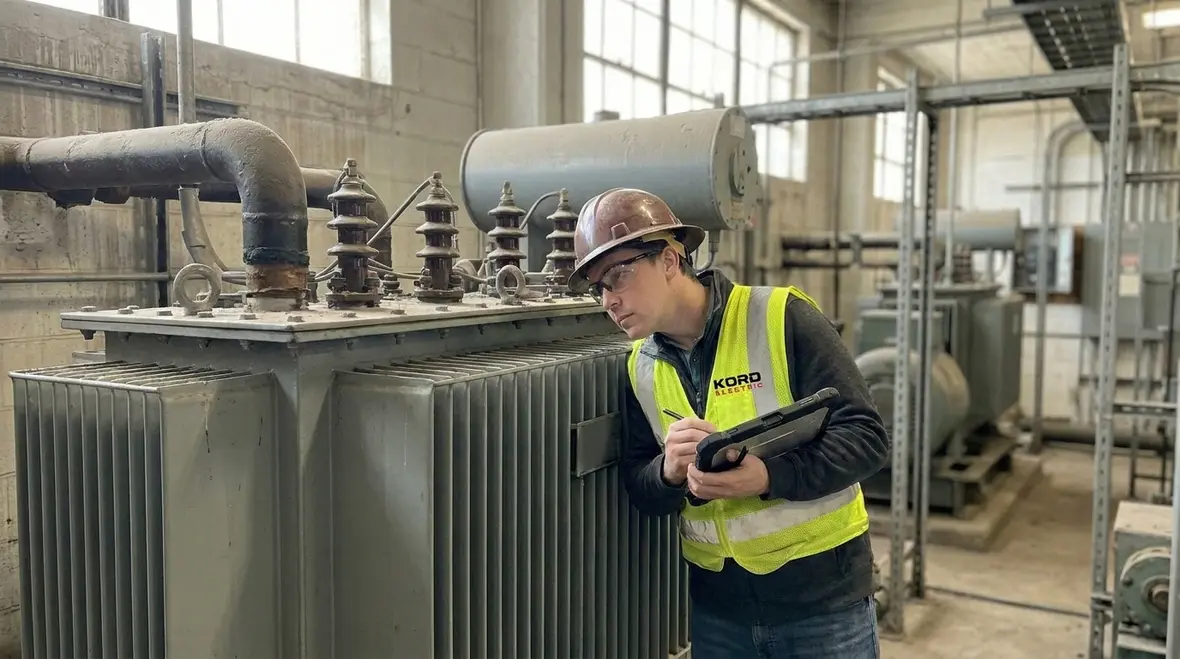
Advanced troubleshooting starts with observation, but it cannot stay at vibes. Our technicians treat symptoms as data. For example, a transformer that hums loudly and warms quickly does not act like a transformer that only sounds slightly different. Similarly, a feeder that trips only at peak demand behaves different from one that trips at random times.
We also listen to the timing. When did it start, and what changed right before it? Was there a new load, a UPS transfer, a lighting retrofit, a pump swap, or a schedule shift? In commercial and industrial facilities, changes often hide the trigger.
Then we map symptoms to likely causes using simple patterns. So, when voltage dips and equipment stalls, we consider conductors, connections, protection settings, and upstream loading. And when a control circuit behaves erratically, we shift focus toward reference voltages, contact health, and noise sensitivity. In short, we do not just fix. We interpret.
3) Industrial electrical troubleshooting techniques for isolation and verification
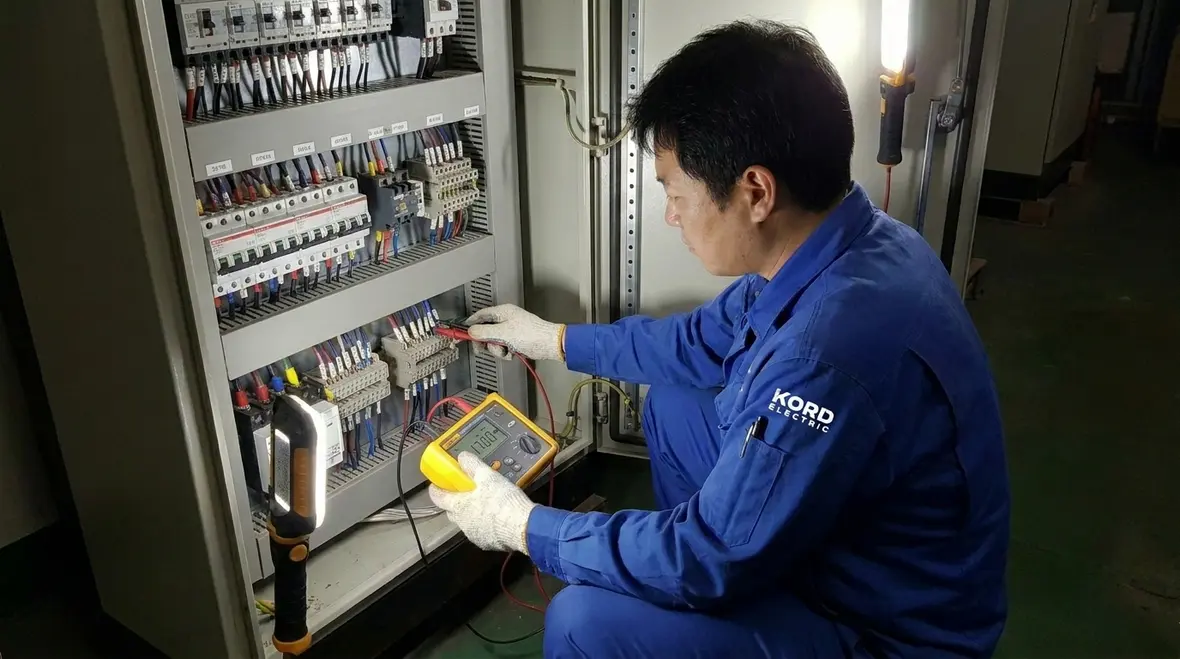
Once we narrow the field, we use techniques that isolate the fault with less risk. Our technicians work in a sequence that protects people and equipment.
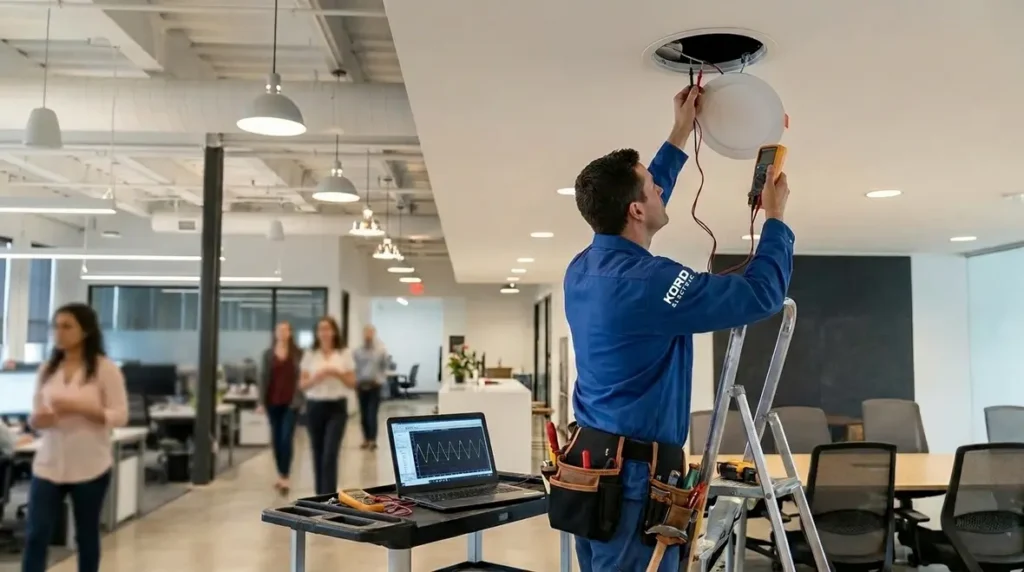
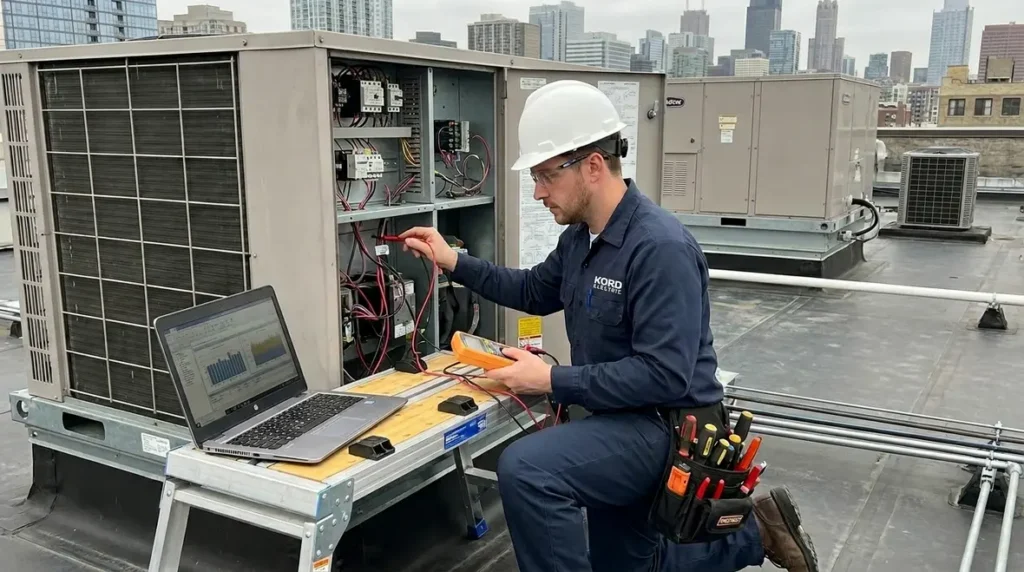
We verify the basics first. That means checking control power presence, reading phase balance, confirming that protective devices match the intended scheme, and inspecting for loose terminations or signs of heat. Then we use targeted tests that confirm electrical behavior.
Common advanced methods we rely on include:
- Load and voltage drop checks to confirm conductor health under real operating conditions
- Insulation resistance testing to reveal insulation breakdown trends before a catastrophic failure
- Continuity and contact resistance verification to detect worn contacts and poor crimps
- Sequence and phase checks to rule out wiring and sensing mismatches
- Thermal inspection to find abnormal heating at terminations, breakers, and bus connections
However, the key is not the tool. The key is how we use it. For that reason, we interpret results against the system’s ratings and history. Meanwhile, we consider how the fault might be intermittent, because intermittent issues love to show up right after you close the panel. That is their favorite joke.
Connecting troubleshooting with preventive maintenance
Smart facilities turn every troubleshooting event into a small piece of preventive maintenance. When our technicians document abnormal connections, borderline insulation readings, or protection settings that live too close to their limits, those details feed into future service plans. Over time, this approach turns your industrial electrical troubleshooting guide from a one time rescue into a playbook for stronger reliability.
For facilities that want fewer surprises, pairing advanced fault finding with a structured electrical preventive maintenance program keeps equipment healthier for longer and makes each future issue easier to diagnose.
4) Advanced diagnostics for motors, drives, and control circuits

In many major property buildings and industrial sites, motors, variable frequency drives, and control systems carry a big share of the workload. When those systems fail, they rarely fail politely.
We start with the control path. Our expert service staff checks command signals, interlocks, and feedback circuits. Next, we look at power delivery to the drive or starter. Then we verify sensor feedback, since control errors often masquerade as electrical faults.
For motor and drive issues, we also separate “electrical failure” from “process failure.” After all, a motor that trips on overload could be due to mechanical binding, not just electrical supply quality. So, we coordinate with operations to confirm load conditions and operating modes. That prevents the classic trap: replacing parts while the root problem stays in the line like an extra guest at the party that nobody invited.
When we suspect a drive, we inspect input components, rectifier behavior, cooling performance, and protective thresholds. And when we suspect a motor, we consider insulation condition, connection points, and signs of overheating. Finally, we confirm settings and wiring paths before we reset and return equipment to service.
Linking drives and power quality in real facilities
Drives, motors, and control systems live downstream of the larger power distribution story. If voltage stability and protection coordination are off, even healthy equipment can behave badly. That is why our technicians often pair detailed drive diagnostics with a broader look at feeders, panels, and grounding practices, especially in facilities that already see flickering lights or sensitive electronics resetting without warning.
5) Power quality and protection coordination in real systems

Some failures start long before the breaker trips. They show up as subtle power quality changes, nuisance trips, or aging protection components. Kord Electric focuses on practical power quality and protection coordination for the facilities that run every day without drama.
We check for patterns in the event history. For example, a protective device that trips more often during certain load cycles may point to time overcurrent coordination issues, inrush effects, or upstream voltage instability. Likewise, repeated ground fault events can reveal insulation degradation, moisture intrusion, or wiring issues.
We also review settings carefully. Because a breaker that is slightly off can cause a chain reaction. It might trip too early, or it might trip too late, and either outcome adds risk. We verify that protection devices match the equipment they protect, including motor protection and feeder characteristics.
Additionally, we evaluate grounding and bonding. Then we check for loose connections and abnormal current paths that can create heat, noise, or voltage drops. In commercial and industrial settings, power quality problems can affect lighting, HVAC controls, automation systems, and sensitive electronics. Therefore, our goal stays consistent: stable power, correct protection, and fewer interruptions.
Turning power quality findings into long term upgrades
Once we see how a system behaves under real load, we can recommend targeted upgrades instead of blanket replacements. That might include adjusted protection curves, bus and feeder remediation, updated surge protection, or dedicated investigations into chronic voltage fluctuations in commercial and industrial areas of the facility. The result is a power system that supports operations instead of arguing with them.
6) Safety, documentation, and the calm confidence teams need
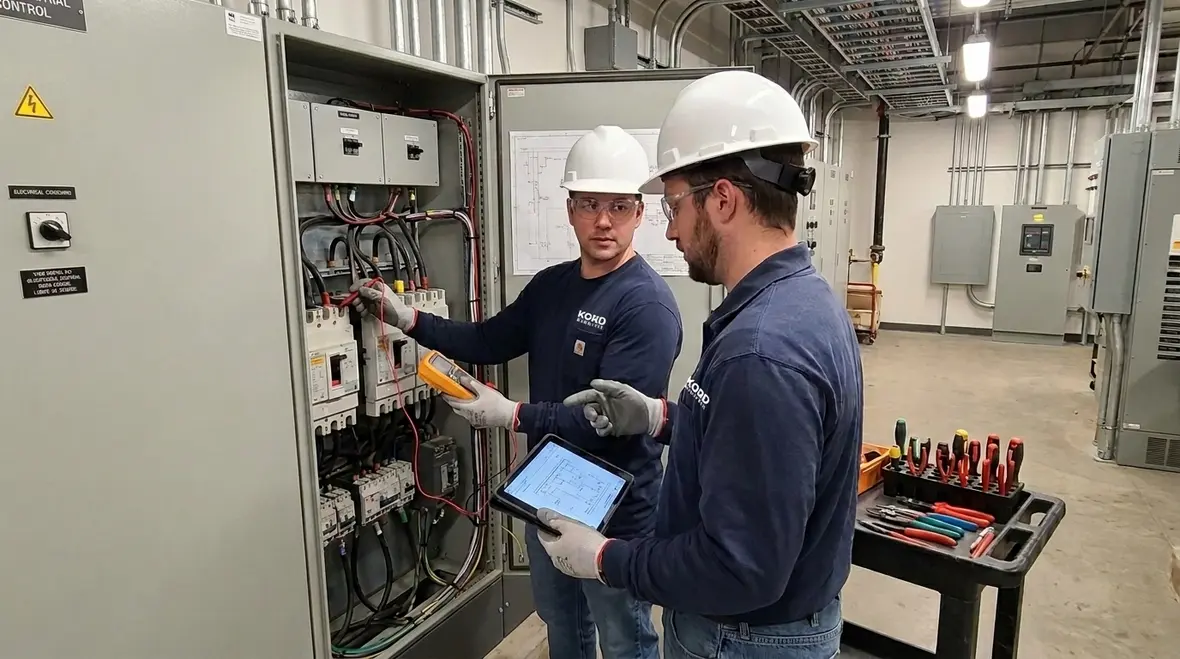
Advanced troubleshooting must stay safe and repeatable. Our technicians follow lockout and verify procedures, and they keep test practices aligned with electrical standards. Even when the problem looks obvious, we confirm because the panel does not care how confident we feel.
We also document. First, we log what we observe. Next, we record test values, settings, and condition findings. Finally, we write a clear summary for operations and facilities management, especially for major property buildings where multiple teams share responsibility.
Our expert service staff explains what we find and what we recommend. So, when we advise replacement or recalibration, the facility manager understands the “why,” not just the “what.” That reduces pushback and speeds up approval, which is the only kind of speed that matters when equipment is down.
Why an industrial electrical troubleshooting guide belongs in your playbook
Facilities that rely on a structured industrial electrical troubleshooting guide see fewer repeated faults and less finger pointing when something fails. Everyone knows the sequence: observe, test safely, document, verify, and communicate. That shared playbook keeps operations, maintenance, and management aligned when the pressure is highest.
7) What advanced troubleshooting looks like when we arrive on site
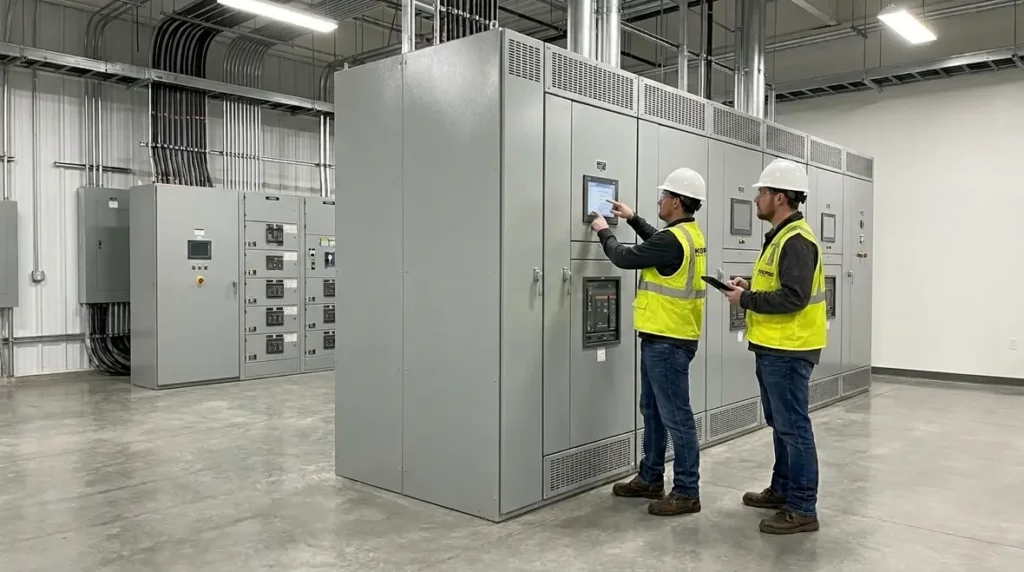
When Kord Electric gets called to a commercial or industrial facility, we move fast but not reckless. First we collect the problem statement and any event logs. Then we walk the system boundaries and identify the likely failure zones. After that, we isolate the fault with a method that fits the equipment and operating constraints.
During the troubleshooting window, we keep communication active. Meanwhile, we coordinate with facility staff so shutdowns happen when they should, not when someone “feels like it.” And after all tests confirm the cause, we repair or replace parts with attention to connections, torque practices, and correct configuration.
We also validate return to service. That includes checks for stability, confirmation that protective devices behave as expected, and monitoring for repeat symptoms. In short, we do not just restore power. We restore confidence.
Connecting troubleshooting with broader electrical services
Because our technicians support a wide range of commercial and industrial projects, from lighting installation code compliance to data center power, they carry that same disciplined mindset into every troubleshooting call. If your fault points toward lighting layout, landscape circuits, kitchen upgrades, or future solar integration, we can connect today’s issue with tomorrow’s improvements instead of treating each problem in isolation.
For facilities that want fewer late night calls and more predictable performance, pairing this industrial electrical troubleshooting guide approach with broader electrical preventive maintenance, lighting optimization, and voltage stability services turns the entire site into a calmer place to work.
FAQ
Conclusion
If your equipment is acting strange, you need more than a quick reset and a prayer. Kord Electric sends technicians who use advanced troubleshooting methods, careful isolation, and clear documentation for commercial and industrial facilities and major property buildings. We explain what we find in plain language, because smart facilities deserve smart answers. If you want to stop repeat failures and reduce downtime, reach out to us today. We will schedule a site assessment and build a practical plan to get your system stable again, fast.
For facilities that are ready to move from emergency fixes to long term stability, this industrial electrical troubleshooting guide is the place to start. From voltage fluctuation investigations to structured electrical preventive maintenance and code aligned lighting projects, our team helps commercial and industrial properties turn electrical systems into a quiet asset instead of a constant concern.
If your facility is already seeing symptoms like nuisance breaker trips, unstable voltage, or aging panels, scheduling a focused electrical assessment now can prevent the next outage from turning into a long, expensive downtime story.
Explore how our broader electrical preventive maintenance and troubleshooting services support commercial and industrial facilities that cannot afford surprises. When you are ready, our team can map out a staged path from today’s urgent issues to a cleaner, more reliable power system.
To see how strategic maintenance supports reliable troubleshooting outcomes, learn more about our preventive maintenance programs for commercial and industrial facilities at Kord Electric’s Electrical Preventive Maintenance services. When troubleshooting and preventive work move in step, facilities gain fewer disruptions and a clearer understanding of their risks.
If your facility is wrestling with unstable voltage, nuisance trips, or sensitive electronics that never seem happy with the power they receive, explore our focused support for Voltage Fluctuations in Commercial & Industrial Facilities. Combining that service with the methods in this industrial electrical troubleshooting guide gives your team a stronger, calmer electrical backbone.