Industrial Emergency Power Plans for Critical Loads
Industrial emergency power planning that keeps critical loads alive
At Kord Electric, we build robust emergency power strategies for industrial facilities and major property buildings, and we do it with a calm, practical mindset. Our approach begins with industrial emergency power plans that match your real risks, your real loads, and your real operating timeline. Then, we tighten the system with clear switching steps, resilient power paths, and service methods that do not depend on luck. In other words, we design so the lights do not panic when the grid does. And if you think that is dramatic, welcome to facilities engineering where “it probably won’t fail” is not a plan, it is a wish.
In this article, our expert service staff explains how industrial sites should prepare, test, and maintain emergency power systems so they perform when conditions get messy. We also reference how we think about switchgear maintenance, because the emergency system is only as reliable as the equipment that feeds it. For a deeper look at that discipline, you can explore our NFPA 70B electrical panels and switchgear maintenance guidance, which pairs closely with everything we cover here.
Why industrial emergency power plans fail when people skip the hard parts
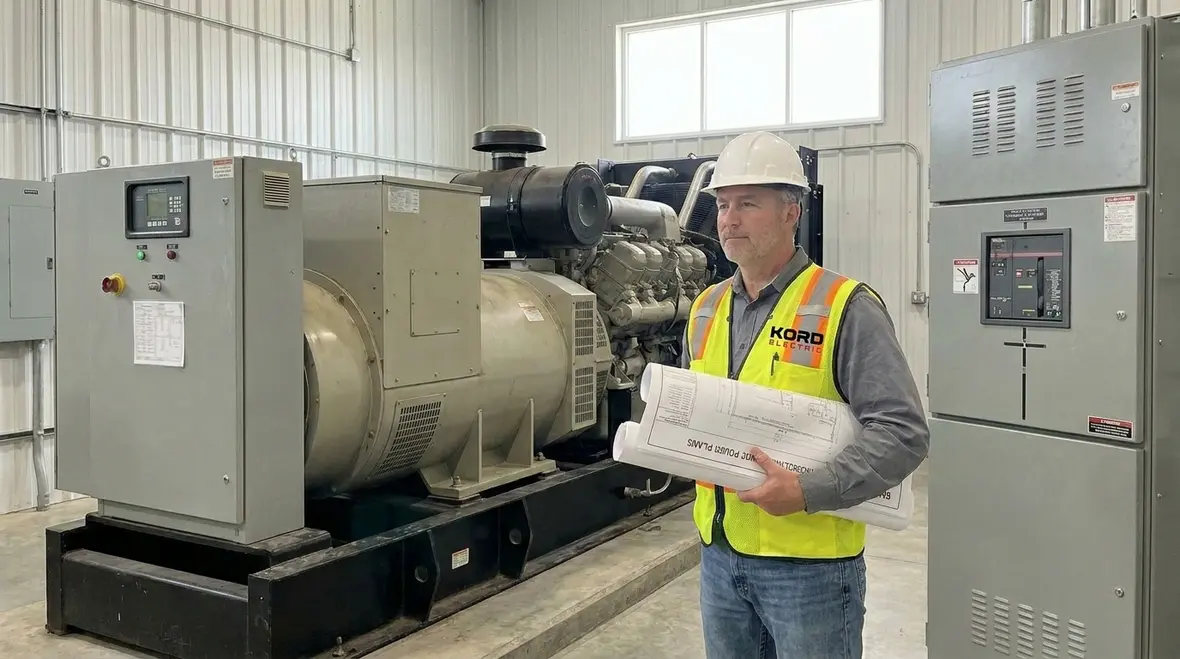
Many facilities learn the wrong lesson after an outage. They notice the darkness, then they stop at “we need a generator.” Yet, the real failure often happens earlier, during decision making and setup. For example, a system may start, but it may not power the right loads, or it may power them in the wrong order. As a result, critical processes can stall while non critical circuits draw power like guests who arrived early and won’t leave.
Also, industrial emergency power plans can fail if they do not reflect actual operations. Loads change. Equipment upgrades happen. Production schedules shift. Then, the emergency system gets out of date. This is why our technicians treat documentation as a living asset, not a shelf decoration. Furthermore, we map critical loads to your power architecture so you can avoid nuisance trips, undervoltage alarms, and transfer delays that turn a brief interruption into a long downtime event.
And yes, we have heard the jokes. “If it fails, we’ll just restart it.” That works about as well as telling a UPS system, “Relax, buddy, I’m sure it will be fine.” The whole point of disciplined industrial emergency power plans is to stop betting the night shift on wishful thinking.
Build a load strategy that matches your process, not your nameplate
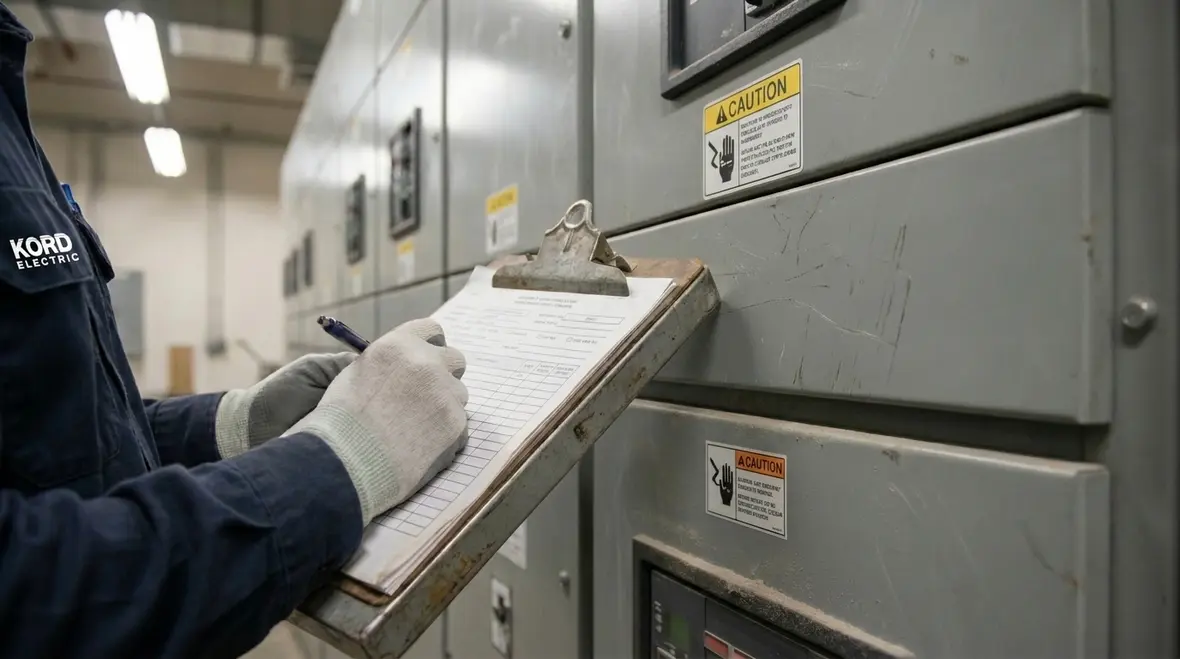
When we develop industrial emergency power strategies, we start with load reality. Nameplate ratings only tell part of the story. Instead, we look at demand profiles, motor starting behavior, inrush currents, and the sequence in which equipment needs power. In addition, we consider how long each load needs to run during an outage. A compressor might run for 10 minutes in one plan and 2 hours in another plan, based on the production model.
Next, we help define priority levels for critical loads. That means you can separate “must stay online” from “important but flexible.” Then, we align this with how your transfer equipment operates, so the emergency supply matches your time requirements. For sites with multiple buildings or remote areas, we also think about coordination and feeder segmentation to reduce the chance that one downstream fault collapses the entire emergency block.
At Kord Electric, our experienced service team walks stakeholders through these decisions in plain language. We do not hide behind jargon. We show why a slightly different load order can improve stability. And we explain how control settings impact performance during transfer and restoration.
The result is a load strategy that reflects your actual process flow, not just a spreadsheet of horsepower values. When industrial emergency power plans are grounded in how your plant really runs on a busy Tuesday, they hold up better on a chaotic Sunday night.
Transfer schemes and switchgear readiness under stress
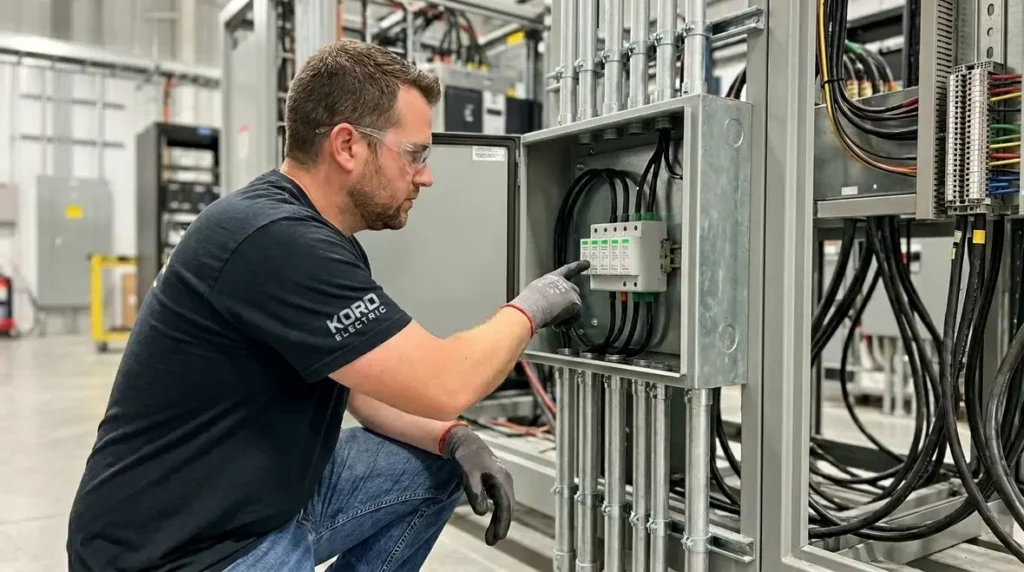
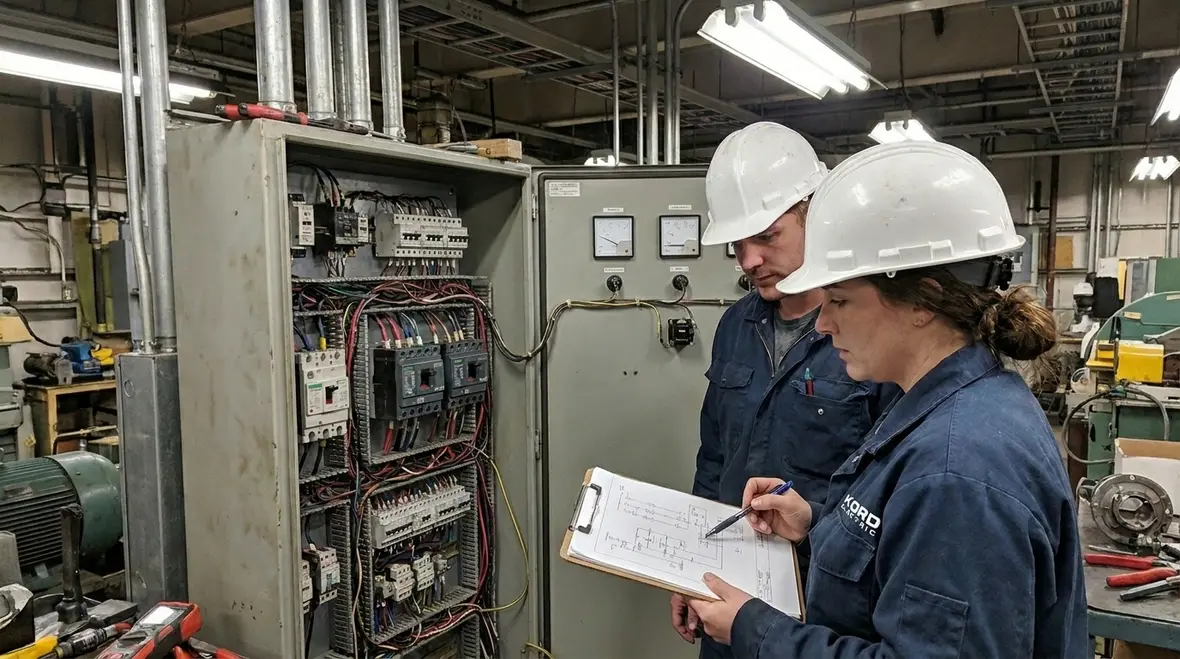
Emergency power depends on fast, reliable transfer, and transfer depends on switchgear and controls that remain dependable year after year. If the switchgear hesitates, the emergency system might not carry the load in time. Therefore, we treat electrical panels and switchgear maintenance as part of emergency strategy, not as a separate “later” task.
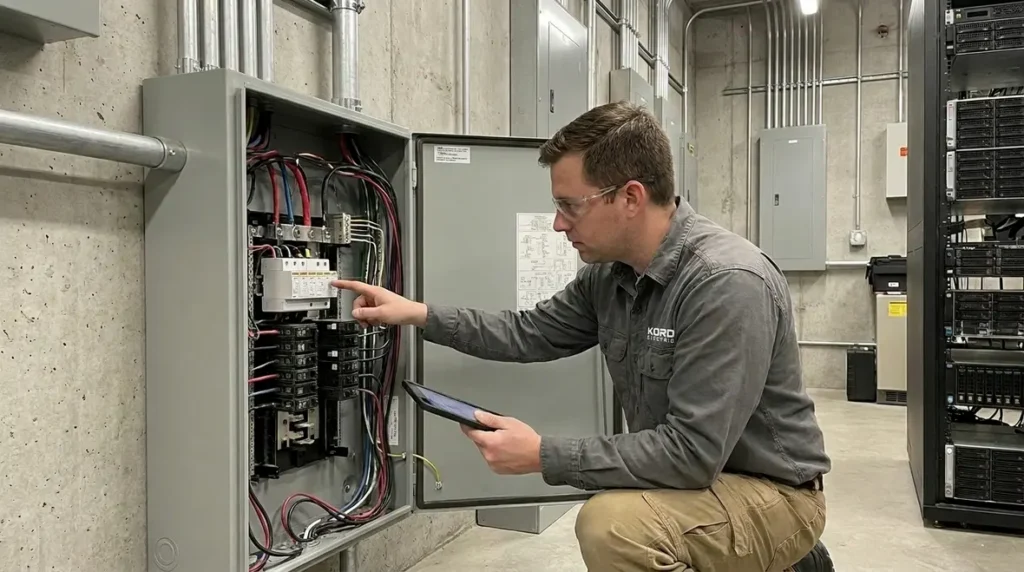
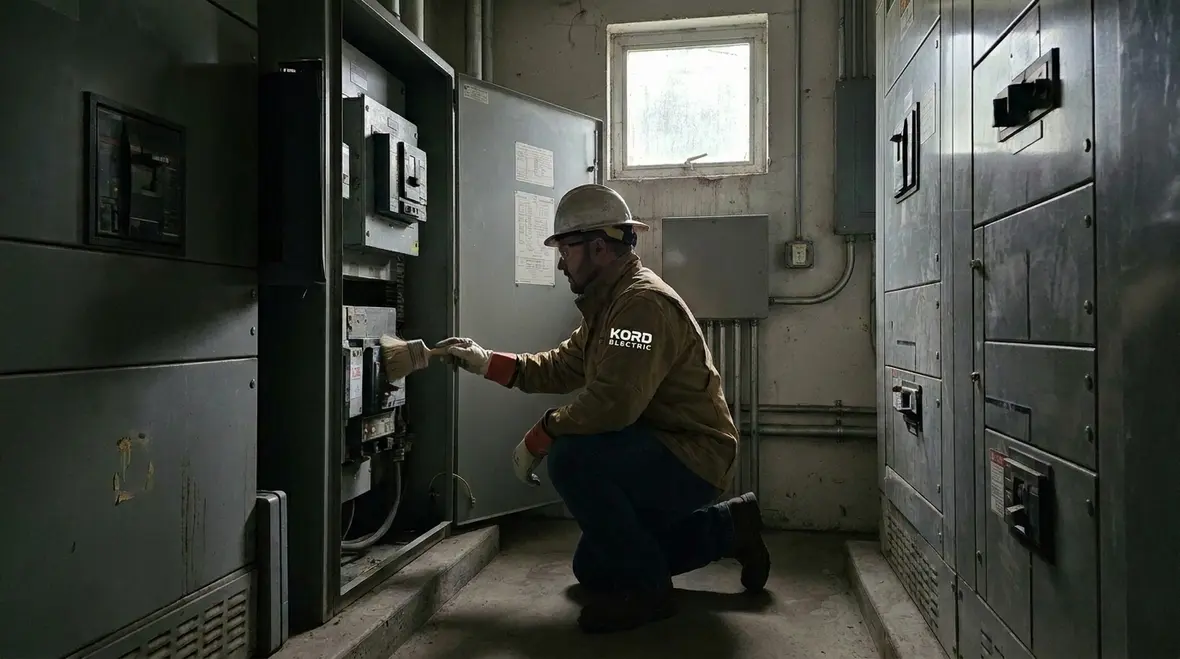
Our team often references the same discipline we discuss in our NFPA 70B focused guidance for electrical panels and switchgear maintenance. We emphasize routine checks, cleaning practices where appropriate, and verification steps that help reduce hidden failures. Just as importantly, we encourage documented inspection results so facility owners can track condition trends. Because when you can see deterioration early, you can plan repairs during normal schedules rather than during chaos.
Moreover, we help clients understand how to maintain the components that control the emergency transfer path. This includes ensuring that interlocks function correctly, that labeling stays clear for operators, and that protective devices coordinate as intended. When controls behave, transfer behaves. When transfer behaves, loads stay up. That is the whole game, delivered without the dramatic soundtrack.
If you want the simplest way to think about it, here it is: switchgear should not be a black box. It should be a known quantity. We work with your team to keep it that way, connecting your industrial emergency power plans to structured inspection and testing instead of one-off repairs. For facilities that want a broader reliability path, pairing emergency planning with ongoing preventive maintenance makes every transfer event less stressful.
Testing, drills, and commissioning that prove performance
Industrial facilities often test emergency power like it is a once a year box to check. However, real outages do not show up on a calendar. So we recommend testing that proves the system works, and we tailor the approach to your site and critical operations.
First, we establish a commissioning plan that includes functional testing of transfer sequences, load shed logic, alarms, and controls. Then, we validate that test conditions reflect real life. If your facility runs with a certain number of motors or production lines normally, we align the test with that reality so the test results matter.
Second, we schedule periodic drills for operators and maintenance staff. Training should include what to do during transfer, how to confirm that critical loads receive power, and how to report alarms with consistency. In addition, we coach staff on safe procedures and communication flow, because during an outage, people move faster and make mistakes faster too.
Our technicians explain the “why” behind test steps, and that matters. It reduces the chance that staff treat tests as ritual. Instead, they understand what “pass” and “fail” really mean for the facility.
And if you are thinking, “Sure, but who has time?” We get it. Facilities run on time. Yet, a controlled drill can prevent an uncontrolled downtime event. We like to say: tests are cheaper than chaos, and chaos never sends an invoice you can dispute.
Fuel, runtime, and power quality for steady operation
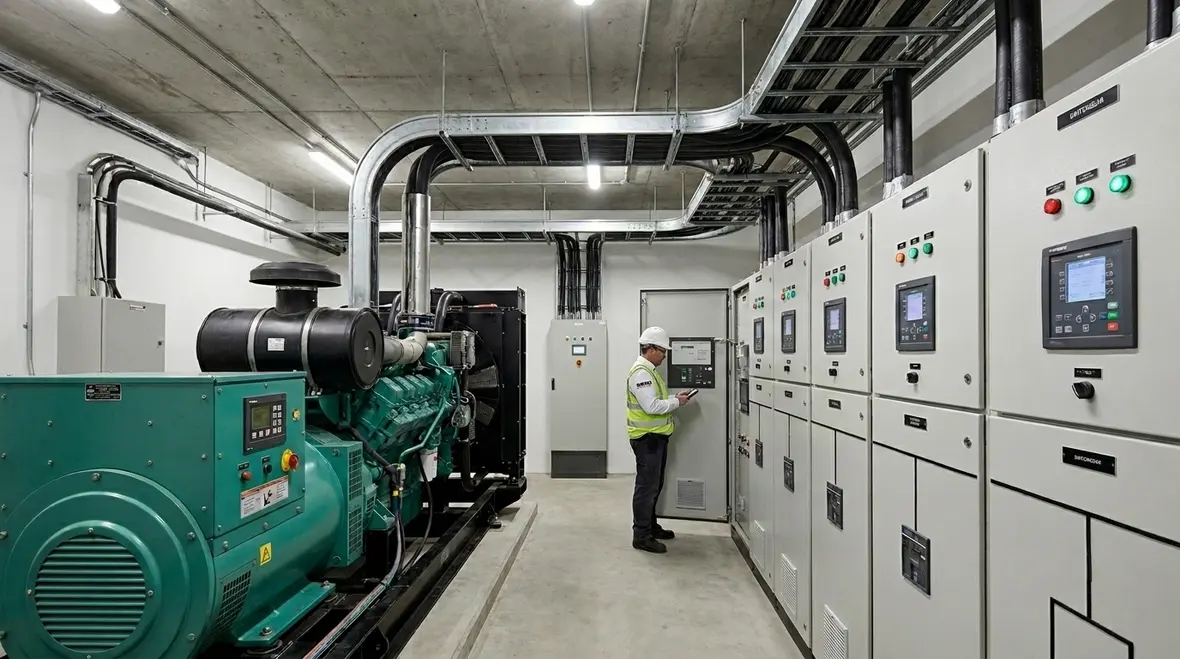
Emergency power is not only about starting. It is about sustaining output within acceptable tolerances. Therefore, we plan fuel supply, runtime targets, and power quality expectations in the same strategy discussion. If your system needs to cover a shift, then fuel logistics matter as much as generator capacity.
We also help clients plan for battery systems and controls that support reliable operation. Then, we look at voltage stability, harmonics, and the impact on sensitive equipment. In industrial settings, some loads can cause power quality issues that ripple through controls. So we address these risks early with proper design choices and coordination.
In addition, we consider how the emergency system restores after an outage. Restoration can bring stress when loads reconnect and processes restart. That means we coordinate sequencing and timing so systems come back in an orderly way rather than in a “everyone press the button” moment.
Our expert service staff explains what to monitor during runtime and what readings matter most. Because if you do not know what to watch, you cannot manage. And if you cannot manage, the emergency system becomes a mystery, which is fun for magic shows and not so fun for industrial uptime.
Maintenance that supports emergency reliability, not just compliance
Maintenance is where reliability is earned. Compliance matters, but performance matters more. When we help facilities, we focus on maintaining the path from utility to emergency supply and from emergency supply to critical load distribution.
We build maintenance plans that align with manufacturer needs, industry best practices, and your operational schedule. Also, we recommend inspection routines that catch early signs of wear, loose connections, or control drift. We pay attention to the details that cause intermittent failures, because those are the failures that ruin the night shift and the next morning’s coffee.
Additionally, we keep documentation structured so it stays useful. Our technicians label and verify where appropriate, and they explain what actions to take when inspection findings show a trend. That way, your emergency power strategy evolves with the equipment instead of standing still while assets change.
We also help major property buildings and industrial clients coordinate maintenance windows so downtime remains minimal. After all, the emergency system should feel like a dependable neighbor, not a stranger who knocks once a year. If your team wants support beyond the emergency system alone, our broader electrical preventive maintenance and Los Angeles County electrical services for commercial and industrial facilities can help bring the rest of your infrastructure up to the same standard of reliability.
FAQ for industrial emergency power strategies
Emergency power starts with a plan you can trust
If you run an industrial facility or a major property building, you do not need theory, you need dependable execution. Kord Electric helps you build industrial emergency power strategies that match real loads, strengthen transfer readiness, and support reliable maintenance. Our technicians explain decisions clearly, then we guide your team through testing and operational steps that reduce downtime risk.
When industrial emergency power plans connect commissioning, fuel and runtime planning, power quality, and ongoing maintenance, they become practical playbooks your operators can follow under pressure. Pairing that with structured outage response and emergency electrical services for critical operations gives your facility both a roadmap and a rapid-response partner when something unexpected happens.
Talk with us to review your emergency power needs and develop a plan your staff can follow when conditions turn stressful. We will bring the calm. You bring the uptime goals.
Ready to align your critical loads, transfer schemes, and maintenance routines into one cohesive approach? Our industrial emergency power plans are built around your operations, your equipment, and your risk tolerance, so when the next outage arrives, your facility does not have to improvise its way through the dark.