
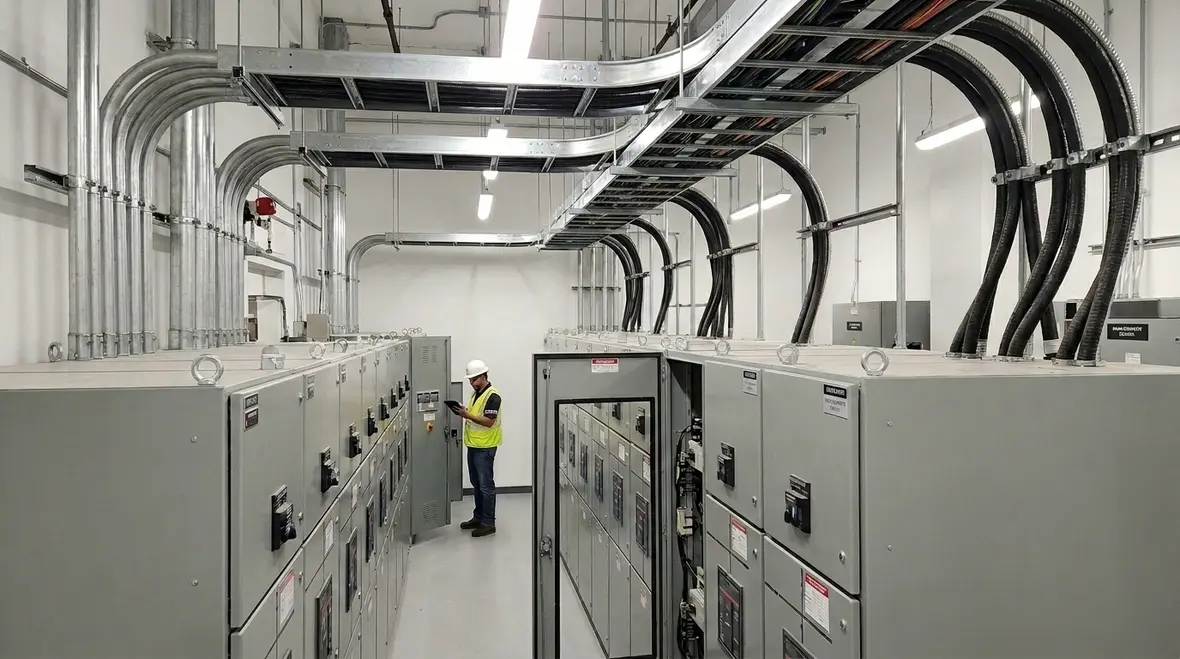
Resilient Data Center Power Distribution Design
Resilient data center power distribution, designed for real life
At Kord Electric, we help build and maintain a resilient data center power distribution that keeps mission critical loads steady when the real world gets messy. In our view, a data center should not rely on luck, vibes, or a “hope it holds” plan. Instead, others need engineered electrical pathways, layered protection, and service teams that react fast when something shifts. And yes, our technicians explain what they find in plain language, because even the best switchgear deserves a human with a calm voice and a steady hand. Still, even if you treat your uptime like a sacred ritual, power problems can still show up. So we design for that moment, before it happens.
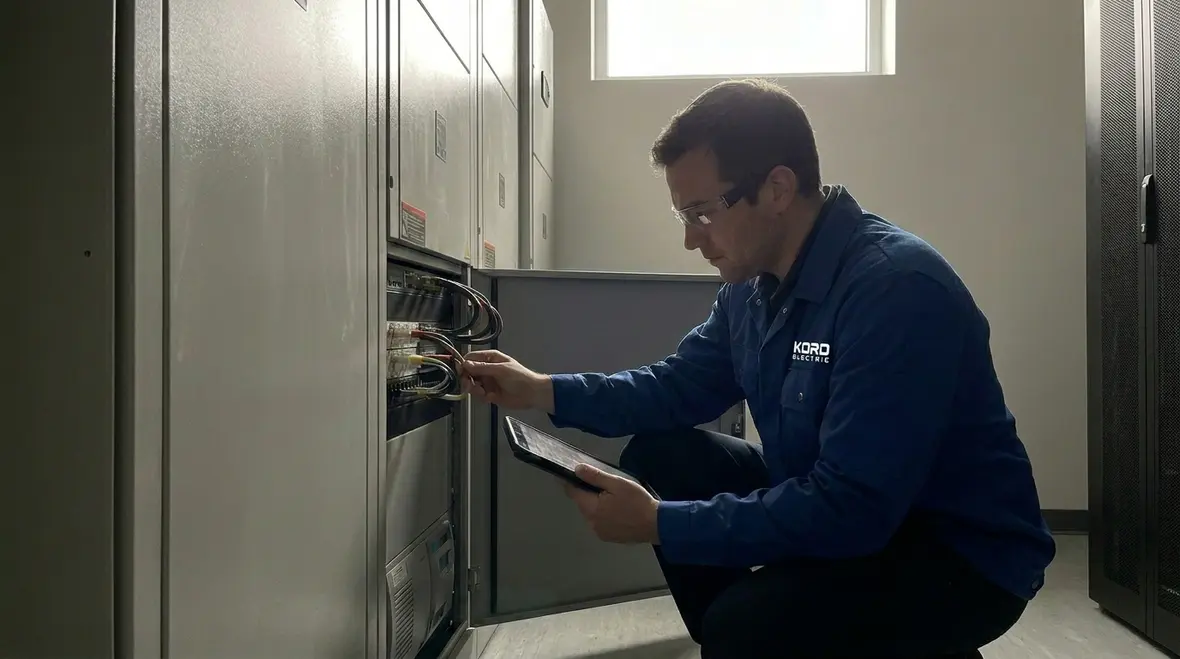
What a resilient power distribution system must do
A resilient system does not just “deliver power.” First, it prevents a simple failure from becoming a full outage. Then it limits the impact if an issue occurs. After that, it helps staff detect problems early and switch loads without confusion. For commercial and industrial facilities and major property buildings, we focus on clear design goals: stable voltage, controlled fault current, and fast isolation so sensitive equipment stays online.
To get there, we align the electrical design with how the data center actually operates. We also coordinate with the facility’s cooling, cabling routes, and operating schedules, because power and operations never live in separate worlds. In addition, we confirm that the system supports future load growth. Otherwise, you end up with a distribution plan that works great today and becomes a “fun” surprise next quarter. Nobody wants surprise drama in an electrical room.
We also connect resilient data center power distribution decisions with broader maintenance strategy. For facility leaders mapping long term care across their portfolio, it often helps to pair this kind of design work with structured electrical maintenance planning, as outlined in Kord Electric’s commercial and industrial electrical maintenance plans. That way, design choices and ongoing care stay aligned instead of drifting apart over time.
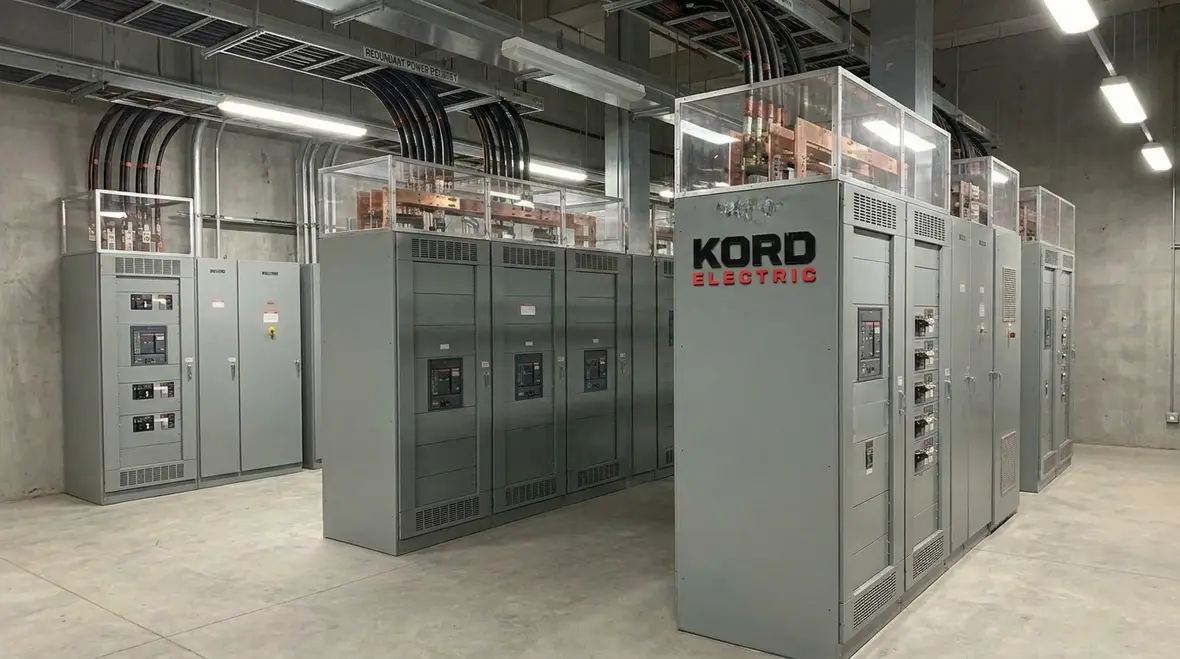
Design choices that reduce downtime risk
In our work, we treat power distribution like a route with backup paths. When one path fails, another path takes over quickly and safely. Therefore, we commonly support architectures that include redundancy, plus selective coordination and protection that isolates only the faulty section. We also pay close attention to bus design, feeder layout, and how panelboards and switchgear connect to critical loads.
Next, we consider the journey power travels. Surge events, harmonic distortion, and voltage dips can create slow damage that shows up later as erratic behavior, nuisance alarms, or shortened equipment life. So we review grounding and bonding practices, cable sizing, and overcurrent settings. Then we verify that protective devices can clear faults without widening the damage. If the protection is too slow or too broad, the system becomes like a loud neighbor who kicks the door open for a single noise complaint.
For facilities already fighting flicker, nuisance trips, or sensitive gear that “acts moody,” a resilient design often pairs well with targeted corrective work on voltage quality. When our team sees chronic instability, we may recommend deeper diagnostics aligned with Kord Electric’s dedicated support for voltage fluctuations in commercial and industrial facilities, so the upgraded distribution plan rests on a stable electrical foundation instead of shaky ground.
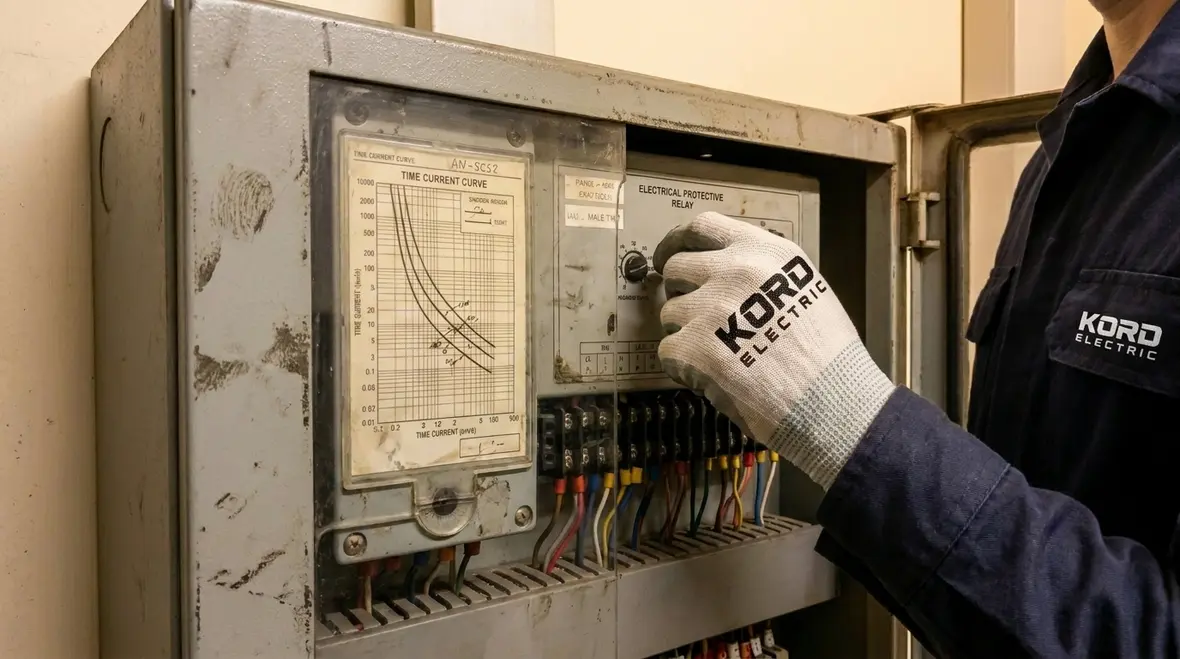
Coordination, protection, and the art of selective tripping
Faults will happen. The goal is to keep them small and local. That is where selective coordination matters. Our approach aims to ensure upstream devices do not trip unnecessarily when a downstream device can clear the fault. In practical terms, we check settings, time current curves, and device behavior across the system. Afterward, we document the logic so maintenance staff can understand it quickly during an incident.
Meanwhile, we account for real equipment conditions, not only nameplate data. We review breaker condition, verify control wiring, and confirm that protective relays behave as intended. We also look at interlocks for transfer gear, because switching needs to happen with correct timing and safe sequencing. When these details get ignored, the system can “technically” transfer, but do so in a way that creates stress for critical loads.
And yes, we have seen scenarios where a perfectly good design got undermined by a small misconfiguration. That is why our technicians do hands on checks and we explain outcomes clearly, instead of leaving everyone to guess like it is a mystery novel with the ending missing.
For many commercial and industrial sites, that coordination work also includes aligning with evolving standards such as NFPA 70B and internal reliability rules. Data center power distribution does not live in a vacuum, so we often reinforce relay and breaker settings as part of a broader maintenance mindset similar to what we describe in our guidance on NFPA 70B electrical panels and switchgear maintenance. The result is protection that behaves predictably when it matters most.

How we support power reliability with maintenance plans
Design sets the foundation. Maintenance keeps it strong. Kord Electric supports commercial and industrial electrical maintenance plans that track system health, test key components, and reduce surprise failures. We focus on preventive and predictive steps so facility teams can plan work before power becomes a deadline.
For major property buildings and data centers, we align our service with the criticality of loads and the behavior of each system. Then we build schedules that fit operations, not the other way around. Our process typically includes inspections, torque checks, thermal checks where appropriate, relay and breaker testing, and review of system events. We also verify that documentation matches the actual field conditions.
At the same time, we use service notes to explain what we see. Our expert service staff walks facility owners and operators through findings in plain terms. We tell them what matters now, what can wait, and what could grow into a bigger issue if ignored. That way, the electrical room stays less like a black box and more like a predictable toolbox.
Many clients find it helpful to connect their data center power distribution roadmap directly to a formal preventive maintenance program. If you are building that structure, our article on commercial and industrial electrical maintenance plans walks through how recurring inspections, thermal scans, and clear documentation support the same resilience you expect from a well engineered power path.
Monitoring, testing, and fast recovery when something goes wrong
Even with strong design and solid maintenance, teams still need fast recovery paths. Therefore, we help clients strengthen detection and response. We review how the facility monitors alarms, event logs, and protective device states. Then we confirm that staff can interpret those signals under stress. Because when a power event hits, people do not need extra complexity, they need clarity.
We also support testing practices that match system design. For example, we validate transfer sequences, check that protective devices respond as expected, and ensure control wiring remains stable over time. When systems include redundancy, our focus stays on how the transfer behaves under load. After all, a transfer that looks fine during a calm test can behave differently during real load conditions. So we check that behavior before it becomes an emergency.
In addition, we help define roles for incident response. Who approves isolation steps. Who communicates with operations. Who verifies that critical loads remain powered. That operational readiness reduces downtime and cuts confusion. And if you want a pop culture comparison, think of it like rehearsals before the big show. The curtain always rises. The question is whether your team knows the script.
For data center teams building checklists and playbooks, it often helps to connect this monitoring and testing work with a structured inspection routine like the one we outline in our data center electrical maintenance checklist for facility managers. When the alarms start talking, you want staff who have already walked through the steps and know exactly which switch, breaker, or relay speaks in which “accent.”
Dual-path resilience for commercial facilities and major properties
Many owners want a data center power distribution approach that protects critical IT loads while still supporting the rest of the building. For commercial and industrial facilities and major property buildings, we often plan dual-path strategies. These strategies keep critical loads supplied even when one section needs service or experiences a fault. However, the system must support smooth transitions and clear isolation so power does not bounce around like a bad Wi-Fi signal.
We also coordinate the electrical design with the physical layout of the facility. We review routing, separation, and how power distributes through rooms that host critical equipment. Then we consider how construction changes and future fit outs affect the distribution plan. This is the part that many teams delay. Yet it often becomes the most expensive phase when redesign gets pushed forward.
Finally, we support the owner’s long term goals. We help ensure the system can handle upgrades without rewriting everything. That mindset helps keep resilience intact while budgets and schedules stay realistic.
Because these facilities often sit inside crowded markets and jurisdictional rules, it also pays to work with a contractor that understands regional requirements. For organizations across Southern California, our broader Los Angeles County electrical services experience helps us plan data center and major property work that fits local permitting expectations while still putting reliability first.
FAQ
Conclusion: secure your uptime with a smarter power plan
Resilience does not come from wishful thinking. It comes from design choices that limit fault impact, plus maintenance that keeps protection and switching reliable over time. Kord Electric supports commercial and industrial facilities and major property buildings with expert technicians and clear service plans, including testing and documentation that make response faster. If your data center power distribution needs a fresh reliability review, reach out to us. We will listen, assess, and build a plan that protects uptime with calm, steady confidence.
If you are ready to align data center power distribution design, maintenance strategy, and long term upgrades under one calm, coordinated plan, our dedicated electrical preventive maintenance services provide a practical starting point. From there, we tailor support to your critical systems, your operating schedule, and the uptime promises you have to keep.
For facilities across the region that depend on steady power for production lines, server halls, and major property operations, Kord Electric’s broader commercial and industrial service portfolio stands behind every project. Whether you need a targeted study of data center power distribution, a full maintenance roadmap, or a coordinated plan that spans multiple sites, our team is ready to help you turn “hope it holds” into “we know it will.”


