Predictive Thermal Panel Scanning for Equipment Reliability
Prevent Equipment Failure with Predictive Thermal Panel Scanning
At Kord Electric, we help commercial and industrial facilities stay dependable with thermal scanning commercial panels that reveal trouble before it turns into downtime. In our workflow, we use controlled, repeatable inspections to spot abnormal heat patterns on switchgear, bus connections, panels, and the places where failures start quietly and grow loudly. And yes, most equipment does not announce problems with a sign that says “I am about to fail.” It just fails. Later. Dramatically. Like a bad movie sequel.
Then our trained technicians and expert service staff explain what they see in plain language, so facility teams can act with confidence. Because when heat tells the story early, we prevent equipment failure with predictive thermal panel scanning instead of chasing problems after the damage is done.
Why heat signals show up before the breakdown
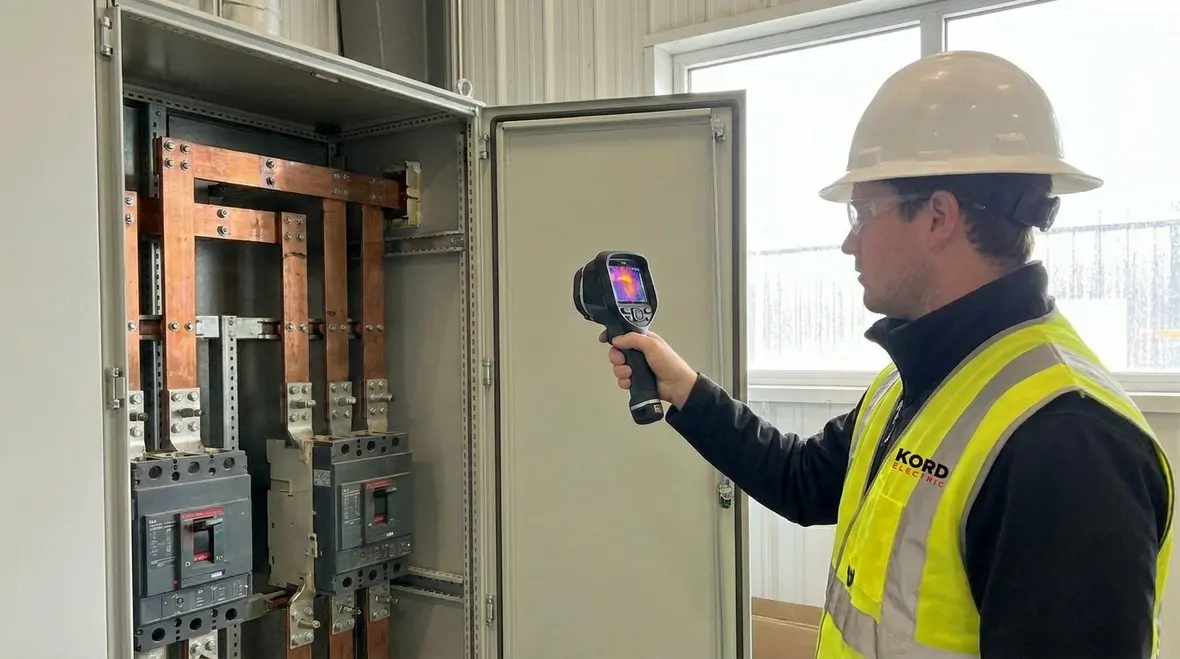
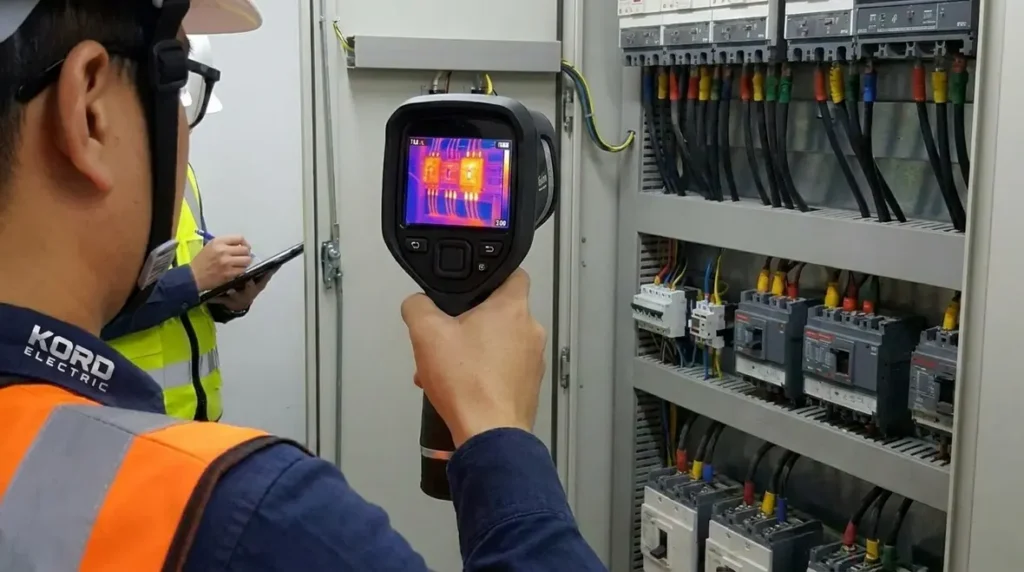
When electrical components age, connection points can loosen, corrosion can form, and insulation can degrade. As a result, resistance changes. That change creates extra heat at specific spots. Even if everything still “works” today, the thermal signature often appears first. After that, the problem typically escalates through arcing, insulation stress, and load imbalance.
Moreover, our approach looks at more than one moment in time. We compare readings across equipment sections, and we check patterns, not just a single hot spot. Consequently, a one off temperature rise may mean recent load changes, while a repeating hotspot often means a physical issue, like a compromised termination. In other words, we do not rely on guesswork. We rely on evidence.
Our team also connects what we see to how your system operates. For instance, if a facility runs higher loads during certain shifts, we align the scan timing with expected duty cycles. That helps us separate normal heat rise from abnormal heat rise, which is where predictive thermal panel scanning becomes truly useful.
How Kord Electric scans modern electrical systems for reliability
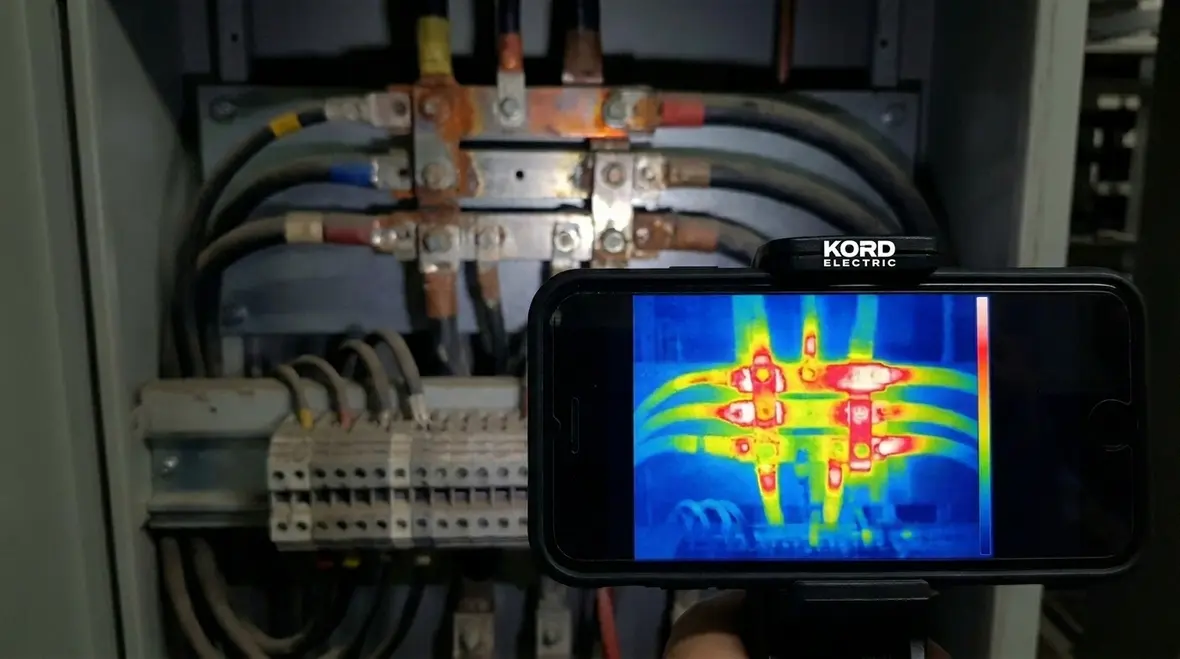
Commercial electrical systems for modern buildings tend to include higher efficiency gear, tighter spacing, more feeders, and complex routing. In that kind of setup, small problems can hide in plain sight. Therefore, our service uses a careful process built for real world panels and real world schedules.
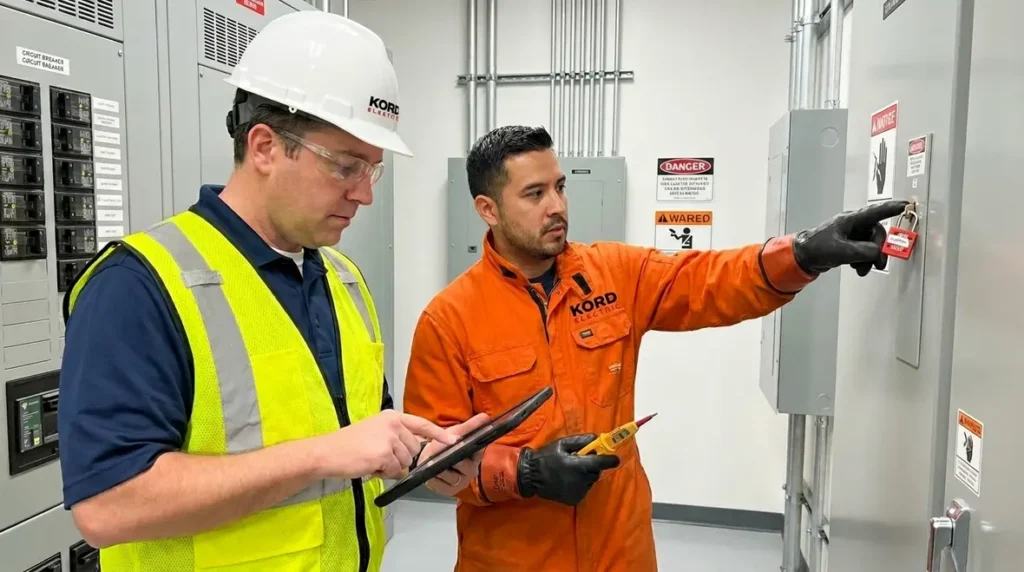
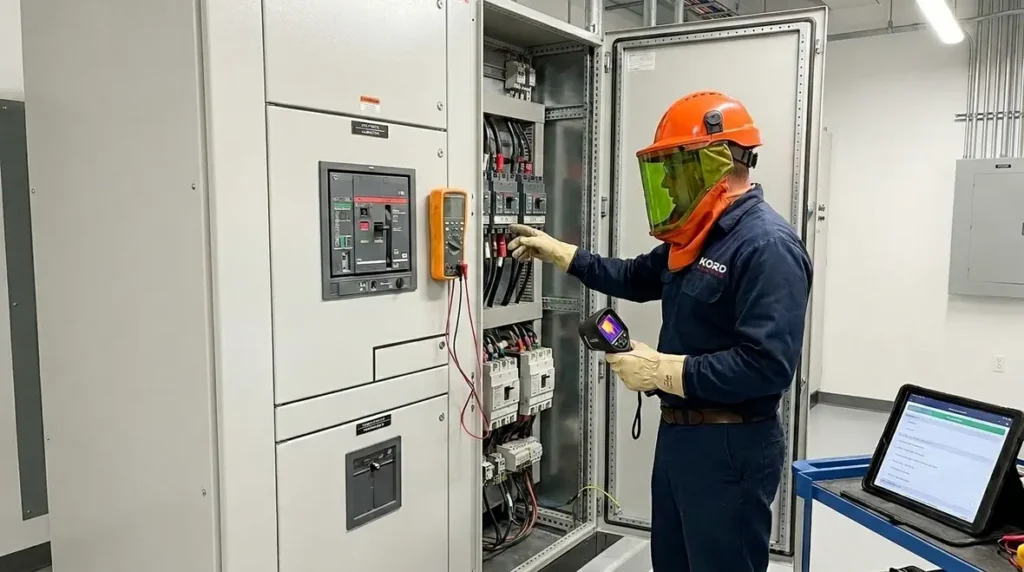
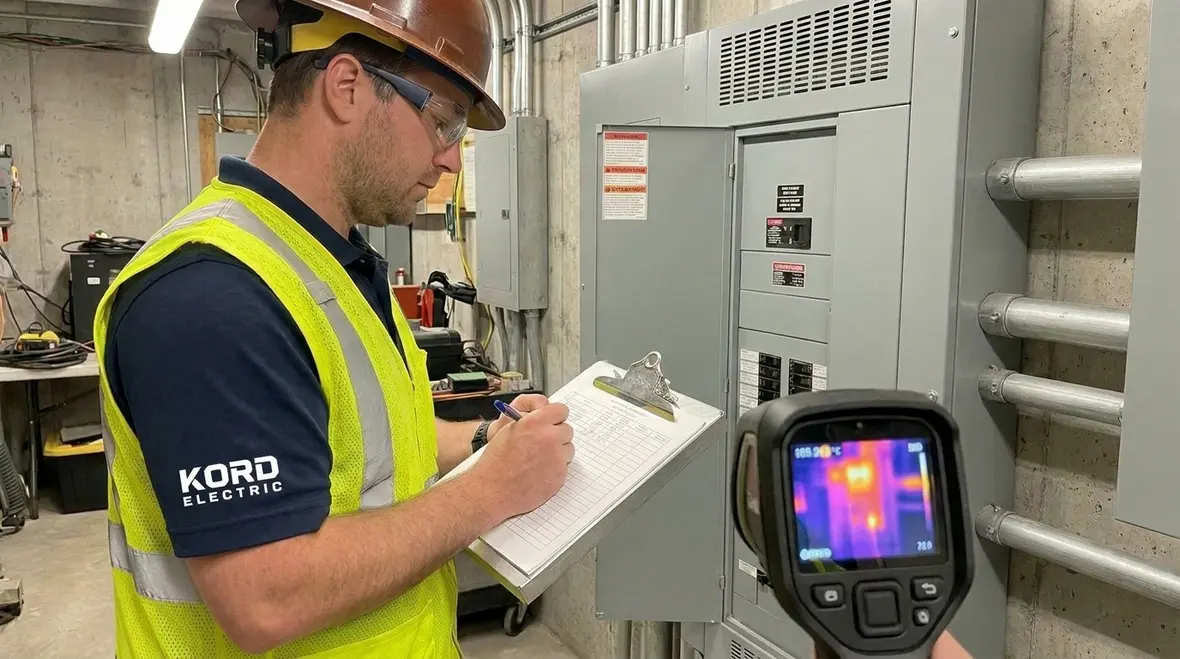
First, our technicians plan the scan around safety and operational needs. Next, they gather temperature data on the main sections, branch circuits, and critical connection points. Then, they document the readings in a way facility teams can review later, so the information keeps its value long after the inspection.
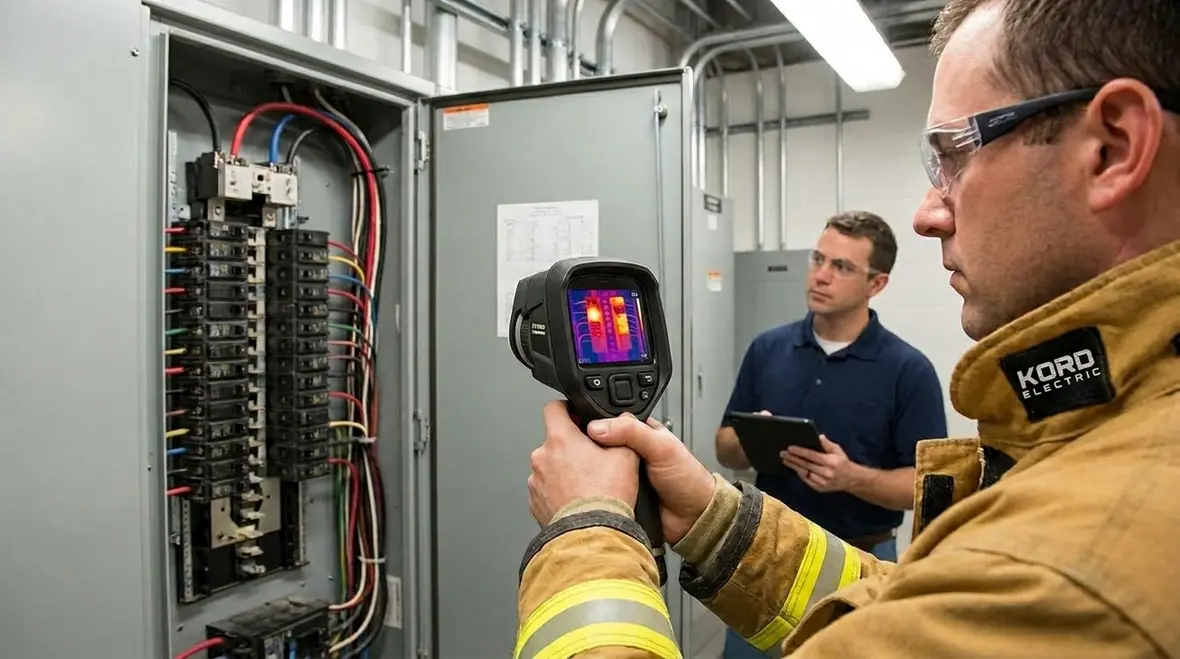
After the scan, our expert service staff does what many teams skip. We explain the “why,” not only the “what.” We help others interpret heat patterns in relation to load, mechanical wear, and electrical design. Finally, we provide a practical path forward, so the facility can schedule repairs in a realistic window.
And because we work with commercial and industrial facilities only, we focus on the equipment that matters most in those environments, like distribution equipment, motor controls, and systems tied to production, logistics, and building operations.
For facility leaders who want to connect predictive scanning with broader upgrades, it can help to pair inspections with planning for commercial electrical systems for modern buildings, so panel conditions, capacity, and reliability strategy stay aligned instead of being handled in separate silos.
Common failure points in switchgear, bus, and distribution panels
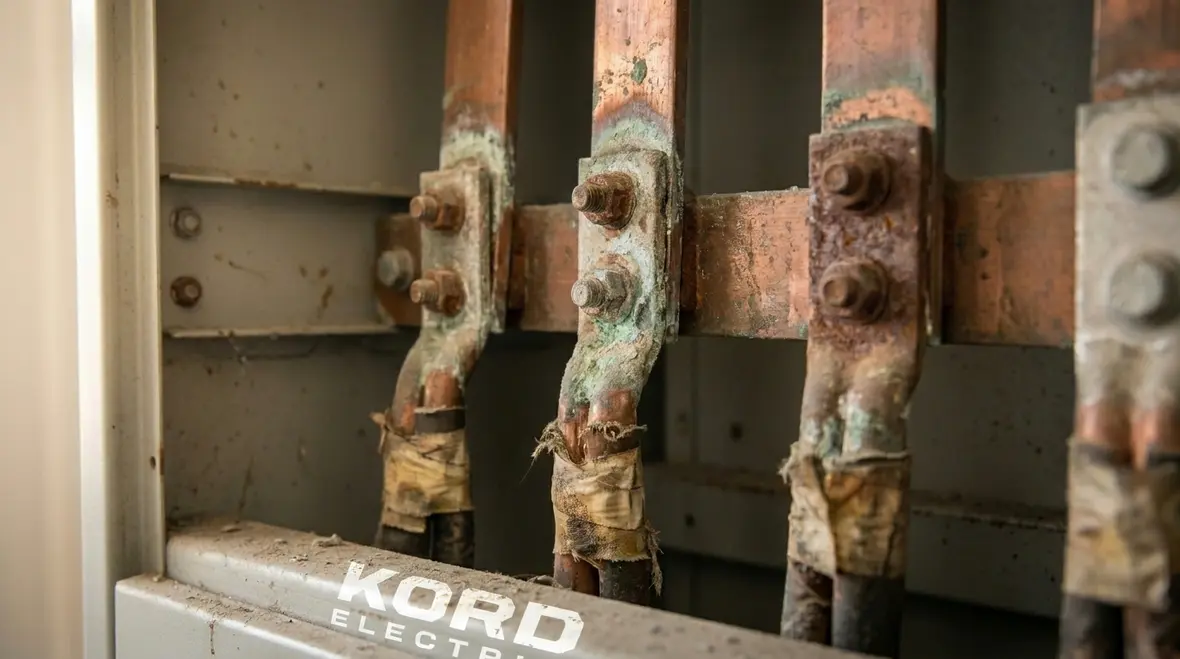
Failures rarely start at the main breaker like a hero stepping into the scene. Instead, they usually begin at connection points, interfaces, and areas under stress. In many commercial settings, the most frequent trouble spots include:
- Loose or worn terminations at lugs and bus connections
- Corrosion around metal surfaces and contact points
- Overloaded breakers, feeders, and panels that carry more than the design allows
- Wiring issues that cause uneven current sharing across phases
- Degraded insulation that holds heat longer than expected
- Cooling and ventilation gaps in cabinets where temperature should stay steady
Meanwhile, load changes can make these issues more visible. If a facility adds tenants, expands production, or upgrades equipment, the thermal balance shifts. That is exactly why our team treats thermal scanning commercial panels as an ongoing reliability tool, not a one time “check the box” task.
For example, a hotspot that slowly grows over repeated inspections is a different story than a hotspot caused by a temporary spike. Therefore, we trend results and help facility leaders act with timing, not panic.
How thermal trends turn into better decisions
Treating thermal signatures as a trend line instead of a one time photo helps maintenance teams see risk in context. A connection that warms slightly but stabilizes under known loading may simply need monitoring. A termination that keeps getting hotter at similar load levels, on the other hand, usually points toward mechanical degradation or contact issues that demand action before they escalate into trips or failures.
How predictive scanning supports maintenance budgets and avoids downtime
Many maintenance programs feel like firefighters. They respond when something smokes, then they reset and hope for the best. We help commercial and industrial teams move closer to planned work by using predictive insights from thermal scans.
First, the team prioritizes hotspots based on risk, impact, and the likelihood of escalation. Next, we recommend targeted troubleshooting or repairs, rather than broad “replace everything” decisions. As a result, your budget works harder and stretches further.
Additionally, predictive thermal panel scanning reduces the chance that a small issue forces an emergency shutdown. When a connection fails during peak hours, costs stack up quickly: labor, production downtime, customer delays, and repeat visits. However, when we catch the heat signature early, you can schedule work during normal downtime and keep operations steady. That is how reliability becomes an operational advantage.
And if you are thinking “Heat scans sound cool, but do they really help?” Trust us, we have heard every version of that line. Then we show the data, explain the pattern, and the decision becomes much easier. Like arguing with a thermostat. It does not care about feelings.
Turning thermal data into a practical maintenance roadmap
Once thermal data is in hand, we translate it into a maintenance roadmap tied to your real operating calendar. Critical items move into near term work orders. Medium risk items get scheduled during upcoming shutdowns or seasonal slowdowns. Lower risk anomalies become watch items, checked during the next round of thermal scanning commercial panels so the story of each connection unfolds over time instead of all at once during a failure.
What our technicians communicate after the scan
After our thermal scan is complete, our technicians and expert service staff focus on clarity. We know facility leaders need answers that support action. Therefore, we provide findings in a format that aligns with how operations teams plan maintenance.
We typically cover four key items. First, we identify the equipment zones and connection points that show abnormal thermal behavior. Second, we explain what the heat pattern suggests, based on electrical principles and typical failure modes. Third, we recommend next steps, such as targeted tightening, inspection, torque verification, cleaning, or deeper diagnostic work. Finally, we connect findings to an inspection cadence, so you know when to repeat scans and how often to adjust based on system changes.
Most importantly, we keep communication business friendly. We do not bury you in technical jargon. Instead, we translate the scan into decisions you can schedule, approve, and verify. That is the difference between “data” and “usable reliability.”
Integrating thermal findings with other electrical services
Thermal results carry the most value when they tie directly into other services, such as panel labeling, code compliance reviews, and capacity planning. For example, aligning hotspot locations with clear panel schedules and labels makes it easier to execute repairs without confusion. Likewise, coordinating thermal insights with broader efforts like NFPA and NEC reviews reduces the risk that a fix solves heat but ignores compliance or long term load goals.
How often should predictive thermal panel scanning be performed?
There is no single schedule that fits every commercial or industrial facility. Instead, the right cadence depends on:
- Equipment criticality and how much downtime truly costs your operation
- Age and condition of existing switchgear, bus systems, and distribution panels
- Environmental conditions, such as dust, moisture, or temperature swings
- Recent projects that changed loading, such as new tenants or production lines
- Regulatory or insurance expectations tied to reliability and safety
Many sites start with an annual or semiannual schedule for thermal scanning commercial panels, then adjust based on findings. Equipment that shows stable behavior under predictable loads may move to a longer interval. Panels that reveal growing hotspots or recurring anomalies often move to more frequent scanning until the underlying issues are resolved and confirmed stable.
Linking scanning cadence to system changes
Any time a facility undergoes major changes—like adding significant mechanical equipment, expanding production, or integrating new automation—it makes sense to schedule a follow up scan. The goal is simple: verify that the new load profile did not quietly push certain buses, breakers, or terminations beyond their comfortable operating window.
Tying predictive scanning into regional service and support
Predictive thermal panel scanning does its best work when it pairs with support from a regional electrical service team that understands your operating environment. For facilities in and around Los Angeles County, that often means combining thermal insights with broader Los Angeles County electrical services so investigations, repairs, and upgrades happen with local context, permitting experience, and realistic schedules.
By bringing scanning, troubleshooting, and project work under one roof, you reduce the risk that findings sit on a shelf while small issues keep growing. Instead, anomalous heat signatures roll directly into service tickets, project scopes, and, when needed, upgrades that align with both your reliability goals and your long term facility plans.
FAQ
Ready to reduce risk in critical electrical equipment
If your commercial or industrial facility relies on uptime, we help you stay ahead of trouble with predictive thermal panel scanning and clear next steps. Kord Electric brings expert technicians who explain findings in plain terms and guide repairs before heat turns into failure. Take control of your maintenance planning and reduce emergency downtime. Contact us today to schedule a thermal scan and build a reliability plan tailored to your electrical distribution needs.
To support long term performance, many facilities also connect predictive scanning with broader service plans that include troubleshooting, labeling, and targeted upgrades. By partnering with a dedicated commercial electrical team that understands your equipment, your loads, and your schedule, you turn thermal scanning commercial panels into a repeatable tool for reliability instead of a one time experiment.
When you are ready to combine predictive insights with a service partner who can respond quickly and keep projects moving, Kord Electric offers regional support through focused offerings like Los Angeles County electrical services that understand industrial timelines, shift work, and the kind of uptime expectations where failure is simply not an option.