Industrial Lighting Design Layouts for Safety and Output
Industrial Lighting Design Layouts that keep people safe and work flowing
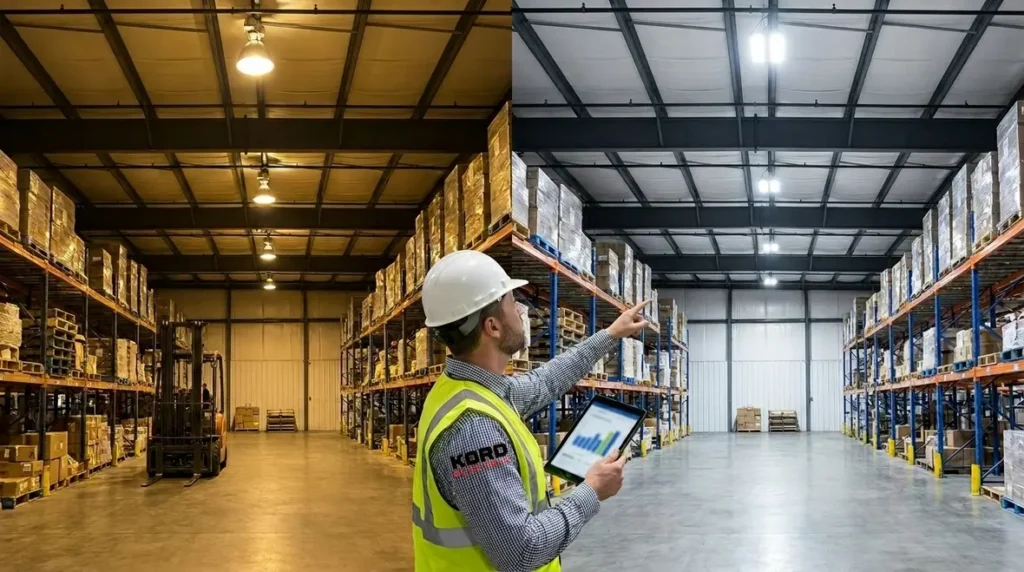
At Kord Electric, we treat Industrial Lighting Design Layouts like the quiet backbone of daily operations. Others may see fixtures on a ceiling. We see pathways for safety, clarity for teams, and a calmer work environment that helps output stay steady. In commercial and industrial facilities, good lighting does more than make areas “bright.” It reduces mistakes, improves visibility at critical steps, and supports a layout that works with how people actually move and perform tasks.
And yes, when lighting is wrong, productivity pays the bill. It is like putting a warehouse forklift in “training mode” every day. Nobody wins. So we optimize production by designing industrial lighting layouts that protect employees and support reliable execution.
Why lighting layout decisions change safety outcomes
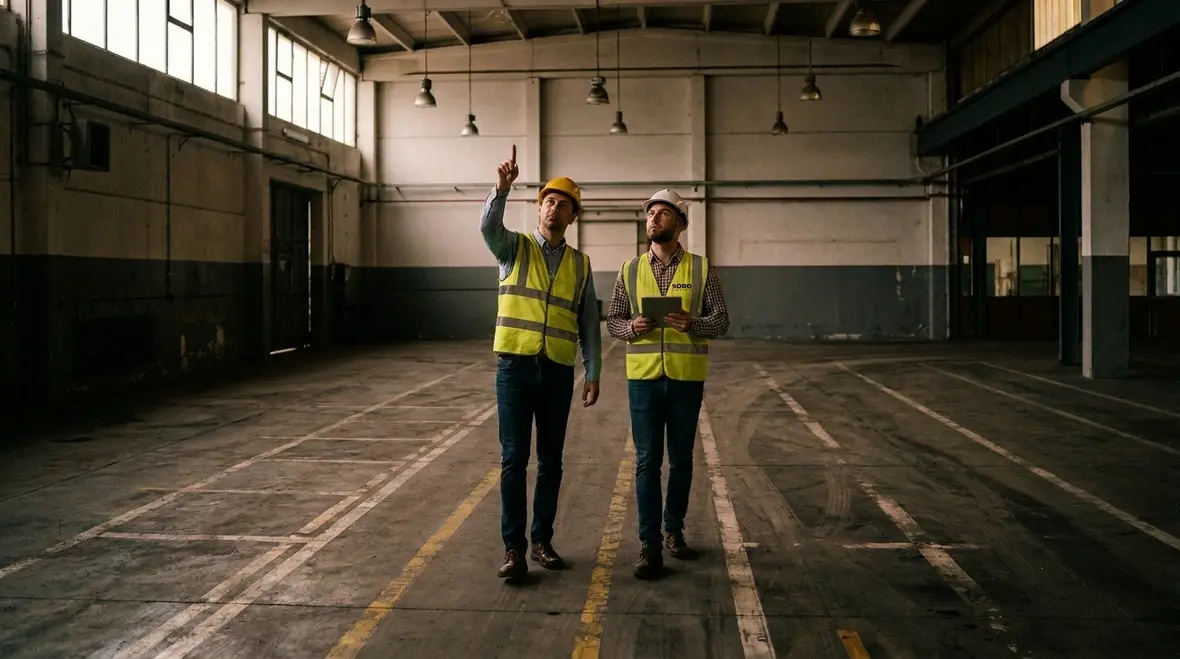
When a facility plans lighting after the fact, teams often end up working around shadows. However, industrial work cannot pause for “spot fixes” when something goes wrong. That is why our technicians start by mapping where people walk, where they inspect, and where they operate equipment. Then we design the lighting plan to match those realities.
In the same way that electrical distribution should be built for reliability in data center environments, industrial lighting should be built for reliability in real life. Power systems must stay stable, and lighting must stay predictable. We carry that mindset into the layout itself, because inconsistent illumination can cause:
- Misread labels and indicators during normal operations
- Slip and trip risk in transition zones such as docks and corridors
- Reduced attention when glare or harsh contrast forces people to squint
- Slower troubleshooting when technicians lose track of what they are seeing
Meanwhile, well planned Industrial Lighting Design Layouts help teams spot issues early. As a result, safety improves and downtime drops. It sounds simple, but in commercial and industrial buildings, “simple” is often the difference between smooth shifts and chaotic ones.
How we map the floor plan for real movement
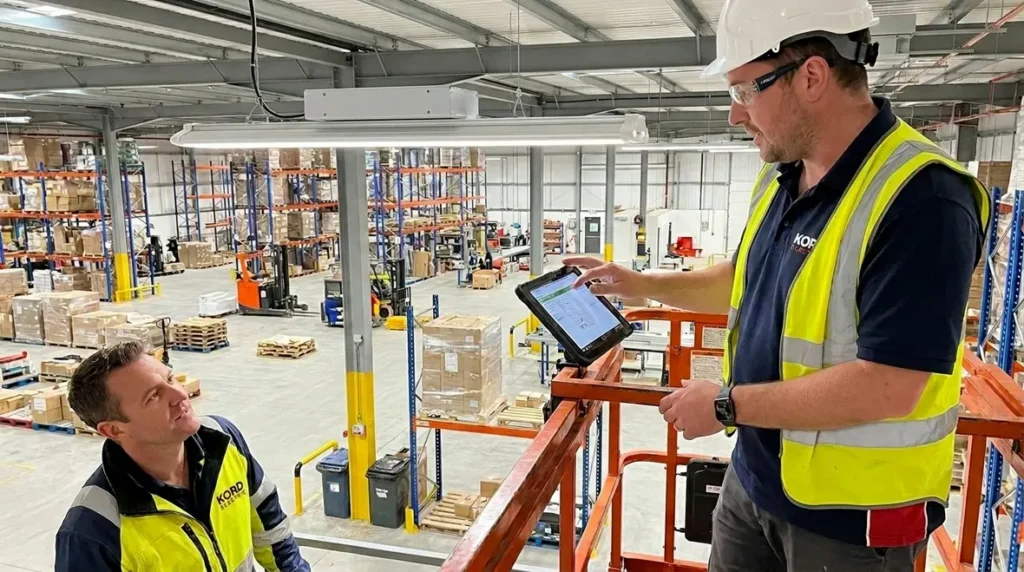
Most facilities already know where people work, yet lighting layouts often ignore the flow of movement. So we build a layout that follows the job, not the drawings. To do that, our expert service staff and field technicians collaborate on a practical approach. They observe access routes, watch how teams move during shift changes, and check where visibility breaks down.
Then we translate those observations into layout rules, such as:
- Clear light at entrances, exits, and dock access points
- Consistent illumination over work benches and inspection areas
- Reduced glare in locations where people look at screens, gauges, or controls
- Light levels that support the most demanding task without wasting energy everywhere
And if anyone tells you “good enough” lighting will do, we politely remind them that “good enough” is how injuries happen. Not because people are careless, but because the environment fights them. So our Industrial Lighting Design Layouts use placement, spacing, and aiming strategies to keep visibility stable across the space.
Lighting zones that support safer, faster production
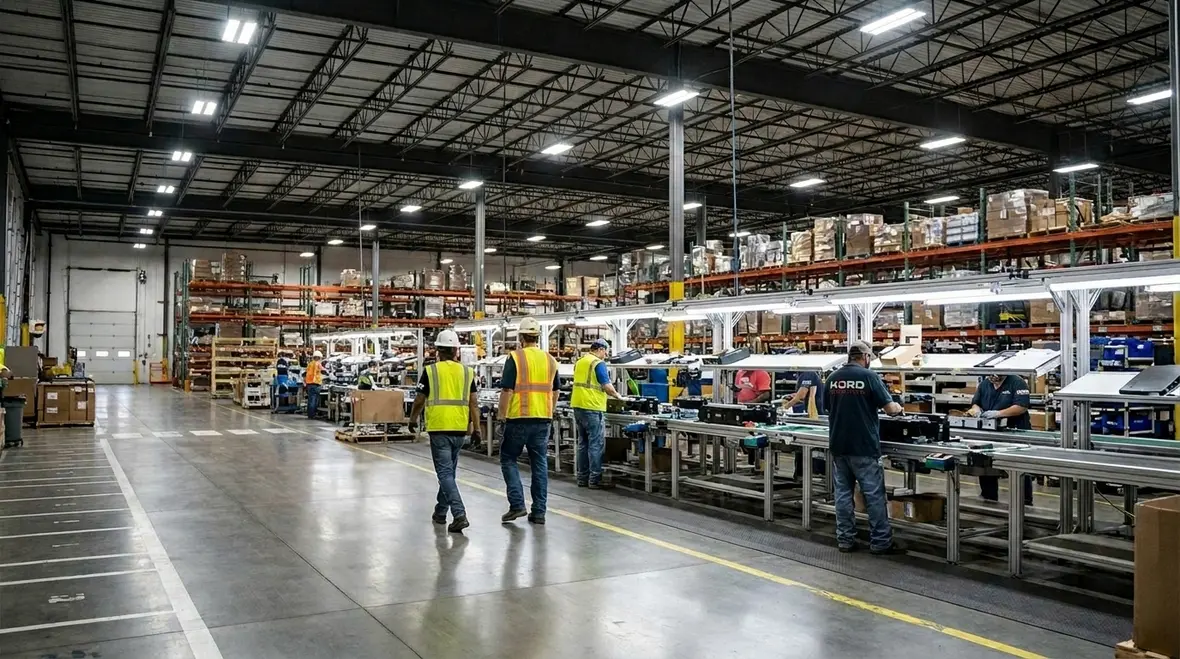
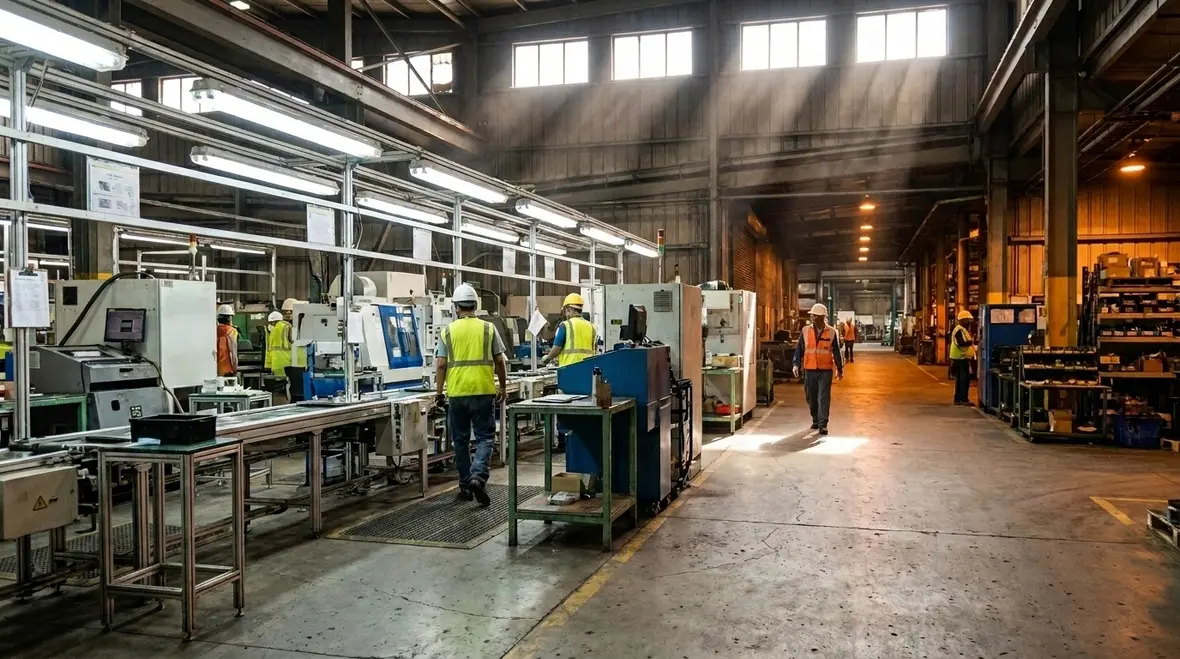
Industrial spaces behave like ecosystems. One area changes the next, and workers cross between them quickly. Therefore we create lighting zones that align with operational zones, including production lines, staging areas, maintenance zones, and warehouse aisles.
In practice, we apply a zoning strategy that supports both visibility and control. For example, production lines often need steadier illumination for repeat tasks. Maintenance zones may require brighter views for detailed work. Staging and material handling areas need uniform coverage so operators can judge distances and avoid blocked sight lines.
To make this approach concrete, we often break zones into categories:
- Task zones for precise work like assembly, inspection, and control panel use
- Walkway zones for safe routes between stations, storage, and exits
- Equipment zones where visibility supports safe operation and quicker troubleshooting
- Transition zones between light levels so people do not get sudden glare or darkness
Because transitions matter, we plan for gradual changes rather than abrupt jumps. That simple detail reduces visual stress. As a result, employees maintain focus, and the facility runs with fewer interruptions.
Glare, shadows, and contrast: the issues teams feel first
Even when a space measures “bright” on paper, it can still feel unsafe. That is because glare and shadows create visual noise that humans instinctively fight. And when people fight the lighting, they lose time and attention.
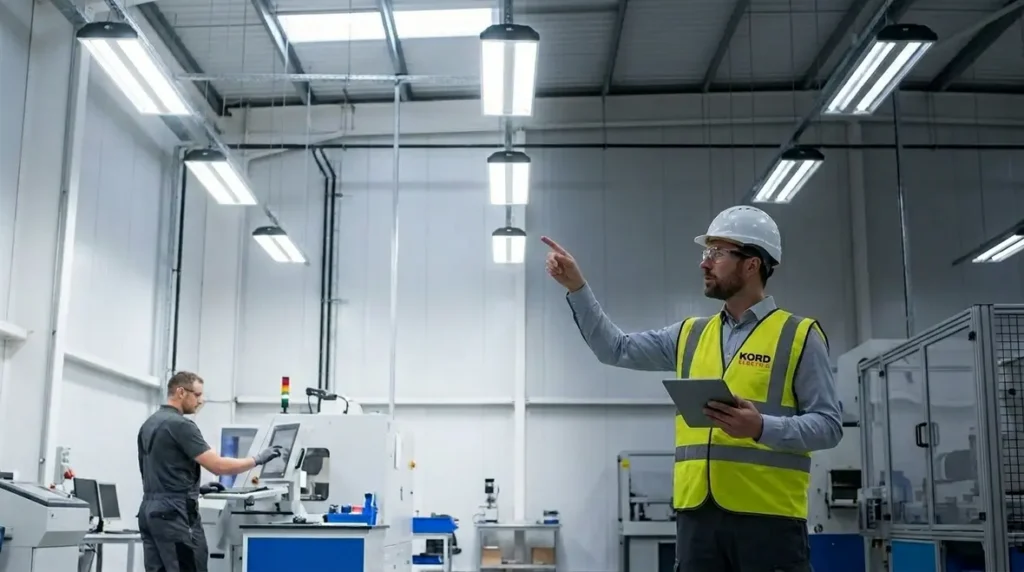
Our technicians and expert service staff look closely at how light lands on surfaces. We address three common problems.
- Glare from direct fixture views and reflective materials
- Shadows behind columns, racking, machines, and placed materials
- Bad contrast where dark floors meet bright tasks without a smooth transition
Then we adjust the layout using aiming angles, fixture selection, mounting height, and spacing. In many cases, we also consider how equipment changes over time. A production line is not a museum piece. It gets reconfigured, moved, and expanded. So we design with realistic flexibility, so teams do not lose safety when the facility evolves.
In other words, we do not just light today. We light the next few iterations of operations too. And yes, that saves headaches. Think of it as refusing to date someone who owns three different “temporary” extension cords. You know where that story goes.
Integrating electrical distribution for dependable lighting
Lighting is not a standalone system. It depends on stable electrical distribution and proper planning. We stay consistent with the reliability mindset used in major electrical distribution design work, including data center setups where performance must remain steady. Even though industrial lighting has different demands, the core principle holds: if the power system stumbles, lighting and safety follow.
So we coordinate lighting circuits with how the facility handles loads and maintenance. We also support practices that improve uptime and reduce repair time, such as:
- Clear circuit grouping for faster troubleshooting
- Practical labeling and documentation for field work
- Design that supports planned maintenance without dark zones across the facility
- Balanced loading so electrical components stay within safe operating ranges
As we work, we explain the design choices to facility stakeholders. Our team does not hide behind mystery terms. We walk through why certain circuits serve specific areas and how the layout supports safe access during service. That way, others in the building team understand what changes mean for visibility and operational continuity.
For commercial and industrial property buildings, reliability is not a “nice to have.” It is the baseline. For a deeper dive into that mindset, many facility leaders also review our guide on data center electrical distribution design for reliability and apply those same reliability principles to their Industrial Lighting Design Layouts.
Maintenance friendly layouts that keep lighting consistent
Even the best lighting plan loses value if maintenance becomes a weekly battle. Therefore, we build Industrial Lighting Design Layouts with service access in mind. Our technicians plan for safe access routes, clear paths for replacement, and layout choices that reduce downtime during fixture servicing.
We also consider how lighting performance changes over time. Dust, humidity, and process residue can affect light output and clarity. So we recommend maintenance practices that keep the visual environment stable, not just “functional.” Then we align those recommendations with the facility’s production schedule.
To keep everything practical, our expert service staff often helps teams answer questions like what to replace first and how to avoid interruptions. We also help facilities understand how future expansions may affect light levels. In this way, the plan keeps working as the building grows.
It is the difference between lighting that lasts and lighting that merely survives. One feels like a well run operation. The other feels like a smoke detector with low battery that nobody fixes until it beeps through a whole shift.
Frequently asked questions about industrial lighting layouts
Call Kord Electric to optimize your lighting and protect your output
If your facility has shadowed walkways, glare on critical stations, or lighting that feels inconsistent shift to shift, it is time to reset the plan. At Kord Electric, we design dependable Industrial Lighting Design Layouts that improve employee safety and support stable production. Our technicians and expert service staff explain the why behind every layout choice, so your team can trust the results.
For facilities looking to take the next step, pairing lighting upgrades with structured electrical preventive maintenance keeps both the power backbone and the visual environment stable over time. Together, they help your operation avoid the slow drift toward outages, complaints, and rushed fixes.
Contact us today to review your space and build a lighting strategy that performs like it means it.