Surge Protection for Businesses and Servers
Surge Protection for Businesses: the calm shield your servers deserve
When voltage spikes hit, your sensitive gear does not get a warning text first. That is why Surge Protection for Businesses matters in commercial and industrial facilities, and major property buildings where uptime is not a luxury. We at Kord Electric design and install surge protection that helps keep servers, network gear, and control systems safer during electrical disturbances.
In this guide, our expert service staff walks through what works in the real world, not just on a brochure. Then, our technicians break down how we plan protection in the full electrical path, how we test it, and how we keep systems reliable as your site grows. Yes, even if your building’s power behaves like it has its own personality. Like a sitcom plot twist, only less funny when data goes down.
Understanding surges and why sensitive equipment suffers

Third party research and field experience both show the same pattern: a surge is rarely a single “boom.” Instead, it is a fast change in voltage that can come from utility switching, nearby lightning activity, motor start and stop cycles, arc faults, or bad connections. Even if the energy seems small, the speed of the spike is what stresses electronics.
We explain it like this to our clients. Servers and network switches are built for stable voltage. However, a spike can overwhelm their power supplies, create stress in components, and lead to hidden damage. And then, later, the failure shows up like that coworker who always claims they “will submit it soon.” The damage was done earlier. The result appears later.
Because commercial and industrial sites often run continuous loads, downtime hurts quickly. Therefore, we plan surge protection that targets the causes and the paths, not just the symptom at one outlet.
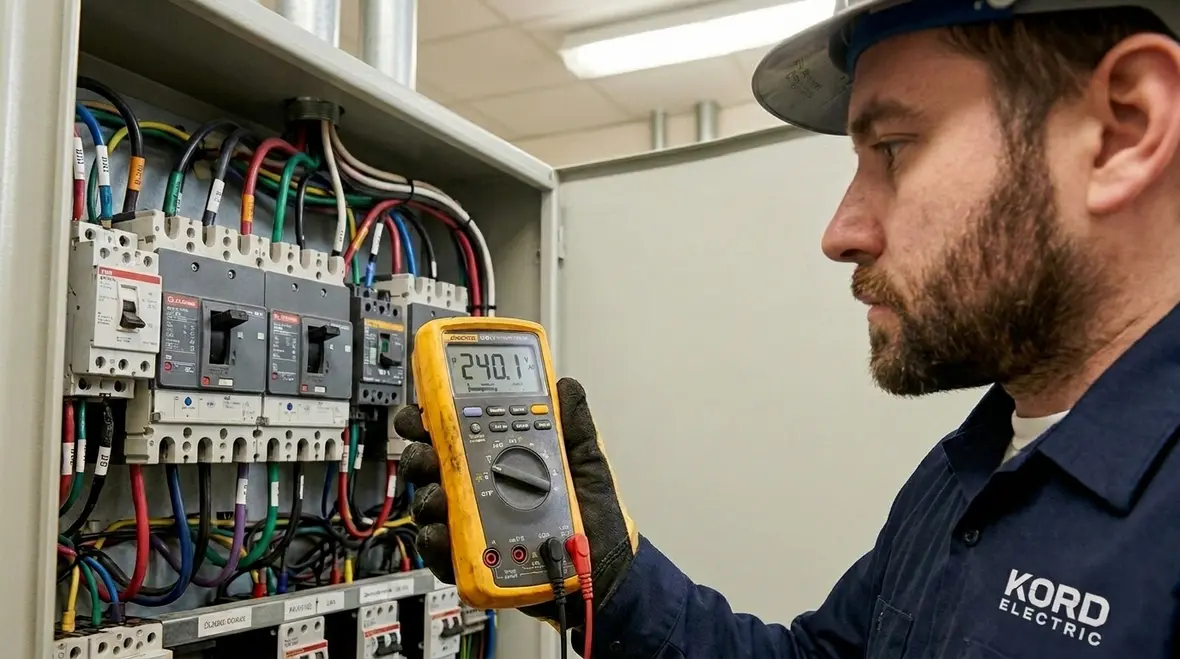
Where surge protection must be installed across a facility
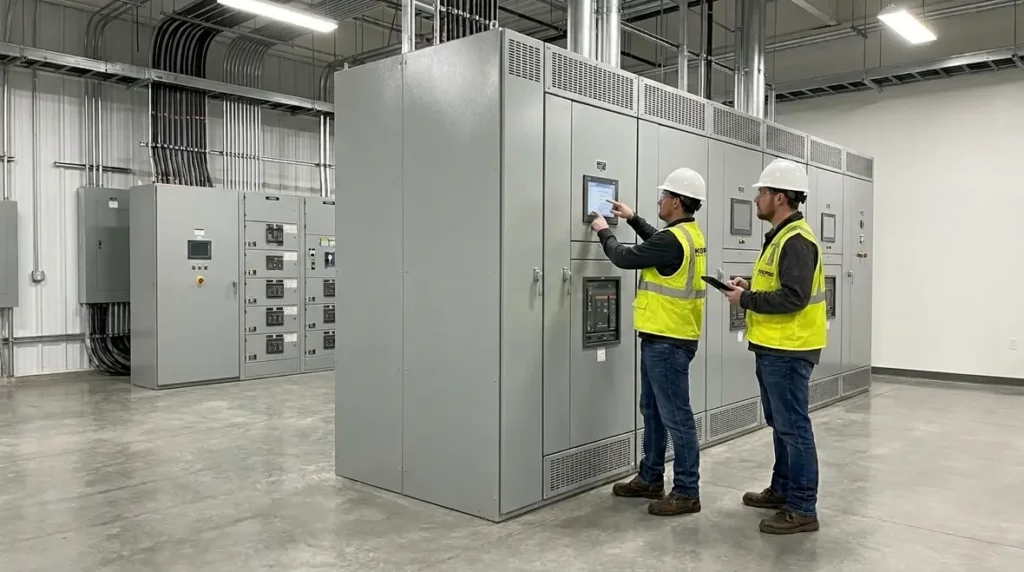
We do not treat surge protection as a single device you slap on at the last minute. Instead, our technicians map where surges enter and where they travel. Then, we place protection so energy is redirected before it can reach sensitive electronics.
For major property buildings and industrial facilities, that typically means protection at multiple levels, such as:
- Service entrance protection, where surges first enter the building
- Distribution boards, which manage spikes moving through circuits
- Final subpanels and branch circuits, especially where computers, process controls, and communications equipment receive power
- Signal and data interfaces, because spikes ride along communication lines too
To keep your uptime story intact, we coordinate grounding and bonding as well. If a surge device is installed without proper earthing, it cannot safely move the energy away. That part matters just as much as the protection hardware itself. We also follow good layout practices so leads stay short and connections stay solid, because “close enough” is how you get surprises.
Planning protection along the full electrical path
Every facility tells a different power story. Some have compact electrical rooms and straightforward panel layouts. Others feel like a maze of retrofits, expansions, and “we will fix it later” decisions. We design surge protection that matches the real path your power takes, not an idealized single-line drawing from ten years ago.
In practice, that means tracing how utility power enters the building, how it branches at switchgear and main distribution panels, and how it finally feeds server rooms, control systems, and office networks. We look at where surges are likely to enter, where they can amplify, and where sensitive electronics sit exposed. Then we build a layered Surge Protection for Businesses strategy that puts the right devices in the right places, instead of hoping one unit will “cover everything.”
How surge devices and coordination work in real projects
Surge protection works best when devices work together in a coordinated system. That means the upstream components handle larger energy events, while downstream devices protect equipment from the remaining stress.
Our expert service staff uses this approach to avoid a common issue: when devices are not coordinated, they can compete. One device may clamp energy too late, while another sees conditions it was never meant to handle. Then, the system may experience premature wear, nuisance faults, or reduced protection over time.
In practical terms, we coordinate by selecting appropriate device ratings, placement, and protection levels for your service configuration. We also review load types, including:
- Motor driven equipment and variable frequency drives
- UPS systems and battery backup arrangements
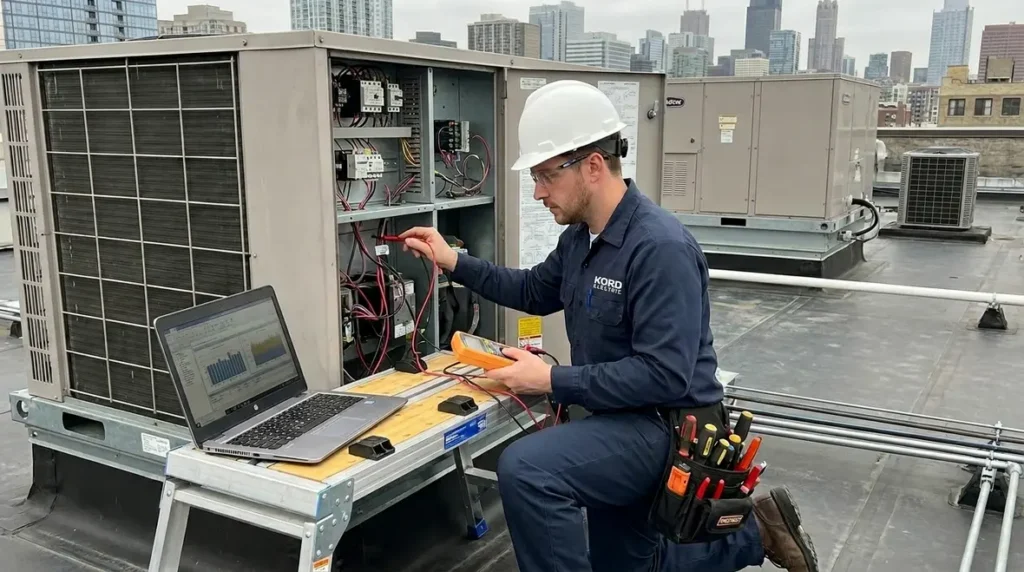
- Large HVAC equipment and controls
- Industrial automation and critical power distribution
As your facility changes, so does your electrical profile. Therefore, we design the system so it can adapt with new distribution, new panels, or expanded server rooms. And we document it, because future maintenance should not feel like solving a mystery with no clues.
Coordinating with UPS and backup power strategies
Many facilities already rely on UPS systems and generators to keep critical loads alive during outages. Surge protection must work with those systems, not against them. We review how surge devices interact with transfer switches, UPS input stages, and generator output so that clamping levels and response times complement your uptime strategy instead of creating strange side effects.
In real projects, that coordination looks like correctly sized surge protective devices ahead of main switchgear, properly rated units on UPS feeds and bypass circuits, and targeted devices near server racks and network cores. That way, the big energy gets handled upstream, while the sensitive equipment sees the smoothest possible ride.
If you are planning or upgrading your electrical distribution for reliability, it can also help to look at how Kord Electric approaches data center electrical infrastructure essentials so your Surge Protection for Businesses plan fits cleanly into the larger design.
Grounding, bonding, and wiring practices that keep protection effective
Surge protection is not a magic spell. It is physics, wiring, and a solid connection to earth. When surge energy finds a path, the path must be safe and low impedance. That is where grounding and bonding practices decide the outcome.
We focus on clean bonding between metal parts, proper connections to the grounding system, and correct sizing of conductors. Then, we verify the installation meets code and best practices for commercial and industrial builds. Our technicians also pay attention to routing. Short, direct runs help limit voltage rise on conductors, which means less stress reaches the equipment.
Think of it like steering a boat. If the rudder is loose, the boat goes where it wants. If wiring and connections are poor, the surge energy goes places you did not plan. In other words, good installation keeps the protection system from “working around” itself.
Why wiring details matter for server rooms and controls
In server rooms, control panels, and network closets, wiring discipline can make or break surge performance. Twisted, extended leads from a surge device add inductance and reduce how quickly energy can be diverted. Excess slack in grounding conductors works against you at the exact moment you need that path to be as clean as possible.
So we keep leads short, routes direct, and bonding intentional. We label grounding conductors clearly and document connection points, so future changes do not quietly undo the protection you invested in. It is the unglamorous part of Surge Protection for Businesses, but it is usually where long-term reliability gets decided.
Monitoring, maintenance, and proof after installation
A surge protection system should not be installed and forgotten, like a plant you promised you would water. We help clients protect their investment by adding practical monitoring and routine checks.
Depending on the project, we may include:
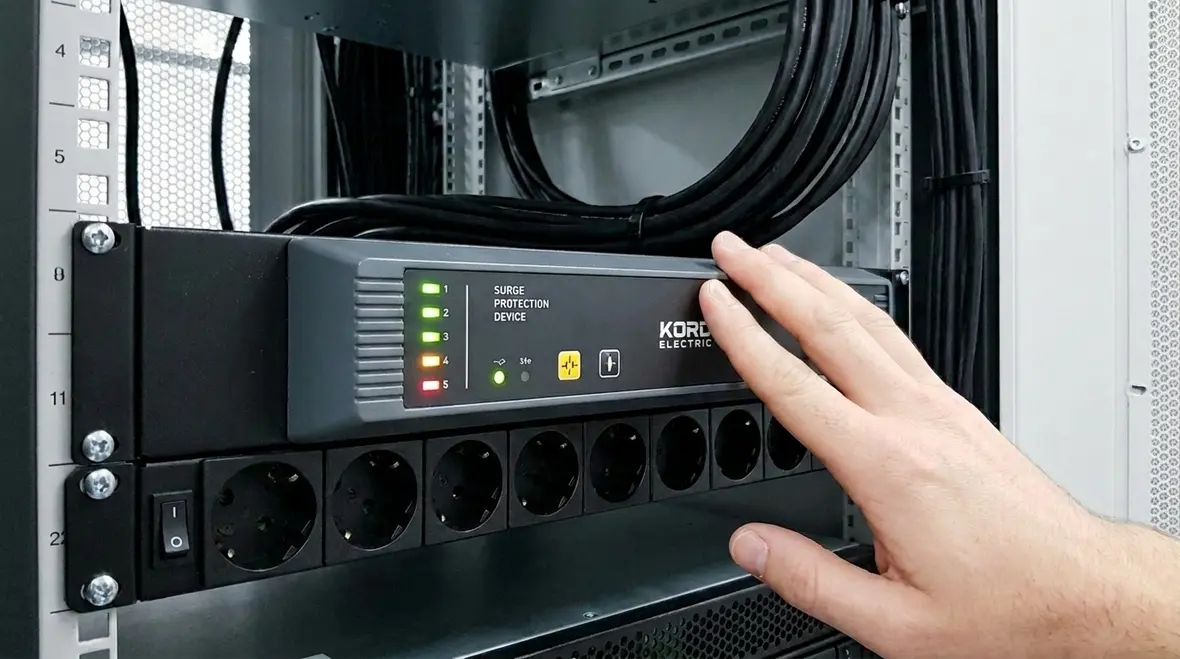
- Visual indicators or alerts that show device status
- Maintenance plans that align with site operations
- Inspection of connections, labels, and panel conditions
- Coordination review if loads or equipment change
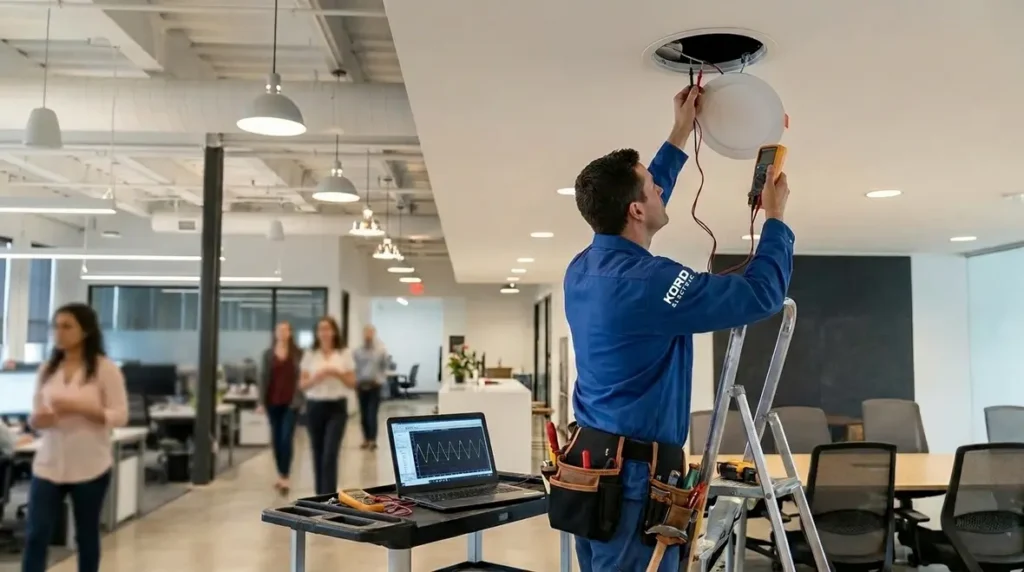
Our expert service staff also explains what to watch for. After events like lightning in the area, construction changes, or repeated motor starts and faults, we encourage a system check. That is how we keep protection reliable and prevent hidden degradation.
Where possible, we document baseline conditions and then verify performance through routine checks. While a surge event does not always leave a visible mark, the wear can show up later. So we stay proactive, because nobody wants a server reboot at 2 a.m. That is not “fun.” That is just modern pain.
For facilities that already rely on scheduled inspections, it is straightforward to fold surge protection checks into a broader electrical preventive maintenance program so your Surge Protection for Businesses strategy stays aligned with real-world operating conditions.
Integrating surge protection with data center and server room electrical design
For many commercial sites, servers live in rooms that get special care, but that care often focuses on cooling and access control. Still, the electrical infrastructure is the real backbone. We align surge protection with the overall electrical design so the entire system supports uptime.
In line with our data center electrical infrastructure essentials, we look at the full flow of power and distribution. In that broader design, surge protection fits alongside UPS strategies, distribution planning, and grounding approaches. We also coordinate with your electrical room layout so protection devices sit where they can do their job effectively.
For server rooms and major property buildings, we also consider the complete environment:
- Critical loads and how power is routed to them
- Shared spaces that house networking and security gear
- Equipment separation so noise and disturbances do not spread
- Panel labeling and service documentation for fast troubleshooting
And yes, we make it easy for your facility team. We explain choices clearly and we help you understand how surge protection works with the UPS and distribution you already have. Our goal stays simple: fewer surprises and smoother operations.
If your site is planning larger upgrades to support growing IT loads, it can be helpful to coordinate surge protection decisions with broader planning around data center electrical distribution design for reliability so protection, redundancy, and maintenance strategies all point in the same direction.
FAQ
Ready to protect your servers and critical systems
If your facility runs on uptime, we should talk. Kord Electric designs and installs surge protection for commercial and industrial buildings, including major property sites and server rooms. Our technicians evaluate how electrical power moves through your panels, protect the right circuits, and coordinate grounding and wiring so protection stays effective. Then our expert service staff explains the system in plain terms and supports ongoing checks. Contact us today for a site assessment and a clear protection plan that fits how you operate, not how a generic spec sheet wishes you operated.
When you are ready to fold Surge Protection for Businesses into a broader reliability plan, our team can also align it with structured voltage fluctuation mitigation and power quality support so your servers, controls, and occupants all see calmer, more predictable power.