Industrial Lighting Efficiency Audit Benefits
How a Commercial Industrial Audit Improves Lighting Performance and Cuts Waste
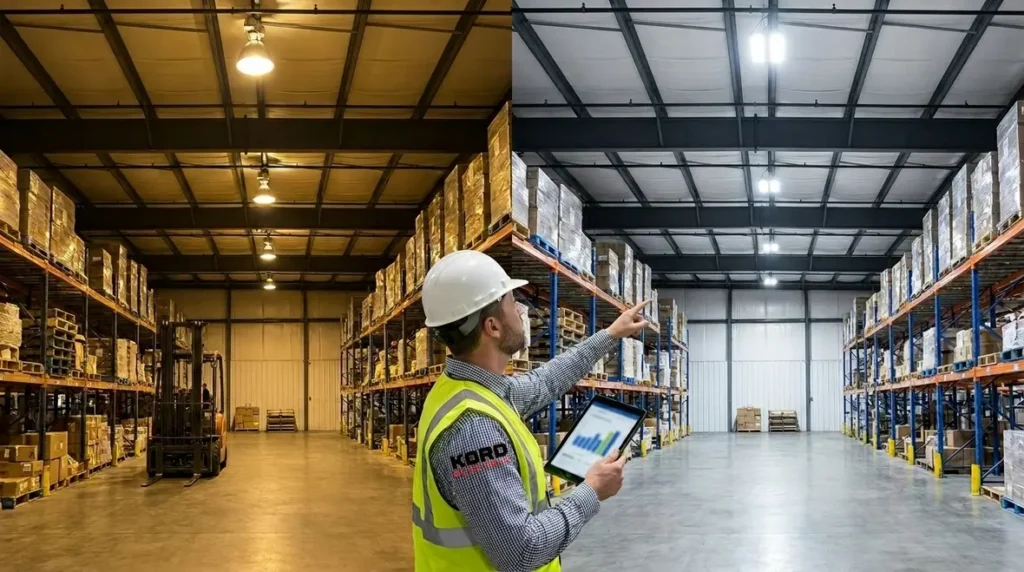
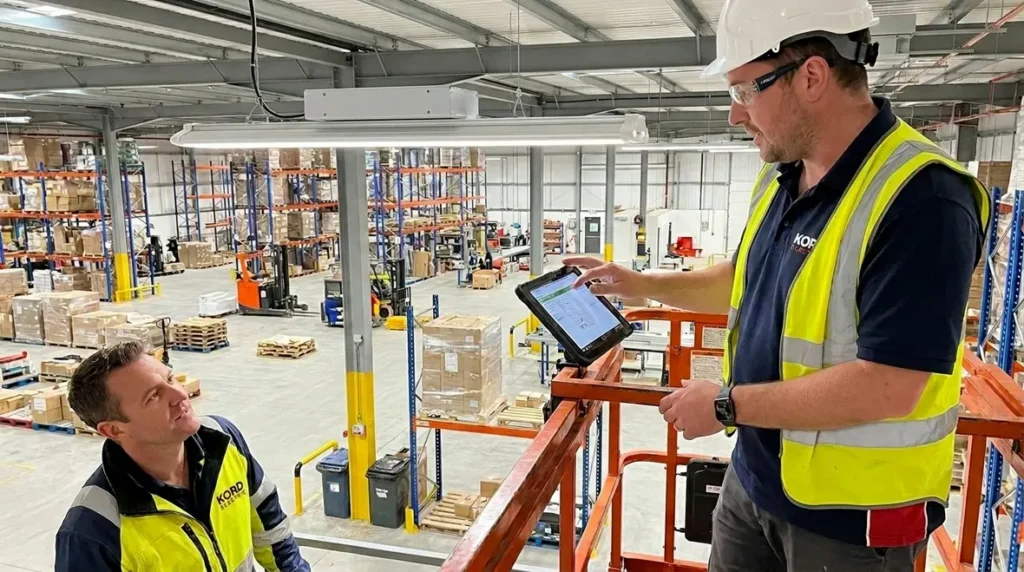
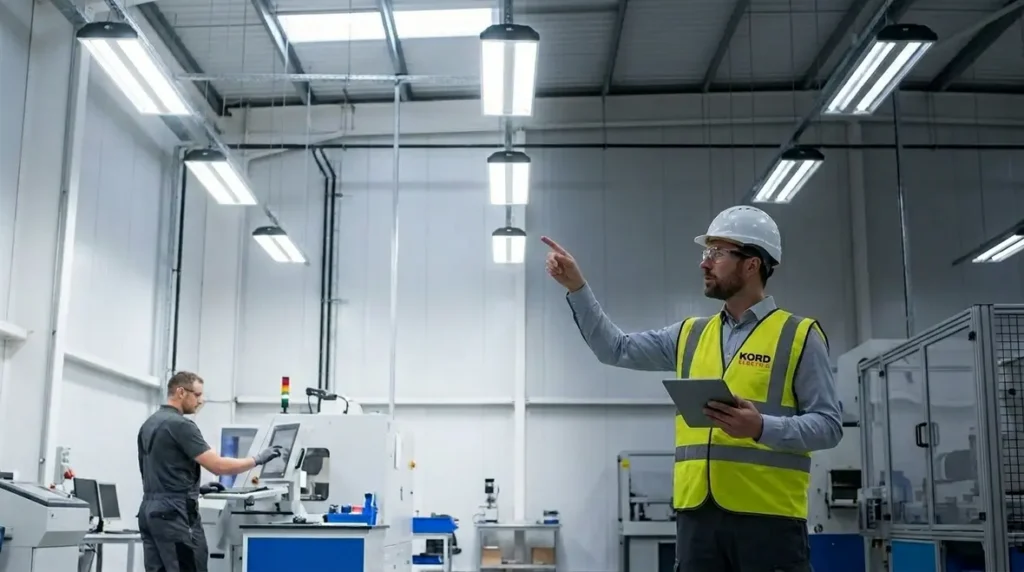
In the first place, Kord Electric treats an industrial lighting efficiency audit like a smart flashlight, not a guesswork flashlight. We use it to map where light is lost, where energy leaks happen, and why spaces stop performing the way they should. Thanks to the industrial lighting efficiency audit benefits, facility teams can reduce wasted power, stabilize illumination, and protect equipment that works harder than it should. At the same time, our technicians and expert service staff explain what they find in clear, plain language, so the next steps feel grounded, not like a mystery novel.
Then again, everyone knows lighting problems do not fix themselves. Lights do not wake up one morning and decide to be efficient. They need a plan. That is exactly where we start.
Lighting Efficiency Starts With Real Data, Not Hopes
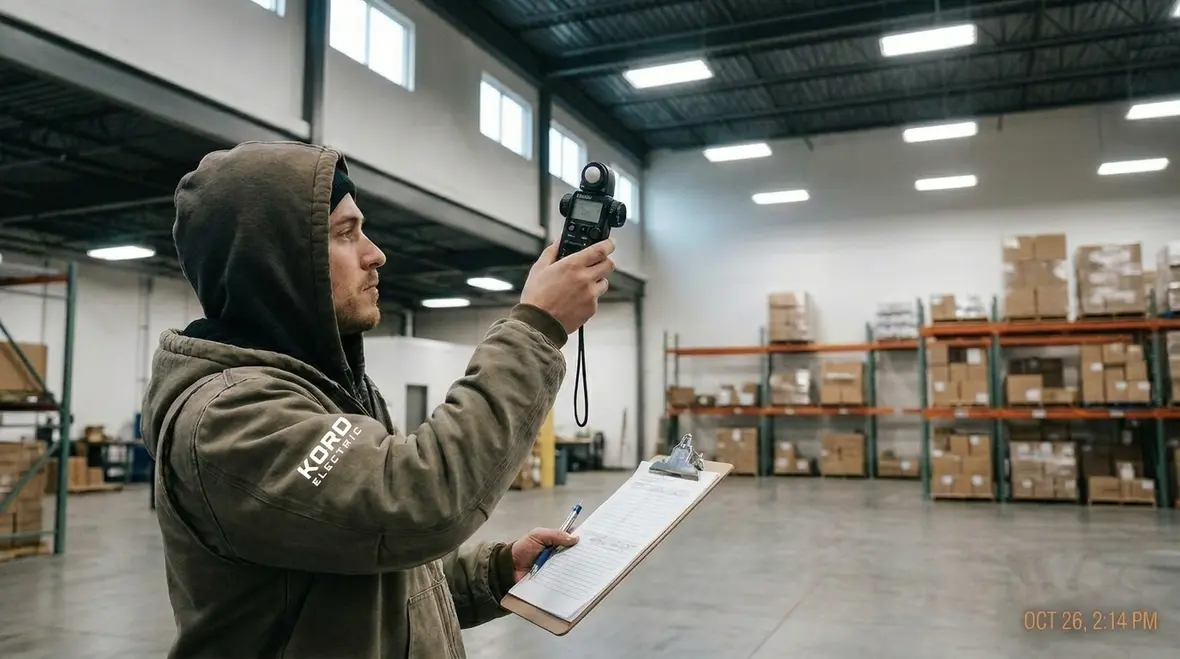
When our team arrives, we do not rely on old invoices, outdated lamp schedules, or “it seems dim lately” reports. Instead, we look at the whole lighting system as it exists today. In other words, we measure, observe, and document. And once we have real data, we can separate comfort issues from electrical issues, and electrical issues from control and maintenance issues.
For many commercial and industrial facilities, lighting performance drifts over time. Ballasts age, lenses cloud, reflectors lose shine, and occupancy patterns change. Consequently, a plan that worked five years ago may now waste energy and miss target light levels. Meanwhile, a warehouse aisle may be bright enough for the eye but not for the safety standards, inspection needs, or camera systems that depend on consistent illumination.
Our expert service staff helps leaders understand the “why” behind the numbers. They explain what is happening with drivers, fixtures, controls, and mounting conditions, so facility managers can make decisions with confidence, not vibes.

What We Check During an Industrial Lighting Efficiency Audit
Let’s walk through what we examine, step by step. First, we review the lighting layout and current configuration. Then we verify how the system behaves under real operating conditions. After that, we compare results to the intended use of each area, such as production spaces, loading docks, corridors, offices, and critical storage zones.
Key items we assess
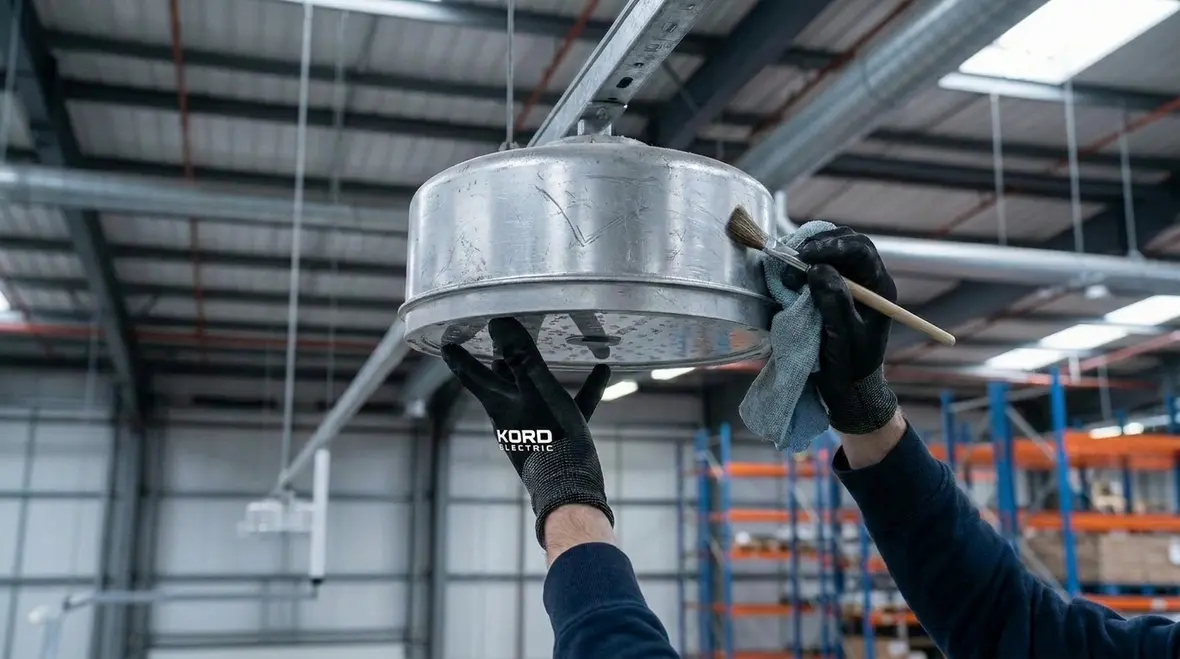
- Fixture condition, including lens dirt, reflector wear, and alignment
- Lamp and LED output condition, plus driver health where applicable
- Lighting controls performance, such as timers, sensors, and dimming strategy
- Electrical delivery issues that reduce performance and add stress to components
- Maintenance history and service intervals, so future work stays predictable
- Target light levels by zone, and how the actual levels compare
As we move through each area, we also check for uneven coverage. Just because a ceiling looks bright does not mean the work surface gets enough light. Likewise, “energy efficient” equipment can still waste power if controls do not match occupancy patterns.
And yes, we have seen systems where the lights stay on all night, like a teenager who insists they will go to bed “soon.” The math does not agree. So we find the mismatch and fix it.
Benefits That Matter for Facility Operations and Maintenance
Now to the heart of the matter. An industrial lighting efficiency audit benefits more than your utility bill. It improves how the facility runs day to day, and it reduces surprise downtime later. When Kord Electric identifies inefficiencies early, the facility avoids the “we will deal with it next outage” trap.
Here are practical outcomes our commercial and industrial clients tell us they feel quickly.
- Lower energy use by matching light output to actual task needs
- More stable illumination for safety, quality checks, and consistent work
- Longer equipment life because drivers, fixtures, and components run under proper conditions
- Less maintenance firefighting through clearer repair priorities and updated service plans
- Better control logic so lights dim or shut off when the space is truly unoccupied
- Reduced rework from poor visibility that can slow teams down
Because we connect lighting performance to facility goals, our teams often recommend fixes that align with other electrical maintenance work. In the end, that means better coordination, fewer contractor handoffs, and a calmer schedule for everyone involved.
How Maintenance Plans Keep Lighting Efficient Over Time
It is one thing to find issues. It is another thing to keep them from coming back. That is why Kord Electric supports lighting improvements with structured maintenance planning for commercial and industrial buildings. If a facility runs lighting like it is a one time project, efficiency will fade. However, if the facility runs lighting like an asset, performance stays steadier.
When we reference our commercial and industrial electrical maintenance plans, we emphasize regular checks, clear responsibilities, and documented service. You can find the same approach in our maintenance plan resources at our Kord Electric blog page: Commercial and Industrial Electrical Maintenance Plans. The idea is simple. We help others maintain what they already invested in, instead of chasing new failures.
Our technicians and expert service staff also train facility teams on what to watch for between service visits. For example, if controls begin to behave oddly after a change in building schedules, a quick review can prevent the system from running inefficiently for months. That is the kind of small fix that saves big money later.
Fixing Controls, Wiring, and Fixture Conditions Without Guesswork
Once the audit shows where the problem lives, we move to solutions that make sense for major properties and commercial and industrial sites. And because we keep the process organized, others can plan around work windows, tenant needs, and safety rules.
Common improvement paths include:
- Control tuning, such as adjusting sensor thresholds, schedules, and dimming curves to match real occupancy
- Fixture upgrades, including replacing worn parts, improving optics, and correcting uneven coverage where needed
- Electrical verification to confirm power quality and connections that keep drivers and components stable
- Cleaning and relamping strategies aligned to actual conditions, not generic timelines
- Maintenance sequencing so the facility gets the biggest impact first, then the rest
At times, a facility team thinks the only fix is swapping fixtures. But we often find that better controls and targeted maintenance deliver a large share of the improvement without replacing everything. In other words, we spend money where it returns value, not where it looks busy. This is not a magic show, even if the lights can make it feel that way.
And to keep things easy, we explain each recommendation in practical terms. Our expert service staff outlines what it does, what it prevents, and how it supports stable lighting performance for the space’s real use.
FAQ: Industrial Lighting Efficiency Audit
Is It Worth It for a Major Property or Warehouse?
For major properties, efficiency work rarely stays “small” for long. Even modest improvements multiply across square footage, operating hours, and seasonal usage. Therefore, a lighting audit can uncover waste that facility teams do not see because the lighting still looks “fine” from a distance.
In fact, we often find that the biggest cost is not just energy. It is the chain reaction that starts with inconsistent light. When visibility drops, safety risks rise. When controls do not match occupancy, lights run longer than they should. When maintenance falls behind, failures increase and repairs become rushed. In other words, lighting inefficiency spreads.
So yes, it is worth it. And if anyone tells you it is not, they may be thinking of a different world. A warehouse does not operate like a living room. We build lighting strategies for facilities that run hard, long, and with real expectations.
Choose Kord Electric for a Smarter Lighting Plan
If a facility wants lighting that performs today and stays reliable tomorrow, Kord Electric is ready. Our technicians and expert service staff conduct a clear industrial lighting efficiency audit, then explain what we find and what to fix next. You get practical recommendations, maintenance alignment, and a plan built for commercial and industrial buildings and major property teams.
For facilities that want to keep improvements on track, pairing an audit with a structured program like our commercial and industrial electrical maintenance plans helps lighting systems, panels, and controls work together instead of drifting apart over time.
If your site is also planning broader upgrades, Kord Electric’s core services such as Electrical Preventive Maintenance and Lighting Installation Services can be aligned with your industrial lighting efficiency audit to turn wasted light into controlled, efficient performance across the entire facility.
Contact us to schedule an evaluation and start turning wasted light into controlled, efficient performance.