Industrial Lighting System Troubleshooting Guide
At Kord Electric, we see the same pattern every time an industrial site’s lighting starts acting up. One day everything looks fine, and the next day the bays go dim like someone pulled a switch in a movie theater. This is where Industrial lighting system troubleshooting matters. We walk teams through quick checks for common failures, because most problems start small and then grow teeth. Meanwhile, our technicians and expert service staff keep the process calm and clear, so facility managers do not feel like they are chasing ghosts. And yes, the lights usually do not fail on the same schedule as your utility bills, so speed helps.
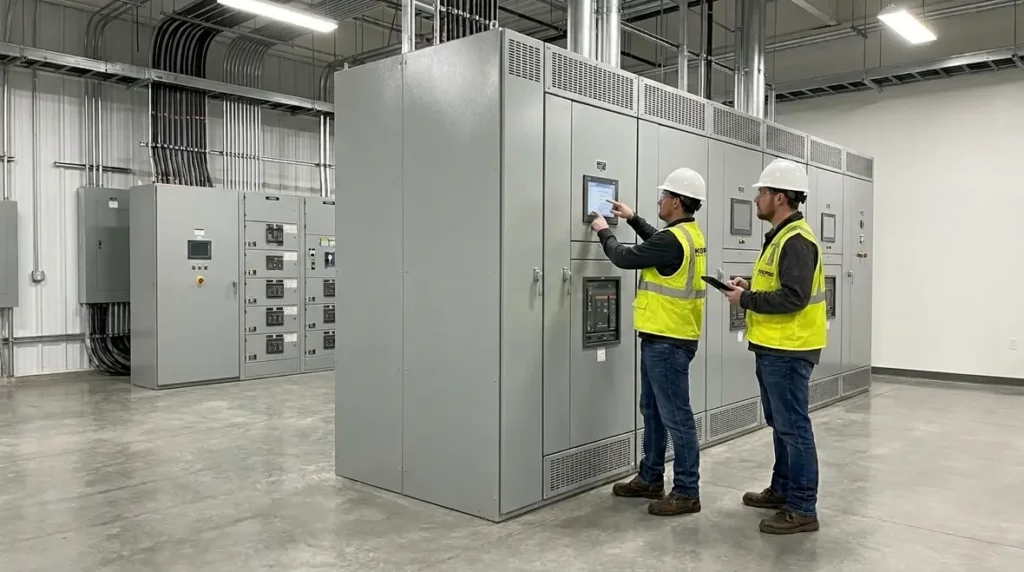
Along the way, we also connect lighting behavior to the rest of your electrical infrastructure. In large commercial and industrial properties, the same issues that create hidden electrical risks or surprise outages can also show up first as strange lighting behavior. That is why our teams treat lighting as an early warning system, not just a comfort feature.
Spot the early warning signs before the lights fail
When industrial lighting systems drift out of spec, they rarely announce themselves with a dramatic countdown. Instead, they show up as small problems that repeat. Therefore, we start with what people notice first: flicker, uneven brightness, a sudden jump in glare, or fixtures that cycle on and off. Next, we connect those symptoms to likely causes such as driver issues, bad connections, or failing controls.
Our technicians typically confirm patterns rather than guessing. For example, if only one area flickers, the issue usually stays local. However, if multiple zones degrade at the same time, we look upstream at power quality, voltage drops, or control panel behavior. In the field, we treat each site like a system, not a pile of fixtures. That mindset keeps fixes fast and prevents the “replace everything” approach, which is about as efficient as using a wrench to fix a watch.
We also recommend simple log notes. Facility teams can track when symptoms happen, like after a motor starts or during certain shifts. Then, our expert service staff uses those details to narrow the cause quickly. In many cases, the right fix becomes obvious once you match the timing to electrical events.
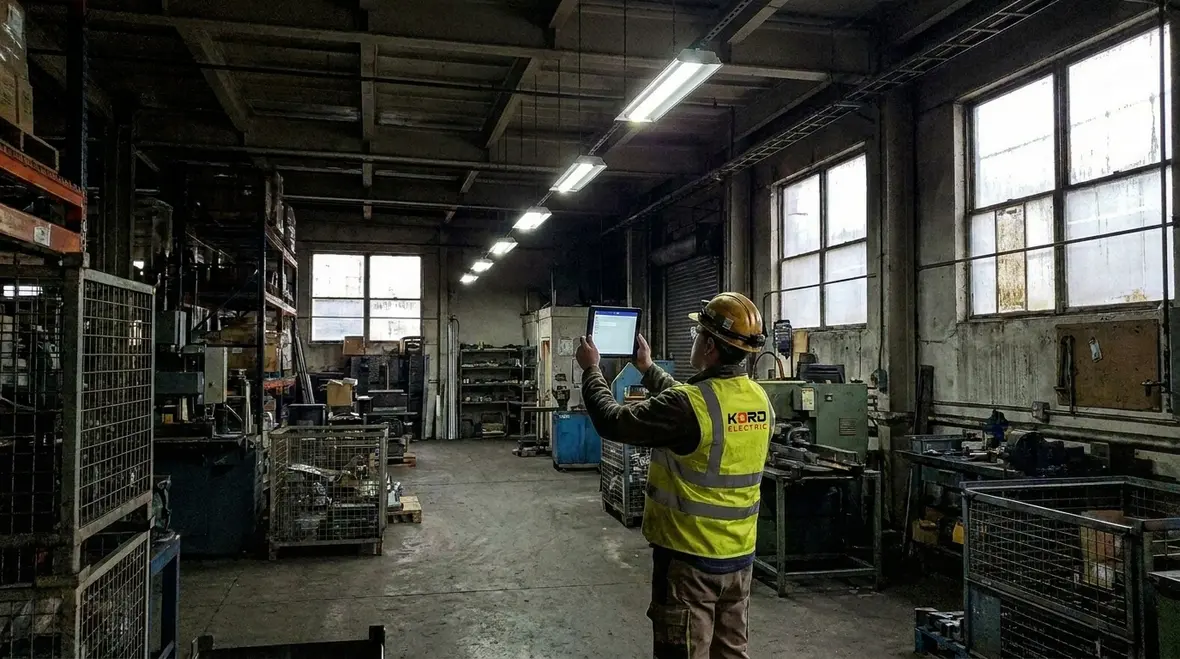
When we see repeated issues in specific areas, we often connect lighting patterns with broader maintenance planning. For some facilities, that means building a structured program like the commercial and industrial electrical maintenance plans we recommend for large properties, so lighting issues become part of a predictable inspection cycle instead of a surprise visit.
Why industrial lights flicker and what we do first
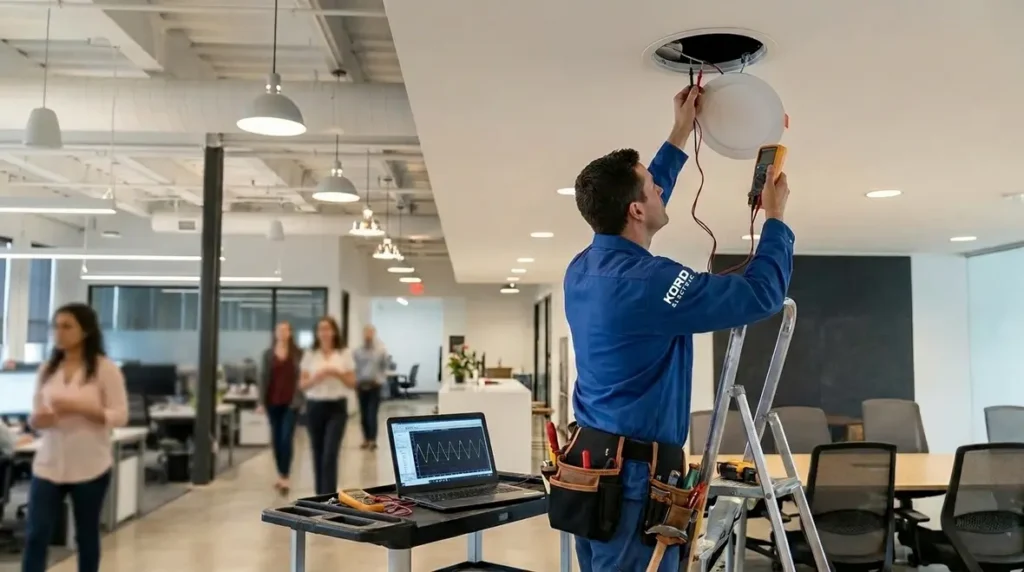
Flicker makes people angry fast, and for good reason. It affects work quality and can raise safety concerns. So, during industrial lighting system troubleshooting, we begin with the power and control path. First, we check for loose terminations and signs of overheating in junction boxes and fixture drivers. Next, we verify the dimming signal and make sure control wiring stays correct for the fixture type. Many modern lamps rely on drivers that do not like dirty signals, and they will show it through flicker.
Then we test the basics: input voltage, grounding integrity, and continuity where it matters. If a crew reports flicker during specific operating modes, we also inspect the lighting control settings. Often, the fault sits in a mismatch between the control system and the fixture electronics, not in the fixtures themselves.
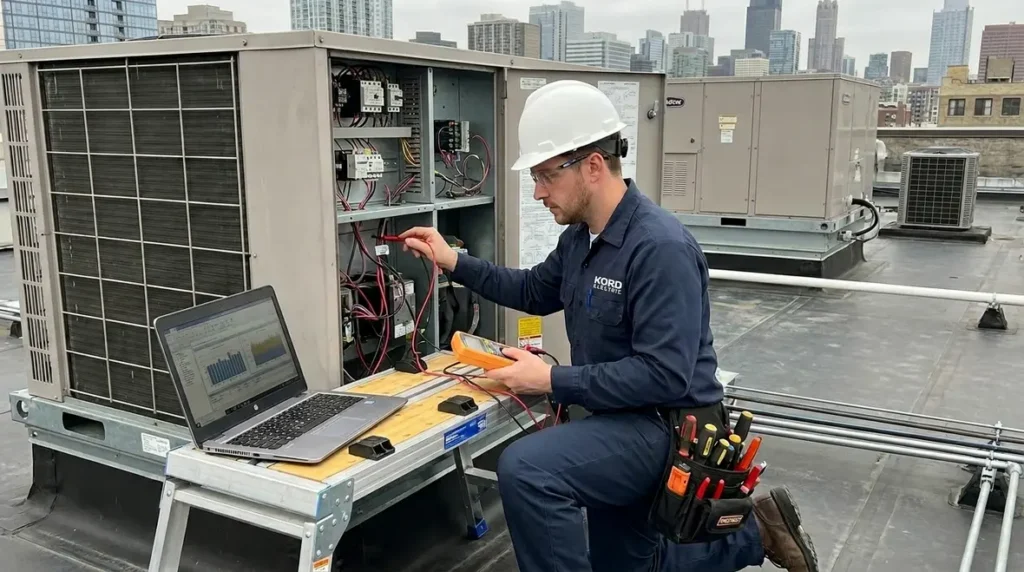
Here is the part most people skip: we scan for power quality issues. Harmonics, poor power factor, and voltage sag from heavy loads can stress drivers. Therefore, we coordinate with site electrical data when possible and confirm whether the problem aligns with large motors or HVAC starts. Once we isolate the source, we apply the targeted repair, not a random part swap.
Because many commercial sites already rely on sophisticated lighting controls, we also reference how those systems should behave when they are working correctly. For example, the same discipline that supports automated lighting control benefits for facilities can be used in reverse during troubleshooting: we confirm schedules, sensor zones, and dimming groups so the control logic stops creating phantom flicker.
Distinguishing local flicker from building-wide issues
Not all flicker is created equal. Localized flicker in one aisle usually points to a bad driver, a loose neutral, or a damaged connector. Building-wide flicker, on the other hand, often indicates larger issues with feeders, switchgear, or even utility events. We separate these quickly by mapping where complaints come from and correlating them with panel schedules and breaker layouts.
In some cases, the same upstream vulnerabilities that cause emergency power failures in commercial buildings will show up first as lighting instability. That makes lighting a valuable indicator: when we stabilize it, we often uncover bigger reliability wins for the rest of the electrical system.
Fixing uneven illumination across large areas
Uneven light can make a warehouse feel like a fun house. It also creates compliance risk when standards call for consistent levels. Accordingly, we troubleshoot in layers. First, we confirm the fixture layout and aiming. Then, we inspect for missing lamps, wrong wattage replacements, or mismatched optics that change beam spread. Even small changes during past maintenance can shift the whole balance.
Next, we check the electrical feed to groups of fixtures. If one circuit supplies fewer fixtures than the layout expects, you will get patchy brightness. In addition, we look for panel labeling errors, incorrect circuit maps, or a change in load that altered voltage at the far end. In the same way a long hallway will sound quieter when doors close, long runs and poor connections can reduce output at the end of the circuit.
Our technicians also verify that controls do not create uneven behavior. For example, occupancy sensors and daylight harvesting can override groups differently. So, we check sensor placement, time settings, and light level thresholds. Once we align the control logic to the real use of the space, illumination usually stabilizes.
To keep downtime low, we prioritize fixes that restore consistency during the same shift. Meanwhile, we document circuit behavior so later maintenance teams do not fall into the same trap. That documentation also supports future projects, from rewiring cost planning for commercial electrical systems to targeted upgrades in high-risk zones.
Linking layout, controls, and maintenance history
Uneven lighting is almost never “just” a fixture issue. Layout changes after a renovation, added racking, or relocation of workstations can all shift how light lands on the floor. At the same time, control zoning might not have caught up with those changes. We combine floor plans, panel schedules, and maintenance notes to build a complete picture before we move a single fixture.
For facility managers, this approach avoids the costly guesswork of trial-and-error part replacements. Instead, it turns each adjustment into part of a deliberate, site-wide optimization that supports both productivity and safety.
When drivers, ballasts, or tubes fail: quick diagnostic path
Industrial lighting failures often trace back to the electronics. Drivers fail, ballasts drift, and lamps reach end of life. However, we do not treat every dead fixture the same. Instead, we use a quick diagnostic path based on failure mode and pattern.
We start with a simple observation. If multiple fixtures on the same branch circuit fail together, the cause may involve a supply issue or a component in common, like a driver type or a control output. If failures appear random, we likely deal with aging components or environmental stress such as heat and vibration. Therefore, our expert service staff checks ambient temperatures, fixture ventilation, and mounting conditions.
Then we verify whether the failure follows the dimming state. Some drivers fail more under certain dim levels. So we test at multiple settings. We also inspect connectors for corrosion and check whether moisture seals stay intact, especially in facilities near docks, chemical rooms, or food processing areas.
As a practical step, we tighten and re-terminate where we find compromised connections. That is boring work, but it prevents repeat failures. And repeat failures are how maintenance teams earn the unofficial award for “most time spent in troubleshooting purgatory.”
Using patterns to protect the rest of the system
When multiple failures share the same driver family, location, or mounting style, we treat the pattern as a clue that the rest of the system deserves attention. That might include checking for hidden electrical risks in nearby panels, looking for localized heat sources, or verifying that the fixtures were matched correctly to the control hardware from the start.
This approach turns each failure into a learning opportunity. Rather than simply restoring one fixture, we protect entire rows, bays, or production zones from repeating the same problem.
Control systems and sensors: solve the behavior, not just the light
In commercial and industrial facilities, lighting rarely works alone. Controls manage energy, safety, and usability. Yet controls also introduce complex behavior that looks like electrical failure. So, we troubleshoot at the system level.
First, we examine whether the issue relates to scheduling. Lights might turn off too early, not at all, or they might ramp oddly. Next, we check occupancy sensors, photocells, relay modules, and panel settings. We also confirm that sensor zones match the actual use of space. If the sensor watches a blank wall, it will behave like a very confident liar.
Then we review communication and wiring. In networks, a misconfigured parameter can drive dimming commands that cause flicker or reduce output. Similarly, power at the control panel can vary because of load changes. When that happens, lighting drivers may respond unpredictably.
Our technicians take a calm, stepwise approach. They isolate the control logic from the lamp electronics so we do not blame the wrong component. As a result, we restore reliable lighting while keeping energy targets in reach. And we document changes so your team can maintain the system without guesswork.
For many facilities, these same control strategies tie directly into broader building goals: code compliance, safety egress lighting, and long-term energy performance. That is why we often coordinate industrial lighting system troubleshooting with other projects like NFPA 70B electrical panels and switchgear maintenance or updates to emergency power strategies, so everything moves in the same direction.
When automated controls help — and when they get in the way
Automated lighting control can be a hero when it matches how people actually use the building. It can also be the villain when schedules drift, sensor zones are misaligned, or overrides stack on top of each other. We treat each troubleshooting visit as a chance to “recommission” the system: verify time clocks, test daylight response, and confirm that overrides are clearly labeled and documented.
The result is less frustration on the floor and fewer calls where staff say the lights “have a mind of their own.” Instead, controls do what they were meant to do: support productivity, comfort, and safety without constant babysitting.
Prevent future downtime with maintenance that fits the site
Once we restore performance, we help your team prevent repeat issues. That is where good maintenance becomes an advantage, not just a cost. We build maintenance recommendations for your facility type and operating pattern, especially in warehouses, manufacturing floors, distribution centers, and major property buildings.
Instead of a generic checklist, we focus on what actually reduces failures. We recommend periodic inspections of terminations, driver status where available, and control panel health. We also help teams set lamp and driver replacement intervals based on environment and observed failure rates.
In areas with vibration or high heat, we suggest tighter checks on mounting and fixture seals. In large sites with long circuit runs, we pay attention to voltage drop and connection integrity. Meanwhile, we remind facility staff to track changes after renovations. When the floor layout changes, the light mapping and sensor behavior can change too.
Our expert service staff also trains internal teams on what to watch for. For example, we show them the early signs of driver strain, like repeated dimming errors or rapid cycling. Then, when a real issue starts, you catch it early, before it becomes a full site incident.
For industrial properties across the region, structured care is often the difference between steadily reliable lighting and constant firefighting. That is why many facility managers pair lighting-focused maintenance with broader programs such as commercial and industrial electrical maintenance plans, so lighting becomes part of an integrated reliability strategy instead of an isolated line item.
Connecting lighting reliability with wider electrical health
Lighting rarely fails in isolation. The same panels, feeders, and controls that feed lighting also support HVAC, conveyors, data systems, and process equipment. When we build a maintenance roadmap, we flag places where an issue in one area — like transient voltage swings — could silently damage lighting drivers and sensitive loads at the same time.
By investing in targeted inspections and documented Industrial lighting system troubleshooting steps today, you build a foundation that supports uptime goals tomorrow, whether your next project involves solar integration, data center upgrades, or a full-scale commercial rewiring.
FAQ: industrial lighting system troubleshooting for common problems
Ready to restore reliable light across your facility
If your industrial lighting feels unstable, we can help you bring it back under control. Kord Electric sends technicians who troubleshoot with clear steps, so you do not waste hours guessing in the dark. We handle commercial and industrial facilities and major property buildings, and we focus on safe, targeted repairs that reduce downtime. Call us today for an on site assessment, and we will map the fastest path to stable illumination. And yes, we promise we will not just swap parts and hope the lights behave.
For facilities across Los Angeles County and surrounding areas, that support includes broader electrical work as well. Whether you need focused Industrial lighting system troubleshooting, help planning rewiring costs for commercial electrical systems, or a partner to build out data center electrical requirements for uptime, our team is ready to step in. Many property leaders start by exploring regional Los Angeles County electrical services options, then build a roadmap that ties lighting reliability directly to long-term infrastructure health.
If your facility includes high-value spaces like server rooms or data halls, you can also review Kord Electric insight on data center electrical requirements for uptime. Those same principles — clarity, redundancy that makes sense, and disciplined testing — apply directly to industrial lighting reliability, especially when lighting supports critical safety and production tasks.