Proactive Electrical Checks Prevent Commercial Fires
Commercial and industrial buildings burn for reasons that rarely surprise anyone who looks closely. In fact, Preventing commercial fire hazards starts long before a flame ever shows up. It begins with wiring that stays within safe limits, panels that are kept clean, and systems that get checked like clockwork. At Kord Electric, we take a proactive approach because we do not wait for smoke to deliver a dramatic lesson. We also explain the “why” in plain language, so our clients and their teams can make decisions with confidence, not guesswork. Now, if that sounds thrilling, imagine this: catching a problem early is like finding a loose screw before it turns into a full episode of “late night building repairs.”
Why proactive electrical checks matter in commercial buildings
For third person guidance inside a prompt, the simple answer is this: proactive checks reduce the chances of electrical faults starting a fire. However, the real value sits underneath the surface. Heat builds when current flows through damaged insulation, loose connections, or overloaded circuits. Over time, that heat can degrade materials, char wiring, and weaken components until the system can no longer handle normal loads.
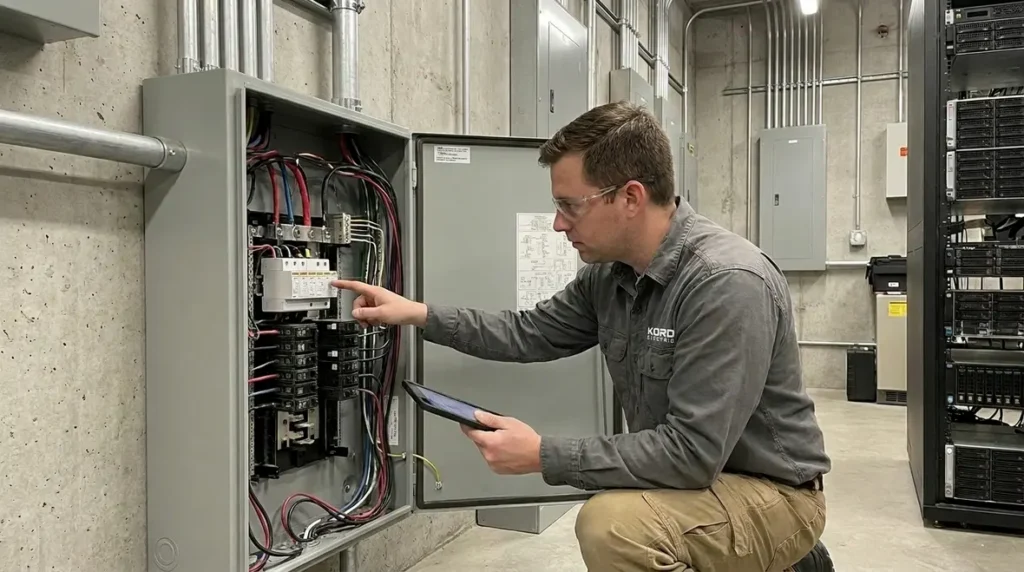
As a facility ages, electrical wear becomes more common, and the risk grows quietly. Therefore, we recommend a plan that identifies problems early. Our technicians and expert service staff inspect visible issues, verify electrical performance, and document conditions so others can act fast. We also coordinate with facility managers and maintenance teams, because everyone benefits when the investigation is shared, not kept mysterious.
How Kord Electric finds hidden risks during walk throughs
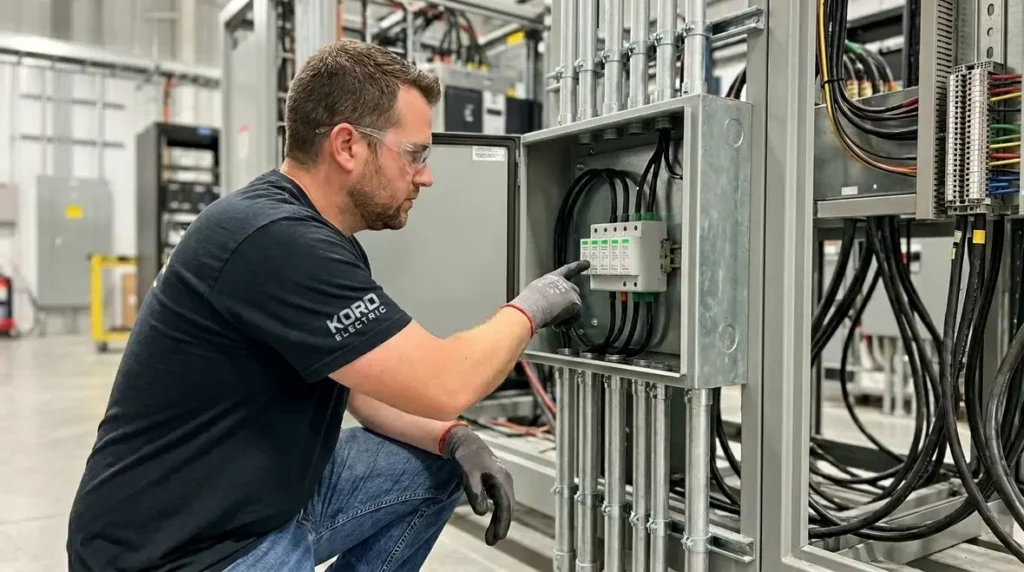
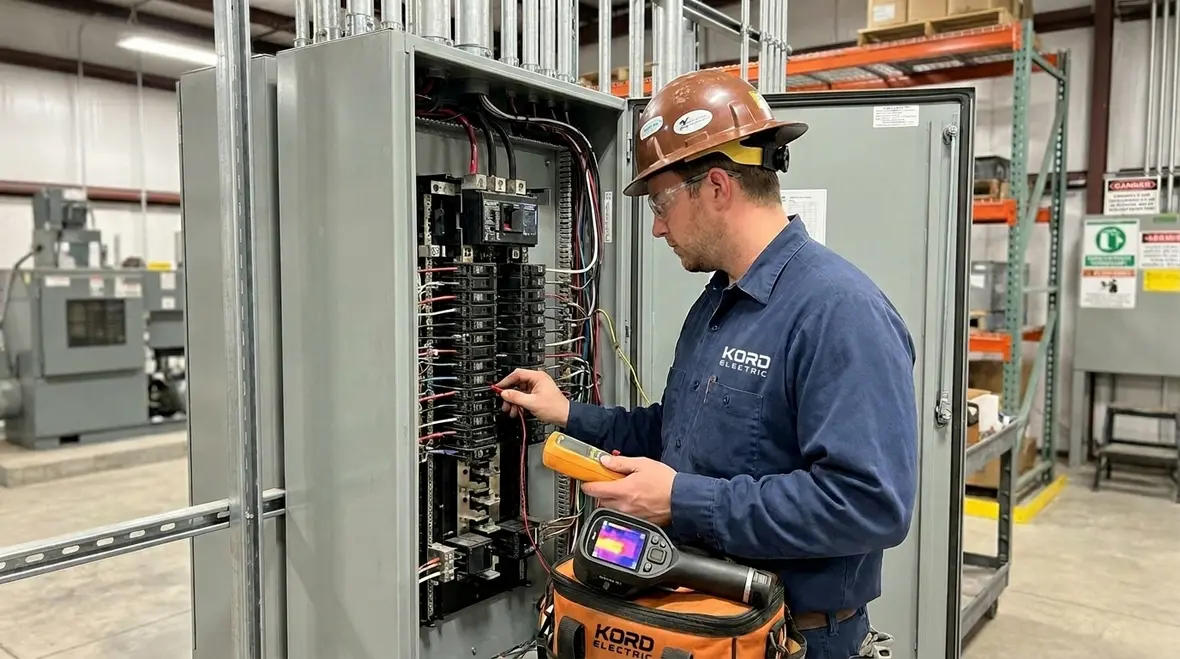
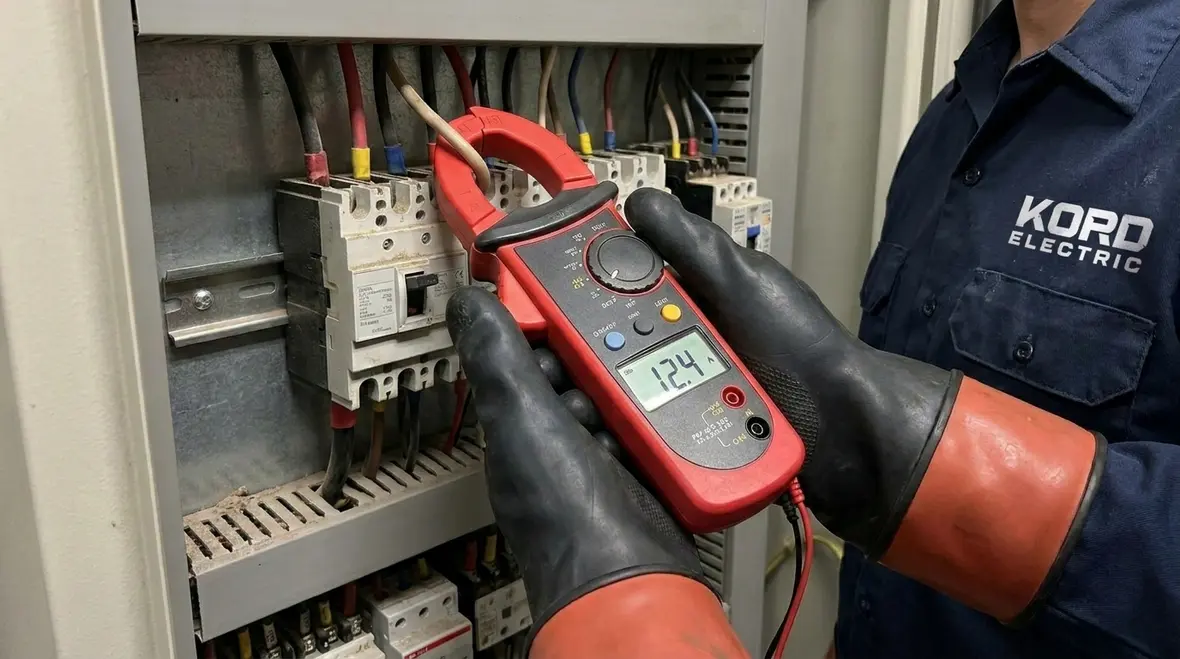
Kord Electric builds inspections around what teams can miss during day to day operations. First, we focus on locations where faults often begin: electrical rooms, panel boards, junction areas, cable trays, and equipment panels. Then we connect what we see to what we measure. That means we do not stop at “it looks fine.” We check for signs of overheating, inspect terminations, and review labeling so the right breaker controls the right load.
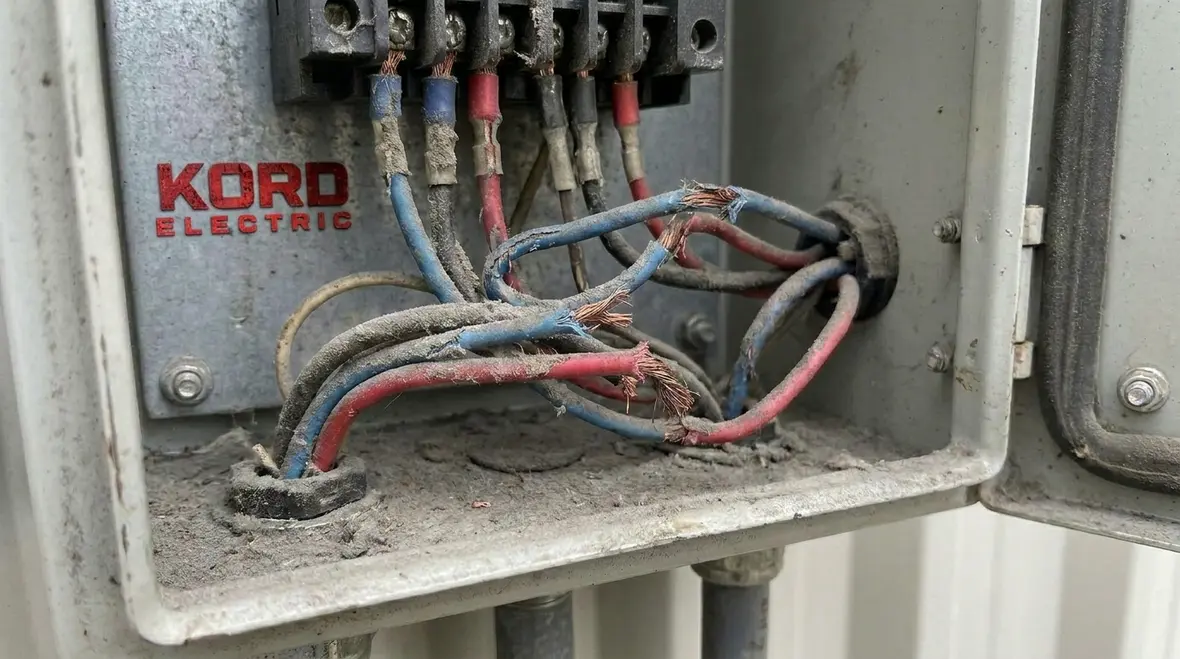
Our technicians also look for patterns. For example, if one circuit gets replaced repeatedly, that tells a story. If breakers trip at certain times each day, that points to a load or connection issue. And if corrosion or moisture shows up in an enclosure, the system may not be failing now, but it can fail later, right when you least want it.
Electrical inspections that stop problems before they become smoke
Preventing commercial fire hazards means controlling risk at multiple levels, not just one. Kord Electric uses a layered approach that targets common failure points. We verify that panels operate within expected conditions and we evaluate how loads are distributed. Additionally, we examine cable routing and support so vibration does not loosen connections. We also confirm that bonding and grounding meet safe practice, because a poor path for fault current can cause abnormal heating.
When our expert service staff explains findings, they also explain options. Some issues require immediate correction. Others need scheduled replacement based on severity. Either way, we provide clear recommendations that a facilities team can follow without needing an engineering degree and a small calm prayer.
Transition matters here. First, detection. Next, confirmation. Then, action. And finally, follow up. That rhythm is how proactive work stays effective instead of turning into expensive guesswork.
Common commercial fire starters we target in the field
Many electrical fire events begin with predictable failures. Kord Electric focuses on the issues that show up again and again in major property buildings and industrial facilities. The key problems we look for include loose wire terminations, damaged insulation, incorrect breaker sizing, and deterioration caused by heat cycling. We also watch for dust and debris buildup, especially in environments where air movement carries particles into enclosures.
We also address equipment that receives heavy use. Motors, drives, transformers, and switchgear can develop hot spots if connections loosen or if ventilation becomes restricted. In addition, we check for signs of water intrusion or condensation, because moisture can lower insulation resistance and accelerate breakdown.
Here is where a little humor helps, because maintenance teams have seen it all. Overheated connections do not “mysteriously” appear. They usually announce themselves with signs that are easy to ignore until they are not. Our job is to spot those signs early, before they write a tragic plot twist.
Maintenance programs that support safer operations
A strong maintenance program turns fire risk into a managed variable. Instead of reacting, we plan. Kord Electric helps commercial and industrial clients set service schedules based on equipment type, operating hours, and environmental conditions. Furthermore, we encourage recordkeeping that makes future troubleshooting easier, because continuity beats chaos. For a deeper dive on structured planning, many facility teams pair this approach with Kord Electric’s guidance on commercial and industrial electrical maintenance plans, which reinforces how proactive work keeps systems calm and predictable.
Good programs include visual inspections, torque verification where applicable, cleaning of enclosures, and periodic testing that matches the building’s electrical architecture. Also, teams should confirm that modifications do not create new hazards. Many facilities add loads over time, and if the electrical system never gets reviewed after each expansion, stress can build quietly.
To help our clients, our technicians explain what changes require review, what documentation matters, and how to coordinate with building operations. We do not just install and leave. We provide guidance so the next service visit stays smoother than your last parking lot experience.
Training and communication for facility teams
Preventing commercial fire hazards requires more than tools. It requires awareness across the building. Kord Electric works with facility managers and maintenance teams to share practical guidance that staff can use between service visits. Our expert service staff teaches what to look for during routine rounds, how to report issues, and why quick action can stop a small defect from becoming a major emergency.
We recommend simple, repeatable steps: alert systems for unusual odors or sounds, clear reporting paths for tripped breakers that repeat, and safe procedures for identifying hot or damaged equipment. Then we align those steps with the building’s electrical documentation so work follows the correct circuits and equipment labels.
When communication stays consistent, risk drops. And when risk drops, operations run more calmly. That is the goal, and yes, it is less glamorous than action movies, but it is far more reliable.
FAQ about proactive electrical fire hazard prevention
Call Kord Electric when you want safer electrical operations
Now is the right time to move from “hope it holds” to planned prevention. Kord Electric serves commercial and industrial facilities with inspections, recommendations, and expert service that supports safer electrical operations. Our technicians explain findings clearly and help teams prioritize action before issues expand. If your building runs critical equipment, houses major property operations, or has electrical work history that needs review, contact us. We will help you build a proactive plan that reduces risk and protects your operation.
For facilities that want to connect proactive fire prevention to ongoing care, Kord Electric’s dedicated electrical preventive maintenance services give teams a structured way to keep inspections, testing, and repairs on schedule instead of waiting for the next surprise shutdown.
If your operation is based in Southern California and you are ready to tighten up your electrical fire prevention strategy, explore Kord Electric’s broader Los Angeles County electrical services to see how system assessments, emergency response, and long term planning can work together for safer commercial buildings.