Industrial Smart Lighting Control for ROI
Kord Electric helps commercial and industrial facilities upgrade lighting with industrial smart lighting control that improves comfort and cuts waste at the same time. When we design a control strategy, we do not chase gadgets. Instead, we align occupancy, daylight, scheduling, and energy tracking so your facility gets better performance and better ROI. And yes, our team explains the “why” behind the system, step by step, because the only thing we enjoy more than saving kWh is preventing confusion during commissioning. We know lighting controls should feel like they belong to the building, not like they were added as an afterthought.
How industrial smart lighting control boosts facility ROI
In most plants, warehouses, offices, and big mixed use sites, lighting cost rarely stays still. It changes with shifts in headcount, production cycles, and seasonal daylight. Therefore, the smartest projects start by treating lighting as an operating system, not just a fixture replacement. With industrial smart lighting control, we help facilities reduce energy use by turning lights down or off when the space does not need full output.
However, ROI goes beyond “dimming equals savings.” When controls handle scheduling and occupancy reliably, you cut rework and maintenance calls. Additionally, you reduce complaints tied to glare, flicker, and inconsistent brightness. In other words, the system pays you twice: first through energy reduction, and then through smoother operations that protect productivity.
We also plan for the real world. Sensors get dirty, schedules drift, and buildings change tenants or layouts. Our technicians build controls that can adapt, and they document everything so others can support it later.

Real ROI math: energy, labor, and retrofit timing
When decision makers ask for ROI, they usually want a clean answer. Still, we make sure the numbers reflect facility reality. For that reason, we use the same type of approach highlighted in our California Title 24 Lighting Retrofit ROI Guide, where we look at how incentives, compliance requirements, and operating patterns affect payback. We do not rely on optimistic assumptions like “everyone will remember to use the app.” Instead, we verify what the building actually does.
Energy savings usually comes from three levers working together: occupancy sensing, daylight harvesting, and time based controls. Yet labor savings often gets overlooked. For example, a well tuned control plan reduces manual lamp changes and prevents uneven lighting that causes operational slowdowns. Furthermore, proper commissioning reduces after hours troubleshooting, which is expensive in large facilities where downtime carries real cost.
Timing matters too. If you retrofit right before peak operating season, you may need staged commissioning to keep production steady. Our expert service staff plans cutovers like a production schedule, not like a casual weekend project. And if someone says, “Can you do it fast?” we remind them, with calm professionalism, that fast is possible when the plan is clear.
Daylight, occupancy, and scheduling: the control plan that actually works
Many buildings install sensors and hope for the best. Unfortunately, that is like putting a smart thermostat in a house and never checking if the heating system responds. It works in theory until it meets the first inconvenient truth.
So we design a control plan with three layers:
- Daylight response: we use photosensors and zoning to reduce glare and keep target brightness steady near windows or skylights
- Occupancy logic: we tune sensor placement and sensitivity so spaces switch smoothly without annoying relays
- Scheduling: we align lighting profiles with shift patterns, cleaning cycles, and after hours access
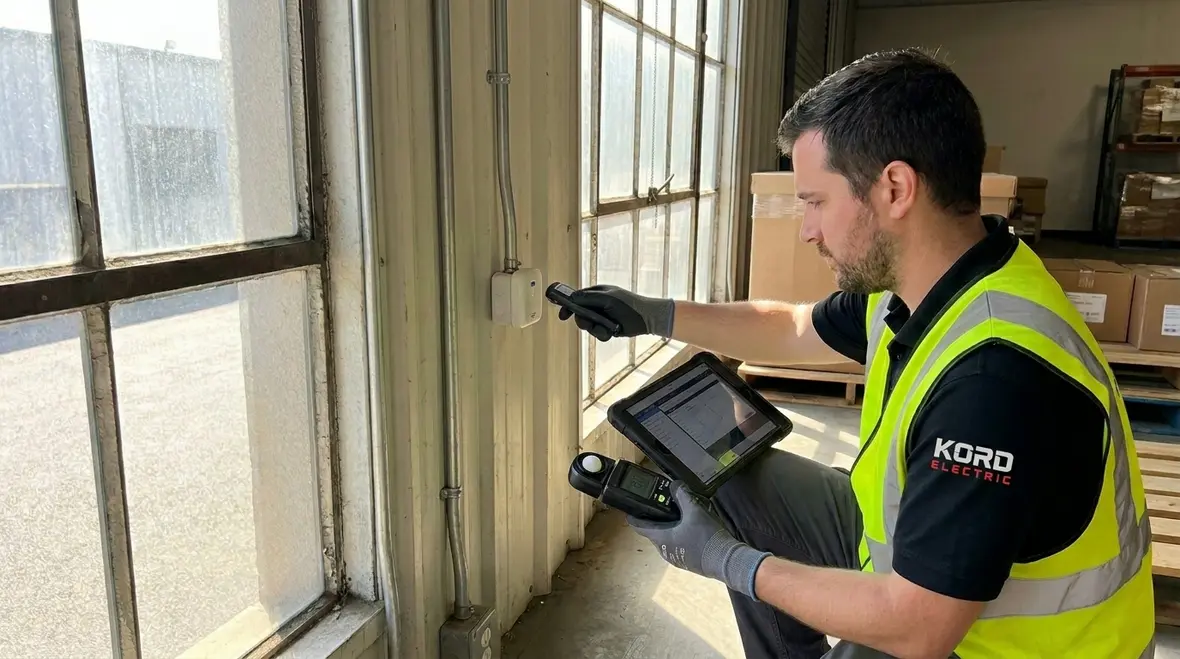
Then we commission the system. During commissioning, our technicians walk areas with the facility team, confirm that light levels match the use case, and adjust settings so staff do not have to “train” the building. Transitioning to these behaviors takes time, especially in spaces with multiple activities. Nevertheless, we guide the site team through the change and explain how the control logic affects daily operations.
Also, we avoid generic “one size fits all” settings. A warehouse bay does not behave like a conference suite, and a corridor in a hospital style environment does not behave like a production line. Control zoning needs to match how people and equipment move, not how a floor plan looks on paper.
Compliance and retrofit discipline in California style projects
In California, lighting upgrades often connect to Title 24 requirements. Therefore, facilities need a path that satisfies code and supports long term savings. Even when the facility is not in California, clients ask us the same question: “Will this help us stay compliant without creating chaos?”
We handle that by treating the retrofit like a disciplined program. First, we inventory existing controls, fixture types, and switching patterns. Then we select a control approach that supports both current use and future changes, such as tenant adjustments or additional lines.
Next, we document what we do. That matters when inspectors come, or when your internal team wants to understand the system later. Our technicians and expert service staff keep notes that tie installation actions to the expected lighting outcomes. In the end, compliance becomes less of a gamble and more of a process.
And yes, compliance checklists can feel like paperwork from a spy movie. Yet when the approach is organized, the result is calmer meetings, fewer surprises, and better outcomes for the facility team. If you are mapping a broader compliance strategy, you can also connect this work with insights from our Lighting Installation Code Compliance Guide and California focused resources that explain how controls, zoning, and documentation fit together.
Integration with building management and maintenance workflows
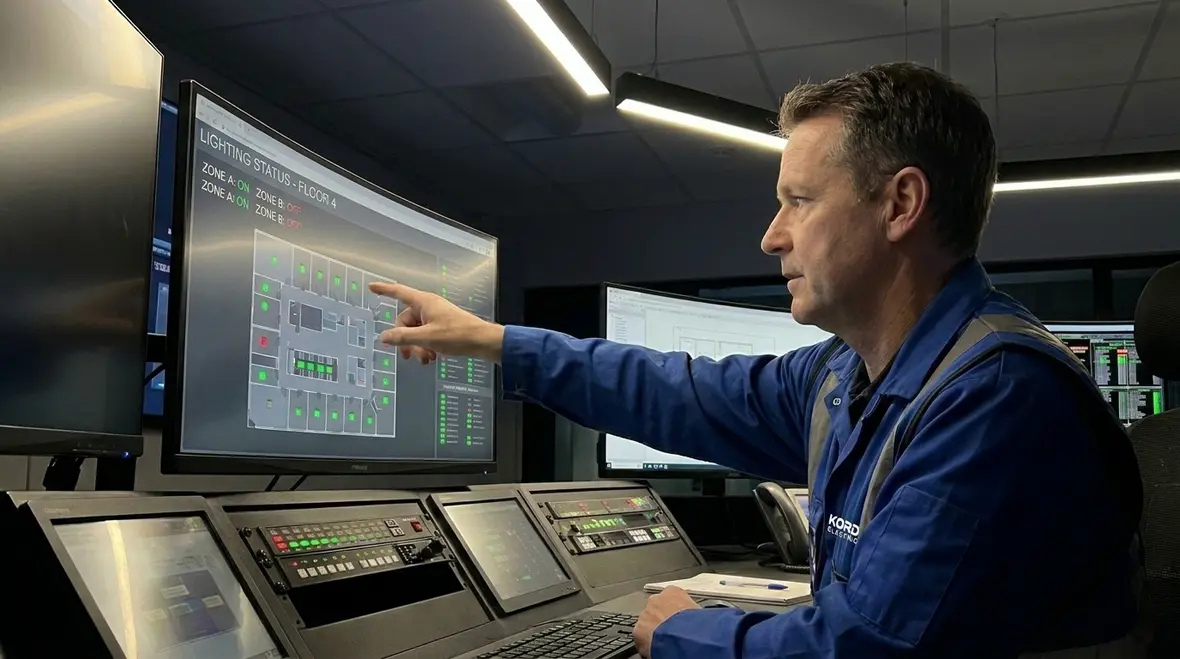
Industrial environments do not run on standalone devices forever. Eventually, teams want the lighting controls to show up in how they already manage the building: dashboards, alarms, maintenance workflows, and schedules.
For that reason, we plan integration early. We map how lighting status should report, what alerts matter, and which team gets notified when a component needs service. Instead of waiting for “the lights are acting weird,” you can act when trends show an issue like a sensor fault or unexpected load changes.
We also design for operational handoff. Our expert service staff explains how to interpret system reports and how to adjust schedules without breaking the logic. That reduces the risk of well meaning staff overriding a setting and accidentally turning your warehouse into a late night stage production.
When controls integrate cleanly, the facility gains a true feedback loop. Therefore, ROI improves because the building stays optimized instead of drifting over months. In many facilities, pairing smart control integration with structured electrical preventive maintenance helps keep lighting performance, panels, and protective devices aligned over the long term.
Common pitfalls that crush payback and how Kord Electric avoids them
ROI fails for predictable reasons. We see the same mistakes across many facilities, and we work to prevent them:
- Over broad zoning: large areas that include multiple daylight conditions cause uneven savings and uneven comfort
- Bad sensor placement: sensors that face heat sources, moving machinery, or direct glare create unstable behavior
- Weak commissioning: systems that get installed but not tuned keep operating like a “guessing machine”
- No operational training: when staff does not understand how the system behaves, they disable it or change it
- Ignoring maintenance reality: controls must survive dust, vibration, and high traffic environments
So our technicians do more than install. They verify coverage, test behavior in real shift conditions, and align the settings to how people work. Moreover, they explain the system in a practical way so the facility team can maintain it confidently. This approach protects savings and prevents the classic situation where the lights perform perfectly during acceptance testing and then drift six months later. We do not aim for “mostly working.” We aim for “working every day.”
Smart lighting controls FAQ
Final thoughts and your next step with Kord Electric
If you want lighting upgrades that protect comfort and deliver measurable returns, we can help. Kord Electric builds and tunes industrial smart lighting control for commercial and industrial facilities, with a clear plan for zoning, commissioning, integration, and long term support. Our technicians and expert service staff explain the system so your team can manage it confidently. Reach out to us for a site focused assessment and a practical path to better energy performance and stronger ROI. Let’s turn your lighting from “installed” into “optimized.”
When you are ready to translate your control strategy into fixtures, wiring, and field work, our Lighting Installation Services team can coordinate installation, commissioning, and long term support so the ROI you planned on paper actually shows up in the building.