Commercial Warehouse Lighting Layouts for Productivity
Commercial Warehouse Lighting Layouts That Actually Improve Productivity
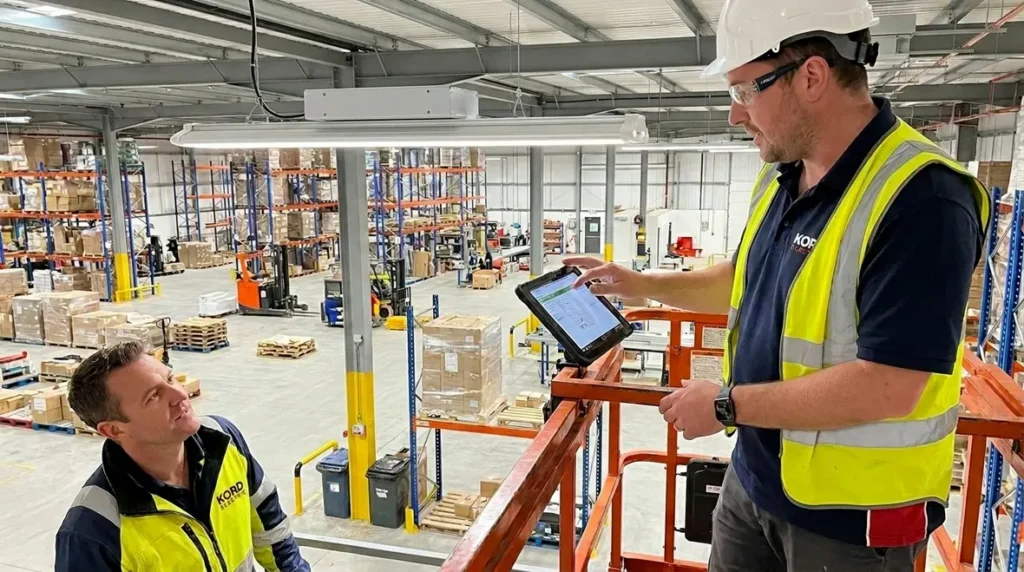
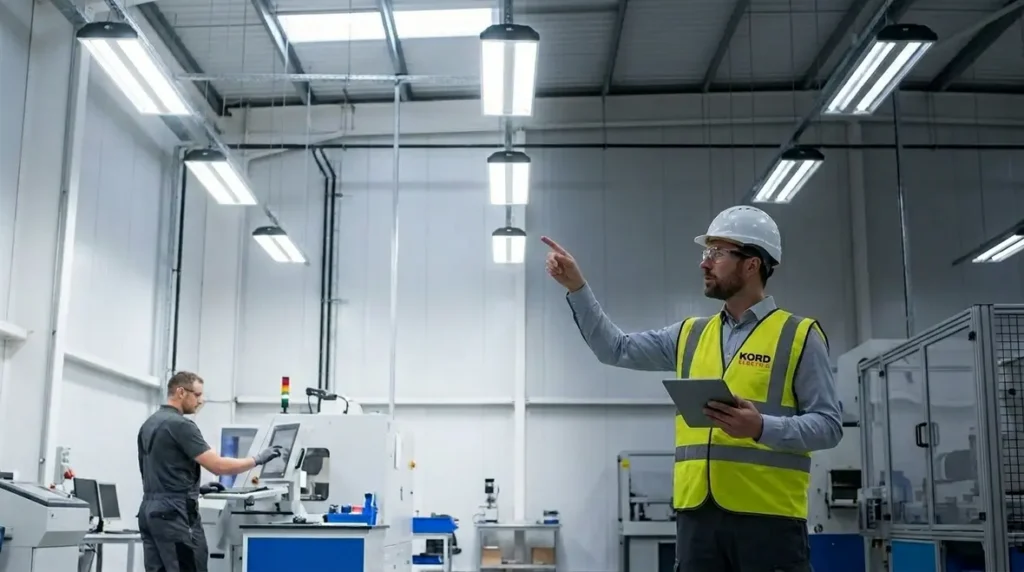
When Kord Electric looks at a warehouse, we do not start with “how bright can we get.” We start with Commercial warehouse lighting layout tips that reduce downtime, improve safe movement, and help workers spot issues faster. First, we map the flow of people, forklifts, and material lanes, then we shape the light to match how the space actually works. Next, we balance brightness with glare control so eyes do not fatigue after the first half hour. Finally, we plan for maintenance access and electrical efficiency because nobody wants lights that burn out like a bad season of a streaming show. Our technicians, and our expert service staff, explain the plan step by step so facility managers understand what changes, why it changes, and what results to expect.
Third person note for this article: others often ask whether lighting is “just aesthetics.” In an industrial environment, lighting is operations. And at Kord Electric, we treat it like the system it is.
Why Industrial Lighting Layouts Matter for Throughput

Warehouses run on rhythm. However, poor illumination breaks that rhythm by slowing walking paths, increasing errors, and raising safety risks. When a bay has dark zones, teams hesitate, which delays staging and slows receiving. When light levels swing dramatically between aisles and dock areas, workers adjust their eyes all day, and that adjustment costs time. Even worse, glare from the wrong fixture angles can make reflective surfaces feel like they are “blinding” people, especially around pallet wrap, plastic film, and shiny floors.
As a result, Kord Electric focuses on distribution, not just output. We use layouts that keep task areas consistent and guide attention toward critical work zones like pick faces, packing stations, and inspection points. Then, we tune the lighting to the geometry of the building so light lands where it should, not where it can bounce around and cause confusion.
Our technicians often tell facility leaders the simplest truth: if light does not help the work, it is only electricity. And in a major property building, electricity is not “small talk.” It is a cost line.
For facility teams comparing upgrade options, pairing a warehouse-focused layout plan with a broader commercial lighting upgrade cost review can clarify how layout, fixture selection, and controls all connect to long term operating budgets.
Mapping Aisles, Racks, and Traffic Paths for Better Visibility

To optimize warehouse productivity, we begin with a site walk and a layout sketch that matches the real operation. Then we break the space into zones that behave differently: dock doors, receiving areas, high rack storage lanes, long aisles, and end caps where people stop to count, inspect, or re-label. Because each zone has a different height, surface reflectance, and viewing distance, one lighting plan rarely fits all.
At Kord Electric, we plan the placement of fixtures to support sight lines between workers and the objects they handle. For example, in aisles where pickers move along racking, we align illumination to minimize shadows from rack uprights. In cross-traffic zones, we avoid harsh contrasts that can hide pedestrians against darker backgrounds. Meanwhile, in loading bays, we consider glare and wet surface conditions, since those areas often get foot traffic, water, and moving equipment.
To keep the process clear, our expert service staff explains each step: what we measured, what we modeled, and how the final arrangement reduces shadowing and improves recognition speed. That approach lines up with how our dedicated lighting installation services handle large scale commercial and industrial projects, from evaluation through commissioning.
Glare Control and Uniformity: The Quiet Productivity Boost
People do not always complain about glare until it becomes a real problem. Then, the complaints come fast. A worker squints, a supervisor notices more mistakes, and safety observations increase. Even if the overall foot-candle number looks fine, glare and unevenness can still ruin performance.
That is why we prioritize uniformity. In an industrial environment, uniformity helps eyes stay relaxed, and relaxed eyes mean fewer re-checks and faster task completion. We also control glare by selecting optics that cut unwanted spill light and by aiming fixtures to match the work plane, not just the ceiling.
Furthermore, we consider reflectance. Light behaves differently on painted steel, concrete, and reflective packaging materials. So, we tune the layout so the light stays usable across the full work area, rather than pooling in the brightest spots like a dramatic actor who only shines during their big scene.
For teams working under California codes, this kind of glare control and uniformity often goes hand in hand with commercial lighting compliance, which links real world performance to Title 24 requirements without turning every shift into a science project.
Fixture Selection and Mounting Strategy in Industrial Ceilings
Different buildings demand different fixture plans. A warehouse with high ceilings needs a distribution approach that reaches the floor evenly across long distances. A facility with complex beams, sprinkler layouts, or uneven soffits needs careful mounting placement to avoid shadow lines. Then there is the issue of maintenance: if access is difficult, the best light design becomes the worst light design after six months.
Kord Electric technicians evaluate these realities on site. They look at mounting height, beam spacing, obstruction locations, and pathway clearances. Next, they select fixture types that fit the application, including optics that support controlled spread and reduce glare. We also think about long term performance, including how the system stays consistent over time.
Because industrial buildings are not built for guessing, we keep the planning practical. In major property buildings, a lighting system must support tenant operations, inspections, and scheduled maintenance windows. Therefore, we design with a realistic service workflow, so the facility does not need “heroic” ladder runs to keep lights working.
When fixture strategy overlaps with broader electrical reliability concerns, it often makes sense to review the lighting plan alongside a structured electrical preventive maintenance program, so critical circuits, controls, and emergency lighting stay aligned with day to day operations.
Dual Column Best Practices: Controls, Dimming, and Energy Results
We also connect lighting performance to the building’s control strategy. That is where productivity and energy meet, and where many teams feel the relief in the budget. Below, our service staff summarizes the approach in two quick views.
|
What we tune in the field
|
Why it improves daily operations
|
Even then, controls should not turn into a science experiment. Kord Electric helps teams set practical schedules and ensures the system behaves well for real shifts. Plus, if someone says, “We will just figure it out later,” our technicians respond with the calm confidence of a person who already knows how that story ends.
In large California facilities, these control strategies tie directly into Title 24 requirements. Coordinating layout and automation with a code-focused walkthrough, like the approach outlined in our lighting installation code compliance guide, helps keep inspections smooth while protecting productivity.
Commissioning and Training: The Part That Prevents “Good On Paper” Problems
After installation, we do not leave. We commission the system and verify that the light output matches the design intent. Then, we check for correct aiming, evenness, and control settings. Because the building is a living machine, small changes during construction and occupancy can affect results, we confirm performance under real operating conditions.
Next, our expert service staff trains the facility team on what the system does, how to use controls, and what to watch for. This training matters most for commercial and industrial sites where multiple shifts run and managers need predictable behavior. We also support ongoing service so problems get addressed early instead of waiting for a “surprise outage” that no one wants during peak receiving.
In short, commissioning turns the lighting layout into a dependable tool, not a one time project.
For facilities planning deeper electrical upgrades, combining commissioning for lighting with broader projects such as commercial rewiring can consolidate downtime and give operations a single, coordinated roadmap for future maintenance and expansion.
FAQ: Fast Answers Facility Teams Ask About Warehouse Lighting
Teams managing commercial warehouses and major property buildings tend to ask similar questions when they look at lighting performance. Below are direct answers that line up with how Kord Electric designs, installs, and supports industrial lighting systems every day.
Ready to Improve Your Warehouse Visibility and Speed?
If you manage a commercial or industrial warehouse or a major property building, Kord Electric can help you optimize visibility with practical lighting planning and dependable installation. We start with a real site assessment, build a layout that matches traffic paths and work zones, and commission the system so it performs as designed. Then our expert service staff supports your team with clear guidance and ongoing care. Reach out today, and let us turn “good enough” lighting into steady productivity.
For property managers who want a deeper look at how full scale projects come together, our dedicated commercial and industrial lighting installation services page outlines the full process from evaluation to commissioning, including how we handle warehouses, campuses, factories, and multi-building portfolios.
If your facility is also reviewing broader electrical reliability or planning a phased upgrade strategy, combining a warehouse lighting layout review with services like preventive maintenance or system rewiring can streamline inspections, support compliance, and set up a long term roadmap for safe, efficient operations across every building in your portfolio.